A Good Samaritan…Without Expectations

In around 2012, I was walking from my hotel to my company’s office building in downtown San Francisco.  I remember the day vividly. It was a crisp morning, and the sun was shining. It was a beautiful day. I was feeling great.  My confidence was high.  I was at a good place in my life professionally, but I will admit that my relationship with Christ was not at a place of strength.  I was a believer but not living it.

My post is a little longer today, but I would like to share my journey with you.  I hope you will stick with me and read until the end.

As I walked down the sidewalk, I encountered morning commuters. People were walking with purpose.  They had a place to be, and they were rushing to get there.  It was a typical San Francisco street that was a bustling with lots of people.  In addition, I saw many homeless people, most sitting along the sidewalk asking for food or money.  My memory is that no one was stopping to help them out, including me. None of the homeless approached me but I tend to look at people in the face to acknowledge them.  Perhaps it’s how I was raised or maybe my Midwest upbringing, but a “Good morning” or a head nod to acknowledge a person was my typical pattern.  I have done this throughout my life, in small towns, major cities, or just walking in my neighborhood.

As I continued to my destination, I could see a homeless man walking down the sidewalk towards me.  I was quickly studying him.  His head was down. He had no bags or possessions, only the clothes on his back.  He was dirty. He had way more clothes on than the weather that day required.  I remember doing a quick assessment and what flashed through my mind was, “he is completely broken.” As we walked past each other, we locked eyes.  I didn’t say anything.  I made a facial gesture, something like a half-smile, a head nod, to acknowledge him.

The next twenty seconds are forever ingrained in my memory.  He spun around as my back was to him and he began to shout at me.  “What are you looking at? Do you think you are better than me?  Don’t you look at me? Don’t you ever look at me!”

Keep in mind, there are hundreds of people around us, and a man I don’t know, is screaming at me on the sidewalk.  My confident swagger then turned to nervousness, embarrassment, discomfort, and ultimately, I fled from the situation.  I don’t recall what else he said from that point, as he continued to yell, but I hurried from the scene with a much brisker walk to my destination.

From that moment, I would say I became somewhat afraid or intimidated by homeless people.  We live in the Washington DC area and encounter the homeless frequently.  We see them on sidewalks or begging for money at stoplights.  “Don’t give them money.  They will just buy drugs or alcohol.”  “Have you seen the news coverage of people who say they are homeless and then they walk over to their nice car and drive away?”

All these negative thoughts went through my mind for years as I would be confronted with people in need. I made many excuses why I should not engage the homeless, and shamefully, I did not give money or acknowledge the homeless for years.

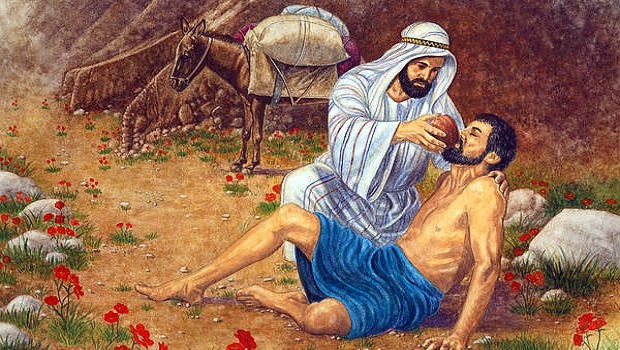
Today’s reading is Luke chapter 10.  Verses 25 to 37 are the famous Parable of the Good Samaritan.  In case you have not read it, here’s the summary.  Jesus said, a man was walking between two cities, he was robbed, beaten, “leaving him half dead.”  A priest saw him and “he passed by on the other side.” A Levite saw him and “he passed by on the other side.” Then, a good Samaritan came to where the man was, “when he saw him, he had compassion.” He “bandaged his wounds,” and “brought him to an inn and took care of him.” When the good Samaritan left the inn, he gave the innkeeper money and said to him, “Take care of him; and whatever more you spend, when I come again, I will repay you.”

God has been working on me the past few years.  I have had numerous Bible studies, sermons, podcasts, and conversations where helping homeless people has been on my heart.  I have not known what to do with these “voices.”  Is this God speaking to me?  Is this what it is like when the Holy Spirit is “talking to me” or influencing me?

A couple months ago, my family and I were driving near the city, waiting in line at a stop light.  There was a man sitting on the side of the road, begging for money.  He was smiling, looking people in the eye, and wishing them to “have a great day.”  He appeared to be homeless, he was very dirty, had tattered clothes and there was a bag of what looked like his possessions behind him.  In that moment, I felt compelled to help him.  I rolled down my window, he approached.  I cannot recall exactly what he said but he gave me a pleasant greeting.  I was nervous and wanted to hurry through the encounter.  Get it over with and move on. I handed him money and the first thing that came to mind was, “what is his name?” “Sir, I hope this helps.  I will pray for you and hope that your situation gets better.  Don’t give up.  Pray to God for strength and He will help you. What is your name?”  He looked me in the eyes and said, “Thank you.  I really appreciate that. My name is Peter.”

A couple weeks later, we are in the car at a different stop light.  I see another man begging for money.  I reached for a few dollars, not thinking about what the man will do with the money, but that he is asking for help.  “Sir, here is some money, I hope this helps you.  I will pray for you.  What is your name?” He responded, “Thank you for asking, sir, my name is Matt.”

To say I am ashamed is an understatement.   For years, I have turned my back on God’s children in need.  Who am I to judge what they will do with what I give them?  Yes, many homeless are addicts and some have a mental illness.  Bottom line is they are in need and asking for help.  Period.  Jesus tells us in Matthew 22:37-39, “You shall love the Lord your God with all your heart, with all your soul, and with all your mind. This is the first and great commandment. And the second is like it: You shall love your neighbor as yourself.”

Is it a coincidence that the names of the first two homeless people I helped had names of Jesus’ disciples?  Yes, Peter and Matthew were two of Jesus’ closest confidants throughout his three years of ministry on earth.

My prayer is that you hear my journey of fear and selfishness and, perhaps, it stirs emotion in you to help others.  I pray that we all look our fellow man in the eye, with compassion, reserving judgement and negative thoughts.  Every person has a story, good or bad, about the journey that life has taken them on.  Every soul is worth saving and every heart is worth healing as we are all God’s children.  The most powerful force that saves people’s lives and brings about everlasting change is having a relationship with Jesus, our Lord and Savior.  Bring words of hope, peace, and comfort to those in need.  They may not acknowledge you, respond with the perfect comment to you in the moment, or even seem thankful for your generosity.  Should we only give to others if they seem to appreciate it?

Jesus suffered and died on the cross for us, all the while knowing His fellow man, the very people He was dying for, would turn on Him and sentence Him to a terrible death.  Moving forward, I think I can muster the courage to give and not expect anything in return.  That is what Jesus did.  I will give freely to God’s children and not expect anything in return.

Photo Credit:  Orthodox Christian Network

Forgiveness Modeled by Jesus

Last month, I wrote about Matthew 27, the capture, conviction, and crucifixion of Jesus.  The book of Matthew was written by one of Jesus’ closest confidants and a disciple who followed Jesus during His teachings and witnessed the events of Jesus’ life.

Today, I write about Mark 14.  Mark, also called John Mark, was an early evangelist of the church with Paul.  He is known to have traveled with Paul and Barnabas to spread the Gospel after Jesus’ death and resurrection

Mark 14 outlines the plot to kill Jesus and the final days He spent with His disciples before His capture.  What weights heavy on my heart about this chapter is the betrayal Jesus knew would happen from His closest confidants and yet He still forgave them.

Jesus spoke on Mark 14:18 “assuredly, I say to you, one of you who eats with Me with betray Me.”  During the Passover meal, Jesus knew that Judas would turn Him over to the Jewish authorities. Scripture tells us that Judas was one of the original twelve disciples, and he traveled with Jesus for three years during Jesus’ ministry.  Three years of travel and companionship with anyone would assumedly lead to a productive and positive relationship.  We would suppose that Judas supported Jesus in His ministry and was a confidant of Jesus.  One would think Jesus would grow to know, trust, and like Judas during their ministry.

In Mark 14:30, Jesus said to Peter, “assuredly, I say to you that today, even this night, before the rooster crows twice, you will deny Me three times.”  Peter was identified in the Bible as one of the closest confidants of Jesus amongst the disciples, as mentioned in Mark 14:33 when Jesus went to pray in the Garden of Gethsemane “And he took Peter, James, and John with Him, and He began to be troubled and deeply distressed.”  Hours before His capture, He brought Peter with Him, knowing the entire time that Peter would “turn his back” on Jesus and deny knowing Him on three separate occasions.

Has someone betrayed you?  Have you been hurt in a relationship, physically, emotionally, or mentally?  The pain caused by the betrayal from others can be devastating and sometimes, life-altering.  Each of us has our own story with likely very good reason to resent, dislike, or mistrust a person. We might resent the way they treated us, abused us, disregarded our relationship, our trust, our friendship, and might have damaged any possible future relationship with them. Unfortunately, carrying the burden or “baggage” from that betrayal can derail our lives. Perhaps we allow one incident to steal our trust, joy, belief, or even happiness in future relationships.  It is difficult to be hurt and not allow that hurt to carry over to other areas of our lives.

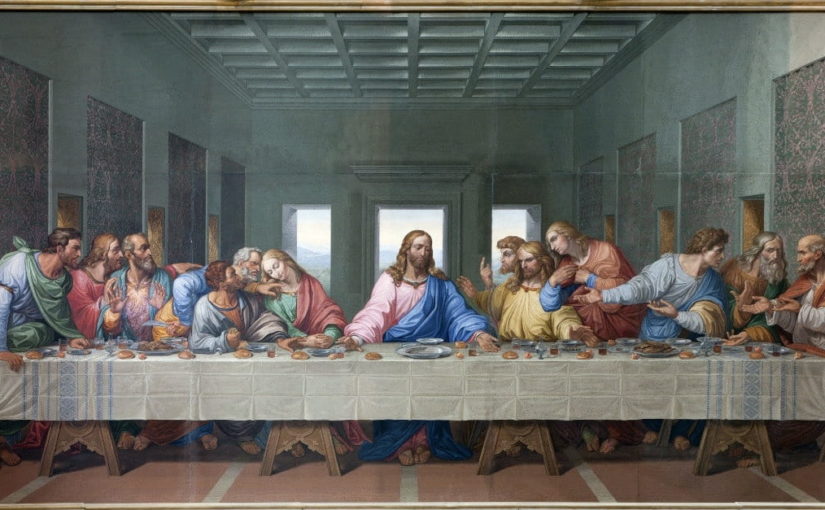
But then we read in Mark 14:24, when Jesus institutes the Lord’s Supper and He said, “This is My blood of the new covenant, which is shed for many.”   At the very same table with Judas and Peter, Jesus forgave them.  He introduced the Lord’s Supper as the act to recognize the “new covenant.”  Luke 22:19-20 describes this event in a bit more detail in verse 19 And He took bread, gave thanks, and broke it, and gave it to them, saying “This is My body which his given for you; do this in remembrance of Me. Verse 20 Likewise He also took the cup after supper, saying “this cup is the new covenant in My blood, which is shed for you.”

The new covenant was God’s commitment to forgive us of our sins, through the crucifixion and resurrection of Jesus.  We can be assured that God forgives us of our sins, no matter how awful, if we confess our sins and ask for forgiveness.  The new covenant provides us the opportunity to spend eternity in Heaven, when we commit to and believe that Jesus died on the cross for our sins.  What a magnificent gift we have been given, for free.

So, during His final hours on earth, knowing that He would be betrayed by two of His closest confidants, He forgave them.  He not only forgave them, but He gave them communion teaching them how to forgive others.

Yes, forgiveness is hard.  We may forgive but we may never forget.  That’s ok but we must resolve and absolve hatred, resentment, animosity, and strife for others.  Jesus modeled for us, hours before His death, the ultimate gesture of forgiveness.  Perhaps we can muster the courage and confidence to forgive others, even when it might seem impossible at the time.

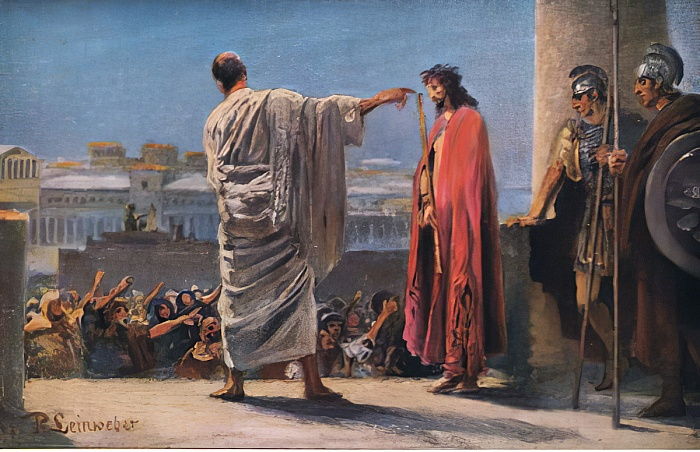
The Murder of our Savior – The Courage to Love Others

Mathew 27, in my opinion, is the most impactful and riveting chapter in the Bible.  The Bible is composed of sixty-six books, written by 40 men, over a period of 1500 years.  Every prophet, every vision, and nearly every parable that was taught was leading up to this moment.   The death of Christ, God’s Son, our Savior.

I cannot help but focus on the manner in which our Savior was convicted of crimes He did not commit and was sentenced to a horrible death by people who had no evidence of Him doing anything wrong.  Jesus was murdered because the Jewish leaders in charge felt threatened by Him.

Here is a riveting part of Christ’s death.  In Matthew 24, verse 23, Pilate said “Why, what evil has he done?”  What was in Pilate’s heart at that moment?  Why was he asking this question? More on that in a moment.

Verse 24 goes on to state “When Pilate saw that he could not prevail at all, but rather that a tumult was rising, he took water and washed his hands before the multitude, saying, ‘I am innocent of the blood of this just person. You see to it.’”  Verse 25 goes on to say the people answered, “His blood be on us and on our children.”

There are hundreds of people who contributed to the murder of Jesus.  The Sanhedrin, consisting of chief priests and elders, Judas, bystanders at the trial, the false witnesses who testified against Jesus, and the guards.  Even Pilate’s wife contributed to Jesus’ conviction as she told Pilate “Have nothing to do with that just Man, for I have suffered many things today in a dream because of Him.”  All contributed and supported the crucifixion of the Son of God.  But, one man could have stopped it.  Pontius Pilate.

When are those moments in life when we need to stand for something and have courage?

Pontius Pilate is arguably one of the most known names in the history of the world.  He is remembered, for eternity, for the horrible crucifixion he allowed.   But yet, the Bible inferred he had questions about Jesus’ guilt.  He seemed to have doubts but did not have the courage, in the moment, to stand up for Jesus and save Him from the mob.

The courage to stand up for our own opinion can be difficult. To rid ourselves of the ease to “follow the herd,” because it seems like the popular or easy thing to do, can be a difficult proposition.  We need to focus on what feelings control us in the moments of decision, when we have to make a choice.  We should not allow ourselves to go along with negative feelings of envy, jealousy, the feeling of “getting attention,” or perhaps the sense of anger or rage against others.

The most fascinating aspect of Matthew 27 to me is that Jesus died to save the exact people that murdered Him.  He took the beatings, the spitting, the ridicule, the torture and the unfathomable pain to provide the salvation for believers to spend eternity in Heaven.

What is on my heart today is that if Jesus had the courage to make the sacrifice He did at His crucifixion, I should be able to muster the courage to love and appreciate people when it might not seem popular.  Loving or supporting others might not seem accepted at the time, but in the end, could have a massive impact on someone’s life.  We never know when our support will mean the most.

Jesus commanded, before His death, in John 13:34-35.

34 A new commandment I give to you, that you love one another; as I have loved you, that you also love one another. 35 By this all will know that you are My disciples, if you have love for one another.

By loving others, we show our love for Jesus.

Great Faith Provides a Great Yield

Growing up in the heart of farm country in Central Illinois, we were surrounded and engulfed in farming.  Every friend lived by a field and every trip involved a drive that through mile after mile of soybeans and corn. Although no one in our family were farmers, the conversation of the weather, the condition of the crops to grow throughout the seasons, as well as the yield were a consistent dialogue.

In chapter 13 of the book of Matthew, Jesus taught eight parables all related to the Word of God and its ability to prosper and grow in our lives.  He also spoke about judgment day when Jesus comes back to earth and the sinners will be separated from the believers.  The parables were about seeds, soil, tares (weeds), and yield.  I can understand these parables well.

As we live our lives, we are influenced in many ways.  We are exposed to different people who have different views and opinions on religion and faith in Christ.  We participate in different personal and professional gatherings.  We live in homes and neighborhoods where we associate with different people.  Some of us are close to our families, and we spend a significant amount of time with them.  Social media also has an impact on our thoughts and beliefs as well when we are exposed to information daily that is influenced by the people we associate with online.  And the most significant influence, our spouse or significant other.

Does the “tribe” of people you associate with influence your faith in a positive or negative way?  When you speak of faith, or even going to church, do your friends and family encourage and acknowledge in a positive way? Or do they shun you like you are crazy to believe that “religion stuff?”

My prayer for you today is that you guard your life and who you associate with carefully.  Surround yourself with individuals who push you to grow in your faith.  Spend time with people who care for your well-being and constantly put you before themselves.  Guard your spiritual life and ensure you spend time with those that help you grow your faith in Jesus by living out His Word daily.  Find a great church family that inspires you to dig into the Word of God and study it daily.

The parables in chapter 13 speak of the “evil one” or “enemy” who pull us away from God.  Be careful.  The devil does not always appear to us in obvious ways.  Evil can come in the simple form of creating doubt in Jesus and our faith.  That may come from your friend group. Evil can pull us away from attending worship, reading our Bibles, or even reading daily devotions like this one.  That could be your neighbors or, unfortunately, members of your family. Our thoughts that are generated from a place of pity and self-doubt can gradually erode our faith and pull us farther from God.  That may come from our own frustration when our prayers are not answered.

I think the biggest “trap” that can pull us away from our faith is pain and disappointment.  Many times, friends or family may question our faith because of tragedies, pain, or unanswered prayers.  How can you believe in that “religion stuff” when (fill in the blank) didn’t work out?

Paster Andy Stanley says “The foundation of our faith in Jesus is not answered prayers and everything going our way. It’s always a mistake to wrap our faith and confidence in God around the fulfillment of our dreams or answered prayers. Dreams that don’t come true say nothing about the presence or faithfulness of God.”

When you question your faith, perhaps due to the influence and elements around you, remember that some of the most inspirational believers to ever walk the earth went through terrible challenges and pain.  Our faith should not be based on every wish and dream coming true.  Our faith is based on knowing Jesus is our Lord and Savior, is with us all the time, and will provide a “soft place to land” when the bad times come.  Although we do not understand in that moment, He is using the challenges and difficulties to grow our faith in Him.  Yes, bad things can create good.  Guard the people and places you associate with in your life as well.

My final thoughts today are wishing my bride, Kim, a Happy 24th Anniversary (the best 20 years of my life LOL! Kim will get this).  She has been such a blessing in my life. We have had an amazing life together with many adventures.  Our marriage has been filled with joy and happiness as well as sadness and tragedy.  What I love about our marriage is that we lean on our faith, both individually and as a couple, to partner in our union together.  We give credit to Christ in the happiness and turn to Him for strength in the sadness. As every day brings uncertainty and challenges, I know with Jesus at the center of our lives, we will continue to grow in our faith together as a couple.

Let All Things Praise the Lord

Today’s journal writing marks the final chapter of Psalms. Our Bible Journal team has written about every chapter, one hundred chapters written by eight authors, and fifty chapters from unknown authors.   The Book of Psalm is filled with love and adoration, struggle and strife, happiness and joy, and desperation and sadness.

Sound familiar?  The books of Psalm were written thousands of years ago, as mankind still struggled with balance and challenges related to everyday life.  The authors question God, implore to God, and ultimately praise God in the final chapter.   The chapters describe what many of us feel and experience today.

Psalm 150 concludes the book with this…

1 Praise the Lord!

Praise God in his sanctuary;

Praise Him in His mighty firmament!

2 Praise Him for His mighty acts;

Praise Him according to His excellent greatness!

3 Praise Him with the sound of the trumpet;

Praise Him with the lute and harp!

4 Praise Him with the timbrel and dance;

Praise Him with stringed instruments and flutes!

5 Praise Him with the loud cymbals;

Praise Him the clashing cymbals!

6 Let everything that has breath praise the Lord.

Praise the Lord!

Do you feel like praising God?  Do you believe a relationship with God is right for you?  Or do you have questions?  Are you unsure why things happen and how that relates to God?

I choose to praise God, and it comes down to one verse.

John 3:16

For God so loved the world that he gave His only begotten Son, that whoever believes in Him should not perish but have everlasting life.

Understanding God’s word can be complex.  It can be overwhelming, especially stories that are thousands of years old.  What I do know is that there is emphatic proof that Jesus walked the earth, and He was the Son of God.  I believe that Jesus came to earth to save man from ourselves.  I believe God, through Jesus, demonstrated how we are to love and treat others.  Man, has consistently fallen away from God throughout history and Jesus was sent to change our relationship with God.  If you need more proof of Jesus’ existence, read The Case for Christ by Lee Strobel.

I can always do better, but I try to praise God through my prayers, the message and good news about Jesus I share with others, and my attempts to serve as an example how a relationship with God can change your life for the better.   Praise Him through the trials and tribulations.  Praise Him through the pain. Praise Him during the good times.  Our lives are about growing closer to our God and our faith can grow stronger through the good times and the bad.

Idols

The one hundred and thirty fifth Psalm was written by an author that is not identified. This unknown person contrasts the greatness of God with the powerlessness of idols.  Verses fifteen to eighteen say the following:

15 The idols of nations are silver and gold,

The work of men’s hands,

16 They have mouths, but they do not speak;

Eyes they have, but they do not see;

17 They have ears, but they do not hear;

Nor is there any breath in their mouths,

18 Those who make them are like them;

So is everyone who trusts in them.

What do you think of when you hear the word idol?  Perhaps you think of a statue or alter with weird images or depictions of a god.

Idol is defined as “an object of extreme devotion, a person or thing that is greatly admired, love or revered.”  The passage today caused me to think more broadly about the definition of an “idol.”  In modern day, it seems a bit out of touch to think about worshipping a physical idol but what are the “idols” that we worship today?  My thinking today is that anything that takes us away from worshipping our God should be considered an idol.

“Idols” come in many shapes and sizes.  We may idolize money.  We may idolize success.  We may “worship” and devote our lives to our career.  Perhaps recognition and attention through social media has become an addiction or “idol” for us.  Guilty as charged on all the above.

What I know is that when I spend time studying, reading, learning, and listening to the Word of God, I find more application and understanding for God’s purpose for my life.  The scriptures are packed full of guidance and application how God has asked us to live our lives.   The opportunity to sing, pray, learn, and worship our Lord each week at worship service is a small sacrifice to offer to our God after He continuously preserves and loves us throughout our daily lives.

I understand that the routine and busyness of life can pull us away from attending worship and communing with God.  Raising children to be active in sports or hobbies can conflict with spending time with God.

Say no to the Sunday morning golf match, running club, tennis match, or whatever the “idol” is that prevents you from attending church with your family.  Say no to the sports team that offers your child practice on Sunday mornings.  Say no to the biking club that insists that the only day of the week to meet is Sunday morning. Preserve time to spend time with God.

Don’t let the “idols” of this life prevent us from recognizing our God, who has shown us more love and mercy than we could ever repay.

Why Turning to God Makes Sense?

I have been contemplating pain and suffering and why God allows bad things to happen.

Psalm 123, our reading for today, has four verses.

1 Unto You I lift up my eyes,

O You who dwell in the heavens,

2 Behold, as the eyes of servants look to the hand of their masters,

As the eyes of a maid to the hand of her mistress,

Until He has mercy on us.

3 Have mercy on us, O Lord, have mercy on us!

For we are exceedingly filled with contempt.

4 Our soul is exceedingly filled

With the scorn of those who are at ease,

With the contempt of the proud.

The readings and verses of the Old Testament of the Bible, Genesis to Malachi, are the depiction of God’s first covenant with man.  The Books are complex, the names hard to read, and sometimes, the sadness and outlandish nature of the stories are hard to comprehend.  Book after book in the Old Testament is about people suffering great loss, murder, famine, sadness, and devastation.

I find the brutality of stories in the Old Testament (sacrificing animals, death of children, destruction of cities and civilizations) makes it hard for me to relate and dare I say causes me to struggle to find meaning in my faith in God.   The Old Testament stories many times don’t seem to make sense.

With that said, Christianity has brought about standards and expectations of morality in our society, rights to women and children, and has advanced the betterment of society.  Yes, there are sinful Christians who do bad things.  But Christians know that our God does allow bad things to happen.  There are moments that tragedy stops us in our tracks.

Our brains are wired to try to understand and find meaning.  We cannot help but feel loss and devastation when we are hurt or sad.  We try to leave feelings of sadness and despair behind as quickly as we can.  Certainly, when family or friends suffer during a health episode or unfortunately, sometimes death, we yearn to find meaning.  We want to end the hurt and feel better with a sensible explanation.

Here is why I choose to turn to God during times of despair, suffering, or loss.  Pastor Andy Stanley stated in a recent sermon that “God allowed the worst possible thing to happen to the best possible person.”   Why should I question God’s judgement about terrible things?  God sent His only Son to experience grave and unimaginable suffering as a demonstration to us that if we believe that Jesus died on the cross for our sins, we will live in eternity in Heaven.   Yes, very bad things happened to our Savior, Jesus.  How can we expect that the God we believe in doesn’t have meaning or purpose for the bad things that happen?

Faith grows through challenge.  Faith grows through sacrifice.  We appreciate the good times more when we have experienced the bad.


The Lord is Gracious and Full of Compassion

Our reading today is from Psalm 111. This chapter is the beginning of what are called the “Hallelujah Psalms,” which are chapters 111 to 118.  Hallelujah means “praise the Lord” as these chapters express an uplifting and optimistic tone.

I have been reading a book entitled “Gentle and Lowly,” written by Dane Ortlund which talks about who Jesus Christ is and how He and His Father, God, have a heart for us.  The book addresses throughout scriptures where God is “gentle and lowly,” not vindictive and spiteful, toward sinners and sufferers.

As a believer, I choose to believe that God wants what is best for me.  He is pleased when I praise and fear Him.  He is not pleased when I sin or turn away from Him.  I believe that events and happenings in my life are there to turn me toward God and His infinite promises.

The best part about faith in Christ is knowing that as a man who walked the earth, Jesus truly understands the emotions of sin, suffering, sadness, and strife.  He looks at us as imperfect beings that need Him to find fulfillment.  The things of this world will not fulfill us.

Verse 4 in Psalms 111 says, “He has made His wonderful works to be remembered; The Lord is gracious and full of compassion.”

My family has had recent conversations about “why bad things happen.” It is very tough to understand when tragedy strikes.  We see throughout human history examples of profound and abhorrent sin.  There have been wars, the killing of people because of their religion or ethnicity, and numerous events where we see human suffering and pain at its worst.  And we continue to see horrific events in our world today. Why does God let these things happen?

I continue to remind myself that the difficulties of this world, although exhausting at times, are present to draw us closer to our Savior.  Difficulties, tragedy, sadness, and disappointment are inevitable.  Times like these will happen in our lives but don’t last forever.  The emptiness that is felt in these situations is truly felt by believers as much as it is by non-believers.  I believe no matter how bad or sad the situation, God has a purpose.  The suffering is real and can be overwhelming but the strength and resilience that can come from bad situations can point us to our true Father when we “throw ourselves” to praise Him.

The difference is that I as a believer know that I will never be satisfied and fulfilled while on earth. If I continue to strive for acceptance and happiness through the materiality of this world, I will always be disappointed.

I acknowledge that God is my source of wisdom, and He is compassionate to me.  I may not always understand why things happen to me, or others, but I trust God.  I know He wants what is best for me and will work through the good and bad to do so.

God’s path for our lives is not always straight and smooth but he assures us we can reach our destination with grace and strength, with Him by our side.

He is Holy

Psalm 99 is packed full of substance in 8 short verses.

1 The Lord reigns;

Let the peoples tremble!

He dwells between the cherubim;

Let the earth be moved!

2 The Lord is great in Zion.

And He is high above all the peoples.

3 Let them praise Your great and awesome name –

He is holy.

4 The King’s strength also loves justice;

You have established equity;

You have executed justice and righteousness in Jacob.

5 Exalt the Lord our God. And worship at His footstool – He is holy.

6 Moses and Aaron were among His priests,

And Samuel was among those who called upon His name;

They called upon the Lord,

And He answered them.

7 He spoke to them in the cloudy pillar;

They kept His testimonies and the ordinance He gave them.

8 You answered them, O Lord our God;

You were to them God-Who-Forgives,

Though You took vengeance on their deeds.

Exalt the Lord our God,

And worship at His holy hill;

For the Lord our God is holy.

In my experience, sound relationships are built on trust.  We respect people who we trust.  We love people who love us back, provide us unconditional love, and are there for us when we need them.

What about our “mighty and powerful God?”  How do you feel about the trust and relationship that you have with Him?  Do you believe in the three exclamations in verses three, five, and eight, “He is holy?”

Webster’s defines holy as “exalted or worthy of complete devotion as one perfect in goodness and righteousness.”

I have been reading lately about our God’s “gentle and lowly” approach to our sins.  Scripture tells us in Hebrews 12:1-12 that our sins “draw the discipline” of God but He still loves us.  God hates our sin and draws near to us and wants us to choose the right path. His immediate reaction to our sin is not wrath and retribution but love and care for us.

In Hosea 11:7-9 God exclaims his love for Israel, even after they have sinned against God.

7 My people are bent on backsliding from Me.

Though they call to the Most High, none at all exalt Him.

8 “How can I give you up, Ephraim?

How can I hand you over, Israel?

How can I make you like Admah?

How can I set you like Zeboiim?

My heart churns within Me;

My sympathy is stirred.

9 I will not execute the fierceness of My anger,

I will not again destroy Ephraim.

For I am God, and not man,

The Holy One in your midst;

And I will not come with terror.

Our God has compassion for us always.  God showed His eternal love by sending his Son Jesus to earth to die on a cross for our sins.  The New Covenant God made with man with Jesus’ birth and death was the greatest demonstration of love ever shown to humankind. God acted on His love for us by sending us a savior, knowing we would continue to sin and defy Him.

Back to trust.  I think trust in God is vital to my relationship with Him.  I would find it hard to love Him if it was only because of my fear of Him.  I could feel “forced” to believe in Him because I am afraid or scared of His wrath, or I can choose to believe and follow Him because I know he loves me ALWAYS and wants what is best for me.

I choose love.  God loves me and wants what is best for me.  I get to choose my actions and they are frequently not pleasing to God.  But I know and trust that God will never forsake and leave me knowing that He created me for a purpose, and I will strive to live out that purpose and glorify His name.

Our Home

Psalm 87 speaks to the glorified position that Jerusalem has in the eyes of God.

The Psalmist speaks about the great and wondrous events in the history of God that occurred in Jerusalem.  From the days of Isaac’s willingness to sacrifice Jacob, Kind David’s rule, the birth, death, and resurrection of Jesus, as well as where the apostles launched Christianity.  Jerusalem is the epicenter of our faith.

Where is the city, town, or home that is special to you?

Home has become an important part of our lives over the past year as that is where we have spent the majority of our time since COVID-19.  Our family activities, travel, clubs, sports, hobbies, and even church have been cancelled or moved online.  Some homeowners are remodeling, expanding, painting, upgrading, and evening buying new homes, because they are spending so much time or have extra time to work on their home.  Many are working on their “home” to make it a place where they want to be.

Reflecting on the word “home” for this journal, I prayed to receive wisdom about this chapter.  I have been reflecting on the fact that no dwelling, structure, town, or city is my home.  My home is in Heaven with our Savior.

The greatest joy and comfort to me is to know that this life is temporary.  Yes, I love my family deeply and want to stay here with them on earth as long as I am able.  I want them to stay on earth as long as possible to experience the love and joy that comes from our relationships.  I live with conviction that when we die on this earth, we will see each other again in Heaven. Honestly, I long for my true “home.”  I want to live in Heaven with my savior Jesus Christ.

The Bible speaks of Heaven in both the new and the old testament.

“But as it is, they desire a better country, that is, a heavenly one. Therefore, God is not ashamed to be called their God, for he has prepared for them a city.” Hebrews 11:16 

“Then the angel showed me the river of the water of life, bright as crystal, flowing from the throne of God and of the Lamb through the middle of the street of the city; also, on either side of the river, the tree of life with its twelve kinds of fruit, yielding its fruit each month. The leaves of the tree were for the healing of the nations. No longer will there be anything accursed, but the throne of God and of the Lamb will be in it, and His servants will worship Him. They will see His face, and His name will be on their foreheads. And night will be no more. They will need no light of lamp or sun, for the Lord God will be their light, and they will reign forever and ever.”Revelation 22:1-5

“For we know that if the tent that is our earthly home is destroyed, we have a building from God, a house not made with hands, eternal in the heavens.” 2 Corinthians 5:1

Our home or city on earth is where we hope to feel protected, comfortable and at ease.  Our home in Heaven will be beyond what we can comprehend.  I yearn for a “home” with no pain, no heartache and no sadness.  I yearn for constant celebration, adoration, joy and peace with our Lord.

May the promise and hope of your Savior wash over you with His presence and peace to know that through Christ, you are saved, and will dwell with Him forever, in the “home” He has prepared for you.

My favorite Christian song about Heaven is by Chris Tomlin called Home.