Not all kings are the High King

Today’s Reading: II Kings 15-16, Matthew 21 

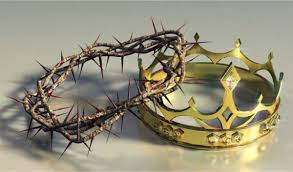
Kings, princes, rulers, emperors, and leaders all have one thing in common…they are human.  There were 23 kings of Israel and 19 kings of Judah.  The split of kingdoms occurred after Solomon.  The kingship of Christ is from the line of Judah.  Christ is the High King and final in the lineage of King David.  I believe one of the best lessons learned from this passage is that not all kings are perfect, but if we have a relationship with God we can have amazing things happen for them.

Here are three themes that I have gotten from this passage: 

Not all kings are saviors

In the beginning of the kingships for Israel which started with King Saul,  the people were looking for a central figure to help them in the human form.  They were not able to grasp the concept of God being available to help them out in spirit and needed someone tangible to make decisions for them. They were looking for a savior to keep them safe from other forces.  But because the kings were human, they were not able to fully save everyone from everything.  

Not all kings are merciful 

There are some kings that love their people and will put their life in the place of the people.  They are committed to the people for eternity.  There are some kings that will sacrifice their own children for their benefit as Ahaz did in

II Kings 16:2-3.  

 Ahaz was twenty years old when he began to reign, and he reigned sixteen years in Jerusalem. And he did not do what was right in the eyes of the Lord his God, as his father David had done, 3 but he walked in the way of the kings of Israel. He even burned his son as an offering,[a] according to the despicable practices of the nations whom the Lord drove out before the people of Israel. 

Not all kings have your best interest. 

Many times kings will pursue the best arrangements for their kingdom.  They will make the best decisions to make the kingdom prosperous.   Some kings will be selfish and attempt to do what is good for the king.  

Throughout our world and throughout history, we see that the kings and rulers are human.  Sometimes they can be altruistic and thinking for others, but many times we can see that the rulers think of themselves. It’s only when God is in the midst of their reign and they acknowledge it; then they can lead and be prosperous.  We are fortunate that we have a great king in Jesus, that is our savior, who is merciful, and has our interests center of his being. When we have a relationship with Christ, we are able to connect and be part of his kingdom. We do not have to be dismayed by the world, in regards to our king. Let us acknowledge, and be aware of the blessing that we have in Christ Jesus as our king. Let us not be dismayed by the world or its shortcomings because we have a relationship with God.

What did you expect?


Today’s Reading : Jonah; Matthew 11

Expectations.  In our everyday lives we have countless expectations and outcomes.  For instance,  when we wake up and the sun is shining through the window, we can expect that the day will be pleasant. But when we go outside the temperature is twenty degrees below what we expected or it could be thirty degrees above.  The expectation is not what reality actually holds. 

In today’s passages, we have to reset our expectations. Today’s passages are from the book of Jonah and Matthew chapter 11. The book of Jonah has been referenced to and recounted many times throughout history since the book was written. To recap, Jonah is given an assignment from God to go to Nineveh,  and tell the people that they have not done what God wanted them to do. Jonah does not want to go to Nineveh so he decides to run away. Upon running away, he finds himself on a ship, which comes into the middle of a storm. The storm stops when Jonah is thrown into the ocean. When Jonah is thrown into the ocean, he has been  swallowed by a big fish (a whale). After three days, he is brought back to land, and he goes to the city. He tells the people what they need to do to change. The people actually listen to the prophet and change your ways. Jonah is mad that the people listen to him. 


Jonah expected to run away from his assignment 

  •  Jonah, like many of us, will be given a task on assignment that seems insurmountable or difficult. We first try to run away from our obligations. We think that it will be easier to run away from the situation.  The act of running away, we believe that we do not have to face the outcomes or the consequences of the actions. We want the easy way out. We want to get away from the fire because it’s too hot. We want to run away from the cold, because we don’t want to get frostbitten. We want to run away from the darkness,  because we are afraid of what may be in the abyss. 

Jonah expected to be killed in the ocean to get out of the assignment

  • When we are presented with a challenge that we are not ready or prepared for, we attempt to take actions into our own hands. We try to create different things without asking God for clarification or reference. Sometimes we expect that the situation can’t get worse and we can ease our pain by going into a different direction.

Jonah expected the people to protest and kill him for delivering the message 

  • In the last part of Jonah, we find that God has already prepared everything for Jonah to be successful. We find that the people of Nineveh were not going to kill him, but were ready for a change in which God had made ready for them. Jonah wanted the people in the world to be punished, killed, or annihilated because of their disregard for God‘s law and his statutes. This is a point in where the expectations have been changed:  God changed his heart when the people changed their hearts to him.  God changed from punishment to preservation of the people.  At this change, Jonah was upset that God is living and living Father and can change to save his children.  

In Matthew,  Christ is telling the people to reset their expectations of their thoughts and perceptions of John the Baptist and of himself.    The people and the persons that Jesus and John the Baptist, actually were, were contrary to the expectations.  People were wrapped up in the assumed appearance and perception of the anointed individuals.  But Christ tells them to allow God to speak to their hearts and open their minds and eyes to the truth that God has set for us.  

How can we reset our expectations to be aligned with God?  How can we open up our relationship with him to be adequately prepared for what assignments we are given? How can we allow God to manage our expectations of ourselves, others, and God? 

Be blessed 

What’s on your tree?

Today’s Reading: I Kings 19-21; II Chronicles 17; Psalms 129; Matthew 1

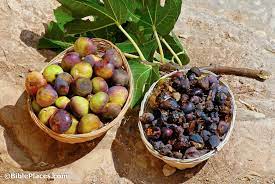
One of the best things that I love about summer is the fresh fruit. Just recently I was shopping with my kids and we picked up some nectarines. The kids had many questions about the different fruits. They wanted to know the difference between the nectarine, the peach, and the apricot. As I’m explaining it to them, they are confused, because each of these fruits seem similar in their taste and texture, except for the size. This gives me an opportunity to see what the fruit is that we have for each other and how we manifest the fruit in our spirit. 

If we bite into a peach and we taste an orange or an apple, that is confusing to the senses.  When we see a pear tree, we know that the tree will produce pears. When we see an apple tree, we know that tree will produce apples. So each tree is distinct by the fruit that it bears.

In today’s passages, we are going through the history and lineage of Christ. In Matthew, we are given the genealogy of Christ for 42 generations. This genealogy goes back from Abraham to David to Christ.  Each of these entries actually shows us the different tapestries that created Christ. It gives us a true understanding that could be connected from generation to generation. This was very important and established the family tree and lineage of Christ. As we are looking at history, we can see in different citations and publications of Christ and is validated and verified to be truly human and truly divine.

‭‭Matthew‬ ‭1‬:‭6‬-‭8‬ ‭ESV‬‬

“and Jesse the father of David the king. And David was the father of Solomon by the wife of Uriah, and Solomon the father of Rehoboam, and Rehoboam the father of Abijah, and Abijah the father of Asaph, and Asaph the father of Jehoshaphat, and Jehoshaphat the father of Joram, and Joram the father of Uzziah,”

In the Old Testament, the descendants of David, Asa, and Jehoshaphat and their workings with God and the fellowship they gave. 

‭‭2 Chronicles‬ ‭15‬:‭1‬-‭2‬, ‭8‬ ‭ESV‬‬

“The Spirit of God came upon Azariah the son of Oded, and he went out to meet Asa and said to him, “Hear me, Asa, and all Judah and Benjamin: The Lord is with you while you are with him. If you seek him, he will be found by you, but if you forsake him, he will forsake you. As soon as Asa heard these words, the prophecy of Azariah the son of Oded, he took courage and put away the detestable idols from all the land of Judah and Benjamin and from the cities that he had taken in the hill country of Ephraim, and he repaired the altar of the Lord that was in front of the vestibule of the house of the Lord.”

‭‭2 Chronicles‬ ‭17‬:‭1‬-‭3‬ ‭ESV‬‬

“Jehoshaphat his son reigned in his place and strengthened himself against Israel. He placed forces in all the fortified cities of Judah and set garrisons in the land of Judah, and in the cities of Ephraim that Asa his father had captured. The Lord was with Jehoshaphat, because he walked in the earlier ways of his father David. He did not seek the Baals,”

Over the past couple weeks, my family has experienced several individuals who have transitioned to eternity. One of the most difficult farewells was for Jillian‘s grandmother, Elda Rose Koch. As we were celebrating her death and departure, we were in awe by the amount of visitors.  Jillian’s grandmother passed away at the age of 93. Many times when individuals pass away at such a great age, there could be a few Individuals to celebrate life. But for Jillian‘s grandmother, there were over 200 visitors for her. This shows what type of fruit she had on her tree. This shows how she led her life for God and others.  

So the question is, what is the fruit that you are producing? When people interact with you, will they see the fruit that God has given you to give? And if we do have fruit that God has given us, let us share it gracefully and gratefully. Because if we do not share that fruit, then we could end up like the tree that Christ spoke to on his way into Jerusalem at his last Passover. The tree was beautiful and it was Majestic. But when it did not give forth fruit, it withered the next day. How can we live a life that will be pleasing and for the glory of God?


Be Blessed

Contentment

Today’s Reading : I Kings 10-11; II Chronicles 9; I Timothy 6

I have forgotten to give my background in many stories. The many times that I am re-reading through the Bible,  I have had exposure to these stories several times over in my lifetime. My grandmother was a preacher’s wife. So many of these stories that I am reading in the Bible I have experienced through word, song, and text hundreds of times.  I forget that sometimes this may be the first time many of the readers have access to the stories. 

The passages that we have today actually complement each other so well. The stories in the passage that we recount today are the one with Solomon and the Queen of Sheba, in both Kings and the Chronicles, and Paul’s letter to Timothy.

“But godliness with contentment is great gain, for we brought nothing into the world, and we cannot take anything out of the world. But if we have food and clothing, with these we will be content. But those who desire to be rich fall into temptation, into a snare, into many senseless and harmful desires that plunge people into ruin and destruction. For the love of money is a root of all kinds of evils. It is through this craving that some have wandered away from the faith and pierced themselves with many pangs.”

‭‭1 Timothy‬ ‭6‬:‭6‬-‭10‬ ‭ESV‬‬

Yesterday, after church, I was sitting with my children and recalling “The Big Idea”. It is really interesting how they are able to understand and receive understanding about the Bible and about the different miracles that are happening in the Bible. But one question I asked was “do you know who King Solomon and King David were?“ And to my surprise, they did not know. 

In Kings and the Chronicles, we are given a glimpse into the power and the magnitude of King Solomon and his wealth. We are also given a glimpse into how others can influence us or be detrimental to us. In the first part of both of these passages King Solomon is introduced to the Queen of Sheba. The Queen of Sheba is a well-known and very influential person in the historical biblical setting.  She is also very wise,  similar to that of king Solomon. In both of these accounts, she gives praise to God for the wisdom He has given to Solomon, and for the bounty and the abundance that Solomon has been given.  Then the Queen of Sheba returns to her home and kingdom. 

For many years that I have read this, I assumed that Solomon and Sheba were married, but they were just great friends, and held each other up to a higher standard. These are the people that we need to have in our lives. Ones who are there to acknowledge what we have done, but also to give us support to grow stronger in our faith and in our life.

In each of these passages in Kings and Chronicles, after the Queen of Sheba leaves, Solomon does not find contentment in what he has. 

“Now the weight of gold that came to Solomon in one year was 666 talents of gold, besides that which came from the explorers and from the business of the merchants, and from all the kings of the west and from the governors of the land.”

‭‭1 Kings‬ ‭10‬:‭14‬-‭15‬ ‭ESV‬‬


To put this in perspective, a talent of gold was roughly 75lbs,  so approximately 4,950 lbs of gold per year, not including other gold that he received.  This is calculated at $112,988,904 per year.  Solomon reigned for  40 years, which would have been equivalent wealth minimum of $4,519,000,000.  This can easily be calculated to be more than any person before or after accounting for the conversion factors.    

But even with all of the wealth and wisdom of God, Solomon allows others to influence him and to change his heart. His relationship with God decreases as he gives his heart to other gods. How many times have we given our thoughts and energy to other gods(health, goods, status, fame, and time)? 

Being content is not about having things, but having a relationship with God who provides the things that we are in need and some of the desire of our hearts.  Contentment is about the relationship with God.  King David understood this… “The Lord is my shepherd; I shall not want.”

‭‭Psalm‬ ‭23‬:‭1‬ ‭ESV‬‬


God wants us to be content. God wants us to have the desires of the heart. But he also wants our relationship with him. Where we continually work on our relationship with him, we will find our contentment. There’s no amount of wealth of wisdom that can replace God’s connection and God‘s relationship with us. We have to renew our relationship with Him daily. It’s not a one and done. It’s a continual commitment even through the highs and lows that we connect with God. When we do that we are truly content.

Patience and Observation


Today’s Reading Proverbs 29-31; 1 Thessalonians 4 

It happens almost every day while raising children, especially in the ages of 8 to 14, when you tell them something, they always have something in addition to tell you. Upon first observation this can be seen as a sign of defiance. But when you look at it in a different lens, it can be seen as trying to help them grow their patience. 

I have recently realized and found a new understanding of patience and observation returning to community pharmacy and management.  There are many times you are presented with certain situations that arise and individuals want you to have a quick or rapid response. When you react without thinking it can create an onslaught of frustration and chaos. But in Proverbs, it tells us to have patience, which is not given to everyone. Patience is something that has to be learned and to be cultivated in order to be a better person.

Throughout the 29th chapter of Proverbs, we are shown many different ways of having patience. How to not be quick to react. How to allow God to work for us because the end goal is not for us, but for his glory. How many times do we engage with one another due to lack of patience? How many times are we pushed to certain measures because of lack of patience?

Proverbs 29 2- 20

2 When good people run things, everyone is glad,
    but when the ruler is bad, everyone groans.

4 A leader of good judgment gives stability;
    an exploiting leader leaves a trail of waste.

7 The good-hearted understand what it’s like to be poor;
    the hardhearted haven’t the faintest idea.

8 A gang of cynics can upset a whole city;
    a group of sages can calm everyone down.

9 A sage trying to work things out with a fool
    gets only scorn and sarcasm for his trouble.

    11 A fool lets it all hang out;
        a sage quietly mulls it over.

12 When a leader listens to malicious gossip,
    all the workers get infected with evil.

14 Leadership gains authority and respect
    when the voiceless poor are treated fairly.

15 Wise discipline imparts wisdom;
    spoiled adolescents embarrass their parents.

17 Discipline your children; you’ll be glad you did—
    they’ll turn out delightful to live with.

18 If people can’t see what God is doing,
    they stumble all over themselves;
But when they attend to what he reveals,
    they are most blessed.

19 It takes more than talk to keep workers in line;
    mere words go in one ear and out the other.

20 Observe the people who always talk before they think—
    even simpletons are better off than they are.

In the 30th chapter of Proverbs, we are presented with observations. Observations of nature and observations of others. You can see that in observations, it takes patience to sit and observe certain areas in our life. What is God asking us to have patience and observe this week? What is God wanted us to see that he is preparing for us if we only wait for him?

Proverbs 30: 15-31

Four Insatiables

Three things are never satisfied,
    no, there are four that never say, “That’s enough, thank you!”—

        hell,
        a barren womb,
        a parched land,
        a forest fire.

Four Mysteries

18-19 

Three things amaze me,
    no, four things I’ll never understand—

        how an eagle flies so high in the sky,
        how a snake glides over a rock,
        how a ship navigates the ocean,
        why adolescents act the way they do.

Four Intolerables

21-23 

Three things are too much for even the earth to bear,
    yes, four things shake its foundations—

        when the janitor becomes the boss,
        when a fool gets rich,
      …
        when a “girlfriend” replaces a faithful wife.

Four Small Wonders

24-28 

There are four small creatures,
    wisest of the wise they are—

        ants—frail as they are,
            get plenty of food in for the winter;
        marmots—vulnerable as they are,
            manage to arrange for rock-solid homes;
        locusts—leaderless insects,
            yet they strip the field like an army regiment;
        lizards—easy enough to catch,
            but they sneak past vigilant palace guards.

Four Dignitaries

29-31 

There are three solemn dignitaries,
    four that are impressive in their bearing—

        a lion, king of the beasts, deferring to none;
        a rooster, proud and strutting;
        a billy goat;
        a head of state in stately procession.

In each of the proverbs we find that if we allow God to use us in the time that He has allocated for us, we can grow beyond our situations and become the vessels in which he has planned.  If we decide to pursue things without his consideration we will have different results which may not be fruitful and blessed.  Have a blessed week. 

Legacy

Today’s Reading: Proverbs 3-5, Romans 10 

The transition of a loved one to heaven can be hard.  The sorrow, the grief, and the pain sometimes can be unbearable. But the celebration of the life of that person and all that they have given you throughout your life is immeasurable. I’ve recently had to celebrate the life of a dear person in my life, my godmother.   The joy and the happiness and the contentment that everybody had for her is truly amazing.

This is a testament to her legacy.  She was kind, loving, and always giving.  The words and the actions that she bestowed upon me throughout my life will always be remembered. I can still hear her voice giving me advice and giving me love.

In today’s readings, Solomon and Paul are giving words of wisdom to the next generation. They are given their legacy. The words that they’re giving are from their own experiences and from their own mentor’s words to them.

Proverbs 3:1-6

“My son, do not forget my teaching, but let your heart keep my commandments, for length of days and years of life and peace they will add to you. Let not steadfast love and faithfulness forsake you; bind them around your neck; write them on the tablet of your heart. So you will find favor and good success in the sight of God and man. Trust in the Lord with all your heart, and do not lean on your own understanding. In all your ways acknowledge him, and he will make straight your paths.”

Proverbs 4:1-4

“Hear, O sons, a father’s instruction, and be attentive, that you may gain insight, for I give you good precepts; do not forsake my teaching. When I was a son with my father, tender, the only one in the sight of my mother, he taught me and said to me, “Let your heart hold fast my words; keep my commandments, and live.”

Proverbs 5:1-2

“My son, be attentive to my wisdom; incline your ear to my understanding, that you may keep discretion, and your lips may guard knowledge.”

Romans 10:14 

“How then will they call on him in whom they have not believed? And how are they to believe in him of whom they have never heard? And how are they to hear without someone preaching?”

In the passages from Solomon, at the beginning of each chapter, he is instructing his sons and his descendants, how to live a good life. He has shown them how to live a good life, but he’s also giving them instructions on how to live the life after he has transitioned to heaven and has given them the wisdom. Many times we are given words and insights into what we supposed to do, but sometimes we need the instructions to be written out.

In Romans, Paul is asking the question of the people of Israel and the Christians if they have understood what they have been given to by word of mouth and written word.  He is also asking them if they are working with the gifts that they have been given.

Many times in our lives we are given instruction, both verbally and written. It is in the nature in which we use the instructions and wisdom that will produce good fruit.   I have been granted many mentors throughout my life that have imparted wisdom to me.  I have received many words of wisdom from my mother, my father, my uncles, and my aunts. I have listened to their words, but sometimes I have done my own things. But the things that I’ve done have not been without understanding their wisdom. Sometimes we do things that are aligned with wisdom, and sometimes we do things that are counter to the wisdom. But in the end, we will all receive wisdom.  Then it’s our responsibility to relay this wisdom onto the next generation.

Legacy is not all about the words that you use, but the actions that match the words that have been given to you throughout your life. Legacy is also the reflection of your total person and how it will be manifested in others.  Legacy is a shadow of all of our attributes that we have together.

So what is the legacy that we are giving to the next generation? What is the direction or legacy that we are being examples of?  If we give instruction with God’s grace and God‘s wisdom and gods mercy, then the legacy that we will give will be for God‘s glory.

Be blessed

Cycles

Today’s Reading : 2 Samuel 13-14; Acts 28 

Throughout our lives, we go through cycles. Sometimes we find ourselves doing routines with ourselves or our friends at the same cadence.  It sometimes can become predictable. One of the  cycles that I find myself in is the “day off cycle”.  Since working in pharmacy, I’ve always had one particular day off during the week.  This day has been on Tuesday, Thursday, Wednesday, and Monday. Each of these days was set aside, so that I could have a specific day off during the week to accommodate me working on the weekends. Now as this day comes up, it’s a day of reflection, refreshment, restoration. Many times in our life the cycle helps us to get a sense of routine or safety. Sometimes cycles happen for us that are good. Sometimes cycles can be placed upon us from generational things that we have to overcome. In today’s reading, we can see that David is going through several cycles that affect his entire life. 

David’s life had many cycles. To fully understand today’s passage you have to review some of the previous chapters. In the previous chapters, it is where David takes Bathsheba for his wife and kills her husband. This continued a cycle of killing and fleeing that David had for most of his life as we saw with King Saul and with his son Absalom. 

In the cycles, David shows us a wrestling between his human nature and the spirit of God. In the cycles we could see how we will fall, but if we have the Spirit of God with us, then we could be renewed. Even when we are renewed, sometimes we have to undergo the pain of our actions.  One of the most inspiring, yet hard realizations is when David’s first born child of Sheba passes away.

2 Samuel 12: 19-22

19 But when David saw that his servants were whispering together, David understood that the child was dead. And David said to his servants, “Is the child dead?” They said, “He is dead.” 20 Then David arose from the earth and washed and anointed himself and changed his clothes. And he went into the house of the Lord and worshiped. He then went to his own house. And when he asked, they set food before him, and he ate. 21 Then his servants said to him, “What is this thing that you have done? You fasted and wept for the child while he was alive; but when the child died, you arose and ate food.” 22 He said, “While the child was still alive, I fasted and wept, for I said, ‘Who knows whether the Lord will be gracious to me, that the child may live?’ 23 But now he is dead. Why should I fast? Can I bring him back again? I shall go to him, but he will not return to me.”

In this passage, we can see an example of how to be like David, in the respect of how to give God everything that we have. In the midst of our sorrows, God is working in us. In the midst of grief, God is working with us. And despite all of the circumstances that may transpire against us, we have to understand that God will provide peace and comfort to us in our darkest times.

Sometimes we go through cycles for our benefit, or for the benefit of others. No matter what our cycles that we are going through we must continue to ask God for his guidance to show us how his glory will be revealed. Some of our cycles will be happy. Some of our cycles will be sad. But in all of our cycles, we understand that God is with us.

Be blessed.

By Nature or By Spirit

Today’s Reading : I Samuel 26-27 ; I Chronicles 8, Acts 18 

Connections. Each of my interactions throughout the day, I attempt to find a connection between everything. In today’s readings, I try to find what is the connection between all of the passages. In the first passage, we have David fleeing again from Saul, the first king of Israel. The next passage, we are given the lineage and the descendants of Benjamin, of which Saul, the first king, is a direct descendant.  In the third passage, we have Paul the apostle, who is in his mission travels.

Upon researching,  I found that both Saul the king of the Israel and Paul the apostle were both from the tribe of Benjamin. Both were men whose internal nature was that of warriors and fighters.  In the blessing of the tribes of Israel, Jacob actually described Benjamin as a wolf. 

 “Benjamin is a ravenous wolf; all morning he gorges on his kill, at evening divides up what’s left over.”

‭‭Genesis‬ ‭49‬:‭27‬ ‭MSG‬‬

https://bible.com/bible/97/gen.49.27.MSG

Both Sauls are actually exhibiting the proclamation that Jacob gave to his son, Benjamin, who would be like the wolves. The nature of this tribe was warriors. The nature of this tribe was being clever and being very protective of your tribe. This protection and nature actually became their downfall for both of them. King Saul was so protective of his “inheritance” that he lost the vision and blessings of God.  Saul the enforcer was so protective of the Jewish faith that he almost annihilated the early Christian church. The nature or human flesh part of us can lead to unforeseen consequences. 

But in juxtaposition to these passages is the use of the Spirit of God. In these passages the Spirit of God is with David in the first passage. The Spirit of God is guiding David not to submit to his nature. If David was allowed to do as his nature intended, he could’ve killed Saul, God’s anointed. But David listens to the Spirit and not to his own nature.Paul the apostle, formerly Saul, listened to the Spirit when he was afraid, and the spirit of God allowed him to be calm in Corinth, and to continue his work in a place that he was not prepared. 

I Samuel 26:9-12

But David said to Abishai, “Do not destroy him, for who can put out his hand against the Lord‘s anointed and be guiltless?” 10 And David said, “As the Lord lives, the Lord will strike him, or his day will come to die, or he will go down into battle and perish. 11 The Lord forbid that I should put out my hand against the Lord‘s anointed. But take now the spear that is at his head and the jar of water, and let us go.” 12 So David took the spear and the jar of water from Saul’s head, and they went away. No man saw it or knew it, nor did any awake, for they were all asleep, because a deep sleep from the Lord had fallen upon them.

Acts 8: 8-11

Crispus, the ruler of the synagogue, believed in the Lord, together with his entire household. And many of the Corinthians hearing Paul believed and were baptized. 9 And the Lord said to Paul one night in a vision, “Do not be afraid, but go on speaking and do not be silent, 10 for I am with you, and no one will attack you to harm you, for I have many in this city who are my people.” 11 And he stayed a year and six months, teaching the word of God among them.

Many times in our life we have both the spirit and our nature that are at constant battles. It’s in our relationship with Christ, that we are able to allow the spirit to be more in us than our nature. It’s not to say that our nature will not come out more often even while we’re in the spirit. But we have to acknowledge both the spirit animal is, and allow God to work in his way. We may not do all the things correctly, but when we submit to the spirit, we can be assured that it’s going to work for God’s favor.

Be blessed 

Encounters along the journey

Today’s Reading::  I Samuel 9-10; Acts 8

In both of these readings for today the main character has several encounters along their journey. These two journeys are very similar and at the same time complex. In I Samuel, Saul is on a journey to find himself as a king. In Acts, Philip is on a journey to relate Jesus as the risen Christ.  Both Saul and Phillip are guided by the Holy Spirit.  The Spirit is mentoring and guiding each of them on how to approach each situation that they come in contact with. Each individual at this point in their lives gives complete control over to the Holy Spirit as their guide and does not allow their human intentions to cloud their judgment or to cloud their mission.  In each of the journey’s they have: Encouragement, Adversity, and Resolution. 


Encouragement

In both of these journeys, each individual at the beginning of the journey is encouraged. Saul, the future King,  is encouraged about the loss of his donkeys and the potential of amazing blessings that God has in store for him if he follows the guidelines and requirements. Philip is escaping persecution from Saul (soon to be converted to Paul) and working to expand the new religion in the church of Christ. In The Old Testament, Saul is encouraged by Samuel and by the individuals who are taking the food to the celebration. For Philip, he is encouraged by speaking the gospel to the individuals.


Adversity


Each individual has some type of adversity that is presented to them along their journey.   Saul’s adversity is not a completely direct adversity, but we see in his response to his uncle when he returns from the search for the donkeys.   Lets see this as an example, when you were given a gift sometimes you cannot explain everything to everyone. Sometimes when you’re giving gifts, you have to use discretion when disclosing the blessings to individuals.  Sometimes others can be jealous of the blessings and may have malicious intent for you. So in the midst of your gifts and your blessings, we have to be on guard and listen to the Spirit to show others how we can present our blessings.


Philip’s adversity is seen through Simon, the magician. Simon was for himself. Simon was trying to get the best of the best. He was not thinking about the bigger picture, but how he can be seen as powerful. After Philip met Simon met, Simon was baptized.  The act of baptism could have created an existential change in Simon, but Simon did not not really change. This part of the adversary shows that some people may change on the outside, but not fully change inside. 

This encounter also shows that Peter and John when presented with Simon, were not hesitant to call out Simon for his selfishness. So as we are going on our journey, we have to be aware of the ones who may change on the outside, but not change on the inside. We have to be vigilant of the adversaries that will be with us, but not for us. We must ask the Holy Spirit to continue to strengthen us as we grow continuously in our journey.


Resolution


In both of these journeys, at the end of the journey, there’s a beautiful resolution that is marked by blessings. For Saul after he has followed the directions of Samuel, he is blessed as the king. Saul listens. Saul follows directions. Saul is under the Spirit. When we submit and allowed to be honored by the Spirit, we can do amazing things.


Philip also listens to the angel and the Spirit to see how to go forward. Philip listens. Phillip follows. Phillip grows. There are very few occurrences in the Bible, where the Spirit takes people away, and Philip is one of those individuals where the Spirit takes him to another place. It’s because of the connection and the relationship between these two individuals, Saul, the first king of Israel, and Philip, one of the first missionaries, that we can see the Spirit moving and growing and individuals who didn’t know that they were going to make an impact on the world.


In all these journeys, we have to understand that there is going to be encouragement, adversity, and resolution. These can be seen in our everyday life. We have to continue to grow and mature our relationship with God and with the spirit so that we can see God’s work in us.


What will the week have ahead for us? We will be in our journey this week? Can we see the encouragement, the adversity, and the resolution in all of our Works?


Be blessed.

Claim It

Today’s Reading: Joshua 14-17; Luke 17

Unclaimed property. Something that has come up to my attention in the last couple weeks is unclaimed property. Several years ago, some of my close colleagues had informed me about a website where there is unclaimed property for each state. This website is where you can find unclaimed rebates, checks, and money.  This can be seen as a scam, but there are actually some instances where the government has money for you that has been made to you, but you have to claim it. I’ve actually looked at my unclaimed property and there are a couple of checks out there for $.25 off of $.50. I decided that it’s not worth the effort to get this unclaimed property.

In our first reading passage, there are several scenarios, in which the parcels of land that have been promised to the descendants of the Israel and they are being divvied up and parceled out. There are several instances of how to rightfully claim what has been promised to you.  Each of these cases are were the promise has been delineated from before and the individuals assertively request the promise.

Caleb’s portion

“Then the people of Judah came to Joshua at Gilgal. And Caleb the son of Jephunneh the Kenizzite said to him, “You know what the Lord said to Moses the man of God in Kadesh-barnea concerning you and me. I was forty years old when Moses the servant of the Lord sent me from Kadesh-barnea to spy out the land, and I brought him word again as it was in my heart. But my brothers who went up with me made the heart of the people melt; yet I wholly followed the Lord my God. And Moses swore on that day, saying, ‘Surely the land on which your foot has trodden shall be an inheritance for you and your children forever, because you have wholly followed the Lord my God.’ And now, behold, the Lord has kept me alive, just as he said, these forty-five years since the time that the Lord spoke this word to Moses, while Israel walked in the wilderness. And now, behold, I am this day eighty-five years old. I am still as strong today as I was in the day that Moses sent me; my strength now is as my strength was then, for war and for going and coming. So now give me this hill country of which the Lord spoke on that day, for you heard on that day how the Anakim were there, with great fortified cities. It may be that the Lord will be with me, and I shall drive them out just as the Lord said.””

‭‭Joshua‬ ‭14‬:‭6‬-‭12‬ ‭ESV‬‬

Let us remember the promises that have been made to use and faithfully and assertively request the fulfillment of the portion.  God will allow us to be physically and spiritually ready to take the promise.

Daughters portion

“Now Zelophehad the son of Hepher, son of Gilead, son of Machir, son of Manasseh, had no sons, but only daughters, and these are the names of his daughters: Mahlah, Noah, Hoglah, Milcah, and Tirzah. They approached Eleazar the priest and Joshua the son of Nun and the leaders and said, “The Lord commanded Moses to give us an inheritance along with our brothers.” So according to the mouth of the Lord he gave them an inheritance among the brothers of their father. Thus there fell to Manasseh ten portions, besides the land of Gilead and Bashan, which is on the other side of the Jordan, because the daughters of Manasseh received an inheritance along with his sons. The land of Gilead was allotted to the rest of the people of Manasseh.”

‭‭Joshua‬ ‭17‬:‭3‬-‭6‬ ‭ESV‬‬

Let us not forget that all of us are equally important and able to accept the promises.  This was a major point in the allotment of the land.  This land was given to the daughters as equal inheritance.  Each person is given the opportunity to inherit all of the promises that God has in store for us.  This shows how essential it is to know what you have promised and be prepared to receive the portion.

Both of these examples show us to know what has been portioned for us and not be ashamed or tentative about asking for the promise.

The last example of accepting our promise and acknowledging it is found in Luke 17.

“And as he entered a village, he was met by ten lepers, who stood at a distance and lifted up their voices, saying, “Jesus, Master, have mercy on us.” When he saw them he said to them, “Go and show yourselves to the priests.” And as they went they were cleansed. Then one of them, when he saw that he was healed, turned back, praising God with a loud voice; and he fell on his face at Jesus’ feet, giving him thanks. Now he was a Samaritan. Then Jesus answered, “Were not ten cleansed? Where are the nine? Was no one found to return and give praise to God except this foreigner?” And he said to him, “Rise and go your way; your faith has made you well.””

‭‭Luke‬ ‭17‬:‭12‬-‭19‬ ‭ESV‬‬

In the midst of our every day struggles and strife, we forget about the “small miracles“ that happen to us on a daily basis. Sometimes the big things that happen to us are more profound that we really know.  In this passage, Jesus performed an extraordinary blessing on the outcasted and forgotten individuals.  The blessing was a true miracle.  It took only a moment for the one to realize the change.  He accepts the promise and rejoices.  The others were blessed as well, but continued on the way they had been conditioned over the past.

Let us be able to acknowledge the blessings that happen to us daily and claim it.  Let us also not forget the promises that have been bestowed upon us and assertively claim them.

Be blessed as we enter this HOLY WEEK.