Revelation

Link to Today’s reading: Exodus 24; John 3; Job 42; 2 Corinthians 12

Despite being a lukewarm, cultural Christian most of my adult life, I still had many great conversations about God, the Bible and truth. Conversations, that despite their assumed relevance, lacked something they seemed to beg for. Without a deeper personal commitment to my faith, and a constant connection to God, or without the relentless pursuit of spiritual transformation; my conversations lacked real power.

I wanted my words to be more engaging, more compelling, filled with power that came from authenticity.  But ultimately, this power could only come from God, and without the presence of the Holy Spirit, my discussions were still constrained in every way possible by the limits of my flesh. Eventually, I found myself in more conversations where the Holy Spirit’s participation seemed present — and these were very different. They were conversations with people who were pursuing lives of demonstrative faith through action, conversations that spoke beyond our words, in silent power. Perhaps, someday, I too would learn how to communicate like that.

Sometimes, Christians view discussions of faith as contests of ideas. And while the competition of ideas can be a good thing; when it comes to matters of faith, and in particular, understanding God, sometimes it is best to plead, “no contest.” Yes, I believe reason is still important in the discussion about God, but it isn’t the main thing — God is! We communicate with each other through language and ideas, limited by our understanding and experience, also by our capacity for abstract thinking and logic; but God communicates with us in other ways. In addition to revelation through the lives of people, God reveals himself through nature, and also by the law laid down in scripture (Psalm 19, and Psalm 119). In each of these three forms of revelation, it is through the Holy Spirit that God speaks directly and miraculously to the hearts of those, who by faith, choose to listen. It is He, who gives us ears to hear and eyes to see, profoundly, if that is what we ask for and what we seek (Matthew 7:7-8). How we choose to respond to God’s revelation, however, is personal, and something we must decide.

Jesus answered, “I am the way and the truth and the life. No one comes to the father except through me. If you really knew me, you would know my father as well. From now on you do know him and have seen him.” -John 14:6-7

In a conversation with a freind the other day I was presented with this question: aren’t all major religions worshipping the same God? My response was, “no.” Different religions worship different gods, that is the main point of them. However, if there is only one true God, a God above all gods, then it makes sense that anyone, in any religion, seeking God with all their hearts, minds and souls, will find Him. God is calling out through time and space to his whole creation. In a sense, all paths could lead to a God who is always next to us, always calling to us, waiting for our answer; but it seems that our answer, regardless of our religion, is often at best, a timid whisper, “maybe.” Then my freind challenged me with the history of Christianity, filled with abuses and hypocrisy. “If Christianity is the one true path to God, why then is there so much evidence of Christians behaving poorly?” Now I understood his point, much of my life offered evidence to support it; but I said this: “Christianity is a religion practiced by imperfect people, imperfectly. And not all who claim it are true followers.” There are people in all religions who profess a faith that they don’t live up to — Christianity is no different in that sense. This fact however, doesn’t prove that the Christian story is false, any more than the millions of changed lives through out history, prove that it is true. Either it is or it isn’t, and it remains for all to consider: is there a Divine Creator of everything, who is personal, who can be known, who desires to be known?

God has written a story on the hearts of men, and in history; by creating a nation through one family, then rescuing that nation from slavery, delivering them to “the Promised Land.” Finally, through that same nation, after generations of prophesy (that is eventually fulfilled in the life, death and resurrection of Jesus), God provides the means to rescue all humanity from their sin. God’s story is one of promises made and kept; deliverance and provision and restoration. God created the world, then intervened in its history to finish His work; the undeserved perfection of the Human soul. We need only to respond in faith to God’s overwhelming and constant revelation. How will you respond today?

Jesus said: While I am in the world, I am the light the world. -John 9:5

Have Tent Will Travel

Today’s reading link:  Exodus 17; Luke 20; Job 35; 2 Corinthians 5

When I first started camping the idea of living in a tent was compelling. Detached from the world back home, for weeks on end, I traveled through the wilderness in reasonable comfort. Over the years I had tents in different sizes and designed for various conditions. Some for backpacking, or canoe camping; engineered to sustain high winds, extreme cold, or heavy rains. I cherished my tents, for without them, traveling into the wild would have been difficult.

In 2 Corinthians 5, our bodies are compared to tents, and like tents, they lack durability. Our earthly bodies are temporary, so inadequate that we groan for something better. The heavenly body we long for will allow us to be in the presence of almighty God, but the body we have now allows God’s Holy Spirit to dwell within — if we choose.

Earthly needs, like food, clothing and shelter are used in the Bible as simple metaphors, which are reflections of more durable, holy things; helping us to understand their better eternal counterparts. Certainly it is a different life that awaits our arrival in the Celestial City, while our present lives offer glimpses of what awaits us in the better one. I believe my eternal citizenship is in God’s kingdom — a place I can choose to dwell today.

For we know that if the earthly tent we live in is destroyed, we have a building from God, an eternal house in heaven, not built by human hands. Meanwhile we groan, longing to be clothed instead with our heavenly dwelling, because when we are clothed, we will not be found naked. For while we are in this tent, we groan and are burdened, because we do not wish to be unclothed but to be clothed instead with our heavenly dwelling, so that what is mortal may be swallowed up by life. –2 Corinthians 5:1-4

Tents provide the simplest and most portable housing. If we are nomadic wanders, the tent is perfect. But it isn’t until we build up permanent settlements of towns and cities, that we form more advanced civilizations. Ironically, Jesus speaks of, and demonstrates, the simple life of a nomad, while Paul contrasts tents to more desirable, permanent structures. I think this shows that our desire to build something better is often misplaced when we seek to build too much with the things of this life for ourselves.

Our earthly bodies are magnificently designed to serve the present needs of this life, while at the same time, housing our souls, which are destined for eternity. But earthly bodies are something much less than what we would expect of those designed for eternity. Our present bodies are referred to as jars of clay, for they are fragile; but they are also referred to as temples — sacred structures meant to receive God’s Holy Spirit. And by this we are transformed!

For God, who said, “Let light shine out of darkness ,” made his light shine in our hearts to give us the light of the knowledge of the glory of God in the face of Christ. But we have this treasure in jars of clay to show that this all-surpassing power is from God and not from us. –2 Corinthians. 4:6-7

Do you know that your body is a temple of the Holy Spirit, who is in you, whom you have received from God? You are not  your own; -1 Corinthians 6:19

In this present life we have the opportunity to build earthly kingdoms that fade away. Some fade faster than others, but most, in a sense, are gone in an instant. Alternatively, we can live life by  investing in the treasures that await us in the next. Now in a way this may sound foolish; betting by faith on a the existence of an eternal kingdom, and against the ones we might build here and now. In extraordinary circumstances, people build dynasties that last, perhaps, hundreds of years. What God offers mankind, through Jesus Christ, is a spiritual legacy that lasts forever — and an eternal home. If this offer is true, it represents incredible value. I believe the proof of this is the simaltainious offer of a better life on earth, a life filled with lasting peace and joy in all circumstances. A life of transcendence, directing our energy away from us and to the benefit of others. This even seems to line up with other belief systems; but what they don’t offer is the indwelling, transforming, life giving, power of the Holy Spirit of the living God — the comforter promised to us by Jesus.

In this life, within our tents, we are given the opportunity to experience hope, peace, joy, love, and wisdom through fellowship with the one true God. And in our struggles, when we turn to God, we grow. If we follow God into an eternal kingdom, in our surrender, we become a new creation. This is when we begin to see and experience the world in a whole new way.

So from now on we regard no one from a worldly point of view. Though we once regarded Christ in this way, we do so no longer. Therefore, if anyone is in Christ, the new creation has come: The old has gone, the new is here! -2 Corinthians 5:16-17

Dear God, your power is supreme and your love is fathomless. Thank you for your wisdom and your Grace. Please help me to know you better each and every day, for the rest of my life eternally. Amen.

Passover


Today’s reading:  Exodus 11–12:21; Luke 14; Job 29; 1 Corinthians 15

Don’t we all want deliverance from something? Maybe not all the time, but at some point in our lives, being set free from some kind of oppression, or being spared some form of hardship, is a big deal. What would it mean for us, if in those times, our problems just passed over us?

In today’s reading, Moses warns of another great plague. This time, Pharaoh is told that death will come to each firstborn throughout the land — simply terrifying!

Moses then instructs the Israelite’s to sacrifice a spotless lamb, and by marking their doors with its blood, they will be delivered from this final plague upon Egypt. Then they are told to prepare and roast the lamb and eat, in celebratation of the first feast of the Lord’s Passover. It is a feast that signifies many things; the connection between sacrifice and atonement, the deliverance of God’s people, and it also marks the fresh beginning of the new year. But the one thing I find most remarkable, is how it foreshadows the sacrifice of Jesus, a real person (filled with the Holy Spirit) who came into the world for the purpose of reconciling man to God, delivering us from our sin and the law, and giving us a fresh start. Christians across the world believe Jesus to be the Divine, spotless, sacrificial, “Lamb of God.” 

The next day John saw Jesus coming toward him and said, “look, the Lamb of God, who takes away the sin of the world! -John 1:29

Christ followers are also called to live lives of sacrifice. But what is it are we called to sacrifice (and why)?  In a word–everything. This can be a very disturbing thought, especially if we have a lot of stuff, and we love our lives — the very things that get in our way when we try to get closer to God.  We are called to release our claim of ownership and control of these earthly treasures, as well as our comforts and pride.  Interestingly, by letting go of things that do not give us true peace, or eternal security, we find ourselves better able to receive the wisdom, and the lasting peace promised in the Bible. Ironically, in the struggle to hold on to these things too tightly, we are also able to see and hear from God. For me, this has come in the anxiety of trying to control the world that I want to build for myself, or in the disappointment and lack of deeper fulfillment that results from feeding my flesh, my ego or my treasury.

I declare to you brothers, that flesh and blood cannot inherit the kingdom of God, nor does the perishable inherit the imperishable. –1Corinthians 15:50

God in His wisdom, through his word, and in the experience of life, is trying to teach us something important. Will we listen? The thing is this; the life of our spirit is eternal, and as such, it is infinitely more important than the life of the flesh.  Our challenge is to focus more on our spirit.  This can be difficult in the midst of this often wonderful, physical, material, sensual life. Lives, which in the present seem durable, while rapidly slipping away.

To discover the spiritual kingdom of God that exists in our very midst, is difficult, especially in the affluence of consumerism. If we have too much, we cling to it, and if we don’t have enough, we either focus our energies to fight for what we want, or we acquiesce. Whether we compete or accede, we become followers of the world order; caught up in the desperate struggle to prove our worth. Or perhaps we give in to hopelessness, believing we have no value.

Surprisingly (as my wonderful wife Heather pointed out after returning from a mission trip to Haiti), in less prosperous economies, people can find true joy even in the midst of poverty. What a lesson that is! Perhaps in cultures that have not bowed down to the false gods of prosperity and self, it is easier to discover and experience the one true God. It is quite disturbing, that in this great land of freedom, an oppressor lurks. It is the false hope of prosperity and fame, that fans the flames of our idolatry. When this dwells within our spirits and our minds, and if we do not resist, then the things we think will bring us freedom and happiness, eventually will enslave us in despair, or worse, eternal separation from God.

Fortunately, it is by the blood of Jesus, the Lamb of God, that we have the power to be released from the treachery of oppression. By placing our treasures, titles and trophy’s at the foot of the throne of Jesus, we receive deliverance as God’s Holy Spirit leads us into a different life. This is the beginning of the eternal life that starts in the throne room of a celestial kingdom with our confession of faith. And it is by the sacrificial blood of Jesus alone that we are all able to enter into the presence of God despite our imperfections and poor choices — no matter what they are.

Then the Angel showed me the river of the water of life, as clear as crystal, flowing from the throne of God and of the Lamb –Revelation 22:1

God, thank you for sparing me from the death I deserve under the law. By the blood of your Son, your rath has passed over me and delivered me from my unrighteous path. I pray that you would be the focus of my thoughts, words and deeds. And in these things I would always bring glory to you — that my life would forever point the way to you. Amen.

Trust In God

Today’s Reading: Exodus 4; Luke 7; Job 21; 1 Corinthians 8

After killing an Egyptian, Moses fears for his own life and flees to the land of Midian, content to start anew. But after about forty years, God calls out to him from a burning bush, encouraging him to become the deliverer of his people. Moses is reluctant of course, for there is much at risk. Not only does he consider himself ill equipped for the task, but he is rightfully concerned about his chances for success. Like all of us, Moses is inclined to lean on his own understanding, trusting his intellect and his feelings, instead of trusting God. But God shows him signs and wonders, and makes a compelling case. Moses then responds in obedience, and through God’s power, eventually delivers the Nation of Israel to the land of milk and honey — the promised land.

Most of us are not called to be great deliverers of nations, but we are called to help one another find deliverance from burdens and afflictions.  We are also called to point the way to God in a world that has often lost its way. We are not likely to encounter burning bushes, or have serpents that turn into a staff and back again. Still we are called to listen to God and trust His purposes and His timing.  Ultimately we are called to glorify God.

By observing Moses’s reluctance in the very presence of God, we can see how easily doubt and fear can hold us back from important work. Fortunately, God in His love for us, by His brilliant provision, is willing to show us the way, if we will just pay attention.

But God demonstrates his love for us in this: While we were still sinners, Christ died for us. Romans 5:8

Unlike Moses, we have the full Bible, complete with the law and the prophesy which is fulfilled in Jesus. God’s word includes the well documented story of Jesus and how the truth of the gospel spread through out the Roman Empire and the Mediterranean. It paints the big picture of God’s provision for all mankind — for us. It is the story of Man’s struggle for truth and righteousness, and redemption, fulfilled in the life, death, burial and resurrection of Jesus Christ. For in this we have been reconciled to God — fully justified in faith.

Jesus answered “I am the way the truth and the life. No one comes to the Father except through me.” John 4:6

Not only did Jesus’ sacrifice provide the full price for our sin, He demonstrated a life that put God front and center.  He lived a life of serving others first. Through our faith in Jesus we receive the Holy Spirit, and in that power we are transformed to be creatures of God, not just in the flesh but also in the spirit. Though undeserving, because of Jesus’s death on the cross we are made perfect and holy to God. All we have to do is put our trust in Jesus.

Therefore, if anyone is in Christ, he is a new creation; the old has gone, the new has come! Corinthians 5:17

God please grant me faith enough to trust you to take my life and shape it to your perfect will. Grant me the wisdom to discern your plan for me and the strength to follow it. May Thy will, not mine be done. Amen.

Wisdom of the Holy Spirit

image

Today’s reading: Genesis 48; Luke 1:39–80; Job 14; 1 Corinthians 2

I have been looking for wisdom most of my life.  At first it was so that I might be considered smart or wise by others, later it was for wanting to distinguish myself in the halls of academia, and in the market place.  Wisdom I believed (along with knowledge) would help me compete for prosperity and notoriety.  I believed the more knowledge and wisdom I gained, the more worldly success I would attain, and to some extent this was true.  As luck (or providence) would have it, being born in the twentieth century into a productive and well educated American family made my prospects for prosperity all the better — or so I thought.  The pursuit of achievement sometimes drove me to exhaustion, and this clearly took my focus off things that mattered more, like loving God and others.  There was no doubt I wanted to do things my way.  Still at times I looked to God in the process for help.  But the help I looked for was to get more of the things I wanted for me.  Essentially, I just wanted help building my kingdom and was happy to have God’s help if necessary.

I’m not sure I can say exactly when the change took place for me.  There were certainly moments, and seasons, where the light of truth seemed to get brighter in my misguided brain. But mostly it has been a process and a struggle with my flesh, like some great sports contest with momentum shifting many times.  Recently the outcome of this game of life has become more certain for me despite my many struggles and poor choices.  Through prayer and worship, studying God’s word, and in fellowship with other believers wisdom has crept into my life.  Through the life and death and resurrection of Jesus my transformation was made possible, thank God!

Perhaps the better metaphor for this new life is climbing mountains.  As I reach the peak, now I look out across the land, and off in the distance I clearly see the next mountain I must climb.  The big difference in my new life is this; now the climb is mostly filled with joy which goes beyond any feeling of accomplishment.  Once I reach the summit, any feeling of accomplishment is exceeded by the exhilaration of seeing the next mountain off in the distance.  Wisdom tells me that in the challenge of the new mountain there is hope, and this hope is in the knowledge of the blessings from the transformation that awaits me.

Sure there are still dangerous moments and dark times, but more and more, each day I have come to rely on the Holy Spirit to guide my path.  I am now more aware of the limitations of my knowledge and wisdom which pails in comparison to the wisdom from the presence of God’s Holy Spirit which has been proven over and over again.

image

When I read the passage today about Joseph traveling to see his ailing father and seeking Jacob’s blessing upon his two sons Ephraim and Manasseh, I was moved to tears thinking of my own sons and how much I hope to bless them, and for them to receive the blessing of my Heavenly Father.  I’m not sure if these feelings represent the presence of the Holy Spirit, but they come at times when I’m thinking about the majesty of God and about the people I love.  These are powerful emotions that correlate with the rare times that I am deeply focused on God and people, other than me.  They rise up from some better place deep within, a place in my spirit where I believe God is able to dwell, if I am willing to allow it.  This is a place of power, courage, strength, hope and freedom.  It is a place that is prepared in my surrender, when I release my desire to control my destiny.  It is a place of joy made ready by love.

God please help me to understand your plan for my life.  I need your help to navigate between the world and your kingdom.  I seek Your wisdom, not mine, and I long for your guidance, especially how I use my time.  Help me invest in others, the lives of my family, good friends and those that you place in my path, directing me to serve.  Help me build up and encourage the people that I have the privilege of interacting with — those who are close to me.  Help me demonstrate your love through a life that points to you, glorifies you and demonstrates my openness to the incredible power and legacy of your wisdom.  Let your Holy Spirit, in all your infinite wisdom, dwell within me and flow out from me, all the days of my life.  Amen.


Spiritual Capital

Man feeling freedom on beach during sunrise, birds flying around

Today’s link: Genesis 42; Mark 12; Job 8; Romans 12

I have been well educated in the idea of capitalism.  And the more I learn about God’s kingdom, the more I see parallels between the workings of God’s world and ours.  Ours is merely a shadow of His, but because in large measure it is created out of the wisdom of men, it is something less.  I wonder where our big ideas come from in the first place?  Ideas that might be just a little off, especially if we start to forget their origin — or as we lose touch with the Originator.  Since capital is the cornerstone of the economic system called Capitalism and since all things emanate from God, it made sense that there must be a thing that I could describe as spiritual capital?  Webster’s dictionary defines capital: (2) : accumulated goods devoted to the production of other goods (3) : accumulated possessions calculated to bring in income. So spiritual capital would seem to be the spiritual goods and possessions that allow the production of the fruit of the Spirit, such as love, joy, peace, patience, kindness, goodness, faithfulness, gentleness, self control…. (Galatians 5:22).

I have often wrestled to reconcile various teachings of the bible with my limited understanding of the world.  For example, how does the social gospel (giving to the poor) relate to capitalism, an idea seen through the history of civilization.  The Bible sheds some light on this.  Interestingly, Jesus’s parables sometimes use the constructs and principles of capitalism to make bigger points about God’s kingdom and His economy.  I often think about the parable of the talents in Mathew 25:14-30 which illustrates how God wants us to use all we have been given, to take chances and invest our talents for His sake.  Jesus uses the description of bold investing to encourage our investment in God’s kingdom.  Throughout the Bible we are told to grow this investment, to seek out God’s kingdom, to pursue it, even beg for it — and only then can we objectively compare life in God’s kingdom with life on our own.  This investment is clearly not financial, but spiritual.  We are called to invest with (and to build up) our spiritual capital, for this is the means of production and the path to accumulate true wealth in God’s kingdom.  God’s kingdom is a place where the most valuable currency is love, and it is spirit based.  The greatest and truest measure of success is found when God, through His Holy Spirit, opens the gates of heaven and pours His power into our lives — providing riches that we then in turn are able to share with others by loving them.

A few weeks ago I wrote about the value proposition God offers us when we trade a life that can never satisfy us, for an abundant life in the presence of God.  The price of sin is so incredibly high it establishes a value for grace which is beyond our understanding.  This transaction is so ridiculously out of balance in our favor that it seems too good to be true.  Nevertheless because of the troubles of the world and the deceit of riches, this is sometimes hard to see.  But it really is an offer you can’t (or shouldn’t) refuse, and still many do.  Again, I thought of specific scripture; For whoever would save his life will lose it, but whoever loses his life for my sake will find it.  Then I read more; For what will it profit a man if he gains the whole world and forfeits his soul…(Matthew 16:25-26) and in wisdom I am reminded that the value of the human spirit, part of our created being, is infinitely valued by God, it’s creator.

Today’s reading gives us much to think about.  God had shaped Joseph through trials, then blesses him with an amazing life.  Now Joseph is reunited with his brothers and has an opportunity to seek revenge or forgive.  What would I do in that situation?  And the widow who gives a mite in the offering, is favored above all by Jesus, which tells me that God wants our hearts not our money, once again proving the value God places on the human spirit — on our souls.

In Mark Chapter 12, Jesus offers parables that use elements of the worldly economy to illustrate how God’s economy works.  One parable uses a vineyard and a wine press as an example of this world.  We are like the tenants, given this splendid creation to grow fruit and make wine, which represents the privilege to produce good things in our lives and to be a blessing to others.  It is expected that as tenants we honor the owner of the property and the means of production, including sharing some portion for the greater good of God (and His kingdom), the owner of all.  Like the evil tenants who dispatched the masters servants, we often take what is not ours for our own glory, turning away messengers and signs sent by God.

When the Jewish leaders attempt to trap Jesus by questioning his wisdom about Roman law and paying taxes he says in Mark 12:17 …Render to Caesar the things that are Caesar’s and to God the things that are God’s… He doesn’t say, don’t pay taxes, but implies everything is God’s, a clear concept in the Old Testament — and they marveled at him.

In adressing the question about the greatest commandment, in Mark 12:30, Jesus reinforces the fundamental truth that everything belongs to God, even our hearts.  Still, we must choose to give our hearts to God!  And you shall love the Lord your God with all your soul and with all your mind and all your strength.  This clearly points us to God from the beginning to the end of our lives, while establishing what our primary focus should be.  As Christians, how can we miss this?  Aside from this being a command from our maker, again, here is an offer that we can’t refuse.  This truth becomes increasingly more apparent when we begin to really understand why this command is so valuable to us.  Yet again, God in His wisdom has given us the free will to chose to obey or not — to invest in the spiritual capital of His kingdom, or not.  If we are honest, as we compare our wisdom against His, truth is revealed.  He gives us the freedom to look for truth and invest our lives where we will.  Where will you look for truth?  In what will you invest in today?

Freedom in Righteousness

Today’s reading: Genesis 35–36; Mark 6; Job 2; Romans 6

The paradox of freedom, is the power to choose that to which we subordinate our lives.

I didn’t consider the “important” things in my life to be distractions until I found my true purpose.  My hobbies, pursuits and passions seemed so worthwhile, even noble at times, but they were the very things that held me captive.  Vigorously I pursued work, family relationships, fitness and causes; but mostly just work.  My obsession with work often left me physically and mentally depleted and I struggled to find balance.  As it turned out, even balance was just another thing to distract me from the truth.  Then one day, while reading from the book of Ecclesiastes, a light went on — everything was vanity.  Everything that is, except the pursuit of God.  If I wasn’t pursuing God first and foremost, following his law, learning his ways, then I was missing the big point of life.

It wasn’t that my pursuits were bad, though some certainly were; but anything that I preferenced above God was idolatry.  I foolishly put my trust and hope in things that were inferior.  Everything that wasn’t fully subordinated to God’s will was a problem.  Trusting anything more than God was potentially idol worship.  Idolatry.

We can choose to devote ourselves to idols: self, money, sex, power, causes, enterprise, even religion.  We can construct our awesome theories about how the universe works, perhaps even striving to yield our lives in brilliant transcendence to some impersonal force or power that seems to be behind everything.  Then we might even say we have found God and we are spiritual, and perhaps we have and we are.  Alternatively if we intentionally pursue the knowedge of God we can experience real power, and true hope, in a relationship with the personal, living, eternal God who is the creator of everything.  This is the same God whose truth and wisdom is written on our hearts and revealed through our prayers; and in the understanding of God’s Word, which is also found in the Bible, He is revealed!

We will always choose something to worship — we were made to worship.  When we choose to put God first, all other things in our lives find their rightful place.  Some are purged while all others find their order in the prioritities of God’s will.  For most of us this can only happen when we ask, seek and knock.  Ask and it will be given to you; seek and you will find; knock and the door will be opened… (Mathew &:7-8)

As I began to trust God, placing Him instead of me on the throne of my life, everything else started to work out.  Not all at once, and not always how I expected — but always perfect.  Looking back, this became easier to see and understand.  I had found real freedom from trusting God, from yielding my ego and intentionally following Jesus Christ.  He is, and was, and is forever the messiah, offering everyone freedom in the deliverance from the fear of loss, death, abandonment, humiliation and scarcity.  I learned that the Lord gives and takes away with purpose and love.  And the more I prayed, and read God’s word, the more I learned about God. The more I learned about God the more I changed.

And we know that in all things God works for the good of those who love him, who have been called according to his purpose. (Romans 8:28).

There is no fear in love. But perfect love drives out fear, because fear has to do with punishment. The one who fears is not made perfect in love. (1John 4:18).

For you did not receive a spirit that makes you a slave again to fear, but you received the spirit of sonship. And by him we cry Abba Father. (Romans 8:15).

I was no longer bent on constructing my own imperfect reality.  No longer trying to become the master of my kingdom built upon the sin of self worship.  I was no longer seeking out personal glories and pleasures which had become the broken records of my disappointment.

As I read and prayed and listened, I found ears to hear, and the futility of “doing it my way” (no disrespect to Frank Sinatra but…) was revealed, and in its place I discovered the truth of the freedom of righteousness.  I had been a prisoner to sin.  Now I would become a slave to righteousness, and in that glorious bondage I finally found real freedom.

God I pray that I would never be a slave to sin again, and that I would continue to discover the depths and abundant blessings you have bestowed upon me in the incredible freedom offered through your amazing grace and by the power of your Holy Spirit.  Amen.

The Price of Sin and the Value of Grace.

January 28, 2016

Link to today’s reading: Genesis 29; Matthew 28; Esther 5; Acts 28

It is very hard for me to grasp the price of sin. Romans 6:23 reminds us, the wages of sin is death. I take this on face value that there are serious consequences for sinning. In a very basic way, sin can be anything that puts my interest before God’s. How often do I do that?  Can I even count that high?

Not keeping God’s Commandments and breaking the law might mean losing the opportunity for sharing eternal life with God. If it is sin that separates me from God, then it is no wonder I cannot expect to dwell with God forever based upon my efforts alone.

Despite my depravity, God made a provision for my salvation, not only from death but from a misdirected life. In His abundant mercy and amazing grace, He died for me, bridging the void created by sin. He paid the price so that I wouldn’t have to, freeing me from the consequence of my sin and restoring me to the intended fellowship with God. The price of my sin alone was so high in fact that the only way to pay it was for God himself to suffer and die on the cross. Only then could I be redeemed.

Yesterday’s reading made it clear how agonizing the death of Jesus was. He suffered to pay for my sins. Perhaps His greatest agony was that moment before he died when God’s spirit pulled away, leaving Jesus to suffer as a man. A man that had been perfectly united to God throughout his life on earth. My God, my God, why have you forsaken me?

Today’s reading speaks of Jesus’s resurrection. This was the defining moment of Christianity. The proof and proclamation of the power of Jesus and the reconciliation of God to all humanity. By accepting Jesus, we can live in the knowledge that our slate is marked clean. We have nothing to prove to God if we accept by faith, that all was proven for us. This is the easy part (Jesus did the hard part). If we can get to this point, then we are called to put our faith into action. It is in humility and gratitude, that we seek the life that God has called us to, through the disciplines of prayer, study, service, continual repentance, and sacrifice. To glorify God in all things.  On the surface this may seem hard, and yet, in the sincere pursuit of God, we learn more and more about God’s character and will. About God’s love.  Then through the power of God’s Holy Spirit, it is possible to be transformed as we begin to conform our lives to God’s will. The way we were meant to be in the beginning.

For me, transformation began in the willingness (and then desire) to seek God above all else. This was the only way I was able to get past the confusion and self deceit in my life. Trust me, there was a lot of both. Unfortunately it took over fifty years to find the faith to do so. A faith I prayed to receive. Then I did.

“Father I pray that those who do not know you would not have to wait as long as me. That your Holy Spirit and your Word, would peirce the hearts of unsaved souls across the world, in our neighborhoods and within our families, bringing forth the abundance of the knowledge of your truth. Amen!”

Ultimately in our faith we are called to “good works,” for “faith without works is dead.” We are to be known by our fruit, which cannot ignore our response to the Great Commission; the command of the resurrected Jesus’s to his Disciples:

“Therefore go and make disciples of all nations, baptizing them in the name of the Father and of the Son and of the Holy Spirit, and teaching them to obey everything I have commanded you…..” (Matthew 28: 19-20)

I’m not really sure why it took so long for me. Probably a combination of my stubbornness, arrogance and utter confusion. I didn’t really understand who God was, or how big He was. Nor did I really understand who I was — so broken and lost. In my arrogance I was deceived, not truly understanding what was at stake or how wonderfully different life in a relationship with God could be. I didn’t understand how low the value of the things that God wanted me to turn over to Him were, especially when compared to the value of what God offered me — a new life of abundant blessing in grace and sufficiency.

The easier thing for me was talking to God, asking for help, clarity and strength. Always asking God to do more made me realize I always needed God’s help. Eventually I found the strength (in God) to pursue God with more intention. Then a crazy thing happened, I began to experience the power of God’s love, and this eventually became the best thing in my life. As I began to change on the inside, I hungered more and more for God’s presence, and to know His will for my life.

I am a fatally superficial person.  Thankfully, the death and resurrection of Jesus turned my life inside out. What’s your next move?

Few Are Chosen

January 22, 2016

Today’s Link: Genesis 23; Matthew 22; Nehemiah 12; Acts 22

I have often struggled with the idea of the exclusivity of Christianity.  The notion that salvation is available to all, but then somehow is limited to only the elect, or the chosen.  This has often weighed heavily on my heart, and has been a central issue in many discussions with Christians and non-Christians alike.

When I refer to salvation, I mean the freedom that comes from being saved or delivered from sin, and its consequences.  I often wonder; is this salvation truly available to all people or just special people?  What is it about the “path to salvation,”  that makes it difficult to get on, and to stay on?  And when is it easy?

I think this path is both easy and difficult.  Since salvation is offered “by grace, through faith……,”  the path may be easier than it looks.  For it is by grace you have been saved, through faith—and this is not from yourselves, it is the gift of God—  not by works, so that no one can boast. For we are God’s handiwork, created in Christ Jesus to do good works, which God prepared in advance for us to do.  (Ephesians 2:8-10)

Salvation is also easy in the sense that it’s main requirement is the willingness to receive a precious gift.  And it is also easy because Jesus did the really hard work, paying the price for our sins with his very life.  It would have been hard, impossible really, for us to do what he did.  It is impossible for us to live perfect holy lives on our own; lives which would allow us to be worthy of a relationship with the infinite, perfect, all powerful, all knowing creator of the universe.  We cannot live perfect lives; but we can live lives blessed by the deliverance from our sin as if we had earned it ourselves, because of Jesus.

As one who wants to reduce things to their simplest purest form, I love this very powerful and incredibly simple proclamation that Jesus made.  “Teacher, which is the great commandment in the Law?” And he said to him, “You shall love the Lord your God with all your heart and with all your soul and with all your mind. This is the great and first commandment. And a second is like it: You shall love your neighbor as yourself. On these two commandments depend all the Law and the Prophets.” (Matthew 22:36-40)  These words shed a brilliant light on a narrow path leading to salvation.  Finding and following this path however, while it seems easy in concept, is not so easy to do.  This passage has often helped me realize that I needed to focus on God all the time, another easy idea to grasp, but much harder to do in practice, especially on my own.

What is especially challenging for me is to surrender my sense of self-importance, along with the desires of my flesh.  These are the things that often stand between me and God.  Between me and a God who knows me, and who I can know in a very powerful way, if I so choose.

Ironically, the difficulty of getting closer to God, is our “hard wired” genetic code to survive.  This includes amazing God given ability: to reason, to justify anything, to learn and understand about everything, and to create really cool stuff.  But as I compete to survive, I have this persistent urge to want more than, and to be better than others.  When I compare myself to others, unhealthy competition is reinforced.  When I think and behave this way, I can never find fulfillment of purpose.  This foolishness of chasing after the wind also sets the trap of thinking I am better than others.   Jesus explicitly stated, I am not to think of others as any less than myself.  When I “love my neighbor as myself,” I am set free from the endless cycle of unfulfilled self seeking.

The problem with all this self focus is the need to be on “top” of something to be ok, to find peace or satisfaction.  Since there is always something better, someone with something more; the rewards for this pursuit of supremacy are limited, and fleeting at best.

I am not saying that the pursuit of excellence is wrong, but we are called to excellence for the glory of God.  And it is in this challenge of seeking constant improvement that we are forged to become something more than animals.  We are encouraged to find fulfillment by following the example of Jesus who demonstrated a life of first seeking God’s will.  Our spirits are made for unity with God.  The path to salvation is the path away from the “worries of this life and the deceitfulness of wealth” (Matthew 13: 22).  This is our destiny!  If we miss this, we become misdirected, and this misdirection, at least for me, never leads to lasting joy or fulfillment, despite all the contrary messages from our culture and the basic urges of my flesh.  We were made for fellowship with God which is abundantly available through the life and death of Jesus.

The easy part of this path to salvation begins with the willingness to take it on faith that God exists.  As Jennifer talked about yesterday, it all starts with faith, then acting upon that faith by trusting God to be God.

We must choose to enter into a relationship with a God who seeks us out, and who invites us into covenant through the sacrifice of Jesus.  In accepting this we are made clean, we are made whole, and we are made worthy of a true kinship with God.  Then, in the realization of this miraculous adoption into God’s family, in our deepest humility and abundant gratitude to His amazing grace, we bow down to worship — surrendering all that we desperately cling to in our brokenness and in our confusion.  In this way we receive God’s spirit and we are changed forever.  This is a process I have repeated many times, and each time I become more like the creature God has already made me to be.  If I am to be chosen, I must choose to follow Christ, and only then am I given the power to do so.  The invitation to salvation is universal, but it is by faith that we must choose to be chosen.

Yes the path to salvation is both easy and difficult.  It is God who makes it easy for us, we are the ones that make it hard.  Many are called but few are chosen.  Thank God we are given the invitation and the will to answer the call.

Covenants with God

Today’s reading: Genesis 17; Matthew 16; Nehemiah 6; Acts 16

About four thousand years ago, God made a covenant with a man from a tribe wandering through the desert.  When God makes promises, he means to keep them!

Behold, my covenant is with you, and you shall be the father of a multitude of nations. No longer shall your name be called Abram,[b]but your name shall be Abraham,[c] for I have made you the father of a multitude of nations. (Genesis 17: 4-5)

God’s pact with Abraham involves the miracle of new life from old, and a promise that from Abraham would come two great nations. From one of these, from the line of Isaac, would come the the Christ!

Covenants in the time of Abraham were traditionally sealed with blood, with something cut, a sign of commitment.  The Covenant of Circumcision was a demonstration of Abraham’s commitment to God, and the acknowledgement of that commitment by succeeding generations.

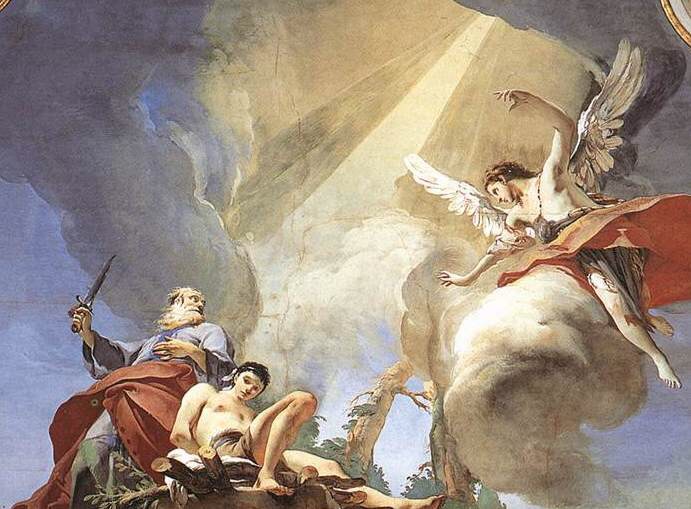
Abraham stayed true to to his promise, and later would be tested even further by God and found worthy.  I believe, God ultimately wants to bless us in covenant and the more willing we are to give everything to God, the more we are blessed. God asked Abraham to withhold nothing, not even his son, Isaac. God said to Abraham: I will surely bless you and make your descendants as numerous as the stars in the sky and as the sand on the seashore. Your descendants will take possession of the cities of their enemies, and through your offspring all nations on earth will be blessed, because you have obeyed me. (Genesis 22:17-18) When God makes a promise, He sure means business!

God would go on to establish a new covenant through Jesus, who’s father Joseph, was Abraham’s descendant. This was a covenant for all people, of every nation. A covenant of the willing! A covenant made through the blood of God’s own son, Jesus.

This covenant was proclaimed in the Old Testament:  “The time is coming,” declares the Lord, “when I will make a new covenant with the house of Israel and with the house of Judah.” (Jeremiah 31:31)

And fulfilled in the New Testament:  In the same way, after the supper he took the cup, saying, “This cup is the new covenant in my blood, which is poured out for you. (Luke 22:20)

Matthew 16:24-25 reminds me of the sacrifice we make if we choose to follow Christ:  Then Jesus said to his disciples, “If anyone would come after me, he must deny himself and take up his cross and follow me. For whoever wants to save his life will lose it, but whoever loses his life for me will find it.

As a child, this evoked fear, as I could only understand it in the literal sense. As I have had decades to ponder this passage, today I see it differently.

The cross for me, represents “that thing’ in our lives that is hardest to do. There is, however, no true parallel to the act of God in the flesh, humbling himself to extreme torture and disrespect, when in an instant he could have vaporized the world. Instead, he endured extreme pain and suffering, out of love for all humanity, and in the knowledge that this was the path God choose to offer reconciliation to man.  The path He chose!

The thing that is hardest for me to do is subordinate my life to God, to surrender it fully. I am invited to follow Jesus, not to a death on a cross (though it could come to that) but to a life of putting God’s kingdom (in every way) above mine.  Death to self!

In the garden of Gethsemane Jesus prayed a prayer I have often prayed in circumstances considerably less arduous than what He faced. “Father, if you are willing, take this cup from me; yet not my will, but yours be done .” (Luke 22:42)

Our lives are not our own. We are of God, and he invites us to surrender our gifts and our blessings to His divine will and purposes.

To me God’s promise to Abraham seems like a great lesson in waiting on God. A sign for all that our dreams, without God’s hand in them, can never become what we hope. Can we sacrifice our plans for God’s plan?  Are we able to wait on his timing? Lord God, please help me to do so.