Wednesday

Can you hear the camel in the Geico commercial saying, “Hump Day!”  

Happy Wednesday!  We may be in the middle of the week but,  Sunday is coming!! 

As we look at our reading for today, Mark 14:1-31, we are reading about the same calendar Wednesday in the last week of Jesus here on the earth.  

We read of a woman (who is not named) and how she readies Jesus for all He is about to face.

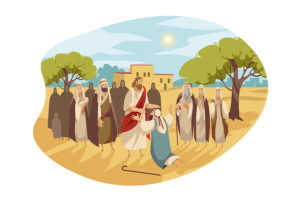
Meanwhile, Jesus was in Bethany at the home of Simon, a man who had previously had leprosy.  While he was eating, a woman came in with a beautiful alabaster jar of expensive perfume made from essence of nard.  She broke open the jar and poured the perfume over his head.  

Mark 14:3

She. Broke. Open. The. Jar!!!!  This jar contained a perfume that was worth a year’s salary.  She did not “drip” a drop of perfume on his head.  She broke the jar and it ALL flowed on Jesus’ head.  She did not hold back any of the expensive oil for herself, she gave it all.  

Those who were also at the dinner began to criticize her harshly.  Did she not know how valuable the perfume was?  Did she realize how she could have sold the bottle and used the money to help the poor?  The dinner guests saw a horrible injustice and a waste in what they thought to be a frivolous act.  But, Jesus quickly comes to the woman’s defense.

But Jesus replied, “Leave her alone.  Why criticize her for doing such a good thing to me?  You will always have the poor among you, and you can help them whenever you want to.  But you will not always have me.  She has done what she could and has anointed my body for burial ahead of time. 

Mark 14:6-8

It was not customary for a criminal’s body to be anointed for burial.  The woman was authored by God to do this purposed act on the Wednesday before judgment day.  

The people in this room were focused on the perfume, the money, the tradition, and they missed the act of anointing.  

“She had done what she could”

Mark 14:8

When she broke the bottle, the woman gave all of it contents.  The woman loved the Lord with ALL that she had.  

It is Wednesday…Sunday is in sight. 

What is in your alabaster jar? 

What do you need to pour out at the feet of Jesus? 

Jesus will soon give His entire life for you and for me.  He will be completely broken and poured out for us.  

Have we done all that we can?

Pray like Daniel

Are you a praying person? There are so many different ways we can pray. I remember back in youth group days, we had a prayer time called “popcorn prayer”. This was a time of prayer when anyone could jump in a pray a quick prayer for whatever was on their heart. Of course God hears these types of prayers and any quick prayers we say as we face dilemmas during our days. But, are you a praying person like Daniel?

In the book of Daniel, we find that Daniel had a regular prayer habit. He could be found praying three times a day (which ultimately led him to the lion’s den). His prayer is what we read today in chapter 9:1-19. The prayer in this chapter is far more detailed and inspired from the Word of God than my “popcorn prayers” were back in the day.

Sometimes our prayers flow from our own feelings and emotions at that moment. But, when we look at Daniel’s prayer, we see that his prayer flows from spending time in God’s Word. While Daniel was reading God’s word in the book of Jeremiah, he realized that what he was reading was just about to be fulfilled. The 70 years serving the king of Babylon was almost completed.

This entire land will become a desolate wasteland. Israel and her neighboring lands will serve the king of Babylon for seventy years. “Then, after the seventy years of captivity are over, I will punish the king of Babylon and his people for their sins,” says the Lord. “I will make the country of the Babylonians a wasteland forever.
Jeremiah 25:11-12

Because Daniel believed they are about to be punished, he prays. He prays much more than a one sentence “popcorn prayer.” Daniel prays in earnest for his people. He prays that God would forgive the people. He puts himself in the place of all the people and pleads with God to intercede.

Daniel puts himself in the middle of the nation’s sin. He does not put the sin on all the other people, he includes himself in the sin.

But we have sinned and done wrong. We have rebelled against you and scorned your commands and regulations.
Daniel 9:5

To pray like Daniel prayed, we must take the sin of others upon ourself. Daniel was a righteous man who lived without compromise. Even so, he put others’ sins upon himself and asked God for forgiveness. This is costly for Daniel. He feels the grief. He is overwhelmed with the burden. He is humbled before God. He intercedes for the sins of the people.

Praying to God in any form is a good thing. God loves to hear the cries of His people. Sometimes, the word Jesus is all we can mutter and God hears us. Interceding for others takes time in God’s Word and time on our knees. This type of prayer is humble. May we take more time to intercede for others and be on our knees in prayer for those around us, just as Daniel did.

Persistent Prayer

Would you describe yourself as persistent?  Or, maybe your more like me and find it easy to give up on certain things?  Today I find myself having to be very persistent at writing this Bible Journal Post.  Sometimes, the words come to me quite easily.  Sometimes, it takes a few days to develop the words I want to say.  And, sometimes, like today, I cannot find the words that need to be written for today’s post.  I have to be persistent in my seeking to write these words.

Have you ever felt discouraged or anxious that God was not listening to your prayers because you did not see the relief or the answer you desired?  We’ve all been there at one time or another.  Today, in Luke 18:1-8 Jesus tells us why we should continue to persist in prayer and not lose heart.  Even when it seems that God is not responding.

We read of the parable of the Persistent Widow.

“There was a judge in a certain city,” he said, “who neither feared God nor cared about people.  A widow of that city came to him repeatedly, saying, ‘Give me justice in this dispute with my enemy.’

Luke 18:2-3

Widows in this first century had very few rights or resources.  Losing your husband and not having family to support you was a sentence of poverty and helplessness.  There was no Social Security or Life Insurance to kick in when needed.  Widows were essentially helpless.  To survive, they had to be persistent and tough.

The widow in this parable has been wronged by an unnamed enemy.  In her town, the judge was corrupt and only cared about his position of power.  He had little interest in God or the people he was placed in charge of.  This judge showed no interest in the widow or in giving her justice.  No matter how he treated her, she showed up day after day.  And day after day, the judge continually denied her her request.  But, finally, after numerous requests, the judge said to himself,

but this woman is driving me crazy.  I’m going to see that she gets justice, because she is wearing me out with her constant requests!”

Luke 18:5

The widow finally gets the justice she sought.  Jesus explains His point in telling this parable…

“Learn a lesson from this unjust judge.  Even he rendered a just decision in the end.  So don’t you think God will surely give justice to his chosen people who cry out to him day and night?  Will he keep putting them off?  

Luke 18:6-7

Are we not similar to the widow?  We do not always get immediate results when we pray.  The persistent widow demonstrates that effective prayer requires consistent faithfulness.  We are God’s chosen people, unlike the judge who was only out to please himself, God hears our prayers and will answer when, where and how He chooses.  God expects us to keep on asking, seeking, knocking, and praying until the answers come.

“Keep on asking, and you will receive what you ask for.  Keep on seeking, and you will find.  Keep on knocking, and the door will be opened to you.  For everyone who asks, receives.  Everyone who seeks, finds.  And to everyone who knocks, the door will be opened.

Matthew 7:7-8

Dedication


Have you ever been to a dedication ceremony?  I think of baby dedication day at Church.  It is a sweet time to watch a mom and dad dedicate their young child to the Lord.  There is always at least one child that steals the show.  The pastor prays a special prayer of blessing over the child and the parents.  After the ceremony the family might gather and celebrate this special day.

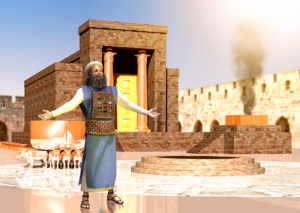
This is what happens today in our reading of 1 Kings 8.  Solomon has prayed his prayer of dedication for the temple and now is time for celebration.  This was a huge celebration.  The time was the Feast of Shelters.  

Then Solomon and all Israel celebrated the Festival of Shelters in the presence of the Lord our God.  A large congregation had gathered from as far away as Lebo-hamath in the north and the Brook of Egypt in the south.  The celebration went on for fourteen days in all – seven days for the dedication of the altar and seven days for the Festival of Shelters.

1 Kings 8:65

Solomon spoke before the crowd.  He told them of his hope that God would show Himself just as faithful to them as He had to their ancestors.  He also knew that the people would need God’s assistance to remain faithful themselves.  Without God’s help they were powerless to live in obedience.

May the Lord our God be with us as he was with our ancesotrs;  may he never leave us or abandon us.  May he give us the desire to do his will in everything and to obey all the commands, decrees, and regulations that he gave our ancestors.

1 Kings 8:57-58

The people had just experienced the amazing completion of the Temple and listened to their King dedicate it to God.  The bottom line is that now they were to live a faithful and obedient life.  The temple would serve as a physical reminder of God’s glory, but their lives were meant to be a demonstration to all others of what a relationship with God looks like.  

After the celebration the people went to their homes full of joy.

After the festival was over, Solomon sent the people home.  They blessed the king and went to their homes joyful and glad because the Lord had been good to his servant David and to his people Israel.

1 Kings 8:66

May we remember what God has done.  He fulfills His promises just as He did to David, Solomon and the people of that time.  Just as we present our babies to the Lord, may we daily give dedicate ourselves to Him and live a faithful life.


The Lord’s Temple

“Now I have built a glorious Temple for you, a place where you can live forever!”

I Kings 8:13

Growing up my neighbors would tell us that they were going to Temple.  I never really thought about what that meant, but it seemed special and  different.  I never stopped to think about what they did when they went to Temple.  They were Jewish and followed their customs of going to Temple on the days they were called to go.  In our reading today, we learn about the temple that Solomon built.

What is a temple?  Reading the first books of the Bible we see that the temple is a place to worship and offer sacrifices to God.  The sacrifices were made so that the people could be ceremonially clean and holy before God.  

This is true of the temple, but the temple served a fundamental purpose…it’s main purpose is that it is where God lives.  It is God’s resting place.  It is where God dwells among humans.  It is the place where heaven meets earth.  The temple is where God lives.

This is hard to understand because we have the belief that God is everywhere.  So, if God is everywhere all the time, how can He live in the temple?

Have you ever been out in nature and felt the overwhelming presence of God?  Maybe it was watching the sun rise or set?  Maybe it was on a clear night looking up at the moon and the stars?  Or maybe it was standing at the edge of the ocean and watching the waves roll in and out?  You stand there overwhelmed by the mystery of how all of this is possible.  This is the glory of the Lord.  The glory of the Lord is always with us and surrounding us.  Even when we are distracted and don’t notice it, God’s glory is always there.  

When the priests came out of the Holy Place, a thick cloud filled the Temple of the Lord.  The priests could not continue their service because of the cloud, for the glorious presence of the Lord filled the Temple of the Lord.

1 Kings 8:10-11

Here is the part that is hard to understand.  How can all of that glory of the Lord (the sunsets, sun rises, twinkling stars, rolling waves) all fit in a temple?  How could God live in a house?

This is one of the amazing things about God.  He can be present in more than one place.  But, for the people of the Old Testament, the temple was their place where God was especially present.  

God desires to know us and He wants us to know Him.  He desires it so much that he had a house built among His people (the temple) so He could be near them.  And also, so they could be near him.  

This is God’s greatest desire, to be close to us.  We no longer live in the days of the Old Testament.  The people did not yet have the gift of Jesus or the Holy Spirit so they had to visit the temple to be close to God.  We now have the incredible gift of Jesus and the Holy Spirit indwelling in us.  We have become the temple of the Holy spirit.  

Don’t you realize that your body is the temple of the Holy Spirit, who lives in you and was given to you by God?  You do not belong to yourself…

1 Corinthians 6:19

God is dwelling among us.  We get let God shine through us for others to witness.  Until He returns we are His temple.  

Love God

I love learning history about people and the customs they followed.  I always put myself in their world and wonder what it might be like if we still followed in those customs today.  In our passage for today, Deuteronomy 6, we learn what the Jewish rabbis did to remember God’s word.

“Listen, O Israel!  The Lord is our God, the Lord alone.  And you must love the Lord your God with all your heart, all your soul, and all your strength.  And you must commit yourselves wholeheartedly to these commands that I am giving you today.  Repeat them again and again to your children.  Talk about them when you are at home and when you are on the road, when you are going to bed and when you are getting up.  Tie them to your hands and wear them on your forehead as reminders.

Deuteronomy 6:4-8

Jewish rabbis took verse eight literally and tied phylacteries (pictured above) on their arms and foreheads.  These were little leather boxes in which were placed verses of scripture written on parchment paper.  There are Jewish homes that still practice this today.  

Since we do not walk around with the Word of God bound to our forehead or arm, how do we obey these words to love God and share them with our children and loved ones?  How are we constantly reminded of God’s Word and let it seep in our hearts 24/7?  

Moses is emphasizing the need to continually teach the Word of God.  It should be all we think and do.  We should demonstrate our love for God by the way we live.  Others should be able to see our love by how we treat them.  We should use God’s Word as a guide each day.  Not as a badge worn on our body to show our devotion, but to saturate our hearts with His Words. We are commanded to be consumed with Jesus.  To talk about Him with our children.  To talk about Him when were are out and about.  He should be our first and last thoughts of the day.  

The video below explains more about the phylacteries and how they were used.

Now I See

Amazing grace
How sweet the sound
That saved a wretch like me
I once was lost, but now I’m found
Was blind, but now I see

After reading through today’s text, Luke 18:31-43, and thinking on it all day, the song Amazing Grace kept playing in my mind. The words above sum up the meaning of these verses.

Jesus gathers his disciples and once again tells them about what will happen to him. He explains all that he will have to face and what he will have to go through.

But they didn’t understand any of this. The significance of his words was hidden from them, and they failed to grasp what he was talking about.
Luke 18:34

In a sense, they were blind from what he says is going to happen to him. They did not accept this plan for Jesus.

Luke goes on in this text to tell us that Jesus encounters a blind beggar along the side of the road as he approached Jericho. This man knew of Jesus’ mercy and miraculous healings. The blind beggar could not see Jesus but he used his voice to shout above the crowd and beg Jesus to show him mercy. Jesus asks the man, “What do you want me to do for you? The beggar replies, “Lord, I want to see.”

Jesus heard his plea for mercy and immediately restored the man’s sight. He credit the man’s faith as the source of his healing.

And Jesus said, “All right, receive your sight! Your faith has healed you.” Instantly the man could see, and he followed Jesus, praising God. And all who saw it praised God, too.
Luke 18:42-43

Here is the ironic part of today’s text…The disciples had physical sight, but were spiritually blind. But, the beggar was physically blind and had spiritual sight.

Are we like the disciples at this moment and not have the ability to understand that Jesus is who He says He is? Or do we have faith like the blind man and have faith that Jesus is who He says He is?


Fully Known

Have you ever looked into a mirror from years ago?  Antique mirrors have a film throughout them that does not allow you to see yourself clearly, they are foggy and cloudy.  You can see yourself, but your reflection is distorted.  

In our reading for today, 1 Corinthians 13, Paul uses this illustration of how we are limited to fully see and understand spiritual things.  The antique mirror is also a reflection of how we reflect Jesus to the people around us.  But, someday soon, we will be changed.  We will finally see God fully, without any distorted image.  

Now we see things imperfectly, like puzzling reflections in a mirror, but then we will see everything with perfect clarity.  All that I know now is partial and incomplete, but then I will know everything completely, just as God now knows me completely.  Three things will last forever-faith, hope, and love-and the greatest of these is love.

1 Corinthians 13:12-13

When the Lord returns, or when we arrive in Heaven, we will finally be changed.  Then we will finally see God fully.  There will not be anymore distorted images.  

Psalm 139 makes us aware that God fully knows and understands us right where we are.  Even before we express a word, we are already known to Him.

O Lord, you have examined my heart and know everything about me.  You know when I sit down or stand up.  You know my thoughts even when I’m far away.

Psalm 139:1-2

1 Corinthians 13:12 tells us that one day we will one day be able to understand God completely.  We will be able to express perfect love to the Father.  We will also be able to show love toward one another perfectly.  

Here on earth we are growing in faith, hope and love.  But, in Heaven we will be focused on love alone.  Faith and hope will be completed.  Paul wrote to the Corinthian church because they were missing the most important aspect – love.  Spiritual gifts (read about them in 1 Corinthians 12) are important here on earth.  But love is the most important gift of them all.  Spiritual gifts will one day pass away for those that love Jesus.  But love will last forever.  God sees us fully now and we will one day fully know Him.  

We are fully known and loved by God.  Look in your mirror, you see what is on the outside.  God sees you from the inside out, you are fully known by Him.  

Rejected

I remember with great anticipation returning to my hometown after being away at college for a few months.  The excitement to be with family and friends, wondering if they would see any change or growth in me.  I had become more independent while away and been exposed to new ways of thinking, would anyone notice?  I felt both apprehension and anticipation on the trek home.

In Luke 4:16-30, Jesus returns to his hometown of Nazareth.  I am sure he experiences some of those same emotions.  While he had been away he had been baptized by John and received the Holy spirit.  He had also spent 40 days in the wilderness being tempted by the devil.  I’m sure he was excited to go back to his home and see his family and friends.  He had been ministering in Galilee and everything was going well for him.  In Luke 4:15 we read that “He taught regularly in their synagogues and was praised by everyone.  I am sure everyone was eager to see him and hear him preach when he returned home.

On the Sabbath day in his home town of Nazareth, Jesus went to the synagogue to pray.  He was handed the scroll of Isaiah, he unrolled it and began to read…

“The spirit of the Lord is upon me, for he has anointed me to bring Good News to the poor.  He has sent me to proclaim that captives will be released, that the blind will see, that the oppressed will be set free, and that the time of the Lord’s favor has come.”

Luke 4:18-19

Jesus was quoting this from Isaiah 61:1-2.  After reading the scroll, he rolled it back up and handed it back to the attendant.  Then he said,

“The Scripture you’ve just heard has been fulfilled this very day.”

Luke 4:21

The crowd listening to Jesus was amazed.  They knew him as Joseph’s son who had worked as a carpenter.  How could he be saying these things?  They questioned what they heard and who he claimed to be.  How could this ordinary boy claim those things?  The people were skeptical.  Instead of easing their doubts, Jesus challenges them.  The peoples skepticism and confusion soon turns to anger.  

The Nazareth people were offended when Jesus told them that God loves Israel, but He also loves the rest of the world.  The people were deeply enraged that God would have mercy on people who they did not like or agree with.  It made them furious.

When they heard this, the people in the synagogue where furious.  Jumping up, the mobbed him and forced him to the edge of the hill on which the town was built.  They intended to push him over the cliff, but he passed right through the crowd and went on his way.

Luke 4:28-30

The people were not willing to hear that God wanted to love and save all people.  Jesus was there to speak the truth, not to gain a following.  Miraculously, Jesus passes through the crowd and goes on his way.

Jesus did not get the hometown welcome that he initially might have desired.  But, more importantly he did not care about the popularity and thoughts that the people had about him.  He cared what God thought about him.  

Jesus experienced rejection.  He knows the feeling.  He goes on in His life to experience rejection to the point of death.  But He did this so that we may have life.  We get to ask for His forgiveness for when we have rejected Him and He forgives us.

What do You desire?


Do not love this world nor the things it offers you, for when you love the world, you do not have the love of the Father in you. For the world offers only a craving for physical pleasure, a craving for everything we see and pride in our achievements and possessions. These are not from the Father, but are from this world. And this world is fading away, along with everything that people crave. But anyone who does what pleases God will live forever.
1 John 2:15-17

As we turn on the tv, listen to the news, talk to co-workers and friends, it is easy to get caught up in all that is going on around us. What is everyone focused on today? Covid? War with Russia? Masks? Mandates? The Olympics in China? The latest snowfall? Those are just the immediate thoughts that come to my mind. We can be consumed by what is going on around us.

In our reading for today, God reminds us that He has a plan and purpose for our life. He reminds us that we need to take time to hear from Him.

“Do not love this world nor the things it offers you, for when you love the world, you do not have the love of the Father in you” (verse 15). This is a pretty harsh statement. Jesus is saying here that you can’t serve two masters. This doesn’t mean that you can’t enjoy the good things of this world, but God should always be our first love. And we should indulge in only those things that please God.

Verse 16 helps us understand what John meant when he talks about “things of the world”. It is easy to focus on things of this world that might quickly satisfy any desire or craving we have. These contain desires of the flesh, desires of the eyes, and boasting of possessions. All of these things are important to the world around us. We see them displayed everyday on social media, television, and even displayed through our neighbors. This verse is stressing that our Christian desire should be for God, and pleasing him.

John reminds us in verse 17 that these desires are fleeting, but our souls are eternal. We should be focusing our lives on things that matter. Things that will last, not on things that will just make us feel good in the moment. Only in Christ can we find eternal satisfaction and contentment.

May we keep our focus on pleasing God in this week ahead.  Tomorrow is not promised to us.  No one knows what tomorrow holds.  Each day we get to choose who or whom we will serve.  We get to choose pleasing God or the desires of this world.