Limiting Faith

I once answered an interview question that asked, “How long would you fail at a task before you quit?”  Now remember, this was an interview.  My foolish answer was, “I’m not a quitter.”    I say that because I am, and you probably are too.

Don’t worry; we are in good company.  The disciples quit too.  Look at the story starting at Matthew 17:14.  A man brought to them a demon-possessed boy for healing.  They tried everything they knew, but it didn’t work.  So, what did they do?  They quit.

What does that mean?  It means that they gave up hope and bailed.  Can you imagine looking at the man and the boy in their desperate situation and saying, “Sorry, we can’t do it, see you later.  Have a nice life.”

The truth is that we do it all the time.  That’s right; we give up.  Most times, we don’t even try.  Remember that homeless man you passed on the street corner?  He was asking for help too.  But I didn’t stop.  Why not?  Because, like the disciples, I don’t believe I can make a difference.

Jesus’ response was appropriate.  “Faithless generation,” he calls them.  “how long do I have to put up with you?” He asks with disgust.  Thankfully, this is not the story’s end for the boy or the disciples.  The boy gets the healing he needs and the disciples learn some valuable lessons.

For instance, the disciples could have approached Jesus humbly and honestly, seeking his guidance rather than running.  They could have provoked God’s intercession through prayer and they could have simply trusted that God will do what he say’s he will do.  In short, they proved their lack of faith by accepting their human limitations and not turning to God.

At the time, the disciples didn’t think they were quitting. Instead, they accepted the task as impossible.  But Jesus said otherwise, “Nothing will be impossible for you.”  Now, they know better.  They know their failure is directly linked to their lack of faith.  Now, we know better too.

Parables, Fables and Legends

Amos 1-3, Matthew 13

In today’s reading of Matthew 13, we encounter Jesus talking in more parables.  What are parables, exactly?  Parables are short, simple stories that convey a moral or spiritual lesson.  There are several reasons that Jesus chose to communicate with parables.

Accessibility: Jesus used parables to make complex spiritual and moral lessons accessible to diverse audiences. By using familiar scenarios and everyday situations, he could connect with people from different backgrounds and walks of life.

Engagement: Parables are inherently engaging and thought-provoking. They capture the audience’s attention and encourage them to think deeply about the underlying message. Parables allowed Jesus to convey profound truths in a way that held people’s interest.

Memorability: The storytelling nature of parables made them easier to remember.  When people remember it, they will share it.

Protection: In some instances, Jesus used parables to convey sensitive or controversial teachings without attracting unnecessary opposition or persecution. The symbolic language of parables allowed him to deliver challenging messages while providing a degree of protection from immediate backlash.

Spiritual Revelation: Parables often contain hidden meanings and profound spiritual truths. Jesus explained the meanings of some parables to his disciples privately, giving them insights into the mysteries of the kingdom of God.

Self-Reflection: Parables required active participation from the audience. Listeners had to ponder the stories and discern the moral or spiritual implications, which encouraged self-reflection and personal growth.

These reasons are fine, but there is a catch to parables.   You must be willing to hear (Matthew 13:43).   Author John Macarthur puts it this way, “If a person rejects the propositional truth being illustrated by a parable, of course, it remains an open riddle.”

MacArthur, John F.. Parables: The Mysteries of God’s Kingdom Revealed Through the Stories Jesus Told (p. xviii). Thomas Nelson. Kindle Edition.

Pilgrim’s Progress

2 Kings 9-10, Psalm 49, Matthew 7

Matthew 7:14 (ESV) For the gate is narrow, and the way is hard that leads to life, and those who find it are few.

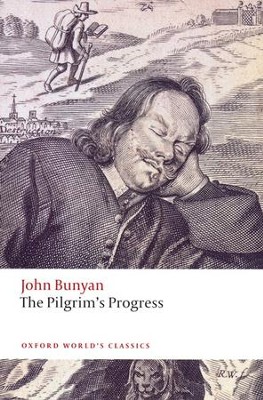
One story captures this idea of a narrow gate and a difficult path better than any.  It is Pilgrim’s Progress, by John Bunyan.  The story is about a journey of a man named, Christian.  Throughout the story, Christian faces various challenges and meets characters like Evangelist, Faithful, and Hopeful, who aid him in staying on the narrow path. He endures the Slough of Despond, the Valley of the Shadow of Death, and battles with Apollyon and the temptations of Vanity Fair. These trials test his commitment to righteousness and deepen his reliance on God’s grace.

All too often, however, we fail to stay on the path.  Perhaps it happens most when we encounter difficulty.  Bunyan describes it excellently.

As Christian proceeds on the narrow path, he comes to a foot of a hill called “difficulty.”  “There were also in the same place two other paths besides that which came straight from the gate; one turned to the left and the other to the right at the bottom of the hill, but the narrow path went right up the hill, and it was called Difficulty. Christian now went to the spring and drank to refresh himself and then began to go up the hill, saying:

The hill, though high, I covet to ascend,

The difficulty will not me offend;

For I perceive the way to life lies here.

Come, pluck up heart, let’s neither faint nor fear;

Better, though difficult, the right way to go,

Than wrong, though easy, where the end is woe.”


Bunyan, John. The New Pilgrim’s Progress . Discovery House. Kindle Edition.

Fornicators!

2 Chronicles 19-20, 2 Kings 1, Psalm 20, Matt 3

There used to be a man that would preach on the quad at ISU.  “Fornicators!” he would shout at the top of his lungs to draw attention, “Repent!” He would cry out.  Occasionally, a small crowd would gather to listen more carefully but quickly turned away, snickering and mocking the idiot standing on the box.

I don’t imagine this being much different from John the Baptist.  Here was a man dressed in camel hair and a leather belt.  This strange man was issuing a warning, “Repent, for the kingdom of heaven is at hand.” Matthew 3:2 (ESV).  Still, people came to listen.  But, they did not just listen, “They were baptized by him in the river Jordan, confessing their sins.” Clearly, they were not concerned about his appearance or repulsed by his tough message.  They didn’t snicker, and they didn’t come up with ways to tear him down.  Instead, their hearts burned within them, and their burning hearts cried out for mercy.

At that moment, it was evident that the only path to mercy was repentance. This is the cry of John the Baptist’s heart. Not because he wanted followers but because he knew God. People followed him; people listened to him because he looked like Jesus. He looked like Jesus because that is who he spent time with.

Two other scriptures come to mind when I think about this.  The first is in Exodus 34:29-35. Moses had been with God on Mount Sinai.  When he came down, “Aaron and all the people of Israel saw Moses, and behold, the skin of his face shone, and they were afraid to come near him.” (Exodus 34:30). The second is after Jesus’ crucifixion on the road to Emmaus.  Two men were walking along talking when a strange man joined their conversation.  Upon his departure, they knew something was different.  They remarked, “Did not our hearts burn within us while he talked to us on the road, while he opened to us the Scriptures?” (Luke 24:32)

I am sure that the preacher on ISU’s campus had great intentions.  So do I.  As I consider the effort I put into becoming a better leader, speaker, father, husband, and friend, it is clear that I am missing the mark.  The only way to become who I am created to be is to spend my time with my Creator.

Trouble and Toil

Ecclesiastes 4-6, Psalm 125, 2 Tim 2

Solomon like to talk about toil.  Toil, according to Merrium-Webster, is more than work.  It is laborious, burdensome, and exhausting work.  Toil also implies a grind.  A lot of action with little or no forward progress.  Yet we persist.  To alleviate our pain, we shift our strategies.  We set new goals and seek new positions, thinking these will finally fill our hearts.  Surely, these will bring joy and put an end to our toil.

Not so, says Solomon.  He says, “I kept my heart from no pleasure, for my heart found pleasure in all my toil, and this was my reward for all my toil. 11 Then I considered all that my hands had done and the toil I had expended in doing it, and behold, all was vanity and a striving after wind, and there was nothing to be gained under the sun.”  Ecclesiastes 2:10-11 (ESV)

The truth is that we have gotten it backward.  The gift of joy does not come from our work, achievements, and possessions.  It comes only from the love of God in our hearts.  God “keeps him occupied with joy in his heart” through it.

Ravi Zacharias sums this up well, saying, “It is far easier for man to worship God in his toil than in his heart.”

Bigger, Faster, Stronger

1 Kings 7, 2 Chronicles 4, Psalms 44, 1 Timothy 2

Problems are part of life.  Much of our daily efforts are an attempt to solve our problems.  Take money, for example.  If you are struggling to make ends meet, you may work harder so that you make more money.  But, the additional money and time spent only creates new problems.  This is true for relationships too.  We think we would have more friends if we were funnier, skinnier, or drove a better car.  But, no matter how hard we try, they don’t work.  They never will.  How long will you try before turning to God?

The Psalmist in Psalms 44 takes a minute to remember.  As he does, something special comes to light.  He realizes that there is nothing special about the Israelites.  They were not taller, smarter, prettier, or richer than their neighbors.  In fact, they were not even stronger.  He recalls,

They did not conquer the land with their swords;

it was not their own strong arm that gave them victory.

So what was it?  What made them successful in battle and prosperous in everything they did?  It was the hand of God.  He says it this way,

It was your right hand and strong arm

and the blinding light from your face that helped them,

for you loved them.  Psalms 44:3 (NLT)

I don’t know what problem you are trying to solve or what hurt you are trying to heal, but I do know that there is only one path; Jesus.  I know that he is standing, patiently with his hand extended and asking, “Do you want to be healed?” (Matt 5:6)

Under Attack

Song of Solomon 4-6, 2 Thessalonians 1

The church of Thessalonica faced intense persecution.  We know they were frustrated and discouraged, but Paul does not describe how the Thesolonicans were persecuted. It probably looked like ridicule.  People would shout at them with insults and call them names. They were slandered and mocked.  Kind of like today.  I only have to name Planned Parenthood, or LGBTQ, for you to quickly remember that Christians are often targets. What about prayer in schools or the woke movement?  You and I both know that the world calls us not only to tolerate but to accept and even celebrate these divergent points of view.  Our failure to comply has consequences.  Those consequences, my friends, are called persecution.  It feels bad.  It’s easy to get discouraged.

As a leader, Paul knew that the general discouragement of the Thessalonians could be deadly.  He was not about to let that happen, so he wrote this simple letter of encouragement.  His words are as true today as they were then.

Good job! He reminds them.  Your suffering is evidence that God is with you v5.

Don’t worry, you will win, and God will be your relief. v6 – 10.

He will empower you.  This is not going to end soon, so have faith that God is near v11

He will be glorified, and you will be with him. You will prevail. v12


Grace Begets Grace

Proverbs 19-21, Psalms 40, Romans 16

Grace begets grace.  It means that if I give grace, I will also receive grace.  That sounds nice.  But is it true?

I’ve been struggling with someone recently.  I’ve been insulted, cheated, and slandered.  My response to this aggression has been only grace.  What does that look like?  It looks like kindness.  Despite the evil dished upon me, I have been kind.  Grace also extends hope.  Hope for a peaceful and productive relationship.   My heart says that if I give grace, grace will be returned.  Thus the phrase, grace begets grace.

But, the problem persists.  My generosity has been rejected.  My kindness has been returned with malice and outright hostility.  Why would I continue?  At what point do I stop extending grace?

In frustration, I cry out to God.  “What shall I do?  How can I make someone understand that I am for them, not against them?  How will they see that my love is real?”

God’s response was perfect.  “Exactly,” He said.

As He turns my thoughts toward the grace He has given me, my heart sinks.  My will is strong.  I have been rebellious.  At times, I have been hostile.

If grace begets grace, what does a graceful response to Jesus look like?  Surrender, humility, praise, and worship, and of course service.

Obedience Training

2 Samuel 18-20, Psalm 34, Romans 2

My family had an Old English Sheepdog named Ziggy.  He was wild.  He chased rabbits, squirrels, birds, and me.  All the time.   The wildlife often led him out of the yard and into the park behind our house.  We spent hours chasing him.  Then, he chewed everything.  Socks and shoes, remote controls, door casings, and couches.  There were no walks with Ziggy, just tug-o-war.

We tried a couple of things with him.  First, we tied him up outside. The incessant barking annoyed the whole neighborhood.  So, we added this choke collar.  It was metal and fitted with sharp pokers that would tighten up around his neck when he pulled.  That didn’t work either, and believe me; I pulled that thing hard.  We had one last option.  Obedience training.

We would take him to the training sessions a few times per week.  These sessions were designed to teach him.  We ran around a ring on a leash and shook an aluminum can full of rocks to get his attention. It didn’t work.  After a couple of weeks, the trainer asked us to stop coming because he was too disruptive.

Then, one day, Ziggy was gone.  He didn’t run away, we just couldn’t take it anymore.  All I know is that he went to “the farm.”

We spent enough time with Ziggy to teach him the rules.  He knew what to do.  The problem was that he wouldn’t do it.  He didn’t have the will to follow.

In Romans 2, Paul talks a lot about obedience.  He says, “It is not the hearers of the law who are righteous before God, but the doers of the law who will be justified.”  Do you know what that means?  It means that we are good at doing things that look good on the outside but fail to bend our will to the things that matter.  Think of it this way; we can go to church every Sunday, attend small groups every Wednesday, and even write for BibleJournal every week.  According to Paul, these things are good but do not lead to righteousness.  In fact, nothing that we do outwardly matters.  Only the mark of God on our hearts will make us whole.  It is this mark of God that produces obedience.  Jesus said it this way in Luke 6:45, “the good person out of the good treasure of his heart produces good, and the evil person out of his evil treasure produces evil, for out of the abundance of the heart his mouth speaks.”

The lesson is simple.  Be doers of the law.  While Paul does not discuss the consequences of our disobedience in Romans 2, I think we all know.  It looks a lot like being sent to “the farm.”

Defining Moments

1 Chronicals 14-16, Acts 24

I remember a book that I was reading, a long time ago.  I do not remember the name of it or the actual content.  What I do remember is being scared.  Really scared.  But not in the way that you might think.  I mean, when you think about being scared, we usually think about something evil.  But this was not the case.  It’s not evil that I was afraid of.  It was holy.

I think that my experience was similar to Felix’s.  You may want to reread it in Acts 24-25.  Let me set the stage.  He was talking to Jesus, and Jesus was telling him of our behavior and God’s judgment that would soon be upon us.  Then, “as he reasoned about righteousness and self-control and the coming judgment, Felix was alarmed.”

Stop for a moment and think about Felix’s alarm.  What was he afraid of?  Do you see it?  Felix was not afraid of something evil.  He was afraid of something good.  Jesus was showing him the Holy, and he could not hear it.  What is it about the holy that we do not want to hear?  Simply put, it’s the price.

If you can tolerate the old English, it is worth listening to John Calvin.  He says that we  “do desire to hear the gospel preached.”  But, he continues, as soon as we have heard, we do by and by either loathe, or else they cannot suffer it.” Do you hear it?

There are only two reasons, according to Calvin.  First, we may loathe it.  That means that we disagree with it.  We want to fight it.  That does not describe me.  If you are reading this, it probably does not describe you either.  Instead, I am the one that “cannot suffer it.”  Do you know what that means?  It means that I am not willing to give up myself.  I cannot fathom sacrificing my own agenda for his.  That would mean too much suffering for me!

Is there a limit to your suffering?  A point that you no longer want to follow Jesus because it’s just too hard?  The answer is yes.  It is too hard.   I am thankful for his grace.

For by grace, you have been saved through faith. And this is not your own doing; it is the gift of God, not a result of works, so that no one may boast.  Ephesians 2:8-9 (ESV)