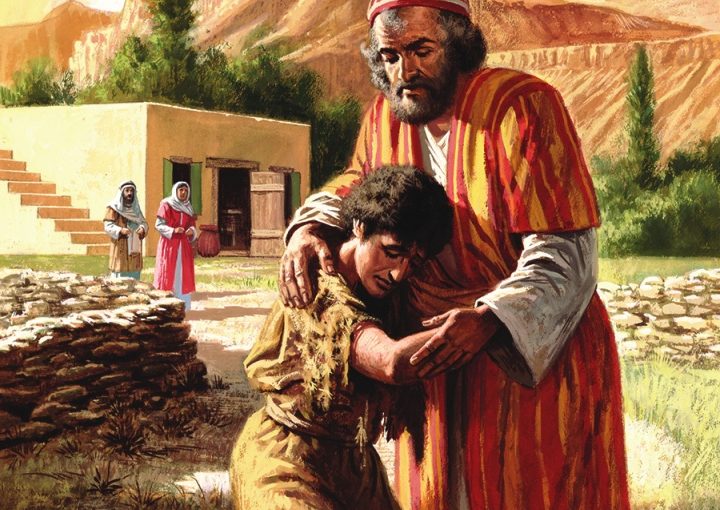
Confronting Sin

Today’s reading is from the Book of Jude, which I had never read before.  Jude is the second to last book of the Bible, before the book of Revelations.  I will list a few books and verses throughout my journal today to provide references to Jude’s teachings, which for me, builds the case for the legitimacy and application of the teachings of the book.

The opening line of the Book of Jude is “Jude is a bondservant of Jesus Christ, and brother of James.”  James was the author of the New Testament book of James, and he was the half-brother of Jesus. Mary, Jesus’ mother, was the mother of James and Jude. So, this means that Jude was also a half-brother of Jesus.  In addition to learning that Jesus had another brother, I learned in Acts 1:14 that Jesus’ brothers became disciples after the resurrection of Jesus. 1 Corinthians 9:5 tells us Jesus’ brothers became “leaders and missionaries” of the Gospel.  James and Jude do not appear to have believed Jesus was the Son of God while He was on earth.  Every family has their challenges.  Seems like there might have been some arguments and angst amongst their family while Jesus was on earth spreading the Gospel.  I digress.

The Book of Jude was written to an unknown church is crisis.  Jude rebuked the teachings of corrupt teachers and encouraged Godly living.  Jude was alarmed that the teachers had distorted God’s grace as a “license to sin.”  Jude provided three stark examples of immorality and sin by referencing rebellious people in Numbers 14, Genesis 6, and the deplorable men of Sodom in Genesis 19.  Jude is imploring the people in his letter to the dangers of immorality of sin and testing God.

Although these Biblical stories seem harsh and difficult to relate in the context of our world, the message has application today. We should build our lives on the goodness, love, and grace of God, by following His Son Jesus’ teachings.  We are all sinners and fall away from God daily, due to our nature to sin (Romans 8:5, Galatians 5:19-21, Ecclesiastes 7:20, 1 John 1:8).  We are tempted by the same emotions and feelings that the ancient Biblical figures were, and we can relate in our world today of the difficulty to recognize when we are in the moments in time when we need to ask God for forgiveness and repent for our sins.  By reading our Bibles and studying scriptures, we can keep ourselves centered on the Word of God and hold ourselves accountable to following the teachings of the Bible.

I am a work in progress and what I have learned about my faith is that I must be “all in” on my commitment to Christ.  Trying to live life while picking and choosing the parts of the Gospel I want to follow and ignore the parts I don’t, does not work. We must not accept some sins in our life and “turn our heads” to the disappointment that God feels in us.  In John 14:15, Jesus said “If you love Me, keep my commandments.” Being a Christian comes with conviction, responsibility, and commitment.  I must be willing to take a hard look at how I am living my life and ensure I follow the teachings of Christ.

Beyond following the Gospel, ourselves, Christ charged us to spread the Word and bring others to believe. I appreciate Jude for having the courage to love the church he wrote to enough that he “calls out” examples of God’s judgment as he wants to provide them salvation from their sins.  I think Jesus has charged you and I to do the same.  Reach out to family and friends that are struggling, witness the loving Gospel, and encourage them to establish a relationship with Jesus.                                                                                                                                                               We must have the courage to lovingly confront sin, in our lives first (Matthew 7:3-5), and others second.  I pray that this message today points you to evaluate the sin in your life and ask for forgiveness.  Or perhaps there is an important person in your life that you must address, lovingly, to express your concern for their life.  Bring your prayers to Christ and pray for the loved one who is on your mind. I pray we have the courage to live our lives like Jesus encouraged us to, bringing as many others as possible to His loving arms.

A Compass for the Storms of Life

The wind is gusting, the waves are crashing, and the ship is rocking. The captain cannot see where he is going.  During the storm, the combination of wind and rain make it impossible to see out the windows of the ship.  Managing the direction of the vessel is impossible without instruments.  Namely, one of the most important instruments for the captain of the ship is the compass.  The compass does not fail.  It directs the captain, regardless of the wind speed, the height of the crashing waves, or the pitching of the vessel, the compass directs the captain where to steer the ship.

Your phone rings, and your sister tells you she is sick, and the prognosis is not good.  You are talking to your cousin, and he tells you he and his wife are getting a divorce. You get a text and one of your children tells you they are depressed and having a difficult time.  You take your spouse to the doctor to find out they have a life-threatening illness and there is a slim chance of survival.  The list goes on. The “storms” in our lives are real.

Navigating life can be like sailing a ship through a storm.   There are many “battles and storms” for us to fight.  Difficult situations come in the form of physical ailments and illness, marital challenges, emotional or mental issues, as well as financial challenges.  All the while, we must navigate the decisions we make in the “middle of a storm” and decide which direction to “steer our ship.”

How do we make the right decision during times of the great turmoil? What is your compass?  Where do you turn for advice or counsel during the “storms of life?”

The Bible is the perfect compass.  The Word of God can be a compass that provides you confidence and solace “during the storm.”  Yes, the storms are inevitable.  We are all sinners, and we are going to make wrong choices daily.  It is not a matter of if, but a matter of when the storms will happen. Relatives get sick.  Our children and family have challenges. Life is not about preventing the storms but knowing how to “steer your ship” with confidence and assurance in the “rough seas.”

Today’s reading is from Hebrews 10:35-38 which says 35 Therefore do not cast away your confidence, which has great reward.  36 For you have need of endurance, so that after you have done the will of God, you may receive the promise. 37 For yet a little while, and He who is coming will come and will not tarry. 38 Now the just shall live by faith, but if anyone draws back, my soul has no pleasure in him.

As a Christian, I continue to gain confidence that “God has got me.”  I do not “cast away my confidence” because I am confident there is “great reward” in living my life as a believer in Christ.  I have witnessed first-hand the impact a life following Christ has on families and individuals.

I am humbled by the impact Christ has had on my family.  As one example, my grandfather was one of six children, and his father abandoned his family when my grandfather was a young boy.  Unfortunately, we can all relate to sad family stories like this one.   My grandfather grew up without a father figure and could have taken his life in many directions.  He and my grandmother were the founding members of a Baptist church in Olney, IL and was a man who studied scripture and applied it to his life.  He prayed regularly and set the example for our family to choose a life with Jesus. He could have ended up angry, bitter, and frankly could have continued the string of a bad father and bad husband.  He chose not to.  He was a God-fearing man that led his family to follow Jesus Christ.  I believe he was a better man than his earthly father, because he believed in his Heavenly Father, Jesus Christ.

Following Jesus Christ does not reduce or rid us of the pain of life.  Sins still conquer us.  Emotions still overwhelm us.  We make bad choices and must live with the consequences.

Scripture provides us comfort and confidence that we are loved, regardless of the severity of our sin.  I live confidently knowing that I have a rudder and a compass during my storms, and I will “face the wind, the rain, and the waves” with a smile on my face knowing that my captain will direct me to safety.

Philippians 4:6-7 says 6 Be anxious for nothing, but in everything by prayer and supplication with thanksgiving, let your requests be made known to God. 7 and the peace of God, which surpasses all understanding, will guard your hearts and minds through Christ Jesus.

I encourage you to remember that our pain in life does not reflect a lack of presence of God. God’s goodness is not contingent on our circumstances.  Our pain provides us opportunity to dive into the Word of God and seek to understand how a relationship with Christ can bring us peace and rest during the most impossible times.  God wants us to choose to love Him.  I encourage you to choose to follow Christ every day because when the storms hit, you will have an armor and confidence that you will carry you through it.

Family During the Holidays…Relationships are Complicated

As we approach the holidays, many families are planning to get together.  Details are discussed regarding the location, texts and calls about who can and cannot attend, and lastly and most importantly, we finalize who will bring or fix different dishes or recipes for the meal.

Here’s an honest question. Do you secretly wish some family members won’t be able to make it?  Let’s be honest, there are family members that you may not look forward to seeing.  There are relationships that are broken and may seem to have no chance of repair.  You dread the rehash conversation of what caused the strain or worse yet, you are already getting worked up anticipating uncomfortable conversations that will cause more arguments.  Oh boy!  It will be SO GREAT to see each other.  Not.

I’ll start by saying that there may be a history and hurt with family that makes the relationship seem unrecoverable.  There are instances where time and effort to reconcile are futile, as it takes both parties to be willing call a truce.  The hurt can be very deep and may seem too impossible to have any chance of reconciliation.

On the other hand, to challenge us, especially Christians, Christ was very clear about our role to forgive others.  In Luke 6:27-29, “27 But I say to you who hear; Love your enemies, do good to those who hate you. 28 bless those who curse you, and pray for those who spitefully use you. 29 To him who strikes you on the one cheek, offer the other also. And from him who takes away your cloak, do not withhold your tunic either.” In verse 35 Jesus said, “But love your enemies, do good, and lend, hoping for nothing in return; and your reward will be great, and you will be sons of the Most High. For He is kind to the unthankful and evil.”

In a recent sermon, Pastor Andy Stanley spoke about troubled relationships.  He said, “reassembling a relationship is a learned skill. The goal is not always reconciliation. The goal is no regrets.”

Turning to the Bible for more guidance, today’s reading is from Colossians 3, where the Apostle Paul wrote, 12 Therefore, as the elect of God, holy and beloved, put on tender mercies, kindness, humility, meekness, longsuffering; 13 bearing with one another, and forgiving one another, if anyone has a complaint against another, even as Christ forgave you, so you also must do. 14 But above all these things put on love, which is the bond of perfection. 15 And let the peace of God rule in your hearts, to which also you were called in one body; and be thankful.

At this point, you may be thinking “no way my relationship with _______ can be fixed.  I cannot forgive them for what they said (or did).  I will look weak, and I am not giving in.  I am not going to let _______ push me around.  I am NOT apologizing, especially when _______ started this!”

I would humbly encourage you to view the possible benefits of a truce with your strained relationship, to you and the other person.  I would encourage you not to focus on thinking your feelings for the other person can be repaired with a truce.  They likely cannot. You will still not trust them and will still feel hurt from the conflict.  Healing, like any cut or wound, takes time.  It is normal to feel guarded and cautious regarding the other party, until you see if you each can earn the other’s trust.

What is on my heart today, is Philippians 2:5 (NIV) where the Apostle Paul tells us “In your relationships with one another, have the same mindset as Christ Jesus.”

Here is what I know.  I am a sinner.  There are days I am embarrassed about what I think, say, or do.  Unfortunately, I will continue to make these mistakes. If Christ Jesus held a grudge against me, in my relationship with Him, because of what I said or did in the past, I am in big trouble.  If Christ would not be willing to forgive me for the times I have sinned against Him and His commands, where would I be?

What I am learning throughout my spiritual journey, as I study more of the Gospel and Christ’s commands, it is not about “winning arguments” or allowing my ego to be put before my humility.  Life for me is striving to live each day, being thankful for my blessings, embracing the challenges and strife, and knowing that all these emotions and experiences are for the good of my relationship with Christ. I will never understand every challenge or tragedy, but I trust Christ has a plan for me. Our Savior Jesus Christ experienced anger, sadness, betrayal, angst, and unimaginable pain, and He still forgave me for all my sins by rising from the dead on Easter morning.

I am not as good as I could be, and I will never be as good as I should.  But I am learning that Jesus Christ serves as the ultimate example of forgiveness and humility for any relationship, and who am I to live my life without attempting to come as close as I can to His commands.  I don’t want to take His forgiveness for granted, to build on my relationship with Him.  I want Him to trust me, that I will keep His commands.  Our relationships on earth are complicated and sometimes they seem impossible.

My prayer is that heading into this holiday season, we seek peace in the difficult relationships, with what may seem like an impossible person.  I pray that we are the “bigger person” and open the door for a truce.  True forgiveness comes with time and trust, but I pray we can be more like Jesus and model the forgiveness He provides us.

Filled With Joy During Tribulation?

Pain and suffering in life stinks.  Yes, simply stated, life is hard.  We experience difficulties with our relationships, our career or job, our health, and many times these circumstances have a lasting impact on our relationship, or maybe lack thereof, with Christ.  Perhaps you don’t believe in Christ because you have experienced so much pain, that if there was a God, He would not let all of the bad things in your life happen to you.

This makes me consider what we expect from God in our relationship with Him.  I would like to pose some tough questions.

  • How do our expectations of God impact our relationship with Him?
  • Does our faith in God come with our expectation that only good things happen to those that believe?
  • Do we expect God to fix and prevent our tough times?

Today’s reading is from 2 Corinthians.  This was Paul’s second letter to the people of Corinth, a city in Greece, after he sent Titus there.  Acts 18 tells us that Paul spent a year and a half in Corinth planting a church.  After his departure, the people of Corinth fell away from God and questioned Paul’s motives.  After Titus’ return to Corinth, the people rebounded in their faith and Paul was praising the people of Corinth in 2 Corinthians.

The Bible is filled with story after story of pain and tribulation. We read about sins, death, and sadness, with most stories outlining how Bible figures are being tested for their faith.  The compilation of books that make up the Bible are a culmination of 40 authors over a period of 1600 years.  Not one prophet or author ever promised a life on earth with no pain.  In fact, based on the hundreds upon hundreds of sad and terrible Biblical tribulations, we should expect pain, disappointment, and trials in our lives.

I would like to focus on our relationship with God and how we specifically relate trials, tragedies, and strife to Him.  We hear of inexplicable tragedies each day that are impossible to understand.  You and your family may be enduring unimaginable pain and suffering with no end in sight.  The heartache that many suffer may drive them to question the presence of God asking, “Why does God let things like this happen?”

The honest answer is we do not know.  What I do know is that our recovery or rally during tribulations is based directly on our relationship with Christ during that season.  Paul says in 2 Corinthians 7:4 “Great is my boldness of speech toward you, great is my boasting on your behalf.  I am filled with comfort.  I am exceedingly joyful in all tribulation.”

One of my favorite pastors is Matthew Maher.  Matthew has an incredible story of tragedy, suffering he caused, and his redemption through God’s grace.   You can learn of Matthew’s story here.  Click on “Watch the Video.”  God can use the worst imaginable situations and use them for good.

Our pride, hurt, and stubbornness can prevent us from turning to God during difficult times.  The grief we experience may take us through an emotional journey of regret, sadness, denial, and many times an anger that prevents us from releasing our pain.  In Matthew Maher’s case, he was the cause of tragedy and horrible sadness, but he said “I refuse to allow pain to debilitate the voice God has entrusted in me.  God is willing to use you, in spite of you.”  Matthew immersed himself in the Bible to seek and understand God’s Word.  It changed his life and now thousands of others that have come to Christ through Matthew’s ministry.

Paul also says in 2 Corinthians 7:10, “For godly sorrow produces repentance leading to salvation, not to be regretted; but the sorrow of the world produces death.”

When the tough times, sorrows, sadness, challenges, and disappointments occur, and they will occur, God is drawing us closer to Him through the “sorrow” and stirring emotion in our heart to understand that our happiness and sense of self comes from the Holy Spirit and NOT our own doing.  The awful times and suffering during that journey remind us to revere and appreciate the solace and peace that comes from faith in Christ.  There can be a peace and understanding, even in the moments where it makes no sense, that there is a reason for our strife and our Lord will provide a path for us.

I think the question to ask is how to approach tribulation and suffering during the rough times.  I would implore you to “run toward God,” His Word, learn scripture through regular study of the Bible, and maybe even seek Christian counseling. Surround yourself with people that will help you interpret and understand the Gospel and allow you to ask the tough questions related to your pain.

God is not the cause of our pain, but He is the prescription to bring us back to a content and fulfilled life.


The Freeing of Forgiveness

Today’s reading is from the book of Romans, chapter 15.

Understanding others is a difficult thing.  As individuals, we have opinions, preferences, life experiences, and beliefs that dictate how we react to various situations.  Emotions dictate how we process challenging relationships, challenging people and circumstances that may be difficult or maybe even impossible to understand.

In fact, our emotions many times dictate entirely how we react.

Are you hurt?  Are you sad?  Are you angry? Are you disappointed?  Are you tired of (fill in the blank)?

Factoring in emotions, we then layer on the type of individual that we are having trouble with.

Are they family?  Are they your spouse?  Are they your co-worker?  Are they your boss?  Are they your neighbor?

Our reaction to be upset or mad may differ depending on our relationship with the individual(s). Friends can sometimes be just like family.  Family can sometimes feel like they don’t know or understand you, or perhaps never tried to.  Bosses put you in a nearly impossible situation as your livelihood may depend on maintaining or preserving your relationship.  And nothing speaks to being more uncomfortable than when you must see your neighbor every day at the mailbox or retrieving their trash cans.

Romans 15:5 says, “Now may the God of patience and comfort grant you to be likeminded toward one another, according to Jesus Christ.”

The wonderful thing about our faith in Jesus Christ is that through the scriptures and His example, we can model our lives after Jesus, who was the only perfect person to live on earth.  We can know that Jesus walked this earth and experienced emotions like pain, suffering, sadness, disappointment, and yes, even anger.  Through all this, Jesus still loved everyone that He saw and He witnessed to the worst of the thieves, tax collectors, and prostitutes to save them from a life of sin and angst.

So back to understanding others.  The truth is we may never know.  We may never know why a family member accused you of something you didn’t do.  We may never know why your parent never tells (or told) you they love you.  We may never know why a co-worker talks behind our back.  Or we may never know why a neighbor is constantly causing issues in the neighborhood.

What we can control is our emotions and how we allow ourselves to react.  We can turn to our Lord in prayer and pray for peace, patience, and to helps us manage how we react.  A great quote from fellow Bible Journal writer Jon Harris’ October 22 post was,

“The more I became focused on praying for mercy, grace and healing in the life of the other person, the more I felt the much-needed grace covering me.”

The grace and peace our Lord provides knows no boundaries.  The worst of situations have proven to be overcome through faith in Jesus Christ.  The unimaginable is overcome. The most unforgivable acts are forgiven, but maybe not forgotten.  The true peace and mercy that comes over us in transgressions of others can only be granted and given by God.

Philippians 4:5-7 says…

5 Let your gentleness be known to all men. The Lord is at hand. 6 Be anxious for nothing, but in everything by prayer and supplication, with thanksgiving, let your requests be made known to God. 7 and the peace of God, which surpasses all understanding, will guard your hearts and minds through Jesus Christ.

Perhaps your forgiveness of others might not mean the recovery or repair of a relationship.  Maybe the hurt and pain will always be there. The damage has been done. But the people around you might benefit from seeing your grace, the granting of your forgiveness, and the example of seeing you “move on.”  Perhaps your forgiveness, true forgiveness, allows the freeing of others related to the relationship, with release of the burden that surrounds the situation.

Forgiveness of others is not always just about us, but other people as well.  May God grant us the strength, mercy, peace, and understanding how to overcome the most unimaginable circumstances and to forgive others in complicated relationships.

Comment on cover photo: symbolsage.com/symbolsofforgivenss: One of the most lauded flowers in English poetry, daffodils represent optimism, happiness, rebirth, and forgiveness. Recognized by their trumpet-shaped blooms and bright, yellow color, daffodils are typically given in a bouquet as it’s believed that a single daffodil represents bad luck and sadness. Daffodils convey the wish to start a new chapter, and look forward to a more hopeful, optimistic future. They’re the perfect way to say I’m sorry.

Conviction Takes Courage – Because Jesus Said So

Today’s reading is Acts 23.  During the previous chapters, Paul was on his journey to evangelize Christianity and spread the Gospel to the Gentiles.  In chapter 21, Paul was urged by the disciplines not to travel to Jerusalem due to the danger he would be in.  Paul was convicted and knew he needed to go there.  Paul was eventually arrested in Jerusalem for taking Greeks into the temple and was attacked by a Jewish mob.  Chapter 23 brings us to Paul’s trial before the Sanhedrin, where he is professing his belief in the Risen Christ, and he is not backing down.   The Sanhedrin wanted Paul to be punished and likely, put to death.

The verses take us through the story where a group of Jews banded together and set a plot to kill Paul. As a point to remember, Paul was a Jew, a Roman citizen, and a Pharisee.  He was well known and connected.

In the book of Mark, he provided direct insight from Jesus about the persecution and future struggles of those who would spread Christianity.

In Mark 13-9-11, Jesus said the following:

9 “But watch out for yourselves, for they will deliver you up to the councils, and you will be beaten in the synagogues.  You will be brought before rulers and kings for My sake, for the testimony to them. 10 And the gospel must first be preached to all the nations. 11 But when they arrest you and deliver you up, do not worry beforehand, or premeditate what you will speak. But whatever is given you in that hour, speak that; for it is not you who speak, but the Holy Spirit.”

In many parts of the world today, Christians are still persecuted and murdered for their faith.  Although we might not face the threat of death in our day-to-day life, the conviction of living by Christ’s Word can be a challenge. Many times, Christians are judged harshly for holding strong convictions and beliefs.  Neighbors, friends, and even family may ostracize you because they do not like or agree with your beliefs.   Maybe you don’t get invited to parties, co-workers avoid you, or perhaps being a Christian feels lonely.

We can be assured that although we will endure struggles in this world, Christ is with us.  Christ is with us in the moments we are being challenged and will provide us the courage and words to stand by our convictions.  The “difficult road” is to live a life according to the Gospel, yet we will endure persecution and strife.

Some great verses to remind us of Christ’s presence in our lives.

James 1:2-4 When troubles of any kind come your way, consider it an opportunity for great joy.  For you know that when your faith is tested, your endurance has a chance to grow. So let it grow, for when your endurance is fully developed, you will be perfect and complete, needing nothing.

1 Peter 1:6-7 So be truly glad. There is wonderful joy ahead, even though you must endure many trials for a little while. These trials will show that your faith is genuine. It is being tested as fire tests and purifies gold—though your faith is far more precious than mere gold. So when your faith remains strong through many trials, it will bring you much praise and glory and honor on the day when Jesus Christ is revealed to the whole world.

Isaiah 41:10 Fear not, for I am with you; be not dismayed, for I am your God; I will strengthen you, I will help you, I will uphold you with my righteous right hand.

Paul was ultimately saved and sent away from the mob who wanted to kill him.  While Paul was being held captive, Christ came to Paul and said, “Be of good cheer, Paul; for as you have testified for Me in Jerusalem, so you must also bear witness at Rome.”

Christ is with us also and encourages us to continue the fight to spread His Gospel, and most importantly defend the teachings and guidance in the Bible.  Because we disagree with someone based on Biblical guidance or reference does not mean we are hateful, discriminatory, or hostile.  We can deliver the message and teachings of Jesus with a kind word and compassionate heart.  Standing by our convictions and beliefs may lead to more difficult situations, uncomfortable conversations, and perhaps increased sacrifice.  But we can know with our whole heart that God will provide solace and rest for us in those moments.  We can stand tall with conviction and know that our God is with us.

Redemption for Us – We Are All Sinners

Today’s reading is from the 8th chapter of Acts.

Acts is a fascinating account, written by Luke, of the spread of Christianity following the resurrection of Christ.

The chapter opens with a divisive character named Saul of Tarsus, a Jewish leader, who eagerly persecuted, jailed, and condemned Christians, and abhorred the spread of Christianity.  Saul was a supporter of the stoning and death of the disciple Stephen, described in chapter 7.  He was described in Acts 8:3 as a man who “made havoc of the church, entering every house, and dragging off men and women, committing them to prison.”

For those that are familiar with Saul, we learn in chapter 9 that Saul converted to Christianity after Christ appeared to him.  Saul would later be called Paul and would arguably become on of the most vital Christians in history, next to Jesus himself, to spread the Word and Gospel.

Perhaps like you, I read the Bible searching for application to my life.  Life provides twists, turns, and challenges, and the search for peace and understanding are a constant.

I can see Paul’s life reflected in our present day.  Many times, we are in seasons of life where we are not good.  In fact, we might be terrible. Perhaps we are working through addiction, this could be to a substance or pornography.  Sometimes we are surrounded by friends that encourage us to participate in the wrong things.  Maybe we are in a bad relationship and our response is to be angry and nasty to other people.  Or perhaps we live our lives in regret and angst due to previous trauma, abuse, or disappointment that our lives have not turned out the way we want.  During these times, we don’t feel worthy of God’s grace and certainly cannot fathom there is a God that loves us.

The transformation and redemption of Paul is no different than the opportunity we have for our own lives.  Paul, formerly Saul, was a bad person.  He committed what may seem to be unforgivable sins.  He hated Christians.  He jailed them and ultimately supported their execution.  How could God forgive someone who was so bad?

Jesus was the first person in the world to preach, model, and spread forgiveness.  He brought to us the translation of who God our Father is, and what He wants from us.  Christ spoke about the love, forgiveness, and the relationship our God wants with us.  And to top it off, Jesus came to earth and converted prostitutes, tax collectors, adulterers, and murderers to spread the Gospel.  Did you catch that?  Jesus chose the “worst kind of people” to demonstrate the love and forgiveness of following Him.

The blessing of the Bible is Jesus provided us a roadmap to live healthier and happier lives.  We can be assured that no matter how bad the sins are that we have committed, our God will forgive us.  All we must do is ask.  The lessons and teachings of Christ can be applied to our daily lives.  Stories of courage, acts of faith, redemption, and resilience can be applied to each day we live on earth.  There will be trials and bad days.  We see horrible, sinful acts committed each day.  God has never committed to us that bad stuff, which ultimately is sin, will not occur.  What the Gospel tells us is that no matter how awful the struggle, Christ is always with us and wants what’s best for us.  If we turn to the Gospel, we can live our lives with purpose knowing that the challenges and struggles can be overcome.

I am guilty of trying to make God fit into what I want him to be, based on what works best for my life, how I feel, and what I want, versus what Jesus and scripture teach us.

1 Corinthians 10:13 “No temptation has overtaken you except what is common to mankind. And God is faithful; He will not let you be tempted beyond what you can bear. But when you are tempted, He will provide a way out so that you can endure it.”

Perhaps you are searching for a church community to learn more about the Gospel and find meaning in your life.  Here are great church communities to listen to live, watch recorded messages, or discover Bible study resources.

I believe the only way to grow in our faith and gain understanding is to study and pursue God’s Word.  The more we read, the more we study, the more meaning and understanding we gain and can apply.

Forgiveness & Humility Shown By Jesus

Humility.  Freedom from pride or arrogance: the quality or state of being humble.  This is Miriam-Webster’s definition.  The Oxford dictionary defines humility as, a modest or low view of one’s importance; humbleness.

Today our reading is from John 13 and this chapter is packed full of great lessons from our Savior, Jesus. In my opinion, the greatest of these lessons is humility and forgiveness.

I would be remiss if I did not reference one of the new Testaments most famous verses, John 13:34-35, where Jesus gave us a new commandment, “to love one another, as I have loved you.” Rather than write about these verses, my heart was pulled in a different direction for this journal, although Jesus’ commandment was profound for the future of the world and Christianity.

In verses John 13:1-17, Jesus washed the feet of His disciples.  The act was incomprehensible for His disciples to understand.  He was their Teacher and Leader.  Why would He wash their feet?

Jesus knew the time was quickly approaching when He would be arrested and killed.  In verse 10, Jesus said “He who is bathed needs only to wash his feet but is completely clean; and you are clean but not all of you.”  In verse 14, Jesus said “If I then, your Lord and Teacher, have washed your feet, you also ought to wash one another’s feet.” Verse 15, “For I have given you an example, that you should do as I have done to you.”

In verse 21, Jesus said “Most assuredly, I say to you, one of you will betray me.”  He knew that Judas was the one that would turn Him over to the Roman authorities.  Jesus also predicted one of His most trusted disciples, Peter, would deny knowing Him three times before His death.  Knowing all of this, Jesus still washed both of their feet.

Jesus washed the feet of His disciples to symbolize how removing the dirt and grime from their feet would cleanse them, not just to clean their feet in the moment, but to symbolize the “washing away” of their sins. Jesus set the best example ever of HUMILITY and forgiveness.  The very men that He trusted as His confidants for the past three years would turn away from Him, and He still forgave them.

What can we apply from Jesus’ example to our lives?  Who in our lives have done wrong to us?  Who do we hold a grudge or harbor resentment against?

The most important message from these verses is that Jesus promises and commits to the forgiveness of our sins.   Even though we are sinners, we continue to do bad things, and we turn away from the Word and Scriptures, Jesus’ death on the cross provided you and I forgiveness of our sins.  Jesus’ death and resurrection “washed away” all the sins of mankind.  Knowing of His own death and the betrayal caused by the very people He was saving; He still forgave them.

In a recent sermon, Gary Hamrick of Cornerstone Chapel spoke about the paradoxes that Jesus used to remind us to live with HUMILITY.

      1. To be GREAT, you must be LEAST. (Matthew 20:25-28)
      2. To be STRONG, you must be WEAK. (2 Corinthians 12:7-10)
      3. To be WISE, you must be a FOOL. (1 Corinthians 3:18-20)
      4. To RECEIVE, you must GIVE. (Luke 6:38)
      5. To FIND your life, you must LOSE (Matthew 16:24-25)

Forgiveness requires HUMILITY. Sometimes we learn humility when we experience a life-changing event.  Sometimes we are forced to show humility when we realize we are not in control of every circumstance and situation and how things turn out.  Perhaps humility is an emotion that can bring about a profound recognition that we must acknowledge that we are not always right, or we must admit that we are wrong.

Honestly, HUMILITY is the most difficult emotion for me to embrace.  Life requires drive to survive, the will to succeed.  Life requires perseverance to thrive in difficult situations.  But many times, the emotions evoked in these moments’ drive us to attempt to take control of situations ourselves rather than “giving them to God.”  The harder we try, the worse it gets.   The more we push, the farther problems may be from being resolved.  The HUMILITY to relinquish control, to forgive, the willingness to relent, and the confidence to accept situations as they are and let them play out, according to God’s plan, not mine.  That takes HUMILITY.

I pray that I can be reminded of these verses in the moments I need them.  I pray that this message provides you reflection and assurance that your Savior loves you and forgives you.  I pray that we all have the same ability and HUMILITY that Jesus did, in the exact moments and times we need them.

Photo Credit: novenaprayer.com

The Guilt of Getting Away With Something

Around a month ago, I wrote about Matthew 27, the trial and conviction of Jesus with Pontius Pilate.

Today we read Luke 23, which was Luke’s version of the same events, Jesus’ trial, and sentence to death.

As I read Luke’s version, the person that stood out to me was Barabbas.   Luke 23:19 tells us Barabbas “who had been thrown into prison for a certain rebellion made in the city, and for murder.” Several times through Luke 23, Pontius Pilate declared that both he and Herod had found no wrongdoing of Jesus. Pilate was prepared to “chastise Him and release Him (Jesus).”  The crowd would not have it.  They declared in verse 18, “Away with this Man, and release to us Barabbas.” Pilate pleaded with the crowd to release Jesus, but the crowd shouted in version 21, “Crucify Him, crucify Him.”  Pilate pleaded with the crowd a third and final time, and they wanted Jesus to die.  As we know, Pilate relented and allowed the greatest human being to ever walk the earth to be murdered.

What is on my heart today is Barabbas.  What was going through his mind during the trial of Jesus when no attention was directed to his crimes? Was he guilty?  Why was the crowd letting him off the hook? Did he feel remorse while an innocent man was taking his place to be put to death?

If no one finds out that we did something that was wrong, do we feel guilty about it?  Perhaps it was stealing, hitting another person’s car, and not admitting to it, lying, or gossiping about a person and spreading false rumors, or maybe even injuring someone physically and not admitting to our guilt.

Our conscience is a fascinating and wonderful thing.  It is that certain little something that tells us the right thing to do, when perhaps we don’t know if we can or should.  Or maybe that “voice in our head” convinces us to do what is right, even though it might be to our detriment.  If I admit to wrongdoing, it might cost me financially, it might damage my reputation, or I might even be charged with a crime.

Faith in Jesus Christ provides me the moral compass to do the right thing even when no one else is watching.  To be clear, I am a sinner and FAR from perfect.  I make my share of daily mistakes that I am embarrassed about and many times regret.  But I am committed to telling the truth even if it hurts me.  Yes, I have hit someone’s parked car.  Yes, they were not there.  Yes, I could have left and not told anyone.  No, I could not bring myself to do it.  I left a handwritten note with my name and number and that admission cost me several hundred dollars to repair the persons vehicle.  I would do it over again.

Back to Barabbas.  It gets me to wonder what the rest of his life was like, carrying the guilt that an innocent man was put to death in place of him. The Bible says in Luke 23:44-45, describing when Jesus died, “Now it was about the sixth hour, and there was darkness over all the earth until the ninth hour. Then the sun was darkened, and the veil of the temple was torn in two.”  From the very day Barabbas was set free, the earth experienced a scary and unimaginable event.  Do you think Barabbas’ conscience kicked in that day and he was scared and perhaps regretted getting away with his crimes?

We are all sinners.  We all make mistakes.  We all say and do bad things.  The awesome part of our faith is that Barabbas had the same opportunity to be saved and spend eternity in Heaven, just like you and I do.  If we truly believe, and profess with our mouths, that Jesus died on the cross to save our sins, we will spend eternity with Him in Heaven.  I hope Barabbas fell to his knees and asked for forgiveness.  The greatest thing about Jesus, our Savior, is that He would have forgiven Barabbas and welcomed him into Heaven with open arms.

A Good Samaritan…Without Expectations

In around 2012, I was walking from my hotel to my company’s office building in downtown San Francisco.  I remember the day vividly. It was a crisp morning, and the sun was shining. It was a beautiful day. I was feeling great.  My confidence was high.  I was at a good place in my life professionally, but I will admit that my relationship with Christ was not at a place of strength.  I was a believer but not living it.

My post is a little longer today, but I would like to share my journey with you.  I hope you will stick with me and read until the end.

As I walked down the sidewalk, I encountered morning commuters. People were walking with purpose.  They had a place to be, and they were rushing to get there.  It was a typical San Francisco street that was a bustling with lots of people.  In addition, I saw many homeless people, most sitting along the sidewalk asking for food or money.  My memory is that no one was stopping to help them out, including me. None of the homeless approached me but I tend to look at people in the face to acknowledge them.  Perhaps it’s how I was raised or maybe my Midwest upbringing, but a “Good morning” or a head nod to acknowledge a person was my typical pattern.  I have done this throughout my life, in small towns, major cities, or just walking in my neighborhood.

As I continued to my destination, I could see a homeless man walking down the sidewalk towards me.  I was quickly studying him.  His head was down. He had no bags or possessions, only the clothes on his back.  He was dirty. He had way more clothes on than the weather that day required.  I remember doing a quick assessment and what flashed through my mind was, “he is completely broken.” As we walked past each other, we locked eyes.  I didn’t say anything.  I made a facial gesture, something like a half-smile, a head nod, to acknowledge him.

The next twenty seconds are forever ingrained in my memory.  He spun around as my back was to him and he began to shout at me.  “What are you looking at? Do you think you are better than me?  Don’t you look at me? Don’t you ever look at me!”

Keep in mind, there are hundreds of people around us, and a man I don’t know, is screaming at me on the sidewalk.  My confident swagger then turned to nervousness, embarrassment, discomfort, and ultimately, I fled from the situation.  I don’t recall what else he said from that point, as he continued to yell, but I hurried from the scene with a much brisker walk to my destination.

From that moment, I would say I became somewhat afraid or intimidated by homeless people.  We live in the Washington DC area and encounter the homeless frequently.  We see them on sidewalks or begging for money at stoplights.  “Don’t give them money.  They will just buy drugs or alcohol.”  “Have you seen the news coverage of people who say they are homeless and then they walk over to their nice car and drive away?”

All these negative thoughts went through my mind for years as I would be confronted with people in need. I made many excuses why I should not engage the homeless, and shamefully, I did not give money or acknowledge the homeless for years.

Today’s reading is Luke chapter 10.  Verses 25 to 37 are the famous Parable of the Good Samaritan.  In case you have not read it, here’s the summary.  Jesus said, a man was walking between two cities, he was robbed, beaten, “leaving him half dead.”  A priest saw him and “he passed by on the other side.” A Levite saw him and “he passed by on the other side.” Then, a good Samaritan came to where the man was, “when he saw him, he had compassion.” He “bandaged his wounds,” and “brought him to an inn and took care of him.” When the good Samaritan left the inn, he gave the innkeeper money and said to him, “Take care of him; and whatever more you spend, when I come again, I will repay you.”

God has been working on me the past few years.  I have had numerous Bible studies, sermons, podcasts, and conversations where helping homeless people has been on my heart.  I have not known what to do with these “voices.”  Is this God speaking to me?  Is this what it is like when the Holy Spirit is “talking to me” or influencing me?

A couple months ago, my family and I were driving near the city, waiting in line at a stop light.  There was a man sitting on the side of the road, begging for money.  He was smiling, looking people in the eye, and wishing them to “have a great day.”  He appeared to be homeless, he was very dirty, had tattered clothes and there was a bag of what looked like his possessions behind him.  In that moment, I felt compelled to help him.  I rolled down my window, he approached.  I cannot recall exactly what he said but he gave me a pleasant greeting.  I was nervous and wanted to hurry through the encounter.  Get it over with and move on. I handed him money and the first thing that came to mind was, “what is his name?” “Sir, I hope this helps.  I will pray for you and hope that your situation gets better.  Don’t give up.  Pray to God for strength and He will help you. What is your name?”  He looked me in the eyes and said, “Thank you.  I really appreciate that. My name is Peter.”

A couple weeks later, we are in the car at a different stop light.  I see another man begging for money.  I reached for a few dollars, not thinking about what the man will do with the money, but that he is asking for help.  “Sir, here is some money, I hope this helps you.  I will pray for you.  What is your name?” He responded, “Thank you for asking, sir, my name is Matt.”

To say I am ashamed is an understatement.   For years, I have turned my back on God’s children in need.  Who am I to judge what they will do with what I give them?  Yes, many homeless are addicts and some have a mental illness.  Bottom line is they are in need and asking for help.  Period.  Jesus tells us in Matthew 22:37-39, “You shall love the Lord your God with all your heart, with all your soul, and with all your mind. This is the first and great commandment. And the second is like it: You shall love your neighbor as yourself.”

Is it a coincidence that the names of the first two homeless people I helped had names of Jesus’ disciples?  Yes, Peter and Matthew were two of Jesus’ closest confidants throughout his three years of ministry on earth.

My prayer is that you hear my journey of fear and selfishness and, perhaps, it stirs emotion in you to help others.  I pray that we all look our fellow man in the eye, with compassion, reserving judgement and negative thoughts.  Every person has a story, good or bad, about the journey that life has taken them on.  Every soul is worth saving and every heart is worth healing as we are all God’s children.  The most powerful force that saves people’s lives and brings about everlasting change is having a relationship with Jesus, our Lord and Savior.  Bring words of hope, peace, and comfort to those in need.  They may not acknowledge you, respond with the perfect comment to you in the moment, or even seem thankful for your generosity.  Should we only give to others if they seem to appreciate it?

Jesus suffered and died on the cross for us, all the while knowing His fellow man, the very people He was dying for, would turn on Him and sentence Him to a terrible death.  Moving forward, I think I can muster the courage to give and not expect anything in return.  That is what Jesus did.  I will give freely to God’s children and not expect anything in return.

Photo Credit:  Orthodox Christian Network