Questioning God

Malachi, Psalm 2, Revelation 9

Humility, according to John Townsend, is accepting the reality of who God is and who you are.  That seems easy but, time and time again, we fail.  In fact, we fail more than we realize.  We see a blatant representation of this failure today in Malachi and it has me counting how many times I talk back to God.

Starting at the beginning, God reminds the priests, “I have loved you.”  Their reply is striking, “how have you loved us?” They question.  It’s as if they do not feel God’s love.  They certainly are not experiencing it.  While he patiently provides an answer of his deep love, the next statement is prepared.  “You have not honored me, and you do not fear me.”  The priest’s response, laced with indignation, comes “how have we despised your name?”  They pretty much ask God to prove it.  I think they were so buried in their own worlds and their own success that they really didn’t know.  They actually thought they are doing good.  So, Malachi explains the priests disregard for God.  Then, he adds yet another offense, maybe the worst yet.  “You cover the Lord’s altar with tears, with weeping and groaning because he no longer regards the offering or accepts it with favor from you hand. But you say “Why does he not?”  The priests have no idea why God won’t answer them.  That’s when Malachi hits them with the truth.

The questions that we ask of God reflect the condition of our heart.  Throughout the book of Malachi, the priests have it backwards.  They have denied the reality of who God is and who they are. So do we. Today, we get another chance.  The promises of God are only one decision away.  It starts with accepting the reality of who God is and who you are.

Townsend, John. The Entitlement Cure: Finding Success in Doing Hard Things the Right Way (p. 54). Zondervan. Kindle Edition.

Only Christ Can End the Conflict

Nehemiah, the central figure in the book, served as the cupbearer to the Persian king Artaxerxes I. The events described in the book take place during Nehemiah’s leadership in the reconstruction of Jerusalem’s walls, which occurred in the period following the Babylonian exile of the Jews. Most scholars date Nehemiah’s governorship and the events in the book to the 5th century BC, possibly around 445-433 BC. Nehemiah’s efforts to rebuild the walls and his reforms are significant aspects of these passages.

Nehemiah Chapter 10: Covenant Renewal: In this chapter, the people of Israel, led by their leaders, make a solemn covenant with God. They commit to follow the Law of Moses, including provisions related to marriage, Sabbath observance, and financial support for the temple. The law for the Jews was put in place by God to expose their need for a Savior. The people promise not to neglect the house of God and agree to contribute a portion of their resources to sustain the temple and its services.

Nehemiah Chapter 11: Inhabitants of Jerusalem: To repopulate Jerusalem, “lots are cast,” and one out of every ten people agree to move to the city. The chapter lists the names of those who willingly settled in Jerusalem, along with the leaders and officials of the city.

Nehemiah Chapter 12: Dedication of the Wall: This chapter details the dedication of the rebuilt walls of Jerusalem. The priests and Levites are organized into two choirs, which walk on the top of the walls in opposite directions until they meet at the temple. A great celebration ensues, accompanied by the singing of praises and the sounding of musical instruments.

Nehemiah Chapter 13: Reforms and Challenges: Nehemiah returns to Babylon for a period, and during his absence, some of the reforms instituted earlier begin to unravel. When Nehemiah comes back, he finds that Tobiah, an Ammonite official, has been given a room in the temple, and the Levites and singers have not been receiving their portions. Nehemiah cleanses the temple, reinstates proper Sabbath observance, and deals with those who have intermarried with foreigners. The book concludes with Nehemiah’s prayer for God’s remembrance of his faithfulness.

Overall, these chapters in the Book of Nehemiah highlight the commitment of the Jewish people to God’s covenant, the repopulation of Jerusalem, the dedication of the rebuilt walls, and Nehemiah’s efforts to address issues and maintain the reforms he had initiated.  God prophecy for a Jewish state (country) of Israel go back to the 5th century BC.

As we watch the present-day war and battle for Israel, we are reminded that the Jewish people have possessed the land in this region and have operated as their own country/state by the prophecy of God.  Many detractors of Israel weighing in on the present-day conflict of Hamas attacking Israel, advocate for the Palestian’s to have their own land and “state,” but it has never existed.  “Palestine” has never been a nation or country.  The term “Palestine” has ancient origins and is associated with the Philistines, an ancient people who lived in the region. The Philistines are mentioned in the Bible and were one of the tribes who settled along the eastern Mediterranean coast.

The conflict happening today is as “old as time,” and will not end until Christ comes again.  The atrocities and horrific sadistic crimes committed by Hamas are the works of Satan and will not be resolved by man.  God has a plan, and He will ultimately reveal His purpose.  Until then, we pray for hope and peace.  More importantly, we pray for the Jews and our world to understand that Jesus Christ is their Savior and He will bring rest and peace to those that believe is His glory.

Restored

We arrived at the train station late in the evening to pick up our vehicle after a long, enjoyable weekend as part of my birthday celebration. While approaching the car, it seemed odd that when I used the remote, the lights didn’t turn on. After pressing the remote another time and no lights, I knew something was wrong.

Unfortunately, the vehicle was targeted by criminals based on the value of its electronics. First, they smashed the driver’s window so they could enter, and then they stole most of the electronics (navigation, driver instrument panel, entertainment) and even the driver’s airbag. The car was no longer driveable. Happy birthday Jon.

It was late at night and no taxis, ridesharing, or buses were available, and our friends were unavailable to pick us up. With no other options, we walked 2.2 miles home with our suitcases and backpacks. To overcome some anger we decided to think positively: We had each other, the car was insured, we were walking off some of the extra calories from the fun weekend, and it wasn’t raining.

It has been several weeks since this event and the car is still in the hands of the repair facility. I keep wondering… when will our car be restored? The other problem is that while the car can be restored, this situation could happen again.

This is all to say that we live in a broken world where restoration is only temporary but there will be a day when we become fully restored through the blood of Jesus. Fully in awe and fully thankful for God’s goodness, mercy, love, and power forever (see Revelation 7:12). It will be a glorious day.

Until that day, keep watching, keep preparing, keep being faithful and sharing your faith, and keep praying.

They shall hunger no more, neither thirst anymore;
    the sun shall not strike them,
    nor any scorching heat.
For the Lamb in the midst of the throne will be their shepherd,
    and he will guide them to springs of living water,
and God will wipe away every tear from their eyes.” (Rev 7:16-17)

Today’s reading: Nehemiah 7-9, Psalm 140, Revelation 7

Prayers of Nehemiah

Today’s reading:  Nehemiah 4-6, Revelation 6

The Old Testament book of Nehemiah tells about the third return of God’s people to Jerusalem after they had been in captivity.  While the temple had been restored many years earlier, the wall around the city was not rebuilt until Nehemiah tackled the project.  He was a great leader.  Despite threats, ridicule and slander from his enemies as well as conflict and discouragement from his own workers.  Nehemiah pressed on.  Through his careful planning, problem-solving, teamwork and perseverance, the wall that had been in shambles for 70 years was rebuilt in just 52 days.  Protection and beauty was restored to God’s holy city.

The most important characteristic that set Nehemiah apart as a leader was that he was connected to God.  Every time he encountered an issue or problem, Nehemiah stopped and talked to God before he took action.  A few examples from today’s assigned reading:

  • After being ridiculed by Tobiah and Sanballat, Nehemiah expressed his anger to God and prayed for justice to be served.

Hear us, our God, for we are despised. Turn their insults back on their own heads. Give them over as plunder in a land of captivity. Do not cover up their guilt or blot out their sins from your sight, for they have thrown insults in the face of the builders (Nehemiah 4:4-5).

  • In the face of enemy threats, Nehemiah prayed for God for protection.

But we prayed to our God and posted a guard day and night to meet this threat (Nehemiah 4:9).

  • Nehemiah put his trust in God while asking for strength to endure.

They were all trying to frighten us, thinking, “Their hands will get too weak for the work, and it will not be completed.”  But I prayed, “Now strengthen my hands” (Nehemiah 6:9).

Whether you are tackling transformational projects or maintaining the status quo, whether you are managing others or serving as a personal contributor, God can use you to accomplish great things.  Like Nehemiah, stay connected to him.

Why Do You Weep?

Nehemiah 1-3, Revelation 5

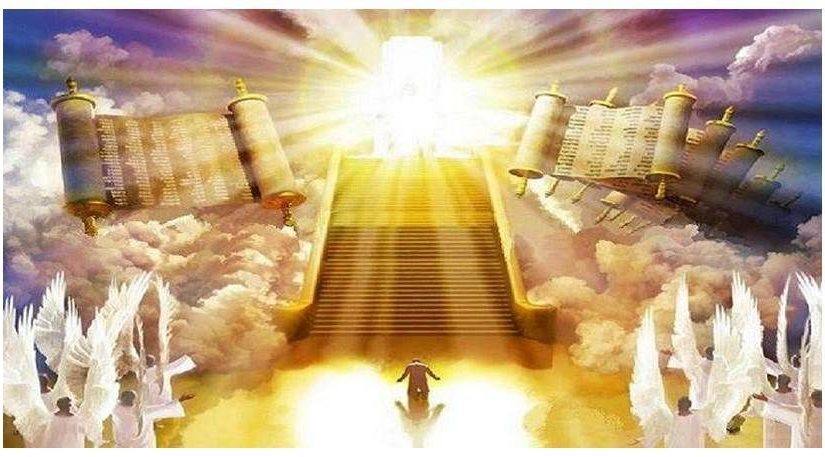
John is in the throne room.  He’s watching God hold out a scroll with seven seals while an angel shouts to everyone “who is worthy to open the scroll and break its seals?” (v2).  When nobody was found, John began to weep.  It’s this reaction that I want to take a closer look at.  Why does he weep?  To understand John’s emotions we need to first understand what is in the scroll, then we need a closer look at John’s heart.

The scroll describes Gods future plans.  Remember that Jesus died and ascended to heaven but he also made another promise; to come again. Luke 21:27 (ESV) And then they will see the Son of Man coming in a cloud with power and great glory  (Mark 13:26-27).   This second coming will be the end to all trials and tribulation.  When it happens, Jesus will send out the angels and gather his elect (Mark 13:27).  This is what John was hoping for.  The scroll would finally reveal it. The full understanding of God and eternal presence with him is finally at hand.  But, there is a problem.  Who will open it?

John probably knew immediately that he, himself was not worthy.  He came to the throne room not with ambition and looking for opportunity, but seeking God, with humility.  Instead, I picture him eagerly searching for a face, for someone to step forward and take the scroll.  But they didn’t show up.  I feel like he matched 5 numbers on a lottery ticket and, waiting anxiously for that sixth number, only to find it doesn’t match.  John had lost.  But this wasn’t about a few dollars, this was everything he hoped for.  He “wept loudly.”

John was distressed until he was reminded to be patient.  There is one worthy, says one of the elders.  It is the “Lion of Judah.”  He has won the victory.  He is worthy to open the scrolls.  With this, John’s hope was restored but not in the way he expected.  He was looking for a lion, bold and strong.  But, what he saw was a lamb, and that Lamb that looked as if it had been slaughtered (Revelation 5:6).  In that moment, John sees Jesus for who he really is. He understands the price that was paid.  With that, John and the entire room fell down before the lamb and sang a new song (Revelation 5:8).

Holy, Holy, Holy

Today’s Readings: Ezra 7-10, Psalm 97, Revelation 4

In today’s reading of Revelation 4, John shares the worship that takes place to our God, who is on His throne. John shares the voices heard and the praise of a Heavenly Choir singing glorious praise to the only one who deserves it all.

Regardless of what comes upon us regarding tests and trials, as Christians, we know that our final outcome will be in the presence of this throne.  If you believe, all places will lead to His Eternal Kingdom.  Will you take a moment to repeat this praise to Our Heavenly Father?

8 “Holy, holy, holy, is the Lord God Almighty,
who was and is and is to come!”

11 “Worthy are you, our Lord and God,
to receive glory and honor and power,
for you created all things,
and by your will they existed and were created.”

Heavenly Fathe,- coming off Thanksgiving and having these special moments to praise you are the best part of my day.  Lord, help us to focus more on You and less on ourselves. Let us know that this life and everything that happens daily come from you. Lor,d help us realize that everything we have is on loan and will one day be back in Your presence.  You are worthy of our best every moment.  Help us to give You that.  Amen


To Speak or Not to Speak

Today’s Reading: Esther 7-10; Revelations 3

The book of Esther is one of renowned understanding of how to use words, and how to use respectful silence to move mountains. In the book of Esther, we see an orphan who is given an opportunity to rise above her station. She’s given an opportunity to allow God to work in her life without trying to live according to her own agenda.   Esther had a great understanding of the importance of observation and willingness to submit to God’s will and authority.  The way that Esther accomplished this is using her words and influence.

Each day, we all want to have our voice heard. In most interactions that we have we want our intentions known and we want to be noticed.  We do not want to be left out of the conversation.  We don’t want to feel uninvited or unimportant.  We want to be a part of the conversation and the community.  Many times we aware of what’s going on,  but many times we may have misinformed and try to communicate our desires and feelings which are completely off-base.  Esther in our passage has an excellent understanding of when to use her influential words and when to allow the king to use his own understanding.

Throughout the last chapters of Esther, Esther uses her connection with the king to change the course of history. She allows her words to help guide the king to protect her people. What Esther does is not being over, powerful or brash, but she uses her words at the correct time with the correct tone to influence the king to save her people. She also uses her words to elevate her people and protect her people as well.

Esther is an amazing example of how meekness can be a powerful force.  Esther saved her people without the harshness of the world.  She shows us how gentleness is a force to change the hearts of the most powerful people.

“And on the second day, as they were drinking wine after the feast, the king again said to Esther, “What is your wish, Queen Esther? It shall be granted you. And what is your request? Even to the half of my kingdom, it shall be fulfilled.” Then Queen Esther answered, “If I have found favor in your sight, O king, and if it please the king, let my life be granted me for my wish, and my people for my request. For we have been sold, I and my people, to be destroyed, to be killed, and to be annihilated. If we had been sold merely as slaves, men and women, I would have been silent, for our affliction is not to be compared with the loss to the king.””

‭‭Esther‬ ‭7‬:‭2‬-‭4‬ ‭ESV‬‬

https://bible.com/bible/59/est.7.2-4.ESV

She knows how to speak to the king, because she had seen the wrath of that king for many years.  She understood that her station could be changed at the slightest change in the king’s countenance.  She understood that the main focus was not on her, but in a bigger purpose.  She understood that she was part of God’s plan for something special. She was part of the future of the people, which would lead to our salvation.

Can we be more like Esther?  Can we set aside our own ambitions and words to allow God to use us as he needs? Can we choose to be slow to speak and allow God to work in our favor for his good and not out satisfaction of being correct?

Be blessed

Spoiler Alert

Our readings for today are Esther 1-2, Psalm 139, and Revelation 1.

What are you thankful for today on Thanksgiving?

As I reflect on our assigned readings for today, one quote or statement I’ve heard before comes to mind.

“I don’t know what the future holds, but I know who holds it.”

Today, on Thanksgiving, this is one of the many things we can focus on and be grateful for.

Psalm 139 is a chapter commonly referenced in support of the sanctity of human life at conception, not just after birth. Psalm 139:13-15 speaks of God knowing us while we are in the womb. Then, in verse 139:16, this is taken a step further…

16 Your eyes saw my unformed substance;
in your book were written, every one of them,
the days that were formed for me,
when as yet there was none of them.

Not only do these verses tell us God made us thoughtfully and purposefully, but He already knows our future. How? It hasn’t yet occurred.

Our small group is currently reading, Learn The Bible in 24 Hours, by Dr. Chuck Missler. In his book, Dr. Missler describes that for us life is a sequence of linear events. But, God is outside of the dimension of time so He can see the past, present and future. This is very hard for our human mind to comprehend. The way he describes it is that if you were sitting on curb watching a parade, you would experience and see each part of the parade as it goes by. But someone who is in a helicopter can see the beginning, the middle, and the end of the parade…all at the same time.

Our assigned reading in Revelation 1 speaks to this in verse 8…

“I am the Alpha and the Omega,” says the Lord God, “who is and who was and who is to come, the Almighty.”

This verse tells us He not only is the beginning and end…but He “was and is to come.” He has seen it all before it happens.

A few other verses speak to this. First, Isaiah 57:15 reads…

15 For thus says the One who is high and lifted up,
who inhabits eternity, whose name is Holy:
“I dwell in the high and holy place,
and also with him who is of a contrite and lowly spirit,
to revive the spirit of the lowly,
and to revive the heart of the contrite.

This tells us He lives in eternity and can see it all.

Another verse is Isaiah 46:10…

10 declaring the end from the beginning
and from ancient times things not yet done,
saying, ‘My counsel shall stand,
and I will accomplish all my purpose,’

He tells us here that He knows the beginning and the end and things “not yet done.”

I don’t know what things are going to happen in this world as we see social conflict and physical conflict all the time, with some very serious conflict going on right now in Israel and Ukraine. What I do know is these verses tell us He will accomplish His purpose (Isaiah 46:10), and I know the rest of the book of Revelation tells us He wins, and all pain and sadness will cease to exist (Revelation 21:4).

We also know He cares for us, and He’s with us as we go. The end of Isaiah 57:15 tells us He will “revive the spirit of the lowly,” and He will “revive the heart of the contrite.” Reading the entire chapter of Psalm 139 tells us how much He cares for us and the life He created in and for us. He tells us in Psalm 46:10 to “Be still and know that I am God.”

Please consider reading the entire book of Esther as we go through it in the upcoming days as yet another example of God’s perfect plan.

Today, let us give thanks for God’s plan and His ultimate and certain victory over Satan, sin, and death.


Supercalifragilisticexpialidocious

I am sure that I am not the only one in disbelief that tomorrow is Thanksgiving?!?!!

How did it get here so fast? If I am honest, I have been a little stressed about the day and how it will play out. We are traveling to our son’s home and will not arrive till the wee hours of Thanksgiving morning. I will not have the luxury of making sure everything is bought and ready to go. I find myself getting caught up in all the “what-ifs” of the day. But when I read Psalm 95, part of our reading for today, it reminded me of what the day holds – THANKFULNESS and JOY!!

When I read Psalm 95 in The Passion Translation it put a little pep in my step. We are called to worship and sing for joy to the Lord.

Come on everyone! Let’s sing for joy to the Lord! Let’s shout our loudest praises to our God who saved us! Everyone come meet his face with a thankful heart. Don’t hold back your praises; make him great by your shouts of joy! For the Lord is the greatest of all, King-God over all other gods!
Psalm 95:1-3

“Don’t hold back your praises.” What would it look like if you did not hold back your praises tomorrow on the day of Thanks? I think of Mary Poppins and the song, Supercalifragilisticexpialidocious. Can you even read that word without starting to sing it in your head? When I looked up the meaning of this word, it actually means extraordinarily good or wonderful.

I think of my worship to God and question my joy. Worship is not about me. Worship is about God. What would it look like if I got on my knees and worshipped Him with a thankful heart? Would it have anything to do with how the food turned out on Turkey Day? Probably not. When I put the focus on God and what He has done for me, my focus changes. I can celebrate and be thankful for the life I have and all that He has given me. He sent His Son to the cross to die for me. He died for me and all my sins so that I could have eternal life. If that is not SUPERCALIFRAGILISTICEXPEALIDOCIOUS, I do not know what is.

So lets focus on the One to whom we give our thanks tomorrow. Thank You God for loving us enough to send your Son to the cross so that we may live eternally with You. May our joy overflow as we remember all we have to be thankful for. And may we smile when we think of this song and remember to sing for JOY to the Lord.

Todays reading:  Ezra 5-6, Psalm 95, 3 John

Defiant

Zechariah 12-14, Psalm 94, 2 John

2 John 2:6 says, Love means doing what God has commanded us, and he has commanded us to love one another, just as you have heard from the beginning. I’ll be honest, I struggle with being commanded to love. It’s like telling me I have to go to the gym.  No, thank you.  I don’t want to be out of breath. I don’t want to sweat, and I sure don’t want to be sore tomorrow.  But guess what?  I can’t be healthy without it.  Sometimes, the only way to get me to do something is to command it.

Why do I have this reaction to the commandment of love?  Because love is costly.  Bob Goff describes the cost of love in two ways: sacrifice and presence.  Sacrifice means giving up something I want so that someone else can have what they want.  Presence is about attention.  It’s a state of being.  When we are present with another person, nothing else matters.  Just them.

Perhaps Jesus presented it as a commandment because he knew I would be reluctant to pay the price.  Perhaps he knew that my obstinance would stand in stark contrast to his humility.  He was not reluctant to pay.  He gave his love freely.  Even when it cost him everything.