Sight of the Lord

What do you do in the sight of the Lord? 

Today’s Readings include 2 Kings 1314, 2 Chronicles 25, Psalm 53, and Matthew 12

As I read through our readings for the day, I was reminded of the inherited influences left for me.  Now there was no royalty involved or finances that could come close to this lifestyle, but I remember plenty of things that have impacted me throughout growing up and into my “adult” life. I wish I could say that everything growing up pointed to the Lord.  That would not be true.  In fact, there were many complicated things that I faced that were attached to sin.  This would then impact the choices that I would make growing up.  In today’s reading, Kingdoms were affected.  In my world, parents, siblings, and friends were impacted by my selfish, prideful, and insecure self.  It wasn’t until I started an authentic relationship with the Lord that some of these choices changed.  I pray that I can stay away from slipping back into these same sinful decisions each day.

2 Kings 13-14

He did what was evil in the sight of the Lord and followed the sins of Jeroboam the son of Nebat, which he made Israel to sin; he did not depart from them.

In our reading today, we see Kings who followed the ways they were taught before they reigned.  We read about Kings who decided to go against the Lord’s ways. ( Not a good idea.)

As a husband, father, sibling, and friend, I pray that I continue to live out and point to the Lord.

Psalm 53

The fool says in his heart, “There is no God.”
They are corrupt, doing abominable iniquity;
there is none who does good.

2 God looks down from heaven
on the children of man
to see if there are any who understand,[b]
who seek after God.

Lesson learned from previous Kings.

  • Remembering that open defiance against God may bring temporary gain but will also bring conflict, fear, and ultimately painful defeat.
  • We learn that it is in futility that we attempt to “recreate” worship of God in the way that we want to do it. This counterfeit worship only leads to destruction.
  • Israel had many kings, but they were not the ultimate authority in Israel. Instead, God’s covenant word was the absolute authority.

Matthew 12

33 “Either make the tree good and its fruit good, or make the tree bad and its fruit bad, for the tree is known by its fruit. 34 You brood of vipers! How can you speak good, when you are evil? For out of the abundance of the heart the mouth speaks. 35 The good person out of his good treasure brings forth good, and the evil person out of his evil treasure brings forth evil. 36 I tell you, on the day of judgment people will give account for every careless word they speak, 37 for by your words you will be justified, and by your words you will be condemned.”

What did you expect?


Today’s Reading : Jonah; Matthew 11

Expectations.  In our everyday lives we have countless expectations and outcomes.  For instance,  when we wake up and the sun is shining through the window, we can expect that the day will be pleasant. But when we go outside the temperature is twenty degrees below what we expected or it could be thirty degrees above.  The expectation is not what reality actually holds. 

In today’s passages, we have to reset our expectations. Today’s passages are from the book of Jonah and Matthew chapter 11. The book of Jonah has been referenced to and recounted many times throughout history since the book was written. To recap, Jonah is given an assignment from God to go to Nineveh,  and tell the people that they have not done what God wanted them to do. Jonah does not want to go to Nineveh so he decides to run away. Upon running away, he finds himself on a ship, which comes into the middle of a storm. The storm stops when Jonah is thrown into the ocean. When Jonah is thrown into the ocean, he has been  swallowed by a big fish (a whale). After three days, he is brought back to land, and he goes to the city. He tells the people what they need to do to change. The people actually listen to the prophet and change your ways. Jonah is mad that the people listen to him. 


Jonah expected to run away from his assignment 

  •  Jonah, like many of us, will be given a task on assignment that seems insurmountable or difficult. We first try to run away from our obligations. We think that it will be easier to run away from the situation.  The act of running away, we believe that we do not have to face the outcomes or the consequences of the actions. We want the easy way out. We want to get away from the fire because it’s too hot. We want to run away from the cold, because we don’t want to get frostbitten. We want to run away from the darkness,  because we are afraid of what may be in the abyss. 

Jonah expected to be killed in the ocean to get out of the assignment

  • When we are presented with a challenge that we are not ready or prepared for, we attempt to take actions into our own hands. We try to create different things without asking God for clarification or reference. Sometimes we expect that the situation can’t get worse and we can ease our pain by going into a different direction.

Jonah expected the people to protest and kill him for delivering the message 

  • In the last part of Jonah, we find that God has already prepared everything for Jonah to be successful. We find that the people of Nineveh were not going to kill him, but were ready for a change in which God had made ready for them. Jonah wanted the people in the world to be punished, killed, or annihilated because of their disregard for God‘s law and his statutes. This is a point in where the expectations have been changed:  God changed his heart when the people changed their hearts to him.  God changed from punishment to preservation of the people.  At this change, Jonah was upset that God is living and living Father and can change to save his children.  

In Matthew,  Christ is telling the people to reset their expectations of their thoughts and perceptions of John the Baptist and of himself.    The people and the persons that Jesus and John the Baptist, actually were, were contrary to the expectations.  People were wrapped up in the assumed appearance and perception of the anointed individuals.  But Christ tells them to allow God to speak to their hearts and open their minds and eyes to the truth that God has set for us.  

How can we reset our expectations to be aligned with God?  How can we open up our relationship with him to be adequately prepared for what assignments we are given? How can we allow God to manage our expectations of ourselves, others, and God? 

Be blessed 

Leadership and Influence

Today’s readings are 2 Chronicles 24, 2 Kings 12, Psalm 50, and Matthew 9.

In 2 Chronicles 24 and 2 Kings 12 we read about Joash who became the king of Judah at just the age of seven. Can you imagine? Although young, Joash led well early and throughout most of his reign. There was a priest named Jehoiada who mentored Joash and 2 Chronicles 24:2 tells us that while Jehoiada was alive Joash “did what was right in the eyes of the Lord.” Joash helped lead a charge to gather offerings like Moses instructed generations earlier so they could use the money to repair the temple. Again, Joash led well during most of his reign, but unfortunately, he did not finish well much like King Asa I wrote about 2 weeks ago.

What changed to cause King Joash to turn from the Lord? With King Asa, we are unsure. However, with King Joash it is apparent once Jehoaida died, then everything changed. Some princes of Judah came and influenced Joash negatively immediately afterwards. The Lord even tried to send Zechariah, the son of Jehoiada, to help bring Joash back to his senses to return to the Lord, but instead Joash ignored Zechariah and even had him stoned. When Joash was only forty-seven and could have reigned for many more years potentially he was assassinated by his own servants after the Lord allowed a great army of Judah to be taken down by the lesser Syrian army because Joash and Judah had forsaken Him (2 Chronicles 24:23-25).

What can we learn from this? I’ve written on this before but often we put our hope in earthly leaders, even ones who seem to be and even are God following. However, we are all sinners and earthly leaders and mentors, even though often good and well-intended, will eventually make a mistake to disappoint you or like Jehoaida they will pass away because they are human. We must make sure that the leaders we are following are leading us to Jesus and even when they are trying, it is up to us personally to make sure Jesus is who we are really following and putting our hope and trust in. Jehoaida may have led Joash very well and did all he could, but Joash evidently did not see the Lord as the leader of his life or he would not have fallen away from his faith so quickly once Jehoaida passed.

Put not your trust in princes,

in a son of man, in whom there

is no salvation.

When his breath departs, he

returns to the earth;

on that very day his plans

perish.

Blessed is he whose help is the

God of Jacob,

whose hope is in the Lord his

God,

who made heaven and earth,

the sea, and all that is in them.

who keeps faith forever.

Psalm 143:3-6

We can also learn from Joash’s downfall to be very careful who we surround ourselves with and their influence. While we can likely say Joash must not have been very convicted in his faith and relationship with God since he departed from it very quickly after Jehoaida’s passing, he also surrounded himself with princes of Judah who evidently were not God-following who influenced him negatively, ultimately leading him astray (2 Chronicles 24:17-18). Nearly all of us can be susceptible to falling astray and making poor decisions if we do not surround ourselves with good people and good counsel. We must make sure those who we are spending the most time with and turning to for advice are God-following and ultimately that we look to Jesus and put our hope in Him and Him alone.

Some trust in chariots and some

in horses,

but we trust in the name of the

Lord our God.

Psalm 146:7

(I would also encourage you to read Psalm 50 which includes much more about how everything in the world belongs to God, thus calling us to glorify Him by putting our trust, hope, sacrifices, and thanksgiving in Him alone.)

Contentment

As I sat behind a mother and her baby at Church this past Sunday morning, I couldn’t help but smile at the way the baby cooed in his mother’s arms. The way he would look up at his Mama and just look so content. It took me back 20+ years when my kids were that little. How quickly time passes, but that feeling of caring for my babies feels like it was yesterday. I long to still provide that calm and quiet for my children. This is the same calm and quiet that God desires for our soul.

Lord, I have given up my pride and turned away from my arrogance. I am not concerned with great matters or with subjects too difficult for me. Instead, I am content and at peace. As a child lies quietly in its mother’s arms, so my heart is quiet within me. Israel, trust in the Lord now and forever!
Psalm 131

Our hope resides in the ability to turn to God with childlike trust. So many times we believe that we can do things on our own. We tackle projects and issues with people without prayer or even considering what God might have planned. But the Psalmist notes here that we can only be content and at peace when we trust in God.

We have a choice to make when we feel we are anxious or out of control. The world is loud and the problems we face are many, we can focus on that or we can remind ourselves about the truth from this Psalm, God is in control and He is in charge. He is in command of our destiny.

God wants a relationship with us. In order for that to happen, it takes us putting down our phone, turning the tv off, sitting quietly and being content in God’s presence. Only when we spend ample time with Him will we experience His peace and contentment.

Pilgrim’s Progress

2 Kings 9-10, Psalm 49, Matthew 7

Matthew 7:14 (ESV) For the gate is narrow, and the way is hard that leads to life, and those who find it are few.

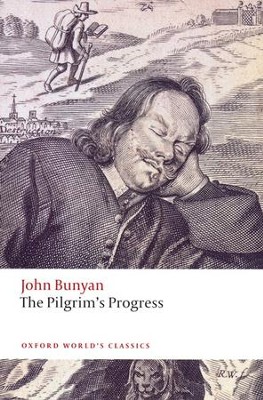
One story captures this idea of a narrow gate and a difficult path better than any.  It is Pilgrim’s Progress, by John Bunyan.  The story is about a journey of a man named, Christian.  Throughout the story, Christian faces various challenges and meets characters like Evangelist, Faithful, and Hopeful, who aid him in staying on the narrow path. He endures the Slough of Despond, the Valley of the Shadow of Death, and battles with Apollyon and the temptations of Vanity Fair. These trials test his commitment to righteousness and deepen his reliance on God’s grace.

All too often, however, we fail to stay on the path.  Perhaps it happens most when we encounter difficulty.  Bunyan describes it excellently.

As Christian proceeds on the narrow path, he comes to a foot of a hill called “difficulty.”  “There were also in the same place two other paths besides that which came straight from the gate; one turned to the left and the other to the right at the bottom of the hill, but the narrow path went right up the hill, and it was called Difficulty. Christian now went to the spring and drank to refresh himself and then began to go up the hill, saying:

The hill, though high, I covet to ascend,

The difficulty will not me offend;

For I perceive the way to life lies here.

Come, pluck up heart, let’s neither faint nor fear;

Better, though difficult, the right way to go,

Than wrong, though easy, where the end is woe.”


Bunyan, John. The New Pilgrim’s Progress . Discovery House. Kindle Edition.

Great Guidance from Jesus

Today’s Reading:  2 Kings 7-8, 2 Chronicles 21, Matthew 6

Matthew 6 is one of my favorite chapters in the Bible, most certainly for me because it contains practical application and guidance directly from Jesus.

Do Good to Please God

Do not do good for others to get the credit.  Do good things when no one else is watching, because it pleases our Father in Heaven, not for the approval of men.

The Model Prayer

Jesus tells us not be like the hypocrites and pray publicly to get credit or seek attention through our prayer. Do not pray “recitations” or in a manner open for attention. Jesus’ counsel outlines the Lord’s prayer on Matthew 6 and Luke 11.

Lay up Treasures in Heaven

Do not seek material things.  These “treasures on earth, where the moth and rust destroy and where thieves break in and steal.”  Our hearts should be pursuing the Gospel of Jesus and not seeking satisfaction and fulfillment from things on earth.

The Lamp of the Body

Our eyes are the “lamp of the body.” If we are watching, pursuing, or doing bad things, it is led by our eyes, and our whole body will follow.  Protect what we see so we do not pollute our whole body.

You Cannot Serve God and Riches

We cannot serve God and material things.  Seeking material wealth and riches can cloud our need and focus on Christ and create a sense of entitlement and pride.  Pride is the worst of all emotions as we ultimately convince ourselves that our ways are superior to the Lord’s.

Do Not Worry

Christ tells us not worry about what we will eat, drink or wear for clothing.  Christ tells us to seek the kingdom of God first and we will receive the blessings for the things we need to survive.

I something hear people speak of how they struggle to find application in today’s world from the Bible.  “That book was written over 2000 years ago, talks about nothing that is like I deal with, how can the Bible teach me anything about today?”  Nothing under the sun changes.  The stories and examples of sin, deceit, theft, adultery, murder, and the list go on, are chronicled in the Bible.  Human sin nature and the devil’s ability to derail our lives existed in Biblical times as it does today.

Jesus’ ministry was about how he became a human, in flesh, to experience the same temptations and emotions that we do daily.  Jesus’ teachings provide a roadmap to peace, happiness, and contentment.  Yet, there is no guarantee that we will get there, a life living with Christ is the most assured way that the strife we encounter will be met with strength, perseverance, and resolve.

Let us draw strength through the teachings of Jesus and live our lives to please an audience of One, Jesus.

God of Abundance

Think about a time in the past when you’ve been wounded and then what you learned from it. How did you recover from the wound? What was God teaching you during that time? While you likely wouldn’t have wished for the challenge to occur, are you now better off because of it?

Recently a good friend observed that I’m now on the other side of a wound from the past year. This friend is a Christ-follower and quite wise when it comes to observing human behavior. My friend noted that I’m in a much better position to serve others because of what I’ve been through. And in turn, I can say that I feel stronger and have a deeper appreciation for God’s grace and mercy, and ultimately more gratitude for the suffering of Christ on my behalf. My suffering was nothing compared to his.

When I was suffering, my thoughts were mainly focused on surviving the situation. The best word I can use to describe what has transpired since is “abundance”. This is not worldly abundance; it is an abundance of faith, peace, wisdom, hope, and love.

In today’s reading, there’s the story of the widow who owes a debt but has nothing so the creditor has come to take her children as slaves. As if it wasn’t difficult enough to be a widow and poor, this woman was facing an excruciating reality, basically losing everything she had.

Now the wife of one of the sons of the prophets cried to Elisha, “Your servant my husband is dead, and you know that your servant feared the Lord, but the creditor has come to take my two children to be his slaves.” (2 Kings 4:1)

What happens next is astonishing. She’s told to get as many jars as she can find and then to fill the jars with oil. Wait a second… where was this oil going to come from? How did it get there? All we are told is that the oil flowed until all of the vessels were full. Did Jesus reflect on this story when he fed five thousand people with just two fish and five loaves of bread?

She came and told the man of God, and he said, “Go, sell the oil and pay your debts, and you and your sons can live on the rest.” (2 Kings 4:7)

There was so much oil that the widow was able to pay her debts and live on the remaining oil! We serve a God of great abundance. He gives so much then gives even more beyond our understanding.

I’m referring to this abundance as I reflect on our troubles in this life, and then when we see God move and carry us, and turn something awful into something for his glory. In my own crisis, not only was I brought through, my cup was filled and it has become my turn to bless others and point them to reasons for my own faith.

In your most recent life storm which has since passed, think about the “before and after”. What was God trying to teach you? Did you see some abundance in the outcome? Take a moment and pray over this. Ask God to reveal where he was during your trials. Have you thanked him for all he has done and is doing?

If you are in the middle of a storm, trust these words of Jesus. He experienced the most significant suffering of all time so he understands your pain, and he promises to be there with you forever after. The kingdom of heaven is yours and you will be comforted.

“Blessed are the poor in spirit, for theirs is the kingdom of heaven. “Blessed are those who mourn, for they shall be comforted. (Matthew 5:3-4)

The widow went from having nothing to abundance. Conversely, Jesus came from abundance as God, then stooped low as a servant, a man yet still God in the flesh, as he gave up everything for us. Through his sacrifice and defeat over death, we can go from nothing (dead in our sins) to life eternal. That friends, is abundance.

Today’s reading: 2 Kings 4-6; Matthew 5

Knowing is half the battle

Today’s reading 2 Kings 2-3, Psalm 48, Matthew 4

After John the Baptist has spent years paving the way for the coming Messiah, at the end of Matthew 3, Jesus came and asked John to baptize him.  This is it, Jesus is finally ready to being his ministry, right?  Almost.  God sent Jesus, in the form of a man, to earth to save us from our sins.  But God knew that in order for Jesus to have credibility with us, he needed to have walked in our shoes, to experience every emotion and every temptation we experience.  So before he starts his ministry, God sends Jesus to the wilderness for 40 days of preparation.

Matthew 4, our text for today, is the account of Jesus being tempted by the Devil.  Notice that the Devil came to Jesus when he was at his weakest point.  After 40 days of fasting, Jesus was tired, alone, and hungry.   Can you relate?  The Devil often tempts us when we are at our weakest point – stressed out, tired, lonely, frustrated or scared.

The Devil also tempted Jesus where he was strong.  Jesus knew he had power over the stones, the angels and all the kingdoms of this world.  So, the Devil was trying to get Jesus to rely on his own strength, to focus on and elevate himself.  Again, can you relate?  By tempting us through our strengths, the Devil often chooses times we are most susceptible to pride.

How was Jesus able to combat the Devil’s temptations?  With God’s word.  He responded to every temptation the Devil threw out with a Biblical truth.   Did you notice that the Devil also knew scripture?  The difference with Jesus was not just that he knew scripture, but that he also obeyed it.  Ephesians 6:17 calls God’s word a sword to be used in spiritual battle.  Matthew 4 illustrates for us how effective knowledge of God’s word can be in resisting the Devil’s temptations.

As the saying goes, knowing is half the battle.  The other half, which is far more difficult, is obeying.  We must know and obey God’s work in order to keep the Devil at bay.

Submit yourselves, then, to God. Resist the devil, and he will flee from you (James 4:7).


Fornicators!

2 Chronicles 19-20, 2 Kings 1, Psalm 20, Matt 3

There used to be a man that would preach on the quad at ISU.  “Fornicators!” he would shout at the top of his lungs to draw attention, “Repent!” He would cry out.  Occasionally, a small crowd would gather to listen more carefully but quickly turned away, snickering and mocking the idiot standing on the box.

I don’t imagine this being much different from John the Baptist.  Here was a man dressed in camel hair and a leather belt.  This strange man was issuing a warning, “Repent, for the kingdom of heaven is at hand.” Matthew 3:2 (ESV).  Still, people came to listen.  But, they did not just listen, “They were baptized by him in the river Jordan, confessing their sins.” Clearly, they were not concerned about his appearance or repulsed by his tough message.  They didn’t snicker, and they didn’t come up with ways to tear him down.  Instead, their hearts burned within them, and their burning hearts cried out for mercy.

At that moment, it was evident that the only path to mercy was repentance. This is the cry of John the Baptist’s heart. Not because he wanted followers but because he knew God. People followed him; people listened to him because he looked like Jesus. He looked like Jesus because that is who he spent time with.

Two other scriptures come to mind when I think about this.  The first is in Exodus 34:29-35. Moses had been with God on Mount Sinai.  When he came down, “Aaron and all the people of Israel saw Moses, and behold, the skin of his face shone, and they were afraid to come near him.” (Exodus 34:30). The second is after Jesus’ crucifixion on the road to Emmaus.  Two men were walking along talking when a strange man joined their conversation.  Upon his departure, they knew something was different.  They remarked, “Did not our hearts burn within us while he talked to us on the road, while he opened to us the Scriptures?” (Luke 24:32)

I am sure that the preacher on ISU’s campus had great intentions.  So do I.  As I consider the effort I put into becoming a better leader, speaker, father, husband, and friend, it is clear that I am missing the mark.  The only way to become who I am created to be is to spend my time with my Creator.

Asking only Him

Today’s Reading is 1 Kings 22, 2 Chronicles 18, Matthew 2

Happy Tuesday – In today’s readings, you will hear the same story of Jehoshaphat joining forces with Ahab.  After feeling like I read the same chapter twice, I landed on a few verses that spoke to my heart. I pray that you will also use His truth and reflect on them today.

1 Kings 22:5  But Jehoshaphat also said to the king of Israel, “First seek the counsel of the Lord.”

2 Chronicles 18:4 And Jehoshaphat said to the king of Israel, “Inquire first for the word of the Lord.”

Jehoshaphat was trying to remind Ahab – Seek first the Lord… Which is what we always need to be doing.  Whether it is myself being reminded or reminding someone else, it should be our first go-to.  I have tended to go to the Lord when I need earnest prayers.  This could involve selfishness, greed, anger, untruths, pride, lust, suffering from duplicity… the list can go on.  The three-letter word that encompasses it all is SIN.

I get in trouble., I’ll call on God and pray my way out of a situation or circumstance I behaved my way into.  And then I wonder, what’s up, God? Why?  When God is really asking me, “What’s up, Dave?” what’s wrong with you?  I have given you MY WORD, and you still don’t listen.

In today’s reading, they were about to go to war.  Jehoshaphat was telling Ahab to seek the Lord, but Ahab asked for advice from 400 other prophets.  Sometimes I can act this way.  I can seek an answer from this world’s many people, places, or things. When I need to turn to the one trustworthy source that can provide the peace only He can provide.

Lord, Help me not turn to myself or the world for answers.  Help me to seek you earnestly and not run to you after I have decided to do things my way.  Let me open my ears and heart to the stories shared today.  Amen

28 And we know that in all things God works for the good of those who love him, who[a] have been called according to his purpose.