Where are you going?

Today’s reading:  1 Samuel 15-16, 1 Chronicles 1, Psalm 39, Acts 11

On the window ledge in my office at work sit four die cast Caterpillar machine replicas – two track type tractors, a large mining truck and a motor grader.  Each of these was given to me by different groups of co-workers throughout my Caterpillar career.  They evoke fond memories.  To this day, it is not uncommon for my office visitors to ask me what the machines are for.  My response is always, “I spent some of the most formative years of my career at Caterpillar.  These machines remind me that in order to know where you are going, you often need to remember where you’ve been.”

Today, we start the book of 1 Chronicles.  The first chapter is a genealogy…53 verses of names. (Spoiler alert, the genealogy continues all the way though chapter 8.)  These names trace the lineage of God’s people all the way back to Adam.  Their purpose was to remind the Israelites of their spiritual heritage and inspire them to renew their relationship with God.  For the Israelites to know where they needed to go, they needed to remember where they’d been.

Some of these names represent stories of great faith, others represent tragic failure, and some of them aren’t known to us at all.  Whether we recognize the names or not, they are known by God.  He used them all to accomplish his purpose throughout history.

And we know that in all things God works for the good of those who love him, who have been called according to his purpose (Romans 8:28).

What is your story of faith?  How is God using you to accomplish his purposes?  Are you open to his leading?  Today I challenge you to remember where you’ve come from, and make sure you are on the path of where God needs you to go.


God Leads Us To Mission

1 Samuel 14, Psalm 124, Acts 10

What are you praying for?  Anything?  As you answer that question, remember that we witness Peter praying in Acts 10.  To be fair, the text does not say what he was praying for, just that he was praying.  It does, however, reveal a few elements of how he prayed.  Through this act of obedience, we get a lot of detail about how God works.

Consider first that Peter had a location to pray.  Verse 10 says that he “went up on the housetop.”  Before you get your ladder out to climb onto your roof, think about what is unique about that location.  First, it’s quiet.  The rooftop was secluded so Peter was able to be alone.  In this seclusion, he is less distracted and, therefore, more likely to encounter God.  That is the primary factor of being on the rooftop.

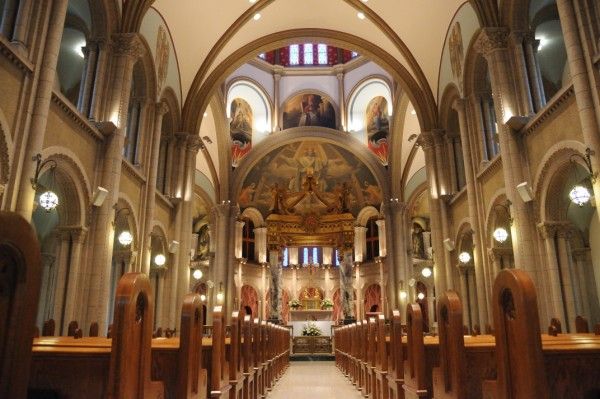
I suppose Peter may have seen another opportunity in being on the rooftop.  Being elevated, he may have felt closer to heaven.  Of course, we know that physical distance is not a thing for God, but it may be for us.  Perhaps Peter could better focus his heart on God because of it.  I’ve found this to be true for myself.  Specifically when sitting in the cathedral at the Chiara center.  While God can be found everywhere, there is something sacred about certain places.  The challenge here is to find our sacred space and use it regularly.

The text also suggests that Peter used this place regularly.  It even cites the time as “the sixth hour.”  Could it be that Peter went to this place at the same time, every day?  It’s probable that he utilized a variety of spiritual locations and very likely that he prayed every day at the same time.

Let’s be clear that God does not mandate where or when we pray.  He does, however, ask us to pray.  Prayer is not just an opportunity to communicate with God, allowing us to seek guidance, express gratitude or voice our needs and wants.  It is also an outlet for God to guide and direct us.  In prayer, he guides and directs us toward fulfilling our mission and purpose in life.  In short, it is transforming.

One commentator says, “As Christians engage in prayer and seek God’s guidance, they believe that he will lead them toward their mission and purpose in life.  This may involve opportunities to serve, share their faith, help others in need, or make a positive impact in their communities and the world at large.  Prayer is seen as a way through which God equips and empowers his followers for their mission, providing them with the spiritual resources, strength, and guidance needed to fulfill their purpose.”

This is abundantly clear to Peter.  As he prayed, his thinking was transformed.  He went from believing that some things – and some people – are unclean to understanding that God makes all things clean.  This was no small thing.  This transformation sparked Peter to take action he would have never considered. Now, the Gospel message will be shared with the Gentiles.

I wonder, where am I holding God back?  How do I need to be transformed?  There is one simple answer to those questions.  Pray as Peter did.

The Story of Two Saul’s

1 Samuel 11-13, Psalm 38, Acts 9

Today as I read these passages, I heard the story of two Sauls.  I was familiar with them both, but reflecting on these two stories simultaneously was interesting.

1 Samuel 11-13

The Book of Samuel is a book of great beginnings…and tragic endings. The beginning of Saul’s life talked about his humble leadership (9:21; 10:22) and was God’s choice as Isreal’s first king (10:24). His early reign was marked by leadership (chapter 11).  I will hold on to details, but eventually, Saul disobeys God, becomes jealous and paranoid, and eventually has his kingship taken away by God.  Saul’s life continues after these chapters going downward.  Eventually, deciding to take his own life.  This story will capture the reign and decline of the first king of Isreal.

Acts 9

In Acts, we find another Saul who is on the road to Damascus.  Saul was a non-believer who pursued Christians to either put them in jail or have them killed.   But on this road, he was confronted by the Lord (9:3) and brought face-to-face with the truth of the Gospel.  Saul eventually turns into the apostle Paul we read about, who shapes the history of Christianity.

Sometimes God breaks into our lives spectacularly, or sometimes conversion may include a quiet conversation.  Either way, we read today about two journeys.  I think of how Lynden mentioned the journey of encouragement, adversity, and resolution.

What is going on in your journey today? Financial issues, health-related problems, raising children, issues with your job, marriage, all of the above?  What will you decide? Who will you believe? The world or the creator of the world?  None of these decisions will be easy, and they will take lots of faith in the Lord.  I see us on the same journey as both Saul’s we read about.  Will the world take you toward a downward spiral, or will you listen to the voice of the Lord?

Psalm 38

21 Forsake me not, O Lord: O my God, be not far from me.  22 Make hast to help me, O Lord my salvation.


And you shall remember that the Lord your God led you all the way these forty years in the wilderness, to humble you and test you, to know what was in your heart, whether you would keep his commandments or not.” Deuteronomy 8:2

Philippians 1:21 “For to me to live is Christ, and to die is gain.”


Encounters along the journey

Today’s Reading::  I Samuel 9-10; Acts 8

In both of these readings for today the main character has several encounters along their journey. These two journeys are very similar and at the same time complex. In I Samuel, Saul is on a journey to find himself as a king. In Acts, Philip is on a journey to relate Jesus as the risen Christ.  Both Saul and Phillip are guided by the Holy Spirit.  The Spirit is mentoring and guiding each of them on how to approach each situation that they come in contact with. Each individual at this point in their lives gives complete control over to the Holy Spirit as their guide and does not allow their human intentions to cloud their judgment or to cloud their mission.  In each of the journey’s they have: Encouragement, Adversity, and Resolution. 


Encouragement

In both of these journeys, each individual at the beginning of the journey is encouraged. Saul, the future King,  is encouraged about the loss of his donkeys and the potential of amazing blessings that God has in store for him if he follows the guidelines and requirements. Philip is escaping persecution from Saul (soon to be converted to Paul) and working to expand the new religion in the church of Christ. In The Old Testament, Saul is encouraged by Samuel and by the individuals who are taking the food to the celebration. For Philip, he is encouraged by speaking the gospel to the individuals.


Adversity


Each individual has some type of adversity that is presented to them along their journey.   Saul’s adversity is not a completely direct adversity, but we see in his response to his uncle when he returns from the search for the donkeys.   Lets see this as an example, when you were given a gift sometimes you cannot explain everything to everyone. Sometimes when you’re giving gifts, you have to use discretion when disclosing the blessings to individuals.  Sometimes others can be jealous of the blessings and may have malicious intent for you. So in the midst of your gifts and your blessings, we have to be on guard and listen to the Spirit to show others how we can present our blessings.


Philip’s adversity is seen through Simon, the magician. Simon was for himself. Simon was trying to get the best of the best. He was not thinking about the bigger picture, but how he can be seen as powerful. After Philip met Simon met, Simon was baptized.  The act of baptism could have created an existential change in Simon, but Simon did not not really change. This part of the adversary shows that some people may change on the outside, but not fully change inside. 

This encounter also shows that Peter and John when presented with Simon, were not hesitant to call out Simon for his selfishness. So as we are going on our journey, we have to be aware of the ones who may change on the outside, but not change on the inside. We have to be vigilant of the adversaries that will be with us, but not for us. We must ask the Holy Spirit to continue to strengthen us as we grow continuously in our journey.


Resolution


In both of these journeys, at the end of the journey, there’s a beautiful resolution that is marked by blessings. For Saul after he has followed the directions of Samuel, he is blessed as the king. Saul listens. Saul follows directions. Saul is under the Spirit. When we submit and allowed to be honored by the Spirit, we can do amazing things.


Philip also listens to the angel and the Spirit to see how to go forward. Philip listens. Phillip follows. Phillip grows. There are very few occurrences in the Bible, where the Spirit takes people away, and Philip is one of those individuals where the Spirit takes him to another place. It’s because of the connection and the relationship between these two individuals, Saul, the first king of Israel, and Philip, one of the first missionaries, that we can see the Spirit moving and growing and individuals who didn’t know that they were going to make an impact on the world.


In all these journeys, we have to understand that there is going to be encouragement, adversity, and resolution. These can be seen in our everyday life. We have to continue to grow and mature our relationship with God and with the spirit so that we can see God’s work in us.


What will the week have ahead for us? We will be in our journey this week? Can we see the encouragement, the adversity, and the resolution in all of our Works?


Be blessed.

Following Their Lead

Today’s readings are Judges 17-18, Psalm 21, and Acts 1.

I’m excited today as we begin to read through the book of Acts which was written by Luke who also wrote the Gospel of Luke. Although I’ve been a Christian my whole life, I must admit I did not know much about the book of Acts until we moved to Bloomington-Normal, IL in 2011 and shortly thereafter our new church home, Eastview Christian Church, preached through it for many months. As we just celebrated Easter this last Sunday, I must also say there are few things that convict me more about the truth of the Resurrection and the Good News of the Gospel than the behavior of the disciples as told in Acts.

As far as we know, John is the only disciple who was near Jesus at the cross, as he is the only one specifically mentioned. We are told some of his followers were in the distance (of which we know he had many), but it does not specifically say any of the other 12 disciples, nor any by name.  At best, the disciples were in the distance and not near Him, presumably because they were scared. We know Peter denied Jesus three times just as Jesus said he would, and we know when Jesus appeared to the disciples on Easter evening they were in a locked room. Why were they in a locked room? John 19:19 tells us they were fearful. They had just seen what the Jewish leaders had the Romans do to Jesus who they thought was the Messiah and would be their earthly king restoring Jewish power and control. And why wouldn’t they think He was their earthly savior after seeing all the miracles He had done? Now, He had been brutally killed for all He had done and said. Would they be next?

In Acts 1:3, we learn Jesus appeared to them multiple times in the next 40 days telling them about the Kingdom of God. He also tells them He will send the Holy Spirit and to spread the Gospel to the ends of the Earth (Acts 1:8). What did the disciples do? They did exactly what He told them, so that you and I would know Jesus and the Good News of His Resurrection today. Most historians agree every one of the disciples, and even Paul, who Jesus appeared to and who wrote much of the New Testament, were all martyrs or killed for their faith in Jesus either directly or indirectly with John being cast away and imprisoned dying on the island of Patmos.

We will read later in Acts 4 where Peter and John go before the same Jewish Council who sent Jesus to the Romans to be crucified. While being threatened to stop speaking about Jesus, they said in Acts 4:20, “for we cannot but speak of what we have seen and heard.” Powerful when you think of what could happen to them for this. Why the behavior changes from running scared and locking themselves in a room to this? Why would they risk and ultimately give their lives? To me there is but one answer, they saw Jesus alive after being killed just as we are told in the Gospel and here in Acts. Well, I guess there is a second answer, we will read they will soon receive the Holy Spirit as Jesus tells them in Acts 1.

We know we are told many times in the Bible the Holy Spirit who Jesus tells of in Acts 1 also lives in us now as believers (1 Corinthians 3:16, 1 Corinthians 6:19, 2 Timothy 1:14). Sadly, there are few times in my life where I have been more on fire for the Lord and desiring to tell others about Jesus more than when we studied the book of Acts in 2011. I pray that as we read through the book of Acts in the upcoming weeks we remember the Holy Spirit within us and we have the desire, courage, and boldness to tell others about Jesus just like the disciples in Acts.

Do You doubt?

“Why are you troubled, and why do doubts rise in your minds?”
Luke 24:38

The disciples had just witnessed Jesus being taken by the Roman guards. They watched as he had been beaten beyond recognition. As Jesus drug the cross through Jerusalem they followed Him helplessly. They stood and waited as Jesus bled out and life left His body on the cross. They saw the guards guarding his tomb. It had been 3 days.

As the disciples were gathering, Jesus appeared to them and asked, “Why are you troubled, and why do doubts rise in your minds?”

How would you respond in this situation? Did they have reason to doubt? I do admit that I probably would have questioned and doubted how Jesus, who I saw hang on that cross till life left His body, could now be standing in front of me.

But Jesus, sits with the disciples and breaks bread. He lets them touch Him. He opens their mind so they could understand the Scripture and what it says.

He told them, “This is what is written: The Messiah will suffer and rise from the dead on the third day, and repentance for the forgiveness of sins will be preached in his name to all nations, beginning at Jerusalem.
Luke 24:46-47

Because Jesus has not yet returned, we must walk by faith. We have His Word as a lamp for our feet and a light on our path (Psalm 119:105). We are not like the disciples in the fact that they got to dine with Jesus and touch Him, but we know that Jesus can be trusted. We  just experienced Easter and celebrated the fact that He indeed  rose from the dead. When doubts arise, we need only to continue to pour over His Word and renew our minds. Ask the Lord to open your mind so that you can understand the scripture. You might be amazed and what you then read.

For we live by faith, not by sight.
2 Corinthians 5:7

Back To The Grind

Judges 9-11, Psalm 17, Luke 23

Easter is such a great time of year.  The warm sun and the blooms of spring are just the beginning.  These are great reminders of the resurrection that we celebrate.  For a moment, we drink it in, basking in the love of family and the precious blood of a risen savior.  All is well with the world.  And then, It’s Monday.

The problems return, and so do I.  I still have a house to pay for and kids to send to college.   I go to work and find everything just where I left it on Friday.  The toil begins again.  This is not what it’s meant to be.  Jesus opened the door, but we have to walk through it.

If today you find yourself confronted with your old reality, there is work to do.  Start as the Israelites did and “put aside your foreign gods and serve the Lord” (Judges 10:10).   That is where God’s promised life is.  AW Tozer explains it well.  He says that “We are long on talk and short on conduct. We use the language of power, but our deeds are the deeds of weakness.”   That is what Monday does.  It exposes the incongruency of our deeds.

As Monday ends and another Easter is behind me, I ask God if I experienced the life that Jesus suffered for today.  I know the answer, yet my soul is reassured as I turn to Him.  Like the Psalmist says,

As for me, I shall behold your face in righteousness;
when I awake, I shall be satisfied with your likeness.  Psalms 17:15


  1. W. Tozer; Caleb Sinclair. Lessons from Tozer for the Christian (p. 3). Kindle Edition.


The Improbable Twists and Turns of Life

Today’s Readings:  Judges 7-8; Luke 22

We live our lives, plan for our future, hope for peace, and pray for health and safety of our friends and family.  We want to know everything will be ok, and that we will be able to manage life’s events.  We plan for certainty and by nature we yearn for self-preservation.

It doesn’t always work out that way.

Today we read Luke 22, which starts off with the “Plot to Kill Jesus.”   Jesus had twelve disciples who followed Him throughout the nearly three years of His ministry on Earth.  Their names were, according to Matthew 10:2-3, “Simon who is called Peter, and Andrew his brother; James the son of Zebedee, and John his brother. Phillip and Bartholomew; Thomas and Matthew the tax collector, James the son of Alphaeus, and Lebbaeus, whose surname was Thaddaeus; Simon the Cananite, and Judas Iscariot, who also betrayed Jesus.”

These twelve men put aside their lives, left their families, and followed Jesus and His ministry for three years of travel, strife, and insecurity. During the time of Jesus’ life, the Jewish people had their own governance called the Sanhedrin, but they were under Roman law.  The Jews were persecuted and not able to control their people’s lives and resented Roman rule.

What seems likely is that the disciples thought Jesus would overthrow Roman authority and become the “King of the Jews,” and rule over the Romans. The disciples and followers were not focused on Jesus’ role toward eternity but what He could do for them on Earth.  Jesus would become king and their daily lives on Earth would become better.  They traveled, toiled, endured criticism and danger from the Jewish elite with the great hope that Jesus was their Earthly salvation.

Luke 22 walks us through Jesus telling His disciples that He was going to die, and one of them (the disciples), is His betrayer when He said in verse 21, “But behold, the hand of My betrayer is with Me at this table.”  This was not a part of the plan the disciples thought they “signed up” for.

That very night, Jesus was arrested, and He would be tried, convicted, and put to death in 24 hours. The twelve men that devoted three years of their lives now had no leader.  The “person” they put their lives and faith into just “died.”  What they planned and hoped for did not come true.  The “person” they committed every as aspect of their lives to was “gone.”

How does this relate to the trials and twists of our lives?  Do we have great hope to stay healthy?  Do we have great hope that our kids will make great decisions, thrive, and be happy?  Do we expect to lose our jobs or struggle with life events?

The Bible teaches us that with our faith in Christ, there is no promise of a life without trials, turmoil, and unfortunately uncertainty.  The disciples endured three days of suffering, pain, and likely deep sorrow that their Savior was “gone.”  They soon learned that Jesus was alive when He rose from the tomb and appeared to numerous eyewitnesses to prove that He was the Son of God and was alive.

The disciple’s faith was likely restored but now their lives would be even more challenging and different.  What they likely planned for in their mind dramatically changed. Their job now was to spread the Gospel of Christianity around the world and risk even more danger, criticism, and uncertainty, and eventually their own death.  The plan they hoped for dramatically changed.

We as Christians must have a keen focus on the purpose of our lives.  Our purpose is to bring glory to God, His Son Jesus, and bring others to Christ.  Our faith and resolve, to stay the course and commit to Christ during the worst of times, is when we make our mark.  Our resolve, strength, and assurance to follow Christ, even when it seems impossible to do so, strengthens our love and relationship with Christ.  The impossible becomes reasonable with our faith Jesus no matter how much “our plans change.”

May we have the resolve of the prophets and disciples before us to “stay the course” when it seems impossible to do so.

He is risen!  He is risen indeed!

Hosanna, please save us! (Again)

Last Sunday we observed Palm Sunday which was a joyful occasion to celebrate Jesus the Messiah, singing “Hosanna” which means “please save us”, similar to how the people celebrated Jesus as he rode into Jerusalem.

So they took branches of palm trees and went out to meet him, crying out, “Hosanna! Blessed is he who comes in the name of the Lord, even the King of Israel!” (John 12:13)

Just five days later the same people who celebrated and worshipped him, deserted him and cheered for him to be put to death.

We’re just like those people who called for his death when say “please save us” (and then he does), but we go back to sin. That’s the pattern shared with us as we continue our reading of Judges 4-6 and as Jennifer noted yesterday. Something bad happens, we ask for rescue, God rescues them (us), and then we choose sin.

All week I’ve thought about the song Hosanna as one of my ongoing prayers is for a Christian revival where I live and work. The lyrics (written by Brooke Fraser and Hillsong UNITED) talk about a revival, inferring us to earnestly pray, on our knees:

I see a near revival stirring as we pray and seek. We’re on our knees.

Today’s assigned reading also includes Luke 21 which was assigned to me over three months ago to be published today. The song “Hosanna” starts out referencing the King of Glory coming on the clouds and coincidentally (or not), the reference verse from the song is part of today’s reading. I’m not clever enough to make this up so we’d better pay attention.

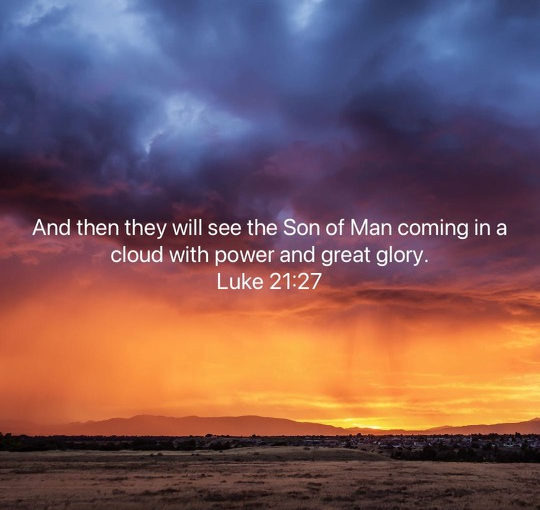
And then they will see the Son of Man coming in a cloud with power and great glory.  (Luke 21:27)

This Son of Man is coming back, and each day brings us one day closer. Are you ready? And will you join me in praying for a revival, for those who are not ready?

Judges

Today’s reading:  Judges 1-3, Psalm 16, Luke 20

When the book of Joshua ends, God’s people are ready to experience all the blessings of the Promised Land.  But wait…flip the page to Judges 1 and you quickly figure out it didn’t end up this way.  Why?  Because the Israelites did not obey God’s orders to totally eliminate the existing inhabitants of the land.  And just like God said, the draw of a pagan, do whatever makes me feel good culture was ultimately too strong to resist.  Eventually God’s people became enslaved to the indigenous people and their sinful ways.  When they finally got to the point of desperation, they called out to God for help.  Out of his loving kindness, God rescued them by sending a series of different Judges to lead his people.  Thus, the name of the book!

It will not surprise you that God’s people continued to repeat the cycle of oppression and then deliverance.  Every time a judge died and the Israelites experienced a leadership void, they got sucked back into the practices of the pagan culture and pulled aways from God.  During the 325 year time period covered by the book of Judges, this happened 12 different times.

This book feels a little bit like a soap opera, and honestly, feels a lot like twenty first century America.  Our sinful culture is attractive and it is easy for us to become enslaved to it.  The book of Judges is a good reminder that the painful consequences of sin are certain.  Fortunately, God’s deliverance for those who repent is also certain.