Understanding your choices

Today’s Reading Proverbs 17:1-28

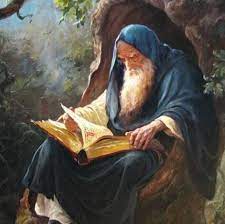
Have you ever sat in the presence of an old sage? A person who is full of wisdom and knowledge. One of my dearest mentors and confidants was my former pastor. This was a gentleman that knew my grandmother and grandfather, they were a minister and minister wife. He would fellowship with them on a regular basis. This means a lot because my grandfather passed away two years before I was born.

This pastor and I had a great relationship. We met when I was in middle school and he was such a gentle and caring individual. We continued our mentorship into my adult life. There were many instances that I would call him in the middle of the night with many dilemmas and situations. He always would have the right words to give me in those times. But I only understood him after I was an adult. He passed away a couple of years ago, but I can still hear his voice and his many sayings.

The most interesting part of our relationship is that as a young youth, I could hardly understand anything that he said. The words were intelligible and crafted, but I was still without experience to fully understand the true meaning of the wisdom. It was only several months before he passed away that I found the key of his wisdom. We can spend countless hours trying to understand what our elders are saying, but it is only revealed when we have the experience to truly understand and make the correct choices.

In this proverb, it reminds me of my time with my pastor. At first glance, there are many different pieces that somehow come together. I picture the author writing things for a purpose, but they are also somewhat random. From my understanding there are four people that are addressed in this proverb: the children, the fool, the wicked, the wise. Throughout our lives we can be each of these individuals. We have to make the deciding and discerning effort to listen to the wisdom of the spirit.

We understand that children are individuals that are not able to make decisions on their own ability to see the best for themselves. Fools are by biblical definition are is someone that disregards God’s word. Fools are individuals that do not learn from their mistakes. Someone that continues to do the same thing even though they know it is not correct. Proverbs 26:11 – Like a dog that returns to his vomit is a fool who repeats his folly.The wicked are those that overtly despise righteousness, truth, justice and honor. The wise are individuals who have keen judgment, deep understanding, and a capacity for sound judgment.

Children 

6 Children’s children are a crown to the aged,
    and parents are the pride of their children.

Fools 

12 Better to meet a bear robbed of her cubs
    than a fool bent on folly.

16 Why should fools have money in hand to buy wisdom,
    when they are not able to understand it?

28 Even fools are thought wise if they keep silent,
    and discerning if they hold their tongues.

Wicked 

23 The wicked accept bribes in secret
    to pervert the course of justice.

Wise Counsel or Advice 

17 A friend loves at all times,
    and a brother is born for a time of adversity.

22 A cheerful heart is good medicine,
    but a crushed spirit dries up the bones.

26 If imposing a fine on the innocent is not good,
    surely to flog honest officials is not right.

27 The one who has knowledge uses words with restraint,
    and whoever has understanding is even-tempered.

We at one point and time in our lives have been part of each of these individuals. We all have had times when we were young. We didn’t have the ability to see the fullness of life and had to have mentors and helpers to guide us to sound judgment. We have been foolish in many ways. We knew that God needed us to do and continue to make the same follies. When we are corrected with love and support we are able to transition to understanding. There may be times that we are wicked in our own way. But there are many times and opportunities that God will give us a way to step away from wickedness and understanding and choose Him. Then after many iterations and times we are hopeful to get to the point of being able to discern and understand more with experience and trials. But with the new understanding comes more responsibility, we have to help the others that come behind us.

So this proverb is for all of us. It is stating something for each of us at different times in our lives. Let us pray that God will be able to use us in all of our forms: child, fool, wicked, and wise; to be able to allow His glory to prevail in spite of the craziness of life.

Be blessed
Guard Your Heart

Do you have a guard dog? We have a dog, but she is not a guard dog.  She loves to greet you at our door and jump all over you. But, as she has aged she is very jumpy. Every time someone enters a door, or pops around a corner she gives a loud high pitched bark. Just one bark, more like an alert, watch out, someone is here. Even if you walk out of the room for a minute and come back she will give her alert bark. Maybe she thinks she is keeping us safe by letting us know when anything in her environment changes.

When something is important to us we guard it. When I take off my wedding ring, I put it in a safe place. When I leave my house or park my car I lock them. And when I am in the grocery store, I guard my purse as it sits in the seat of the grocery cart. One cannot be too safe anymore.

In today’s reading we are encouraged to guard our hearts above all else.

Above all else, guard your heart, for everything you do flows from it.
Proverbs 4:23

This means that guarding our heart should be our priority. Just like we guard our important possessions.

So what does it look like to guard your heart?

We guard our physical heart by eating healthy and exercising. Everything we eat affects how our heart works throughout our body. But, we also have our spiritual heart that King Solomon speaks of in the verse above. Our spiritual heart produces our spiritual life.

The heart is the center of our spiritual being, where all our emotions are ready to be brought forth. The problem is, our heart can be deceitful, we cannot trust every emotion that flows from the heart. We guard our heart by guarding our mind. We guard our mind and what we think about by being cautious as to what our eyes see and what our ears hear. Reading God’s Word is the key to getting the Truth to soak into our heart.

My son, pay attention to what i say; turn your ear to my words. Do not let them out of your sight, keep them within your heart; for they are life to those who find them and heath to one’s whole body.
Proverbs 4:20-22

Just as we physically exercise our heart to keep it healthy we need to spiritually exercise our heart by continually being in God’s Word, worshipping Him, serving Him and talking to Him. This will guard our heart from all the evil that surrounds us.

One Foot in the Sand

Today’s reading is Proverbs 3.

When reading Proverbs 3:5-6, I thought of the office chair I’m sitting on. What if, halfway through bolting it together and making sure it was tight and steady, I got fed up with the whole process and stuck the rest together with Elmer’s glue. Should I really be surprised sitting on the chair and it falling apart after maybe a few seconds? No; a solid seat requires diligent work throughout the whole process. 

When reading about the blessings of the Lord bestowed upon those who follow His word in Proverbs 3 this week, verse 5 resonated with me – “Trust in the Lord with all your heart, and do not lean on your own understanding in all your ways acknowledge Him, and He will make straight your paths.” Trust requires diligent work as a whole to have any impact – does a healthy marriage sound like one where you half-trust your spouse? When we trust in the Lord with our whole and lean on His wisdom and guidance instead of our own, he provides a path through whatever life can bring for us and glory in His kingdom, while failure and shame are guaranteed for those who don’t.

John Trapp said, “He that stands with one foot on a rock and another foot upon a quicksand, will sink and perish as certainly as he that standeth with both feet on a quicksand.” I ask myself – do I lean with my whole self on God’s understanding, or am I trying in vain to balance between His and my own? What could anyone like me possibly know or do that God could not accomplish? When standing wholly in God’s word, our footing remains firm, our path remains straight, and our seat is guaranteed not to be held together by our own flimsy handiwork, but to be at the table by our Father’s side. I simply pray today that God would continue to move in me to trust in Him over myself for the blessings He affords us.

Do You Seek It?

Today’s reading is Proverbs 1.

The fear of the Lord is the beginning of knowledge; fools despise wisdom and knowledge.

Proverbs 1:7

Just last week our 10-year old asked us what fearing the Lord meant. I know at least for me it is not easy to explain. However, if you look up the definition of the word ‘fear,’ Merriam-Webster gives one definition as, “profound reverence and awe especially toward God.” Thank you, Meriam-Webster…that helps. When I think of standing in awe of something, I think of the time our family visited the Grand Canyon as a child. None of us had ever been there before. When we got out of the car and walked up near the edge, I don’t think anyone said a word for a while. If there were flies around, one of us probably could have caught one in our mouths because our jaws may have been dropped, too! While the Grand Canyon is not a person, I would say we had respect for it pretty quickly…I know I wasn’t getting too close to the edge! Now, if we were in that much awe of the Grand Canyon, imagine what it will be like when we see the God who made it…

If we respect God immensely and we are in awe of his power and creation, we likely will not only want to please Him and follow His instruction, but we should also want to seek His wisdom. Sometimes we may move away from things we are in awe of like me from the edge of the Grand Canyon. However, how cool is that despite God wanting us to have reverence for Him, He wants us to actually get closer to Him? James 4:8 says, “Draw near to God, and He will draw near to you. ” Proverbs 1 is pretty poignant that if we don’t seek wisdom from Him we will experience bad things using words like calamity, anguish, distress, and terror.

So, how do we seek God’s wisdom?

Here a few ways….

  • Attend a church that preaches and teaches from the Bible
  • Read His Word and possibly a daily devotional to help with the interpretation and explanation, as well as perhaps giving thought provoking commentary and reflection
  • Attend a small group/Bible study
  • Pray and also ask for His wisdom

What area is the one area you feel like you could improve on to gain wisdom from God?

For me, I would say it’s prayer. It’s not lack of prayer (although I could and should pray more) as much as it is I need to remember to ask God for wisdom in my prayers. And that’s not just for wisdom in my perceived problem areas I’m praying to God for help, but also just wisdom daily to be a better Christ-follower, better husband, better father, better son, better friend, and wisdom to be a better financial planner (my career)….wisdom in the ‘little decisions’ I will make that day and that I make each and every day. I should also be in conversation (prayer) with Him throughout the day asking for wisdom in these things.

I pray that as we stand in awe and reverence in fear of God, we seek His wisdom and reflect on how we can better do so.


Do Not Fret

I know summer is over and fall is here when I have to dump all of my flower pots and dispose the dead flowers. All of the pretty colorful flowers and green leaves have withered and turned brown. It happens every summer. But, after 3 months of watering I am ready for them to be gone.

In our reading today, David writes about green plants that will die away. He relates them to those who do evil. Those who do evil will also wither and die away.

Do no fret because of those who are evil or be envious of those who do wrong; for like the grass they will soon wither; like green plants they will soon die away.
Psalms 37:1-2

Do you ever find yourself “fretting” because of those who are evil? There are so many things we can and do “fret” over in our world today. I don’t even need to list them. You know why you had trouble falling asleep last night or why your heart sped up when you heard certain news today. Our minds can get caught up in all the reasons we have to “fret.”

The Merriam-Webster dictionary defines fret as
1- to eat or gnaw into: corrode
2- to cause to suffer emotional strain

David again says to not fret in verse 7:

Be still before the Lord and wait patiently for him; do not fret when people succeed in their ways, when they carry out their wicked schemes.
Psalms 37:7

When we fret, we turn our focus from God to ourselves. We think of all the ways we can change things or circumstances. We lie awake at night thinking about all the “what-ifs.”   David is telling us in Psalm 37 to STOP!

David calls us to trust in the Lord, find our delight in Him, commit our ways to the Lord, rest in the Lord, and to wait patiently for Him.

We are not to fret because ultimately God will pour out His justice. The evil doers will wither, just alike our summer flowers. When we find our mind beginning to fret, we need to delight in Him instead.

How do we delight in the Lord?

Psalm 37:3 tells us to: Trust in the Lord, and do good; Dwell in the land, and feed on His faithfulness.

Psalm 37:5 tells us to: Commit our way to the Lord, Just also in Him, And He shall bring it to pass.

Psalm 37:7 tells us to: Rest in the Lord, and wait patiently for Him.

When your mind is fretting and turning to all the evil around you, turn to Psalms 37 and read these verses. Delight in the Lord and He will hold you up.

The Lord makes firm the steps of the one who delights in him; though he may stumble, he will not fall, for the Lord upholds him with his hand.
Psalms 37:23-24

Sweeter Than Honey

I want to experience God the way David did in Psalm 19. Take a closer look noticing the metaphors and imagery he uses to describe God. These are not simple thoughts of how great God is, but elaborate descriptions of God’s character. This is not David being creative. These descriptions come from experience. God showed up in David’s life and David was careful to pay attention. Now, when writing the words, he is simply drawing from what he knows to be true.
As David establishes who God is, something profound happens. He becomes deeply reverent. That’s why he moves into the second part of the poem exclaiming that he wants God more than any other thing, Even gold! At that moment, David becomes keenly aware of his humanness. He is humbled. What Does that mean? Andrew Murray describes it this way, “[Humility] is not something which we bring to God, or He bestows; it is simply the sense of entire nothingness, which comes when we see how truly God is all, and in which we make way for God to be all.” That last phrase really says it. When we develop reverence which produces humility, “we make way for God to be all.” We see David committing to exactly that in this Psalm.
Despite this amazing Psalm, David is not the best example of humility in the Bible. Jesus is. Consider Philippians 2:6-9. “Jesus, who, though he was in the form of God, did not count equality with God a thing to be grasped, but emptied himself, by taking the form of a servant, being born in the likeness of men. And being found in human form, he humbled himself by becoming obedient to the point of death, even death on a cross.”
If you have strayed, as David did, there is one way to find your way back on the right path. Do like David did and describe the character of God.

Authenticity

Today’s reading is from 1 Corinthians 2:1-16.

Authenticity is on my mind today as we traverse life.

Many times, we “put on a face” of everything in our lives is great.  Our job could not be better.  Our kids are thriving and happy.  Our marriage is like a fairy tale. We just completed the greatest vacation we have ever had, and it could not have been more restful and relaxing!

Is that how your life feels?

I am not afraid to say that life can be a struggle and brings about a fresh set of challenges.  I believe my state of mind and expectations drive my response.  My response to these challenges varies based on the day, what else is going on, and my state of mind.  I am human.  I am imperfect.  I don’t always react to challenges the way I should.

Most importantly, I think we need to surround ourselves with authentic and open relationships where we can share our lives with others in an authentic way.  There is power in understanding that others have similar challenges, others have similar struggles, and know that we are not alone in our attempt to deal with difficulties.

I love how the Apostle Paul writes in this reading with an authentic and vulnerable voice.

1 And I, brethren, when I came to you, did not come with the excellence of speech or of wisdom declaring to you the testimony of God.

3 I was with you in weakness, in fear, and in much trembling.

4 And my speech and my preaching were not with persuasive words of human wisdom, but in demonstration of the Spirit and of power. NKJV

Life is messy.  Situations do not always turn out like we planned.  We are not always at our best. Relationships are complicated.  Jobs don’t always turn out to be the dream we though they would be.  Vacations do not always end with the blissful moments we had hoped.

I would encourage us to surround ourselves with supportive, faith-filled people, that we can be authentic with.  We should strive to spend time with people that are not afraid to tell us when we are “off the path” and encourage us when we need it.  These are the same people who share with us when they struggle and when they need encouragement. Let us not surround ourselves with people who are not authentic and tell us what they think we want to hear. I pray that we open ourselves up to vulnerability and input from mentors, small groups, and positive influencers in our lives to help us work through difficult situations.

God encourages us to surround ourselves with other believers and commune together. Hebrews 10:24-25 says the following:

24 And let us consider one another in order to stir up love and good works. 25 not forsaking the assembling of ourselves together, as is the manner of some but exhorting one another and so much the more as you see the Day approaching. NKJV

Unconventional Wisdom

Looking at various social media sites you’d think that most people’s lives are all fun, they always look good, are always happy, and things are under control. Selfies when shared depict how we want people to see us, and advertising helps propagate many misperceptions. Over time as we observe these images and messages, we can be succumbed to believing that money buys happiness, looking good means you feel good, or that it is easy to be thin and have a nice body “by following these simple steps”.

Recently a highly respected personal trainer who specializes in strength training shared a related story. A prospective client came to him with a photo of an extraordinarily physically fit person. The prospective client asked how long it would take to look like the person in the photograph. The trainer replied, “with a lot of hard work, a strict diet, and a strong commitment it could take about two years, maybe more”.

Frustrated, the prospective client said, “that’s too long” and decided not to even try, just like that. This person had come to believe the lies that the world is spinning and that there are shortcuts to everything that is great.

It is with a similar mindset that many approach faith or even disdain such beliefs. Many listen to what the world (or the ruler of lies) spins as “conventional wisdom”: You don’t need God, do what you like, Christianity is a myth, or that people who believe are weak and foolish.

For the message of the cross is foolishness to those who are perishing, but to us who are being saved it is the power of God. (1 Corinthians 1:18)

The truth is that God turned this “conventional wisdom” upside down when he used an unassuming carpenter from a lowly respected town to become the Savior of the World. Even Satan wanted Jesus dead as though this might thwart God’s plan. It is something that at first didn’t seem to make sense, and that’s the beauty of it: It was God’s plan, the greatest event of all time, the resurrection of Jesus Christ, defeating death so that we can live.

19 For it is written: “I will destroy the wisdom of the wise; the intelligence of the intelligent I will frustrate.” 20 Where is the wise person? Where is the teacher of the law? Where is the philosopher of this age? Has not God made foolish the wisdom of the world? (1 Corinthians 1:19-20)

Read God’s word and listen to his truth. He has a plan for you regardless of your status, the sins of your past, or your self-image. The same went for the early followers.

Brothers and sisters, think of what you were when you were called. Not many of you were wise by human standards; not many were influential; not many were of noble birth.  (1 Corinthians 1:26)

They were nobodies (by conventional wisdom) who God used for great, and even if you think you’re a “nobody”, you are somebody in God’s eyes. You are loved by God more than you know, and he can and will use you for great if you let him. Trust and obey.

Today’s reading: 1 Corinthians 1:18-31

Undivided

Today’s reading:  1 Corinthians 1:1-17

I was out running the other morning and Tim McGraw and Tyler Hubbard’s 2021 song Undivided started to play.  I don’t know enough about either artist to know whether they are Christfollowers or not, but the song has a catchy tune and an uplifting message.

I think it’s time to come togetherYou and I can make a changeMaybe we can make a differenceMake the world a better placeLook around and love somebodyWe’ve been hateful long enoughLet the Good Lord reunite us‘Til this country that we love’sUndivided

In our scripture for today, Paul was writing to the Corinthian Church to encourage them and address a few problems he heard they were having, one of which was divisiveness.  The Corinthian church was a diverse group of Christfollowers that included wealthy merchants, common laborers and even former temple prostitutes.  They found themselves quarreling about a lot of things from loyalty to certain leaders (Paul, Apollos, Peter, Jesus) to which spiritual gifts were more important.

After an opening greeting and thanking God for the gifts he had given the Corinthian Church, Paul began his message by calling his audience “brothers and sisters”.  This was likely to emphasize that, despite their varied backgrounds, members of the Corinthian church were all part of the same family – the family of God.  Paul asked them to stop arguing and focus on what truly mattered, rather than the small differences that were taking them off course and driving them apart.

 I appeal to you, brothers and sisters, in the name of our Lord Jesus Christ, that all of you agree with one another in what you say and that there be no divisions among you, but that you be perfectly united in mind and thought (1 Corinthians 1:10).

Paul’s message to the Corinthian church is very timely for us 21st century Christfollowers.  We come from a lot of different places, some of us grew up in the church and some of us didn’t.  We don’t all look the same, sound the same, or share common experiences.  But even if we don’t agree on every detail, we can be united and work together in harmony if we agree on the one thing that really matters – Jesus Christ is Lord.

...yet for us there is but one God, the Father, from whom all things came and for whom we live; and there is but one Lord, Jesus Christ, through whom all things came and through whom we live (1 Corinthians 8:6).

I Am Sorry

I got married at the ripe old age of 24. Those early years of marriage were very formative. More than anything, I learned that my life is no longer my own. In other words, the commitment of marriage requires that I make choices with two people in mind, not just myself. Of course, there were many times that I did not meet that expectation. Failure to do so led to conflict. I learned quickly that I could settle the conflict with three words. You know them too. “I am sorry.” That phrase pretty much settles the conflict. They work until it happens again. At that moment, saying “I am sorry” is a false promise.
Jennifer is a patient woman. She tolerated my errant behavior and even accept my apologies. But, she quickly understood that my apology was a tactic to end the argument, rather than a sincere desire to change my behavior.  She called me out. “Being sorry,” she said, “means that you will never do it again.” Ouch.
She may not have known it at the time, but her words mimic Jesus. When it comes to forgiveness, Jesus instructs us to rebuke the sins of other believers. Meaning that we are to let them know where their behavior is not consistent with their commitment. “If,” he continues,” there is repentance, “forgive.” This process continues, as long as there is repentance.
My previous behavior has me questioning the process. How many times have I told Jesus that “I am sorry,” with no intention of changing my behavior? I fear that much of the time, I am simply trying to end the conflict. Those three words are hollow. When they are, they do not produce the justification, salvation, and forgiveness that I need. Justification comes only with a full sense of guilt, according to PT Forsyth. In fact, “you cannot get a full, justifying faith without a full sense and confession of guilt.”
Guilt, therefore, is the catalyst for change.  Now, when we experience guilt, we have two options.  If not confronted, it becomes a source of shame and embarrassment.  But that is not its design.  Instead,  Jesus wants our repentance.  When we present ourselves to him humbled and guilty, he listens.  More importantly, he forgives.  Even, he says, “if I wrong him seven times a day.”