Confused

Today’s Reading: Acts 19

One of the enemy’s best weapons is confusion.  When we are confused, we are unable to see things clearly.  It disrupts our decision-making process, often resulting in choices that are irrational and inconsistent with our core beliefs.  Many times, confusion is produced by the people around us.  We are continuously barraged with differing world views and alternative belief systems.  Want proof?  Take a closer look at today’s reading.  Did you notice in verse 29, “the whole city was in confusion?”

To understand the city’s confusion, we need to look back to verse 23.  Up until that point, Paul was actively spreading the word of God.  Acts 19:20 says that the Lord’s message Paul presented was “spread widely and had a powerful effect.”  Clearly, lives were being changed.  Not everyone, however, was happy about this.  In fact, a man named Demetrius was suddenly worried about the impact that these new beliefs would have on his business.  To combat this, he developed a strategy.  He knew, that it would be easy.  All he had to do was confuse people.

Demetrius starts with the economic conversation, encouraging them to consider the consequences of slowing sales.  It was enough to spark some fear, but not enough to start a rebellion.  To intensify their reaction, he adds confusion by suggesting that the magnificent goddess, Artemis will be robbed of her “great prestige.”  This was all it took.  The people were sufficiently overwhelmed by these significant changes.  The fear it stimulated caused their anger to boil (v18).  It wasn’t long before full on rebellion occurred and “everything was in confusion” (v32).

The sad reality is that we are subject to the same confusion.  J.I. Packer elaborates on this.  He says, “we are so consumed with great thoughts of man that we only have room for small thoughts of God.  Second, we are confused by modern skepticism.”  Is it any wonder that it’s one of Satan’s preferred weapons?  Thankfully, the Spirit who lives in us, is greater than the spirit who lives in this world (1 John 4:4).  When we arm ourselves with His truth, we win.  I have found a very practical way to avoid confusion.  It comes from remembering who God is and who I am.  The following affirmations, despite their simplicity, are powerful statements that bring clarity, hope, courage and refreshment.

I believe that God is who he says he is

I believe that God can do what God says he can do

I believe that I am who God says I am

I believe that I can do what God says I can do

God’s Word is alive and active in me

I believe God
 

Christianity – History That Changed the World

Acts, written by the disciple Luke, speaks to what occurred following the final resurrection of Jesus.   It speaks to how the disciples organized and began the work of spreading the Gospel as commanded by Jesus.  It also recounts the most critical moments in the history of Christianity, and mankind, when the disciples initiated the ministry of Jesus of Nazareth to proclaim Him as the Son of God and the only way to salvation.

As a student of history, I frequently watch and read biographies of presidents and leaders, dive into a World War II documentary, or learn about key moments in our nation’s history related to the Civil Rights Act, Watergate, the Vietnam War, the Cold War, and the list goes on.

Events in history are recounted and reported based on interviews or statements from those that were a part of the event as well as historians who read documents and evaluate historical relics to summate the events that occurred. Much of history is interpreted and reviewed years later by historians that were not at the event.

Why do we believe historians record of what happened in the past?

What strikes me most about the Bible, and specifically Acts, is we are reading the words of the man who was there.  Luke, who was a disciple of Jesus and traveled with Him throughout His ministry, witnessed with his own eyes the miracles and life of Jesus.  In the Book of Acts, Luke chronicles how the disciples were commissioned to spread the Gospel and begin what we know as today as Christianity.  Here is an article that indicates there are 2.3 billion Christians in the world, which is nearly a third of the world’s population.

What I continually consider is the first five books of the Bible were written by people who were eyewitnesses to the life of Jesus. Why do people not believe the testimony of an eyewitness to the life and miracles of Jesus?

My first thought is that the events we read in history books don’t necessarily ask us to make changes to the way we live our lives.  We can hear and believe in the chronicles of JFK, MLK, and FDR but it doesn’t change our way of life today.

Listening and validating the life and miracles of Jesus challenges us to believe that Christ is the Son of God.  The historical parables and stories of the Bible provide us examples of how to live our lives, as well as how not to live our lives.  Nothing is new under the sun.  We think our challenges and strife are unique to us, but they are not. Mankind has continued to struggle with the same challenges and issues over and over.

The value of the Bible is that we can learn from the lessons and parables and improve our daily life as well as provide us purpose.  Life is hard. Challenges and strife do not make sense. The angst and negativity can be impossible to bare.  We can learn and appreciate the stories and parables in the Bible. Yet could all the challenges in our lives be for a purpose?  Perhaps God has a plan for all our heartache and unhappiness?  The Bible tells us time and time again that our lives will be forever changed while we are on earth, and in eternity.

James 1:12

Blessed is the one who perseveres under trial because, having stood the test, that person will receive the crown of life that the Lord has promised to those who love him.

John 16:33

I have told you these things, so that in me you may have peace. In this world you will have trouble. But take heart! I have overcome the world.

Psalm 34:19

The righteous person may have many troubles, but the LORD delivers him from them all.

Revelation 21:4

He will wipe every tear from their eyes. There will be no more death’ or mourning or crying or pain, for the old order of things has passed away.

Romans 5:3

Not only so, but we also glory in our sufferings, because we know that suffering produces perseverance.

Romans 8:18

I consider that our present sufferings are not worth comparing with the glory that will be revealed in us.

I pray that you will read this today, and trust the prophets and disciples, otherwise known as historians, that wrote the Bible.  Their words could change your life, for eternity.

Psalm 50 – Covenant

We’ve recently signed a lease on a furnished apartment. The owners of the apartment are friends of ours so the lease agreement comes with greater expectations as to how we will care for the property. We have both a legal and friendship “covenant” (agreement). Being legally bound to an agreement is one thing, respecting a relationship is a matter of the heart.

For example: What if we break a drinking glass? The agreement has no language regarding our responsibility however in my mind without a doubt, as a friend, we know what is right.

To add a twist to the theme, what if the owner of the apartment was a billionaire and owned a factory that made this glassware? If their financial resources were seemingly infinite and the one broken glass could be replaced by the snap of their fingers, should we still care about the one glass? Absolutely! This isn’t about the glass itself, it is about friendship, respect, honor, and integrity.

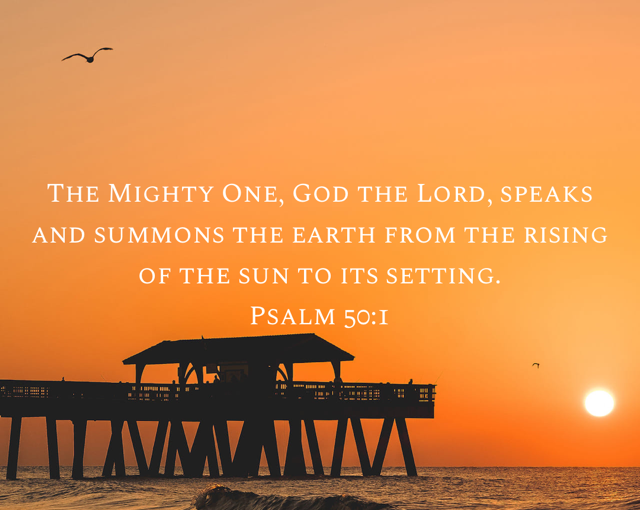
“Gather to me this consecrated people,
who made a covenant with me by sacrifice.” (Psalm 50:5)

In the same way, after supper he took the cup, saying, “This cup is the new covenant in my blood; do this, whenever you drink it, in remembrance of me.” (1 Corinthians 11:25)

Similar to the covenant and relationship with our landlords and friends, as children of God, we are part of an eternal covenant. We have the responsibility to give sacrificially of our resources (time and money) and to love others unconditionally in the way that Christ loves us.

for every animal of the forest is mine,
and the cattle on a thousand hills.
I know every bird in the mountains,
and the insects in the fields are mine.
If I were hungry I would not tell you,
for the world is mine, and all that is in it. (Psalm 50:10-12)

In giving we must acknowledge that God has literally infinite resources. Everything belongs to him therefore when we give to him, we are merely giving back what was his in the first place. We’re not doing him any favors. He doesn’t need our gifts, he wants our attention, he wants our hearts, he seeks a relationship with us.

In this relationship my main failure is around the tendency to “forget” God. Going about life on my own, doing it my way, and somehow taking credit for the good things that happen.

“Consider this, you who forget God, or I will tear you to pieces, with no one to rescue you: (Psalm 50:22)

Since forgetting him is a sin (and I’m quite sure none of us want to be torn to pieces), let us remember him through continuous gratitude for all he has given and for what Jesus has done. Our thankfulness is a sacrifice, it is us humbling ourselves before him, putting him in his rightful place.

The one who offers thanksgiving as his sacrifice glorifies me;
to one who orders his way rightly
I will show the salvation of God!” (Psalm 50:23)

Praise the Lord

Today’s Reading:  Psalm 47

Sing praises to God, sing praises; sing praises to our King, sing praises (Psalm 47:6).

Praise:  verb – to express approval or admiration of; commend; extol (Dictionary.com).

Did you know the word “praise” appears in the King James version of the Bible 259 times?  As children of God, we are commanded to praise him.  Does this seem a little counterintuitive?  Throughout history, I would tell you every leader I know of that demanded his/her followers to salute, bow, or offer some sort of praise could be categorized as a narcissist (a person who has an excessive interest in or admiration of themselves).  So does it seem a little backward to you that God, who teaches his followers to be humble and to turn from self-centeredness, would require us to praise him?

It does to me.  While I trust God knows what is best, a little context on why always goes a long way for me.  A few thoughts on why we are commanded to praise God:

  • Because he is worthy of our praise. You are worthy, our Lord and God, to receive glory and honor and power, for you created all things, and by your will they were created and have their being (Revelation 4:11).
  • Because it is pleasant for usPraise the Lord, for the Lord is good; sing praise to his name, for that is pleasant (Psalm 135:3).
  • Because it builds our faithNot only that, but we rejoice in our sufferings, knowing that suffering produces endurance, and endurance produces character, and character produces hope, and hope does not put us to shame, because God’s love has been poured into our hearts through the Holy Spirit who has been given to us (Romans 5:3-5).
  • Because it silences our enemiesThrough the praise of children and infants you have established a stronghold against your enemies, to silence the foe and the avenger (Psalm 8:2).
  • Because he enjoys itGod inhabits the praises of his people (Psalm 22:3).
May this be your testimony today.
My mouth will speak in praise of the LordLet every creature praise his holy name for ever and ever (Psalm 145:21).

Empowered

Today, in Acts 1, we see Jesus appearing to the apostles after his death.  They are worried.  Even as Jesus is speaking to them, you can hear the anxiety in their questions.  Will you restore us now?  Will you make us free, finally?  They ask.  It’s funny, I find myself asking the same questions.  What is the point in Jesus if we cannot be free, right?   Of course, when I finally submit and ask the questions of God, I get the same answers.

You see, I have the same expectations as the disciples.  Now that I believe in Jesus and know that his work is complete, I expect life to get easy.  But that is not what Jesus does.  It never has been.  Take a look at Jesus’ response in verse 7.  Effectively, he says I cannot answer that.  That is for God to answer only.  So, no, I cannot do that for you.   Meh.  That is a tough answer!

Or is it?  Think about it.  Who would I become if everything was just handed to me?  So, short of death and perfection in heaven, Jesus offers something better.  Power.  “You will receive power when the Holy Spirit comes upon you” (Acts 1:8).  Now, before you dismiss that gift because it’s not what you want, right now, let’s consider what it is.

According to Strong’s Concordance, the word power is translated from the Greek word dunamis.   It is defined as power, might, and strength.  I get a better understanding of it, however, from studying how this word is used in the Bible.  Consider these: physical power, force, might, ability, efficacy, energy, meaning, powerful deeds, deeds showing physical power, and marvelous works.  That’s quite a list!

When I finally consider the power that the Holy Spirit provides, I see that my original question is the wrong one.  What if I began asking to be empowered by the Holy Spirit?  What might he choose to do in me and through me?  What about you?  There is only one catch.  In order to become it, we must first choose to accept and receive it.

Restored

Today’s Reading: Joel 2:18-32

As we have read through Joel the last few days, we have heard about the Two Things – listening to God, and telling others about this great news.  We have also looked at Don’t Fear the Past, Embrace the Promise.  I pray you have had the opportunity to reflect and live out these essential pieces given to us through the word of the prophet Joel.

Today as we continue in Joel, I paused on the restoration promised to us all who are faithful and truly put their trust in the Lord. The Bible is filled with rich images of healing and restoration. It is a consistent theme of both the Old and New Testaments.  Sometimes we fail the Lord badly.  I can recall events from the past when I didn’t have a relationship with the Lord; even in my current work in progress stages, I can catch myself needing to be restored based on my sinful failures.  Joel 2:25 says 

“I will repay you for the years the locust have eaten...”

Only our God has any authority to say something of this nature. On my own, when I think of past failures can be one-time events, days, weeks, or years of selfishness or stubbornness that led to sin, I know of only one who takes any of our shortcomings and says, I have them all.  You are forgiven.  Go and live your life for Jesus know. God will take the time we have on this Earth and multiply his love through us more than we could ever imagine.

This promise of restoration is for everyone. God set out a plan for Joel and the people of Judah.  He has a plan for each of us.  When we forget His plan and lean toward our own, He provides the path necessary for restoration.  God is looking for that today.

Think of the man on the cross next to Jesus. He had various failures that included stealing, and yet, through his concession and his life turned to Jesus right then, he joined Jesus in paradise for eternal life. Some might think he didn’t deserve it; at times in my life, I know I don’t deserve it when I listen to the world.  Thankfully it’s not about what I deserve.  It’s about His love for me and you.

Taking everything from our lives, turning them into His perfect masterpiece.  Repentance & Restoration

But I have this against you, that you have left your first love. Therefore remember from where you have fallen, and repent and do the deeds you did at first; or else I am coming and will remove your lampstand out of its place- unless you repent. Revelation 2:4-5 

Another Restoration song spoke to me.

Lecrae – Restored 


Don’t Fear the Past, Embrace the Promise

Today’s Reading : Joel 2:1-17

As a father, when I read the Bible and other literature, a part of me wants to figure out how I can relate this to my children or to others to help them to understand what the author is trying to relate. As I read Joel chapter 2, the most relatable scene would be that of the juxtaposition of a volcano and paradise.

Just a couple weeks ago, a friend and I were sitting and chatting. As we chatted we found ourselves quoting Disney movies. One of the movies was Moana. We talked about oceans and volcanoes. In Moana, the heroine is in search of a volcano and attempts to bring closure to the grief of the volcano. Moana finds the volcano, but so much grief and time has gone by that the volcano is now sunken into the ocean. Moana has this small piece of the volcano,the heart of the island “Hope”, and replaces the hope by faith and restores the volcano to paradise. The resolution of the story is the volcano and the terror that she was confronted with turns into paradise.

Joel 2:1-17

Blow a trumpet in Zion;

    sound an alarm on my holy mountain!

Let all the inhabitants of the land tremble,

    for the day of the Lord is coming; it is near,

a day of darkness and gloom,

    a day of clouds and thick darkness!

Like blackness there is spread upon the mountains

    a great and powerful people;

their like has never been before,

    nor will be again after them

    through the years of all generations.

Fire devours before them,

    and behind them a flame burns.

The land is like the garden of Eden before them,

    but behind them a desolate wilderness,

    and nothing escapes them.

Their appearance is like the appearance of horses,

    and like war horses they run.

As with the rumbling of chariots,

    they leap on the tops of the mountains,

like the crackling of a flame of fire

    devouring the stubble,

like a powerful army

    drawn up for battle.

In chapter 2 of Joel,  imagine a volcano erupts and takes over the island. The volcano eruption is not planned and it cannot be hindered. The complete demolition of the island is inevitable and there is no hiding. You have to evacuate. The people are not safe. The houses are not safe. The island is not safe. 

The sky turns black, the army and enemies of the people are chasing down the mountain synonymous with the lava flowing down the mountain and nothing can stop it. But in the resolution,  God shows paradise in the promise that we have available to us. And this is not a promise that is hinged on something that we have to do, but it is a promise that God gives us.

Joel 2 :12 – 13

“Yet even now,” declares the Lord,

  “return to me with all your heart,

with fasting, with weeping, and with mourning;

13 

    and rend your hearts and not your garments.”

Return to the Lord your God,

    for he is gracious and merciful,

slow to anger, and abounding in steadfast love;

    and he relents over disaster.

In this passage I believe Joel is trying to convey that we should not fear the past or what things may come. But we should hold onto the promise which God has given us. In this passage Joel outlines what God has promised for us in the midst of the potential for danger and for fear.

This particular passage resonates with me currently because of the past years that my family has experienced. We have had so many hard times in the past year that we can get overwhelmed with the thoughts of the past year, five years, even ten years. If we have remained in these memories, we would not be able to see the goodness that God has given us in the midst of the tears. Last year, Ollie had some major seizures and health conditions. Four years ago, our friend almost died while giving birth to her daughter. Six years ago, Oliver had a three-week stent in the hospital with major surgery and was diagnosed with Crohn’s disease. Seven years ago, Nadya was baptized. Eight years ago, Ruby was baptized. Ten years ago, Oliver was hospitalized for three weeks and diagnosed with a milk protein allergy. Ten years ago, Oliver was baptized.

But today we are experiencing the promise of God: healthy children, our friend is celebrating her daughter’s fourth birthday. The kids are playing and each night I am able to kiss them goodnight and tuck them in. I don’t take these for granted. I smile with tears flowing knowing that I am experiencing the goodness and grace of the promise. We know what we have experienced, but I cherish the expectation of the promise.

Be blessed.

Two Things

The book of Joel gives us two commands. The first command is the importance of listening to God. But, listening to God is not enough, the second command is God’s desire that His people tell others what they have heard.

Hear this, you leaders of the people. Listen, all who live in the land. In all your history, has anything like this happened before? Tell your children about it in the years to come, and let your children tell their children. Pass the story down from generation to generation.
Joel 1:2-3

The following verses in Joel chapter 1 describe the national disaster that Israel faced. A terrible plague of locusts destroyed the land. They stripped bare every growing thing. A nation-wide drought and famine hit the land. God uses Joel to call the people together for prayer and fasting.

Announce a time of fasting; call the people together for a solemn meeting. Bring the leaders and all the people of the land into the Temple of the Lord your God and cry out to him there.
Joel 1:14

We have experienced national calamity in the past week… again. Joel is giving us a reminder that we should follow his words and cry out to God. We may not be facing the same trials as the people of Israel, but we face horrors that we cannot fathom. God hears the cries of His people. We are called to listen to God and pass on what we hear to others. God is calling Israel to turn back to Him. He is doing the same today.

Joel reminds his people that the day of the Lord is near.

The day of the Lord is near, the day when destruction comes from the Almighty. How terrible that day will be!
Joel 1:15

God is calling His people to turn back to Him. He is calling our attention every day. Through the horrible tragedies we see happen in our nation God is asking us to cry out to Him. To stop, to listen, to tell others of Jesus.

He is coming.

Dem Bones

Today’s reading is on Ezekiel 37.

A small example model skeleton

You know those model skeletons you see in science classes? Imagine going up to one of those, starting a casual conversation with it, and asking it to get up and start dancing with you. Do you think it’d listen to you? As you expectantly cha-cha around the room waiting for your boney friend to join you, do you think any onlookers would be questioning your emotional state?

The idea of one of us successfully speaking life into a mere set of bones sounds awfully silly. But when God shows the power of His word & His spirit in Ezekiel 37, raising a vast army of flesh & blood in front of Ezekiel’s eyes from naught but long-dead bones, the power of the word of God over death becomes clear as day to the prophet – and us. God tells Ezekiel the meaning behind what He is showing the prophet in verse 11-14:

“Son of man, these bones are the whole house of Israel. Behold, they say, ‘Our bones are dried up, and our hope is lost; we are indeed cut off.’ Therefore prophesy, and say to them, Thus says the Lord God: Behold, I will open your graves and raise you from your graves, O my people. And I will bring you into the land of Israel. And you shall know that I am the Lord, when I open your graves, and raise you from your graves, O my people. And I will put my Spirit within you, and you shall live, and I will place you in your own land. Then you shall know that I am the Lord; I have spoken, and I will do it, declares the Lord.”

Unlike Ezekiel in the midst of this vision, our usual audiences of conversation aren’t piles of bones, but other normal people. We never know what exactly is going on inside of others, if they are feeling hopeless and cut off from God’s presence. But we do know where our hope, life, and spirit come from. The “one king” God tells Ezekiel about in this passage is our hope of eternal life; in John 11:25-26, Jesus says “I am the resurrection and the life. Whoever believes in me, though he die, yet shall he live, and everyone who lives and believes in me shall never die.” And in John 20:22, “he breathed on them and said to them, “Receive the Holy Spirit.”” The word of God through Jesus Christ has become our promise of victory over death, and in His word we receive the Holy Spirit. When we share this with the metaphorical living “dry bones” around us – people struggling for years with hopelessness and despair – and they accept Christ, they have the opportunity to find life and hope in a future at God’s side again. This same strength and hope that remains in His faithful can bring life to the neediest; so how are you using and taking advantage of that opportunity?

Lord, we know the life in us is more than the bones we leave behind and the breath that will one day leave our lungs for good; but your Word that move us and your spirit that fills us is what gives us eternal life. Lord, as you fulfilled your promise to bring your people out of exile back into the land of Israel, we know you will open our graves and lead us to our rightful home; let us never in all our days forget your promises to us. If we feel our hope is lost and we are empty, let us look to you for life, hope, and joy all of our days, that we may repay your promises and use the life you’ve blessed us with to glorify & praise you always.

God Still Speaks Today

Today’s reading is Ezekiel 2:2-10.

God comes to Ezekiel in visions to deliver a message to the people of Israel who He says have rebelled and transgressed against Him (Ezekiel 2:3). He says they are impudent and stubborn as well in Ezekiel 2:3-4. God is never wrong, but we can clearly see in the Bible why God is correct through the many times Israel sees God’s miracles right in front of them and then they still complain or turn away from God shortly after. This happened time and time again. No matter what God did and provided…it was never enough. They definitely had short-term memory.

It is easy to be quick to judge the Israelites until I realize I’m not really that different from them. I grumble and complain if not out loud, in thought which God knows. I have all I could ever want and more to meet my physical needs, as well as a wonderful wife and 4 wonderful miracles from God in the room with me. Yet..I worry about unnecessary things and want more. I forget how God has provided in the past and will continue to do so in ways I could not ask for imagine (Ephesians 3:20).  I forget that God tells me I will have challenges in the world, but to remember that He’s overcome the world and He works good through all of it (John 16:33, Romans 8:28). He has a plan and my story is a part of His bigger story. I forget that I’m a child of God and only what He says and thinks matters. And He loves me so much He sent His Son to die for me (John 3:16).

Today’s reading reminds me that many times God spoke through prophets and individuals to deliver a message to a group of people or person who needed it. We need to remember that God still does this today. He may speak to us when we need it through a friend, a mentor, a family member, something someone says in a small group setting, or a pastor through a sermon. The question is…am I listening and receiving it? Also..am I around Godly people and in settings where God can speak to me such as a good church and small group? If I am attending church but don’t feel God is speaking to me through it, is it because my heart is hardened and I’m not open to His message or do I need to find a different church that will help me connect with God better and develop a relationship with Jesus?

Some believe the significance of Ezekiel being handed a scroll in Ezekiel 2:9-10 was to signify that God also speaks to us through His written Word and also that the significance of words being on the front and the back of the scroll was to imply nothing can be added to it. It is complete. The question I must ask here is…am I reading God’s Word so that He can speak to me through it? Invariably when I’m in the Word in the morning I hear a message which I needed to that day based on something that’s been going on in my life. I don’t think that’s a coincidence. Hebrews 4:12 says the Word is living and active and is able to judge our thoughts and intentions. Simply put..God knows what we need and speaks to us through it.

Lastly, sometimes God has us as the messenger to speak to someone to impact them. Are you the messenger for someone right or is God tugging on your heart to tell you that you should be? God tells Ezekiel to speak whether they refuse to hear or not in Ezekiel 2:5. We can’t control the outcomes when we speak God’s Word and message into someone’s life. They may not be ready to change their ways today, but your message may still be impacting their thoughts which they aren’t sharing…. or they may come back to it in the future. Keep fighting the good fight which is to share the Gospel.

My prayer today is that we may be open to both receiving and sharing God’s Word and that we read the Bible and surround ourselves with people and a church who will help speak God’s truth in our life in a way that resonates with us and helps us develop a relationship with Jesus.