In today’s reading of Genesis 24 the word “loyalty” kept coming to mind even though the word itself does not appear within the chapter.
As I consider the word loyalty, I think about the people in my life who have been loyal to me as friends, family and loved ones and how important it is to be loyal to each other.
I’m not talking about loyalty to someones ideas or plans (because those are subject to error), I am talking loyalty to the person. Loving and supporting in good times and bad (like the marriage vows).
This past week we celebrated my wife’s birthday and one aspect of this celebration was to be able to observe how many people love and value her. She’s fun, funny, honest, a great listener, a great planner, and yes, very loyal.
When I thought about how amazing she is and how many people love her, I teared up a little bit with joy when she told everyone how she wanted to spend her birthday with just me. The woman I love, all to myself, all day, doesn’t get any better. I love and respect her loyalty to me as her husband through 19 years and counting. Thank you Amy, you are one of a kind!
Our God is loyal and he also expects us our loyalty in return.
Abraham’s servant showed loyalty as he took a long journey to find a wife for Isaac. He stayed loyal to his God in trusting his plans through miraculous answering of prayer. Rebekah’s family showed their loyalty and trust in the Lord by allowing their daughter to suddenly leave with this unknown servant and become the wife of Isaac. Young Rebekah showed her loyalty and faith by agreeing to immediately leave everything she knew and become the wife of someone she did not yet know.
Through all of this God proved himself again to be loyal and worthy of trust.
Reflect today on how God has been faithful to you, giving thanks for the sacrifice and resurrection of our Lord and Savior Jesus Christ.
Additional reading for today giving further insights into the life of Isaac: Genesis 26
Pragmatic – relating to matters of fact or practical affairs often to the exclusion of intellectual or artistic matters; practical as opposed to idealistic (Miriam Webster).
As I was updating my resume a couple years ago, I was looking for ten key words that described me and how I approach my work. One of my friends suggested the word pragmatic. While it wasn’t on my original list, I decided it describes me pretty well. I am a practical, figure out a way to get stuff done, kind of person.
My friend Amy called me last week. She had been asked to lead a big project and wanted my advice on how to approach it. So, we went to lunch on Friday to discuss it. My reaction after listening to the assignment she’d be given was, “well they’ve asked you to boil the ocean, but here is how I’d approach it”. It didn’t take long for us to come up with a plan for how she could clarify/prioritize objectives with her sponsors, then gather/analyze current state data to figure out the problem areas to solve first. A practical approach to start getting stuff done.
The Biblical person we are studying today is Sarah, Abraham’s wife. I think pragmatic is a good way to describe her.
God had promised Abraham and Sarah a child of their own. They had faith, and trusted God would do what he promised. Then they waited, and waited, and waited. By the time she was in her mid-eighties, Sarah’s pragmatism took over. Perhaps Sarah was tired of waiting or, what seems more likely to me, she decided God needed her help to make progress. At around 85 or 86, she decided to come up with a practical approach to start making things happen.
Since Sarah couldn’t have children of her own, her plan was for Abraham to conceive a child with her servant Hagar. This type of surrogate arrangement was not uncommon at this point in history. Married women who could not have children were shamed by their peers and often gave their servants to their husbands in order to produce heirs. Children born to the servant in this type of an arrangement were considered children of the wife. Ah ha, this plan would work for Abraham and Sarah’s situation. Good thing God had Sarah to help him along, right?
Wrong. Sarah’s plan initially worked. Abraham slept with Hagar and she became pregnant with a son. But because this wasn’t God’s plan, things started to unravel. Sarah became frustrated with Abraham and began taking her frustrations out by mistreating Hagar. Eventually, Hagar ran away from Sarah. An angel of the Lord intercepted her and turned her around to return to Sarah. Hagar eventually gave birth to Ishmael who, as the angel foretold, was wild and lived at odds with everyone. Hmm, maybe helping God’s plan along didn’t turn out so well after all.
Fourteen years after Ishmael was born, Isaac was born to Abraham and Sarah. Sarah was 90 or 91 years old when she gave birth to the child God had promised many years earlier. I could go on about the remaining 36 years of Sarah’s life, but I am going to stop here and draw your attention to two key lessons from Sarah’s life that spoke to me this week.
#1 – God keeps his promises even when we mess things up.
Sarah took matters into her own hands and created a mess. It strained her relationship with Abraham, ruined her relationship with Hagar, and produced a wild child that wreaked all kinds of havoc. But, God still followed through on his promise. Take a look at the first two verses of Genesis 21.
Then the Lord did exactly what he had promised. Sarah became pregnant, and she gave a son to Abraham in his old age. It all happened at the time God said it would (Genesis 21:1-2).
#2 – God is not bound by earthly limitations, he is capable of making unbelievable things happen.
As a woman in her early nineties, Sarah was way beyond child bearing years. Giving birth to a healthy child was not physically possible…without the miraculous work of God. Nothing is beyond the realm of possibility with him.
My challenge for us today is this – what areas of your life are you selling God short? Have you messed things up so bad that you no longer think he’ll work in your life? Are there things you think he can’t make happen? After studying the life of Sarah today, do you want to reconsider? Do you need to get on your knees, confess your lack of faith and recommit to fully trusting God?
Now to him who is able to do immeasurably more than all we ask or imagine, according to his power that is at work within us,to him be glory in the church and in Christ Jesus throughout all generations, for ever and ever! Amen(Ephesians 3:20-21).
Today’s reading is Genesis 15,17,22; Romans 4:1-5, 9-25
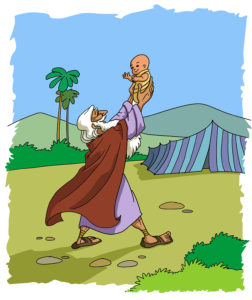
The Lord spoke to Abram and told him he would be the “father of many nations” even though he had no children and was quite old. “And Abram believed the Lord, and the Lord declared him righteous because of his FAITH” (Genesis 15:16). God then made a covenant with Abram and told him that he would make him into a mighty nation. This covenant was not merely one sided, there was a part Abram (now changed to Abraham) had to obey. In Genesis 17:10 God said, This is the covenant that you and your descendants must keep: Each male among you must be circumcised. It was a tall order but definitely a mark that set them apart and Abraham faithfully obeyed. Then in Genesis 22 Abraham’s faith is tested again when God asks him to sacrifice his son Isaac. Again, Abraham obeyed and got as far as lifting the knife to complete the sacrifice when an angel of the Lord stopped him in Genesis 22:12, “Lay down the knife”, the angel said. “Do not hurt the boy in any way, for now I know that you truly fear God. You have not withheld even your beloved son from me.” And the Lord provided an alternative sacrifice in response to his faith and he promised to bless him and multiply his descendants just as he said he would do in the beginning. .
Fast forward to the New Testament and Paul is sharing the story of Abraham with the Christians in Rome in Romans 4. His theme is FAITH. God used Abraham because he first “believed”. Romans 4:13It is clear then that God’s promise to give the whole earth to Abraham and his descendants was not based on obedience to God’s law, but on the new relationship with God that comes by FAITH. And through our faith, God blesses us beyond what we could even imagine. Did Abraham grasp the depth of God’s promise to him? Did he have any idea that he would be the beginning of the line to Jesus, the savior of the world? God did not use Abraham because he was perfect. It was his FAITH that made him righteous, not his good works. Because of his faith he was able to act in obedience when God told him to circumcise the males and then go on to sacrifice his son. God will also ask us to do things in response to our faith but those things do not save us, it is our faith that saves us. Rest today in the fact that Gods promise of salvation is a free gift that only requires our belief, not our perfect performance.
Romans 4:23-25Now this wonderful truth- that God declared him to be righteous-wasn’t just for Abraham’s benefit. It was for us, too, assuring us that God will also declare us to be righteous if we believe in God, who brought Jesus our Lord back from the dead. He was handed over to die because of our sins, and he was raised from the dead to make us right with God.
Good Morning and Happy Tuesday Bible-journal family,
Today’s readings is Genesis 6:1 – 9:17. (Noah)
Last week I asked my oldest son who Noah was? He said he built the ark and brought all the animals with him. I said that was a great start, and followed up with, Do you know why Noah was chosen for this? Why did God have this flood happen? Response… I forgot. So…to answer my own question and for his answer lets reflect on the life of Noah in these few chapters, lets dig deeper into his life as we will see who Noah was and why he was chosen by God to build the ark and why the flood happened.
Let’s look back at chapter 5 for a look at the creation of mankind. Genesis 5:1-2 says that, “when God created mankind, he made them in the likeness of God. He created them male and female and blessed them. And he named them “Mankind” when they were created.” This was God’s plan for how mankind would be. In the likeness of God! Verse 3 says, “When Adam had lived 130 years, he had a son in his own likeness, in his own image; and he named him Seth.” Do you see the difference? God created Adam and Eve in His image. Once sin had entered the world, Adam’s son was made in his likeness, in his own image. This would include all the people that were on the Earth when the flood happened.
When made in our own image we can be very selfish. Personally, I daily pray about my own selfish battles. Many days have ended in repentance from a sinful worldly focus. I continue to ask for prayers to seek His will and not my own in all things!
So why the flood? Why Noah? Let’s get to chapter 6-9.
Genesis 6:1-3 When human beings began to increase in number on the earth and daughters were born to them, 2 the sons of God saw that the daughters of humans were beautiful, and they married any of them they chose. 3 Then the Lord said, “My Spirit will not contend with[a] humans forever, for they are mortal[b]; their days will be a hundred and twenty years.”
The Lord saw how great the wickedness of the human race had become on the earth, and that every inclination of the thoughts of the human heart was only evil all the time. 6 The Lord regretted that he had made human beings on the earth, and his heart was deeply troubled.
God had seen how His beautiful, perfect world, and people change. He was hurt, and at the time sorry that He had made man. As I looked at the various population growth formulas its amazing to think of the number of people that were on the earth. Depending on the formula it ranged from 750 million to 4 billion people. Wow! At this moment is when God decided he was going to wipe everyone out. Well deserved with our sinful nature. Yet, God saw hope, he saw favor in someone that proved he was staying faithful and righteous for our Lord. Noah.
Verse 8 But Noah found favor in the eyes of the Lord! Noah was a righteous man, blameless among the people of his time, and he walked faithfully with God.
Thank you Noah for your faithfulness. Through God’s grace, Noah was chosen, He found favor in the eyes of the Lord. I’m so thankful for this grace that God showed Noah then and the grace that God shows us in our flood of sins.
Ephesians 2: 8 For it is by grace you have been saved, through faith—and this is not from yourselves, it is the gift of God— 9 not by works, so that no one can boast.
Still Noah’s obedience is amazing. I pray for obedience like this when God is telling us to follow His will. The work put in to build the ark is indescribable. Building, remaining faithful when I’m sure the onlookers thought he was crazy. From a worldly perspective doing everything Jesus asks can seem frightening. What will people think? I pray for boldness for us all to live like the righteous Noah God saw, in the face of others today. Be the example of kindness, love, joy, and thankfulness for all that God has given us.
Genesis 7:5 And Noah did all that the Lord commanded him.
Noah, his wife, his three sons Shem, Ham, and Japeth, and their wives entered the ark in addition to all the creatures. They listened to the Lord. According to the Flood Chronology of my bible the total time on the ark was 370 days, from Genesis 7:1-8:17. Of course in that time was the 40 days and 40 nights of straight rain.
1 Peter 3:20 reminds us of Noah… God waited in the days of Noah, while the ark was a preparing, wherein few, that is, eight souls were saved by water. (the above noted)
So after the 370 days what would you do?
Noah’s first action after exiting the ark was to give thanks. Build an alter to the Lord thanking Him for the Lord’s deliverance of him and his family. Thank you Noah for the reminder of how grateful we need to be for God’s deliverance every day. Will you thank God today. God has created us, saved us, and has promised a place for us to be eternally. So with our faithfulness, when the floods come, we can find peace that God will be there.
God thank you for your child Noah, who remained faithful. Help us to remain faithful in our doubts. To be obedient in following your will for our lives and not our own. We love you and are sorry for our selfish ways. Help lead us back to you. Amen
Time. This is one of the most essential human commodities. The actual passage of time can be both subjective and objective. It depends on the person and the situation. I have had the fortune to be present and witness the birth of all three of my children. In the moments before and during, time seems to stand still. It is as if the whole world stands still to witness the birth of a new blessing. In the clinical notes, you would probably see delivery at x:xx. In my current role as pharmacist, I have to assist on Code Blue Response Team and I have experienced the later side of life on some of the responses. In this situation, the time phenomenon occurs again: time stands still. I have first hand knowledge because I am the record keeper. I have to announce the minutes until the next medication can be given and the other functions that are occurring in the room. Every time that I have recorded codes, it seems like 5 minutes have passed, but in actuality only 30 seconds have elapsed.
The patriarch that we have the opportunity to review this week is Enoch. Enoch was the son of Jared and father to Methuselah. Genesis 5:18-24.
18 When Jared had lived 162 years, he fatheredEnoch.19 Jared lived after he fathered Enoch 800 years and had other sons and daughters.20 Thus all the days of Jared were 962 years, and he died.
21 When Enoch had lived 65 years, he fathered Methuselah.22 Enochwalked with God[a]after he fathered Methuselah 300 years and had other sons and daughters.23 Thus all the days of Enoch were 365 years.24 Enochwalked with God, and he was not,[b]for God took him.
Enoch was sixth generation descendant from Adam. His son, Methuselah, was recorded to be 969 years old when he died, 39 more years than Adam and the oldest in the line of Adam. One interesting aspect of this family tree and lineage is Enoch was able to see and interact with Adam. How awesome would this be? Actually knowing your great-great-great-great grand father?
I personally was not granted the opportunity to meet either one of my grandfathers here on this earthly plain, but I have the memories of them that have been told by countless individuals that I can almost picture them: their smile, their laugh, and their smell. It is funny how we can learn so much from the family that remains and capture a piece of the past. My son was fortunate to see and meet his great-grandfather and two great-grandmothers. He was able to meet grandpa Mark and have him at his baptism. He was able to visit grandpa Mark on the farm in Kansas several times and actually know him. This week marks the fifth anniversary that grandpa Mark made his heaven journey.
In my imagination, I can see Adam talking to his grandson, Enoch. Enoch is able to spend several centuries with Adam and learning about the time before and the current time. Enoch was able to sit and absorb the wonders of the garden and the richness of the land. He was able to see how despite the events of the past, God is truly faithful to his promise and he can see the first complete-hand made image of God, Adam. We have to remember that Adam was the first person made to live forever by the hands of God. He was miracle and example of God’s awesomeness. Enoch was able to see all of these attributes and this allowed him to create and nurture a relationship with God that is unique and countless. Enoch’s faith and relationship with God is an example of true devotion and love. Hebrew 11: 5-6.
5 By faith Enoch was taken up so that he should not see death, and he was not found, because God had taken him. Now before he was taken he was commended as having pleased God. 6 And without faith it is impossible to please him, for whoever would draw near to God must believe that he exists and that he rewards those who seek him.
Heavenly Father, Please grant us the ability to have the faith as Enoch and create and foster a relationship with you that is pleasing in your sight. Thank you for being outside of time and space and holding it all together. Amen
Have you ever been intrigued about your family tree?There are so many ways these days to discover our family heritage and where so many of our traits come from.Today while reading our passage, Genesis 4:1-16, I was struck with the fact that the Family Tree is only 4 people long!That is it!There is no need for the internet or any amount of searching for finding the background of this family.They are all right there in front of each other.
Father – Adam
Mother – Eve
Brother – Cain
Brother – Abel
Abel is our focus today.
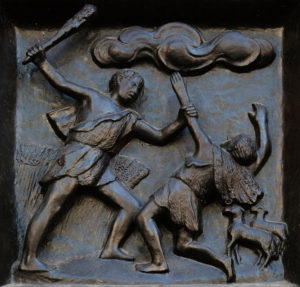
Abel was the second son born to Adam and Eve.He was the first martyr in the Bible as well as the first shepherd.Very little is known about Abel, except that he found favor in God’s eyes by offering him a pleasing sacrifice.As a result, Abel was murdered by his older brother Cain, whose sacrifice did not please God.
When they grew up, Abel became a shepherd, while Cain cultivated the ground.When it was time for the harvest, Cain presented some of his crops as a gift to the Lord.Able also brought a gift—the best portions of the firstborn lambs from his flock.The Lord accepted Abel and his gift, but he did not accept Cain and his gift.This made Cain very angry, and he looked dejected.
Genesis 4:2-5
Why did God look with favor on Abel and why did Cain feel dejected?Genesis 4:6-7 explains why…
“Why are you so angry?” the Lord asked Cain.“Why do you look so dejected?You will be accepted if you do what is right.But if you refuse to do what is right, then watch out!Sin is crouching at the door, eager to control you.But you must subdue it and be its master.”
Cain should not have been angry, both he and Abel knew what God expected as the “right” offering.Both Cain and God knew that he had given an unacceptable offering.God knew that Cain had given his offering with a wrong attitude of the heart.But, God offered Cain a chance to make it right and warned him that the sin of anger would destroy him if he did not master it.
The story ends with Cain killing his brother Able because of jealousy.Able became the first man to be martyred for his obedience to God.
Even though Abel died a martyr, his life speaks today of his faith.He is the first name mentioned in Hebrews chapter 11.
It was by faith that Abel brought a more acceptable offering to God than Cain did.Abel’s offering gave evidence that he was a righteous man, and God showed his approval of his gifts.Although Abel is long dead, he still speaks to us by his example of faith.
Hebrews 11:4
Abel teaches us what it takes to have a right relationship with God.Abel was not considered to be righteous because he was good.He was considered to be righteous because he believed that if he offered God a proper sacrifice, God would forgive him of his sins.
Abel and Cain grew up in the same family.They were brothers and taught by the same parents.But, it is apparent from Genesis 4 how different they were.These two brothers show us that obeying god is a choice.We all face these choices everyday.Most often we know the right thing that God would have us do.But, sometimes we (just as Cain did) choose to go against the will of God.Cain already knew the way to life because his parents taught him.Nevertheless, he chose to rebel against God and kill his brother.
Abel made a choice to become a righteous man.He committed his life to the way of God no matter what happened.
Both of these brothers made a different choice.Abel chose life.Cain chose death.We all have a choice to make.May we all be like Abel and have the faith to endure and choose to please Jesus.
Looking back to the beginning of the Bible now as we study the people of the Bible, we look at Eve. Helper to Adam, mother of all humanity, and archetype of the biblical woman, she can offer a view into God’s infallible knowledge of our hearts. But through her temptation and introduction of sin into humanity, we can also get our first glimpse of God’s great grace.
In Genesis 2:18, the Lord, in the midst of his creative phase, sees fit to provide a helper for Adam. But in all the creatures of the world that he creates, he sees nothing fit to satisfy the deep, personal connection man needs. So in Adam’s sleep, he pulls out a rib and crafts in into Eve, whom he presents to Adam to great appreciation.
Adam’s declaration of thanks in Genesis 2:23 paints a good picture of what this means to Adam. He says, “This at last is the bone of my bones and flesh of my flesh”. Not just an ordinary “thank you” or “woah, cool!” Adam here immediately understands what Eve is; thoughtfully and personally designed by God to provide assistance beyond simple help, but Godly love. He exclaims “At last!”, recognizing that God has provided a spiritual partner, a deeper support and love, more fulfilling and gratifying than possible with any other creature on Earth. Of course, this points to the magnificence of the Lord that marriage mirrors, but even beyond that for those who may not be married, Eve is a symbol of God’s deeply intimate knowledge of us. He knows exactly what help we need, and exactly how we can be provided to best suit us individually and most effectively.
But as chapter 3 begins, we see not even God’s symbol of covenant love is exempt from human error. As Eve is tempted by Satan and shares in her temptation with Adam, they become aware of their human nature and become ashamed with the sin they have newfound knowledge of. Instead of coming to God and confronting their sin, they instead try to hide and obscure their shame from the Lord.
I always have the imagery here of a toddler playing hide-and-seek, standing behind a curtain with their legs visible, or with just a pillow held in front of their face as an attempt at hiding. And as we walk around, humoring them by asking wherever they might have gone to, we can see them clear as day. I imagine that is similar to how the Lord sees Adam and Eve hiding here: very poorly hiding their shame, yet very clearly visible to Him. How could they imagine that hiding behind some bushes, fig leaves crudely sewn together to make a makeshift covering, would fool the Lord of all creation, powerful enough to have just crafted everything from nothing?
We ourselves often try to hide our shame and sin from the Lord. We receive instructions for every walk of life, every difficulty we come across, all in the form of Scripture. Yet when we find ourselves living errantly against what God wants for us, do we find ourselves obeying Scripture and surrendering our sins to Him, or do we convince ourselves that we can hide it away, keeping it from the Lord, not having to confront our own sinful nature? The Lord is just and fair in disciplining us when we fall and refuse to confront him, but when Adam and Eve come forward, we see Him clothing and sending them on their way. In Eve’s actions, we see here the first example of God’s grace and forgiveness: that no matter what, when we come to Him to ask for forgiveness, even if we may be rebuked for our sins, He will always pick us up, clean us off, and help us back on the path towards Him. For he loves us beyond the bounds of sin and death.
From Eve, we can see the beginning of a beautiful, God-ordained relationship between man and woman, one of the most beautiful gifts of this life, pointing towards His love and glory. But we also see a fallible human, vulnerable to sin and temptation as the rest of us. Ultimately, Eve acts as a reminder to all of us of the beauty of grace, that the Lord’s love and care for us endures no matter our actions. So pray today for discernment in understanding when we have sinned and the wisdom and strength to confront our sin and come to the Lord immediately, without hiding and without shame, as we learn from Eve.
Today we start a new series of focusing on people from the Bible, and appropriately today, we begin with Adam as we read Genesis 1:26-2:17.
As I read these verses, I asked myself….what can we learn from God’s creation of Adam and his message to him? What does that mean for me today? Two themes jumped out to me.
Theme #1
Find your identity through God in Jesus Christ.
Genesis 1:26 reads, “Then God said, ‘Let us make man in our image, after our likeness…’” As a side note, the use of the word “our” is the first sign of the Trinity and that Jesus and the Holy Spirit were there in the beginning. John 1 also reiterates that Jesus, the Word, was there in the beginning. Genesis 1:27 also reads, “So God created man in his own image, in the image of God He created him, male and female he created them.” The word image means shadow or shade. If God created us in his image, similar to Him, that tells us how highly he thinks of us and how much he loves us. He didn’t have to make us in His image similar to Him. He could have made us completely different. He created us because He wanted a relationship with us. That is why we exist. We should find our identity, and take peace, in that.
Theme #2
God gives us responsibilities that we are called to fulfill and calls us to use our God-given gifts and abilities to the absolute best we can.
In Genesis 1:26 He says….”And let them have dominion over the fish of the seas and over the birds of the heavens and over the livestock and over all the earth and over every creeping thing that creeps on the earth…” He reiterates this again in Genesis 1:28-30 and again in Genesis in 2:15 which says, “The Lord God took the man and put him in the garden of Eden to work and keep it.”
What has God put you in charge of? What responsibilities has He given you…your family, money, career, and other things? Maybe you are young and not sure if any of these fit yet, but He has given you the responsibility to “work,” and use your God-given abilities and talents to the absolute best you can. And yes, He has given you some great talents and abilities to use in a big way… whether your realize it yet or not because He created you in His image! Colossians 3:23-24 are a few of my favorite verses. They read, “Whatever you do, work at it with all your heart, as though you were working for the Lord and not for human beings. Remember that the Lord will give you as a reward what He has kept for His people. For Christ is the real Master you serve.” We do not get our identity from our work, only from Him, but we are called to “work in the garden and keep it” to the best we can.
Let us pray to help us remember these lessons from the creation of Adam and God’s message to him…
Lord, thank you for creating me in your image which you didn’t have to do. Please help me find my identity in that today and everyday..knowing I’m a child of yours who you created out of love to have a relationship with you and to do big things and impact others by using the talents and gifts you’ve given me to the absolute best I can. I’m humbled by this blessing and responsibility. I love you. Amen.
Today’s reading is Rev 21. I’m not sure if this is true for everyone, but I think that a good number of us think about and maybe even talk about heaven quite a bit throughout our lives. When life feels hard, when there are too many deaths in our circle of friends and family, or when natural disasters strike fear into our hearts we long for the relief and perfection of heaven. Certainly at funerals we comfort ourselves with the hope of being re-united with loved ones who have ended their time on earth before us. But what are the facts? What do we really know about eternity from the Bible?
God gave us way less information in the Bible about eternity than He did about the path we take to get to spend eternity with Him. A lot of what we do read about heaven in God’s word should be labeled “hints” rather than facts because God had the writers use words, ideas and dreams that we understand from earthly experience to describe what we cannot fully grasp until we are actually there. Below is a list of some of the truths we do know from scripture about eternity.
A place prepared for us John 14:2-3
Unlimited by physical properties John 20;19,26
Like Jesus 1 John 3:2
New bodies 1 Cor 15:35-49
A wonderful experience 1 Cor 2:9
A new environment Rev 21
A new experience of God’s Presents Rev 21:3
New emotions Rev 21:4
No more death Rev 21:4
It is clear from our list that Rev 21 gives us a lot of information about heaven. This book is written by John and this chapter is a description of a dream or a scene that God gave to John to give us a window of understanding into our eternity if we have believed in Jesus and accepted His gift of payment for our sin. Verse 3 brings the most thrilling truth of heaven to life for us. “God is home now, among His people! He will live with them, and they will be his people. God himself will be with them.” I don’t know how to expound on this fact, as I have no idea how this will play out. I can only imagine what it will be like to have a different experience and a different type of relationship than I do right now with God and it sounds amazing. We get to live with God in the same “world”. God Himself will be with us! This change from what we know now is enough to make heaven perfection! But God doesn’t stop there. He goes on to promise,“He will wipe every tear from our eyes, and there will be no more death or sorrow or crying or pain. All these things are gone forever!” Wherever God reigns, there is peace, security, and love. Can you wrap your head around life with peace, security, and love instead of tears, death, sorrow, crying, and pain?
From verse 10 on John describes for us the stunning beauty of the new city of God, the place we will spend eternity. John’s vision is symbolic and shows us that our new home with God will defy description in earthly terms. We will not be disappointed by it in any way. Truthfully when I think of the beauty that I have experienced around the world when traveling, I cannot imagine how God can top Himself. I don’t have one idea how He could create a place more beautiful than mountains, oceans, lakes, forests, deserts, flowers, animals, stars, glaciers, rivers…think of the most beautiful place you have experienced and try to imagine something better. All I can do is recognize His creation, His goodness, His perfection, His attention to detail, His trustworthiness and His omniscience that we experience here on earth, and then add on His hints in the Bible about heaven and I am blown away with excitement, amazement, and longing to get to my new home!
I particularly like verse 11. I find it extremely powerful and motivating.
“They overcame him by the blood of the Lamb and by the word of their testimony; they did not love their lives so much as to shrink from death.” (Revelation 12:11)
Verse 11 points out to all of us that the critical blow for Satan came when the Lamb – Jesus Christ – shed His blood for our sins. This means that the ultimate victory was won and continues to be won by sacrifice – Christ’s death in our place to pay the penalty for our sins, and the sacrifices we are obligated to make when we are faithful followers of Christ.
I believe Satan is real and exists in the world today. Satan presents temptations to us and encourages us to act upon those temptations. As we face the battle with Satan we should not fear it but we should follow the example of Christ. Jesus Christ provides us the power to resist Satan’s temptations.
By resisting Satan, our testimony can be inspirational to others. Our actions can influence the actions of others, and this can help draw others into a relationship with Christ.


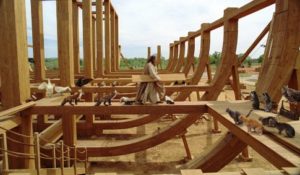 Building, remaining faithful when I’m sure the onlookers thought he was crazy. From a worldly perspective doing everything Jesus asks can seem frightening. What will people think? I pray for boldness for us all to live like the righteous Noah God saw, in the face of others today. Be the example of kindness, love, joy, and thankfulness for all that God has given us.
You must be logged in to post a comment.