Stay in YOUR Lane

Matthew 20:  1-16

What a great way to start our day!  In this story about “laborers” or every day workers, we are reminded of the real world.  The workers who start at 8 or 10 or 12 or 5 or even 7 all received the same wage.  Does that seem fair?  No.  In our every day lives, does everyone receive the same wages?  No.  Do some people at our same level who might do less work receive the same wages?  Yes.  Such is life.  “Unfair” as it may seem, it is that way.

I love this story as it reminds us that God treats each of us as individuals.  He does not necessarily give more to others than to us.  He treats us as individuals, the distinct and unique individuals he created us to be.   It may seem that he gives more to others, but why are we comparing ourselves to others anyway?  What counts is our servitude and attitude to God, not how we compare to others right?  If he called us all to Heaven today, what would he say about us as individuals?  He wouldn’t just take those with the most years being Christians would he?

I have a friend named J***** whom I have known since before I had children.  Throughout the years, we have stayed in touch as her youngest boys are the same age as my oldest.  We have been through tough times together and bonded over being “single moms”.  When the boys were in fourth or fifth grade, we had an issue with school friends (I can’t really remember what it was about now which means it probably wasn’t that critical?) and were discussing it one day or lunch.  She was asking about how she should handle an issue with other parents.   Should she call to tell the parents what she was seeing and hearing?  I said “you know I just try to stay in my lane”.  The point was I was overwhelmed at the time and was making choices over what I thought was a burning platform and what I just decided wasn’t my business.  We still remind each other of that phrase “stay in your lane”.  If it doesn’t pertain to you and doesn’t directly affect your children, don’t worry about it or be anxious about it.  When I read this parable today, those words came to me “stay in your lane”.  Can you really control how much the master pays others?  If you get upset, will it change anything?  If we see others receiving more than us in the form of money, happiness, travel, etc. should you worry about it or think “how unfair”?  Not really.  You can’t do anything about it.  All you can control is your lane or yourself.  You can make a difference in how you react to the situation God has given you whether it is exciting, not what you expected, or disappointing.  Really you can’t even control yourself; it is God’s plan right?  He decides your path and you can decide how you react.  If you are handed your “denarius”, how do you handle it?  Are you respectful and say thank you?  Or do you pout and say “it’s not fair”?  Great reminder to all of us to work on ourselves, our reactions to situations and our thankfulness to God for what he has already given us.


Psalm 126

Who is the Lazarus in your life?

Luke 16:19-31; Psalm 125

The parable of Lazarus & the Rich Man is the account of a very rich man who lived a life of extreme luxury. Laid outside the gate of this rich man’s house was an extremely poor man named who simply hoped “to eat what fell from the rich man’s table”. The rich man was completely indifferent to Lazarus, showing no sympathy or compassion whatsoever. Eventually, they both died. Lazarus went to heaven, and the rich man went to hell.

The context of this parable is that Jesus was condemning the Pharisees for their love of money as well as for the lack of mercy to the poor. The Pharisees were “pious” in that they knew the old testament laws and liked to flaunt their holy behavior and actions, but they were completely without compassion and love to those around them. This parable was a warning to them that the way they were living would be rewarding only on earth, but eternally they would not be shown grace or compassion because they had already received their reward on earth.

In this parable Jesus talks about what the lives on earth were like for the two, what kind of eternity each would have, the inability to cross over from one place (Hades) to another (in the bosom of Father Abraham), and the sufficiency of scripture to be a warning to those on earth of what will happen to them after death.

I am not a Bible scholar, a theologian or a seminary graduate – but I do not think that Jesus is using this parable to condemn being wealthy per say. I read it more of a warning that if your riches and wealth are so important that you are unable to see need of other human beings and are unwilling to show generosity, your spiritual life and relationship with Jesus will suffer. Jesus tells us over and over again through the New Testament how the love of money can separate us from God. He tells us over and over again how the poor, sick, orphaned, widowed, etc. are special to Him.

Before I move on – I think it’s also important to say that it’s difficult to acknowledge this – but for the purposes of this scripture I believe all of us are wealthy. This scripture doesn’t apply only to those with a certain minimum amount of assets and liabilities, but to anyone who has more than what they need to meet their individual needs in a given day.

So who is the Lazarus in our lives? It’s unlikely that there is a sick/lame/starving man laying outside your front door, so here are some ideas to help open your eyes to who I believe Jesus would see as those in need of love, generosity and compassion:

  • Needy illegal aliens who avoid the social welfare system for fear of being deported
  • Divorced moms with kids who are living below the poverty level but are too proud to ask for help
  • Families where the breadwinner is sick or shiftless or missing
  • The poor in third world countries who are out of sight and out of mind

Obviously this list is only a tiny sample, but it is really just meant to get us (me) to begin thinking of and seeing the people around me, and many of whom I come into regular contact with, and finding ways to share what God has blessed me with.

Lord, thank you for your blessings. Give me a heart for the poor and suffering. Please strip away the calluses that I build up to protect myself from their pain. Let me love the poor as Jesus loved them..


What’s at your Core?

Parable of the Dishonest (“Shrewd”) Manager

Luke 16: 1-8 

 1-2 Jesus said to his disciples, “There was once a rich man who had a manager. He got reports that the manager had been taking advantage of his position by running up huge personal expenses. So he called him in and said, ‘What’s this I hear about you? You’re fired. And I want a complete audit of your books.’

3-4 “The manager said to himself, ‘What am I going to do? I’ve lost my job as manager. I’m not strong enough for a laboring job, and I’m too proud to beg. . . . Ah, I’ve got a plan. Here’s what I’ll do . . . then when I’m turned out into the street, people will take me into their houses.’

“Then he went at it. One after another, he called in the people who were in debt to his master. He said to the first, ‘How much do you owe my master?’

“He replied, ‘A hundred jugs of olive oil.’

“The manager said, ‘Here, take your bill, sit down here—quick now—write fifty.’

“To the next he said, ‘And you, what do you owe?’

“He answered, ‘A hundred sacks of wheat.’

“He said, ‘Take your bill, write in eighty.’

8-9 “Now here’s a surprise: The master praised the crooked manager! And why? Because he knew how to look after himself. Streetwise people are smarter in this regard than law-abiding citizens. They are on constant alert, looking for angles, surviving by their wits. I want you to be smart in the same way—but for what is right—using every adversity to stimulate you to creative survival, to concentrate your attention on the bare essentials, so you’ll live, really live, and not complacently just get by on good behavior.”

The definition of shrewd is complex in nature.  In the Oxford Dictionary, the term shrewd is used to describe a person that is wise and clever in a particular way.  Shrewd is derived from shrew, which means “an evil person or villain”.  So depending on the context being shrewd could be praise or an insult.

In the parable, it can be seen from both perspectives. First, the manager was evil by doing ill and deceitful management of the Masters estate.  Second, when called to report his actions he uses his cunningness to settle the owner’s debts and also gain praise in the midst of correcting his folly.

This makes us understand that at the core of the manager: his primary interest was his own survival by any means necessary.  This parable echoes some of the previous teaching of Christ in Luke 11:10-13

11 What father among you, if his son asks for[d] a fish, will instead of a fish give him a serpent; 12 or if he asks for an egg, will give him a scorpion? 13 If you then, who are evil, know how to give good gifts to your children, how much more will the heavenly Father give the Holy Spirit to those who ask him!”

 Even the evil person knows how to do the right thing and also know how to do good.  At the core of each individual the ability to do good is present. The core of a person can be exhibited in many forms, but it is reviled in times of survival. Now the questions to ask ourselves are: How can we be clever and not “shrewd” as managers of what God has given us?  How can we allow the Spirit of God be our core?  What type of managers are we of the riches and talents His has give us?  Can we allow Him to be the owner and we the managers of this life He gives us?  We are the managers of His wealth, His houses, His marriages and relationships, His children, His everything.  Can we be accountable for all that He has entrusted us? What is our core?


Loving the Lost + Found

Luke 15:11-32 and Psalm 123

Sermons, books, paintings, and more, have detailed the story of the Prodigal Son from Luke 15. I’m guessing this is such a popular teaching of Jesus because each of us can relate to one (or all) of the characters.

Maybe we once set off on a path of selfishness and irresponsible choices and hit rock bottom.

Maybe our self righteousness got the better of us in a weak moment of judging others.

Or maybe we have experienced the joy of reconciling a relationship.

What’s so amazing about the Word of God is that it is LIVING. It is ETERNAL. It has POWER. The Word is God and is not bound by time. While the Word of God does not change – our response and our experience with the Word does change.  We receive, relate to, and understand the Word differently at different times in our lives.

I can think of seasons where I could really relate to the son and his disregard for others or himself. I can relate to the brother – who is working so hard to earn his father’s favor and yet harboring resentment and self-righteousness. And I have celebrated estranged family members that have reunited.

Within each of these characters, the Lord is at work. He was at work in humbling the Son, He was at work providing grace for the Father to extend, and He was at work in the brother’s life, giving him a second chance to join in the celebration.

How is the Lord working in your life? Do you need to take steps forward like the Father for a deeper reconciliation? Or admit your sin against God and against man and seek forgiveness?  This story is layered with wisdom and life lessons.

The overall focus of this lesson appears to be the joy of the salvation for the Son. This series started with the lost sheep, then the lost coin, and now the lost Son. While there are many more sheep, many more coins, and even many more souls, God stops and celebrates the ONE. Each are greatly valued, while in the midst of other greatly valued things. But even the one “lost and then found” item or person is still abundantly valuable to the kingdom. And to be celebrated! Can you imagine the party happening when one soul makes a decision to turn from sin and turn to salvation? How would our lives look and feel differently if we really celebrated the “found” in our world?

As a parent I can relate to the joy of the Father that his Son is physically back home. I have felt gratitude for a kid that comes with a humble heart seeking change. I have even celebrated spiritual steps forward in our children’s faith journey.  Parenthood comes with an unconditional love that leaves our arms and hearts open.

As we are all God’s children, and He sees us all with this same love, how can we see each other through those same Father’s eyes?  How do we get our arms open and meet people in the middle, when they aren’t our children? How do we celebrate the person that once sinned against us but is now seeking change? It seems easier when they are our children – which gives us a glimpse into God’s perfect heart and perfect ways. The love I have for my children is an imperfect version of the love God has for me. And even for my enemies.

God, thank you for your living Word that moves and changes us.  You are the perfect Father, with perfect love and grace for all of your children. Help us to shine that same love to all of your children while we are here. Amen.

I think I lost my wallet

Last Saturday the four of us went out for a nice family meal in the city center of Florence, Italy. We had wonderful conversation, great food, and great service. After that we did some exploring on foot to walk off the dinner and to continue the relaxing evening. As we we became tired from the long day filled with walking adventures, we began our journey to walk back to the hotel.

Preston and I were ahead of Amy and Peyton, and we eventually lost them. A few minutes later Amy messaged me asking if I wanted an American beer from the store they stopped into.

After being in Italy for over three weeks, the thought of an ice cold American beer sounded wonderful and nostalgic! As excited as I was for the beer, I was grateful for the thoughtful gesture.

Later we reconvened at the hotel and went to sleep soon after. The next day’s itinerary was long and full of travel.

After a good sleep we quickly packed up, got ready, and had breakfast at the hotel. We checked out and were on our way to the train station with plans to go separate ways for the week.

My plans were to meet with work counterparts to take the train to Milan, then rent a car get us to a hotel close to one of our plants which we would visit the next day. After this we would visit a different plant, traveling city to city via car, train, taxi etc. all week.

Amy and the boys were also headed to the train station en route to the sea for a few days since I was busy with work.

With suitcases and backpacks in tow, we were about two minutes from the train station in central Florence when Amy said, “hmm… my purse feels light”.  She looked inside and said, “I think I lost my wallet”. Panic set in. We frantically looked through the rest of our luggage and began to mentally retrace our steps.

Big tourist towns are known for pickpocketing so that was my first thought. Second thought was, I have to get on that train in about 15 minutes. Our credit and debit cards were the same, and she didn’t have cash. If we had to cancel all of our cards, it would be a complete disaster.

We decided I needed to catch the train and Amy and the boys would retrace their steps since the night prior. We prayed, gave hugs, and I gave her some cash along with one of my credit cards.

I went on my way, and what should have been a joyful reuniting of work brothers had a dark cloud over it. I was sick to my stomach. Amy felt devastated and miserable and guilty. She felt like it was her fault, we didn’t know what we were going to do.

Really all I cared about was Amy and the boys. I felt so horrible for her. I knew she’d put all the blame on herself, and I didn’t like her feeling that way. I couldn’t focus, my mind going in circles wondering what could have happened.

Amy and the boys went to the hotel and scoured the room with no luck. They made the hotel aware of the situation and received some sympathy, but that was it. After that they thought might as well go to the store where Amy was the night prior; the last place the wallet was seen.

The store wasn’t open yet so they waited outside. Finally a light came on and a man opened the door to let her in. Language barriers in play, she was able to explain that she had lost her wallet.

After a long pause which to her seemed like an eternity, the man reached below the counter and slowly pulled the wallet out! He said that he waited until after midnight at the store to see if she would return. What joy!!! I literally had tears in my eyes (in front of the guys) when Peyton sent this picture to me!

Shortly after this lost and found story, I laughed out loud when I looked at my assigned verses for this week… how appropriate, God works in mysterious ways!

The Parable of the Lost Coin

“Or what woman, having ten silver coins, if she loses one coin, does not light a lamp and sweep the house and seek diligently until she finds it? And when she has found it, she calls together her friends and neighbors, saying, ‘Rejoice with me, for I have found the coin that I had lost.’ 10 Just so, I tell you, there is joy before the angels of God over one sinner who repents.”

Luke 15:8-10 & Psalm 122

Lost

Today’s reading:  Luke 15:4-7, Psalm 121

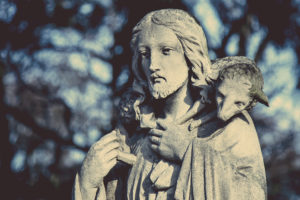
“Suppose one of you has a hundred sheep and loses one of them. Doesn’t he leave the ninety-nine in the open country and go after the lost sheep until he finds it? And when he finds it, he joyfully puts it on his shoulders and goes home.  Then he calls his friends and neighbors together and says, ‘Rejoice with me; I have found my lost sheep.’  I tell you that in the same way there will be more rejoicing in heaven over one sinner who repents than over ninety-nine righteous persons who do not need to repent” (Luke 15:4-7).

Our text for today begins in verse 4 of Luke 15. In order to understand Jesus’ message in context of what was going on, however, we really need to go back to the first 3 verses of Luke 15.  The Pharisees and scribes were grumbling at Jesus because he was interacting with sinners.  Jesus’ message to the religious leaders through the parable of the lost sheep was not just that it was permissible to interact with sinners, but that rescuing sinners was his core mission.  It was his entire purpose.

Would you take time to reflect with me on three primary truths from this parable?

Sin separates us from God – Like sheep separated from their shepherd, separation from God is a dangerous place for us to be. We need a good shepherd, a savior.

For the wages of sin is death, but the gift of God is eternal life in Christ Jesus our Lord (Romans 6:23).

If you confess with your mouth that Jesus is Lord and believe in your heart that God raised him from the dead, you will be saved (Romans 10:9).

Jesus chose to make a way for us, even though we don’t deserve it – The shepherd didn’t despise his straying sheep, neither does Jesus despise sinners. He willingly sacrificed his own life to make a way for us to be reconciled to God.

I am the good shepherd; I know my sheep and my sheep know me— just as the Father knows me and I know the Father—and I lay down my life for the sheep. I have other sheep that are not of this sheep pen. I must bring them also. They too will listen to my voice, and there shall be one flock and one shepherd. The reason my Father loves me is that I lay down my life—only to take it up again. No one takes it from me, but I lay it down of my own accord. I have authority to lay it down and authority to take it up again. This command I received from my Father” (John 10:14-18).

God celebrates when sinners repent – The shepherd didn’t punish the sheep who had gone astray, rather he called his friends and neighbors to celebrate the sheep’s homecoming. Similarly, God isn’t up there waiting to drop the hammer on us for all the wrongs we’ve committed.  His greatest desire is for us to be in fellowship with him.  He sent Jesus as the sacrifice to make that happen.  All of Heaven rejoices every time a sinner declares faith in Jesus Christ.

The Lord your God is in your midst, a mighty one who will save; he will rejoice over you with gladness; he will quiet you by his love; he will exult over you with loud singing (Zephaniah 3:17).

Amazing grace, how sweet the sound that saved a wretch like me.  I once was lost, but now am found.  Was blind, but now I see.  – John Newton, 1779

All In!


Today’s readings:

Luke 14: 28-33 “But don’t begin until you count the cost. For who would begin construction of a building without first getting estimates and then checking to see if there is enough money to pay the bills? Otherwise you might only complete the foundation before running out of funds. And then how everyone would laugh at you! They would say, “There’s the person who started that building and ran out of money before it was finished? Or what king would ever dream of going to war without first sitting down with his counselors and discussing whether his army of ten thousand is strong enough to defeat the twenty thousand soldiers who are marching against him? If he is not able, then while the army is still far away, he will send a delegation to discuss terms of peace. So no one can become my disciple without giving up everything for me.”

Psalms 120 – A song for the ascent to Jerusalem. Page 957 in my Bible 😉

When I read these versus of Luke, 28-32 were kind of simple to understand. Do some serious research and seek wise counsel before making a MAJOR decision. OK, I get that and it makes sense. However, I can’t be a disciple of Jesus without giving up EVERYTHING for him. When I read this, my first thought always goes to ‘I have to sell all that I have and become a missionary in a country that doesn’t know Jesus and have my family live off the land until we convert everyone to Christ followers.’ Then I read the verses prior to our reading today. There were great crowds following Jesus. He starts off: “If you want to be my follower….” Then he puts it to them in this modern day term: you have to be, “All in!” There’s no, “Let’s give this a try and see if this works out.” You must be willing to put all of your trust in Jesus and who he says that he is.

I’ll be the first to admit that I don’t know fully what that means. Again, I often go back to my earlier statement about becoming a missionary…and He does call some to that position. In my simple view, I think it means to put Jesus first. Exodus 20:3, “You shall have no other gods before Me.” After self-examination, do you? If you do, how do you fix that? Jesus loves you no matter where you’re at…how will you love him back today? May God bless your 20th day of June, 2018!

MT


Acrostic Poem

Good Tuesday Morning Bible Journal Family,

At first when I was looking over our reading for the day I was excited to read about the opportunity to read and reflect on the amazing invite to a great feast provided by our Lord in Luke 14:16-24.  After all, I love meals. There are a few messages being shared as we chew on these few verses.  First we can see that this invite is for us all.  Second, the meal provided will leave us permanently filled and never thirsty.

“I am the bread of life. Whoever comes to me will never be hungry again. Whoever believes in me will never be thirsty.

Third, Jesus wants us to come now with no excuses. As a previous expert in excuses, I can think of times where I resist or delay this call by God with my own actions.  I can’t put this invite off for another day or make up another excuse.  These last couple weeks I have had personal friends who have lost loved ones and celebrated their life.  in addition, I’ve had a few former students lose their lives based on various situations.  In addition to children to others pass away. Reminding me that I need to be grateful for every breath, but keep faith that God has a plan for everything and everyone.


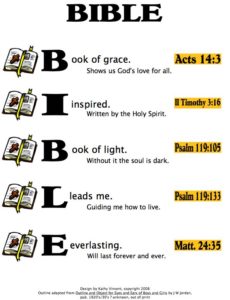
Our 2nd reading is called an acrostic poem, the longest psalm and longest chapter in the bible. Twenty-two sections containing eight verses a piece.   The acrostic part is that in each section of Psalm 119 a new letter to the Hebrew Alphabet is taught starting with Aleph and ending with Taw.  Various bible studies say that this Psalm would allow many to memorize with this type of formation.  To me I love the celebration of the word of the Lord, and a direction for us to follow.  A few of my highlighted words that provide me with hope, trust, guidance, and love include; who walk, who keep, seek Him,  praise, obey, rejoice, meditate, and delight.

Dear God,

Your words have opened my eyes (v.18), they have filled a longing in my heart for a Father and a unconditional love, they have taught me to turn my heart not from selfish gain (v.26,36), but to a promise of hope (v.41,49). Before I was afflicted I was astray, but now I try and pray to obey your commands (v. 67-68). I know His law are righteous and His Living Word is eternal, continuing through all generations(v.89-90).  Your commands are always with me and they provide a lamp to my feet and light to my path.  I pray my heart stays set on keeping your decrees until my very end(v105,112).  Let me live so I can praise you, and may Your laws sustain me. I have strayed like lost sheep. God please seek your servant, for I have not forgotten your commands, and I know you are the Good Shepherd(v.175-176).

Amen

Which Seat?


My children took part in Vacation Bible School last week and it was some of the most enlivened and exhilarating and anticipated parts of the kids’ summer.  Since the early part of May, we have been rehearsing the songs in each car ride with the program CD.  The church that hosts the VBS is also the church that houses the Pre-School that all of our children have attended over the past several years.

A couple of weeks before VBS started my son and I had an interesting conversation.  As we are driving, he starts telling a story of his time in Pre-school.  “ Dad, you know that I really like VBS and preschool at Noah’s Ark.  But one thing that I remember is the seating at preschool.  I really didn’t like where I sat.  At the beginning of the year, you have to choose a place to sit down, and then that is your place for the remainder of the school year.  I really didn’t like to sit in that same seat each day.” As the dad, I followed up with the usual question “Could you have asked to move?” and his reply was  “I didn’t ask.”    In this little conversation, I was able to see that his mind still associated the place with a feeling of questioning and a feeling of familiarity.  How interesting that this particular event would still play a vital role in his memory 4 years later.

Luke 14: 7-14

Now he told a parable to those who were invited, when he noticed how they chose the places of honor, saying to them, “When you are invited by someone to a wedding feast, do not sit down in a place of honor, lest someone more distinguished than you be invited by him, and he who invited you both will come and say to you, ‘Give your place to this person,’ and then you will begin with shame to take the lowest place. 10 But when you are invited, go and sit in the lowest place, so that when your host comes he may say to you, ‘Friend, move up higher.’ Then you will be honored in the presence of all who sit at table with you.11 For everyone who exalts himself will be humbled, and he who humbles himself will be exalted.”

12 He said also to the man who had invited him, “When you give a dinner or a banquet, do not invite your friends or your brothers[b] or your relatives or rich neighbors, lest they also invite you in return and you be repaid. 13 But when you give a feast, invite the poor, the crippled, the lame, the blind, 14 and you will be blessed, because they cannot repay you. For you will be repaid at the resurrection of the just.”

In the reading and parable, Jesus allows us to analyze ourselves and listen for guidance of our proper placement in life and in service.  We cannot arbitrarily create a place of honor and prestige for ourselves above others.  God is the giver of goodness of life.  He is welcoming to all that are in search of Him and He wants us to give to our brothers and sisters that are in need as well.  We have to be aware that we can at anytime be the poor, the crippled, the lame, or the blind, so we must be patient and loving to others because we will be blessing God in turn.  We must ask if we are seating in the right place or is there a different place to sit.


Be Blessed in Steadfast love.   Psalm 118


The Importunate Friend

I learned a new word yesterday…importunate. According to the Merriam-Webster dictionary, importunate means – troublesomely urgent, overly persistent in request or demand, troublesome.

Today in Luke 11:5-8 we read about the Importunate Friend. In these verses Jesus told His disciples a parable about a man going to his friend at midnight and asking “Friend, lend me three loaves, for a friend of mine has arrived on a journey, and I have nothing to set before him” (5-6). Midnight is not a very good time to go asking for bread, but having nothing to set before a guest, regardless of time, was unthinkable for a host in Jesus’ day. The friend of the man refuses to help because everyone in his house is asleep. Jesus said, “though he will not get up and give him anything because he is his friend, yet because of his impudence he will rise and give him whatever he needs” (8).

I found it very interesting learning about the housing of the typical poor Israelite family. They often lived in a one-room house. Sometimes, the house also served as a part-time stable for the family’s sheep, goats, and chickens. All family members would sleep in the same room on a raised platform. They slept with their clothes on, covering themselves with the cloaks they had worn durning the day. They would sleep side-by-side on straw mats rolled out at night. Getting a whole family to bed was a considerable undertaking, as parents know. Once children were asleep, parents want to keep them that way. Once the animals were asleep, parents would want to keep them asleep too!

This was going to be a huge inconvenience to get up, unlock the heavy door, wake up the whole family + animals to give the neighbor bread. The man did not want to do it! But, he finally gave in and gave the man what he wanted because of his boldness and shameless audacity in asking in the middle of the night.

Jesus goes on to explain in verses 9-13, how much more will your Father in heaven respond to your bold and shameless requests when coming to him to meet your need. Jesus is not teaching us in this parable that we need to pester God until he finally gives us what we are asking for, but that we are to come boldly and shamelessly before God with an expectation that our need will be met.

Jesus told this parable to call us to shamelessly and boldly ask God the Father to help in times of need. An important difference, however, is that God is not answering from a locked house saying, “Do not bother me”, but He is saying, “ask…seek…knock” (9). If you truly need God, boldly come before Him in Prayer and shamelessly ask Him for what you need.

Also read, Psalm 117