Temptation

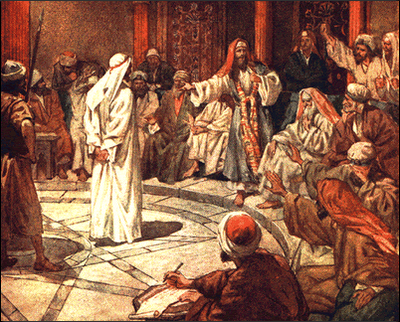
This week, I am writing on Luke 22, The Plot to Kill Jesus. Back in January, I wrote the post entitled “Why?”. It was about the same message about Judas’ betrayal and being filled by Satan, the Last Supper and his powerful words we use every Sunday during communion, praying at the Mount of Olives while the disciples slept, his betrayal and arrest, mocking him, Peter’s denial, and Jesus going before counsel. After writing about Matthew 23, my oldest son said “you didn’t really write much about temptation or denial”. Both are pretty big concepts. Let’s take one at a time.

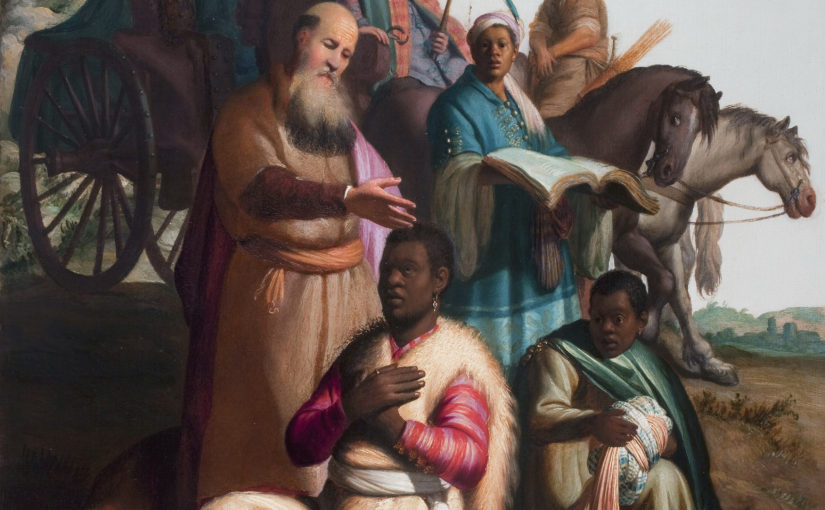
Temptation: There are many references to temptation in the bible. Temptation comes when we are drawn away from what is believed. The more common examples include: Eve in the Garden of Eden, Jonah running away from what God asked him to do, this example from Luke 22: 3-6, Satan tempting Jesus in the wilderness and then the foretelling of the denial: Luke 22:31 And the Lord said, Simon, Simon, behold, Satan has desired to have you, that he may sift you as wheat.

As humans, we are tempted in “thought, word and deed” on a daily basis. Satan tempts us yet we are given tools to overcome this temptation. We are given stories to help us understand how others overcame (or didn’t) temptation. We are given strict instructions in our ten commandments. All this foundation is meant to keep us strong, to build us up and to send us out into the world every day. We still can be tempted to respond back to harsh words, to spend money on frivolous items, or even to “take a day off” from church.

Another angle of temptation shared by Pastor Brian Goke had an interesting twist to temptation that was very relevant to our family. His message had to do with being tempted to listen to others. You aren’t good enough. You don’t have the skills we need on our team. You aren’t smart enough. You don’t look the part. You fidget too much. Only God knows your purpose in life. He made you unique, one of a kind. He knows your boundaries. No one else does. So don’t be tempted by people telling you “you can’t”.   It was a great message for my kids – they can do anything they want and be anything they want to be. It equally applies to adults. You still can grow, decide to take on a new career, and learn a skill you never have before. Don’t listen to the negativity of others who are trying to tear you down. God is in charge.

If we go back to Judas, he wasn’t strong enough or didn’t believe enough to take the stand against Satan. He was consumed by the potential power he could receive by betraying Jesus. If he could turn him in, he would have the notoriety within society that he was “the one”. He would receive fame and fortune.   Or so he thought.

Even Peter was tempted to deny Jesus. With his denial three times, he too was tempted and caved in the heat of the moment. Even though he was viewed as the leader of the disciples, he showed his weakness and fear. He had been through a whirlwind 24 hours from the Last Supper, to falling asleep in the garden while Jesus was praying, to seeing Jesus hauled away, to understanding that Jesus’ death was ultimately happening just as it was foretold, to being on the street and being questioned. He feared what would happened to himself. Would he be hauled away like Jesus was? Would Peter be killed?

Easy to say what Peter should have done, looking back on it now. Prayer was needed. Peter needed strength, gained from knowing and believing God’s word.   He needed guidance and clarity from getting down on his knees and praying. Something all of us can do to help us stay strong through temptation. Unfortunately, temptation will continue for us whether it is caving into a demand, overindulging, or listening to someone’s negative voice. We can be strong though as we know God is with us.

Our prayer: …and lead us not into temptation, but deliver us from evil. For thine is the kingdom, and the power, and the glory, forever and ever.  Amen.

The Coming Times

I always like to start my writings with a story. I think that we, as humans, love stories and can relate to them. I found that today’s reading was more challenging than most to find a story to help even grasp the teachings in Luke 21.


The only way I could think to relate this story to your life and mine is the story of Christmas. Each year parents tell their kids all about Santa and make sure to do everything in their power to make sure they believe that Santa was the one who put presents under the tree and not them. That isn’t the point, though. Before Christmas day comes there are signs that Christmas is coming. Lights start to go up on all the houses in the neighborhoods, the salvation army Santa Clauses’ come out, and of course, Starbucks has bright red cups to remind us of the season. As a kid, there were signs also, but they were different than adulthood. I remember when we got to decorate and put up the tree, snow started to fall and I got to put on my snowsuit, and my favorite part about the season was that everyone was happy. It was hard to explain, but everyone knew Christmas was coming soon because it was almost like it was “in the air.” The signs were there and because of those signs, we knew what was coming. We prepared ourselves because we knew these signs created an expectation in us. This is the same as the reading in Luke 21.


Luke 21 talks about the coming of the Son of Man. This chapter also talks about the signs of the coming season and scripture tells us to be watchful. We don’t know the day, the time, or the hour that Jesus will come back because it will be like a thief in the night but there will be signs for us to know when the day is nearing.


Jesus states these as the signs to be watchful of:

  • Nation will rise against nation, and kingdom against kingdom.

  • There will be great earthquakes, and in various places famines and pestilences

  • But before all this they will lay their hands on you and persecute you, delivering you up to the synagogues and prisons, and you will be brought before kings and governors for my name’s sake.

  • You will be hated by all for my name’s sake


I sometimes wonder if we are seeing warnings now in our day-to-day lives. Wars are happening all around us. Earthquakes are killing people here and in other countries and famine is something that we can see all around us and it definitely can be found in poor countries around the world. Persecution is not happening in the world around us as much, and I think that some of us may even feel that we are persecuted here in the US, but nowhere near the same level as other places in the world.


What I am trying to say is that these things are happening in our world and Jesus warns us to be ready because when these signs appear he will be coming soon. I am not writing this to scare you; I am writing this to make you aware that we may not have a lot of time. The question is; what are you going to do the remaining time you have been given?

What Motivates Me?

Today’s reading is Luke 20

By this point in Jesus ministry the Jewish leaders feel so threatened and afraid of Him that they seem to be spending all their time watching Him, waiting for Him to slip up, and seeking out ways to entrap Him. They want Him out of their hair and seem to be willing to try just about anything they think they can get away with, without getting found out by the people.

In the first 8 verses of this chapter, the leaders go to Jesus and try to trap Him by asking where He gets His power. So Jesus responds with a question about John the Baptist’s power. They have to pull over to the side to confer. As they talk they realize that they are stuck so they go back to Him and say, we don’t know. I laughed out loud when I read Jesus response to their lame answer. “Okay, then I won’t tell you by what authority I do these things.”

In verses 9-19 Jesus tells the people (along with the Jewish leaders) about a farmer who plants a vineyard and leases it to some farmers to manage while He is out of the country. Turns out that this story is calling out the Jewish leaders for rejecting God’s gift of Jesus, which made way for Gentiles and outcasts to be accepted into God’s Kingdom while Jews who refused Jesus would not be added.

The rest of the chapter is filled with discussions about paying taxes, Jewish law around marriage and who will be married to whom in heaven, and questions about how the Messiah can be David’s son. So much trickery, scheming, planning and trapping…why? The Jewish leaders were powerful. Their power and celebrity caused them to become filled with greed and pride. They craved attention, prominence, and more money. Jesus threatened the good things they had going in life and they weren’t about to lose their benefits by being replaced by Him.

Before I am tempted to rant about their stupidity and the lies they told themselves and each other to continue pursuing the end of Jesus, lets back up and look at that list again. They craved power, attention, prominence and more money. I’m trying to let those words soak into my mind. I’m trying to be honest with myself about how motivated I am by the prospect of more power, attention, prominence and money. Stings a little this time around, right? I think we have to be honest and realize that this list is our human nature. On some level every one of us, at one time or another (or every day) is tempted to wish and strive for at least one of these. So how do we rearrange our minds and fill our hearts with the desire to be different than our human nature? We have to look at what motivates Jesus. The answer is simple but more powerful and meaningful than I can express. It’s His love for us. He loves us so deeply that He desires relationship with each one of us. Since we are unable to be good enough to be in His perfect presents, He gave His life to pay the price for us missing the mark. By the gift of His life, we are washed clean and able to have relationship with God. This is a different kind of nature than I have. While I cannot fully understand this kind of love and I certainly am not capable of replicating it, He offers to change me. He is willing to help me be motivated by His love for me instead of my old desires.

Tethered

    Today’s reading is from Luke 19.  As I read through this chapter, one phrase jumped out at me.  In the last verse of Luke 19, we are told that “all the people were hanging on his words” (Luke 19:48).  In the past few days, I have come across this idea of “hanging on” to the Word of God on several occasions.  Sometimes the words used were “hold fast”, and other times the word “tether” was used to describe how we are to attach ourselves to Jesus and His teachings.  When the same word or idea pops up several times within a short span of days, I pay attention!

In Jesus’ time, people were only beginning to understand who He was and how His death, burial and resurrection would impact their lives eternally.  Yet they still knew, somehow, that they needed to pay close attention to the words He spoke.  When I imagine people hanging onto Jesus’ every word, I picture a crowd pressed close together, leaning forward and straining to hear the words directly from Jesus’ mouth.  In those times, people had to work hard to hear Jesus’ words.  Hearing Him meant finding out where He would be, making their way on foot to that place, and then positioning themselves close enough to Him so that they could hear His voice.  In many ways, we have it so much easier today, don’t we?  We have relatively easy access to Bibles both in written form and on our electronic devices.  But we also have an incredible number of distractions that can draw us away from pursuing God and His word.

     In a world that is constantly changing, it is critical that we hold fast to God’s unchanging word.  His word is as valuable and relevant today as it was on the day it was written.  It is “living and active” (Hebrews 4:12) and God promises “it shall not return to me empty, but it shall accomplish that which I purpose, and shall succeed in the thing for which I sent it” (Isaiah 55:11).  

So, what does it look like on a daily basis to tether ourselves tightly to God’s word?  Here are a few suggestions.

– Spend time reading the Bible daily.  This doesn’t need to happen at a specific time each day.  The reading itself is what is important; when you do it is not.

– If you find yourself thinking you do not have time to read the Bible because you have so much else to do, consider this thought that my wise husband shared with our small group this week.  He suggested approaching spending time with God during the week with the same mindset we approach taking a Sabbath rest.  God asks us to rest once a week, and He asks us to trust that our work will get done throughout the remainder of the week.  Likewise, we can set apart time to spend reading His word daily while trusting that He will enable us to accomplish what He has called us to do that day.

 – Consider using a daily reading plan found in a Bible or online.  There are hundreds to choose from, and the accountability of a daily plan can be helpful.

 – Memorize Scripture verses that have personal meaning to you.  When your Bible or your device isn’t near, the verses you have memorized are easily recalled when you need them.

The time we spend reading our Bible matters because the words we read on the page or on the screen are alive.  His word accomplishes God’s purpose for us and for the world He created.  I encourage you to try one or more of the ideas above as you seek to hang onto every word of Jesus!

Repent, Repent, Repent

Todays Reading: Luke 18

This is Lynden; it is a privilege to be writing again this week.  The Spirit has led me to reexamine the concept of repentance. In Luke 18, we are given a beautiful, yet hard illustration of true repentance.

Luke 18: 9-14

He also told this parable to some who trusted in themselves that they were righteous, and treated others with contempt: 10 “Two men went up into the temple to pray, one a Pharisee and the other a tax collector. 11 The Pharisee, standing by himself, prayed[a] thus: ‘God, I thank you that I am not like other men, extortioners, unjust, adulterers, or even like this tax collector. 12 I fast twice a week; I give tithes of all that I get.’ 13 But the tax collector, standing far off, would not even lift up his eyes to heaven, but beat his breast, saying, ‘God, be merciful to me, a sinner!’ 14 I tell you, this man went down to his house justified, rather than the other. For everyone who exalts himself will be humbled, but the one who humbles himself will be exalted.”

How many times have we found ourselves as the Pharisee? I know that I have probably several times this past week. It is not malevolent in the intention, but we do look at others and make criticisms about their situation or condition. Sometimes we try to help them out or voice our concerns on them but fail to see how God will work in their life. I have been convicted to constantly look inside myself and reanalyze what purpose does God have for me in this situation. I pray constantly to be an instrument in God’s purpose.

Growing up in the African Methodist Episcopal Church, I had the belief of repentance as something that is done once and you are not ever suppose to change or revert. When you have this idea you start to question your own progress and outlook. You feel that if you fall or “back slide” you cannot get back to the “right” place. You feel that God is going to judge you different and the marks against you will keep adding up. I have new hope and a new growth as I have matured in my Christian journey.

A few reference verses that have ministered to me are:

Matthew 18: 21-22

21 Then Peter came up and said to him, “Lord, how often will my brother sin against me, and I forgive him? As many as seven times?” 22 Jesus said to him, “I do not say to you seven times, but seventy-seven times.

Luke 17: 3-4

Pay attention to yourselves! If your brother sins, rebuke him, and if he repents, forgive him, and if he sins against you seven times in the day, and turns to you seven times, saying, ‘I repent,’ you must forgive him.”

Repentance is a constant and dynamic change that allows you to grow in Christ. Repentance is the knowledge that you are not where you are supposes to be, but making the changes and to get to your destination. I realize, I have grown into the Tax Collector, I am forever asking God to have mercy on me and I am not worthy for His blessings.

In writing this post I had an epiphany, the main people that were part of the “Twelve” are fishermen. The main tool that a fisherman uses is the boat. If you have ever had any experience using a sailboat or canoe, you know that you cannot go from point A to point B in a single “straight” line. You plot a course then you sail for awhile, then you realign yourself and course correct and then sail a little bit more, and then you course correct again then you repeat. Finally you arrive at your destination. If you were able to map out your traveled course you would find that you had a zigzag pattern over the water, but you are at the planned final destination. It is awesome how God uses the fisherman as an example for repentance; they knew that to get across the water you have to make constant corrections (repentance) to make it to the final destination. As it is state in the text, you cannot change once, or seven times, but as many as it takes to make it to the final destination.

Heavenly Father, continue to guide us on our journey. We will fall and drift off course, please me merciful to us as we are all sinners and need guidance daily. Amen

Eucharisteo


Why do we give thanks?

In her book One Thousand Gifts, Ann Voskamp says, “This is the crux of Christianity: to remember and give thanks, eucharisteo. Why? Why is remembering and giving thanks the core of the Christ-faith? Because remembering with thanks is what causes us to trust; to really believe. Re-membering, giving thanks, is what makes us a member again of the body of Christ. Re-membering, giving thanks is what puts us back together again in this hurried, broken, fragmented world.”

In Luke 17:15, one of ten lepers that is healed returns to Jesus and gives thanks.

Lets read what happens in Luke 17 verses 11-19:
11-As Jesus continued on toward Jerusalem, he reached the border between Galilee and Samaria.
12-As he entered a village there, ten lepers stood at a distance,
13-crying out, “Jesus, Master, have mercy on us!”
14-He looked at them and said, “Go show yourselves to the priests.” And as they went, their leprosy disappeared.
15-One of them, when he saw that he was healed, came back to Jesus, shouting, “Praise God, I’m healed!
16-He fell face down on the ground at Jesus’ feet, thanking him for what he had done. This man was a Samaritan.
17-Jesus asked, “Didn’t I heal ten men? Where are the other nine?
18-Does only this foreigner return to give glory to God?”
19-And Jesus said to the man, “Stand up and go. Your faith has made you well.”
I would like to think that I would be like the one man that went back to Jesus to say “Thank You”. I wonder what the other 9 men thought when they saw this man running back to Jesus? Did they see him fall to his knees and give thanks? It took extra time for this man to run back to Jesus and not to his family and loved ones from whom he had been estranged. He took that time and for that he was rewarded by Jesus. Thankfulness is sometimes time-consuming. It means we have to be aware of giving thanks to God and pause to tell him “Thank You”. Are we too busy in our days to take the time to do this? To always give thanks in all circumstances, especially the big ones like this, the curing of leprosy. But, how many times does something happen in my life in which I am grateful, but neglect to give Jesus the glory and thanks that He deserves? Probably more times than I care to admit.

Eucaristeo means thanksgiving. Within this word are the greek words: Charis, which means Grace and the word Chara, which means joy. A life of gratitude brings transformation. By coming to Jesus and falling at His feet to thank Him, the man with leprosy received something greater than physical healing, he also was saved from his sins. His nine friends were declared clean by the priest, but he was declared saved by the Son of God.

What miracles are we missing when we do not Thank God for the gifts that He bestows upon us?

What do I need to thank God for today?

Stewardship

Today’s reading:  Luke 16

Today’s assigned scripture has us in Luke 16. The first half of this text is devoted to the parable of the dishonest manager, sometimes called the parable of the shrewd manager.  I must admit, I’ve struggled with this one a bit.  It just seems like Jesus is promoting self-centered, unethical behavior, but I know that can’t be the message this parable is intended to convey.  Think about the facts of the story – the manager had not been properly managing his master’s resources.  When he was relieved of his responsibilities (fired from his job), he lamented that he didn’t have the strength for physical labor and was far too prideful to beg.  Thus, he devised a scheme to retain the favor of his master’s debtors by reducing their debts.  While this seems like a pretty deceitful tactic, verse 8 tells us the master’s response was positive – The master commended the dishonest manager for his shrewdness (Luke 16:8).  Hmm…what lesson is Jesus communicating to his followers here?

I read through this parable several times, referenced the notes in my study Bible, read a few commentaries, but I still didn’t have complete clarity.  Hmm…what advice do I usually give my children in situations like this?  “Make sure you are using the resources available to you in order to solve your problem.”  Any idea what I did next?  You got it, I called my Dad.  Thanks Fath for your help on this one!

The main point of this parable is stewardship. Merriam Webster defines stewardship as the careful and responsible management of something entrusted to one’s care. This text is about how we should be using the resources currently available to us in beneficial ways.  For the dishonest manager, this guidance is seen in Luke 16:9.  I found greatest clarity in the New Living Translation of this verse.

Here’s the lesson: Use your worldly resources to benefit others and make friends. Then, when your earthly possessions are gone, they will welcome you to an eternal home (Luke 16:9).

Using the resources (particularly money) currently entrusted to us in useful ways benefits others. But remember, God is perfect and complete in every way.  He doesn’t need our money to accomplish his purpose.  The importance of stewardship in the lives of Christfollowers is seen in how it shapes our hearts.  Consider a few ways in which stewardship helps build godly character:

  • Worshipping God with our resources strengthens our relationship of trust with Him.
  • Investing in Kingdom work demonstrates to what our heart is committed.
  • Helping others, especially those who cannot pay us back, demonstrates generosity.
  • Helping others, even those who can pay us back, demonstrates generosity and deepens friendship.
  • Investing in Kingdom work and helping others anonymously restricts the development of pride.
  • Using resources sacrificially keeps us humble.

Considering Jesus’ words in verse 13, the stakes here are pretty high. With me, will you get on your knees today and ask God to show you tangible ways to better use your resources for his Kingdom?

No servant can serve two masters, for either he will hate the one and love the other, or he will be devoted to the one and despise the other. You cannot serve God and money (Luke 16:30).

One Green Bean

Today’s reading from Luke 15 includes the parable of the prodigal son in verses 11-32. Please be sure to read the full chapter; there are several excellent lessons for us here.

While out for a family dinner this weekend, we challenged our boys to try some new foods. Preston, our picky eater (and picky does not do the situation justice) tried a green bean.

It was an impressive ten year streak, but it was time to end. There were cheers and lots of praise, smiles, and laughs. You would have thought he’d solved a complex math problem or that we were celebrating a stellar report card… nope; one green bean consumed by one small human who cannot be forced to do anything he doesn’t want to do, no matter how hard one tries.

Preston’s older brother is our foodie. He tries new foods all the time, and on this particular evening he tried a couple new foods. I thought we gave him a lot of praise, but he begged to differ. “Why did you have so much celebration for Preston trying just one green bean? I try new foods all the time. It’s not fair!”

I’m sure Peyton was right in that there was more celebration for his brother who took the more drastic step as opposed to himself who did something more usual. It was similar for the prodigal son’s brother. The prodigal son was lost and broken; a slave to sin, but he repented and that is enormous cause for celebration.

The prodigal son’s brother was a rule follower; perhaps a pleaser who only followed the rules out of obedience and tradition. We can see a hardened heart here in that when the prodigal son came home, his brother’s focus was on himself.

But he was angry and refused to go in. His father came out and entreated him, but he answered his father, ‘Look, these many years I have served you, and I never disobeyed your command, yet you never gave me a young goat, that I might celebrate with my friends. But when this son of yours came, who has devoured your property with prostitutes, you killed the fattened calf for him!’ (Luke 15:28-30)

The father in this story, responded much like our Heavenly Father likely would.

And he said to him, ‘Son, you are always with me, and all that is mine is yours. It was fitting to celebrate and be glad, for this your brother was dead, and is alive; he was lost, and is found.’” (Luke 15:31-32)

I love sharing the personal story along with the Biblical parable because I see God’s truth and loving hand in both stories. With Luke 15 fresh on my mind this past weekend, I saw many different story lines in my life in a different light. The Holy Spirit was guiding me to repentance and bringing me closer to himself; it showed me how much God wants our hearts, not empty following with the hope for a reward. It also reminds me that it is risky to compare our own faith or behaviors to that of others. It renewed my spirit because the more I seek God’s presence, the more I find Him.

You will seek me and find me, when you seek me with all your heart. (Jeremiah 29:13)

Dear Readers, I believe that God is in every story in our lives; He is the real story, the beginning and the ending story. Would you consider the many stories going on in your life today and pray for God to reveal himself to you? Pick up that Bible of yours, read it, then let God’s truth and the Holy Spirit do their work. What is he asking of you today? When you see him, would you consider writing about it and sharing it with a friend or even on this site?

Why We Should Quit Making Excuses

I decided to write today’s post on a parable in Luke 14. Today writing is all about excuses. We all use them but I want to remind you of the danger in them.

12 He said also to the man who had invited him, “When you give a dinner or a banquet, do not invite your friends or your brothers[b] or your relatives or rich neighbors, lest they also invite you in return and you be repaid. 13 But when you give a feast, invite the poor, the crippled, the lame, the blind, 14 and you will be blessed, because they cannot repay you. For you will be repaid at the resurrection of the just.”

15 When one of those who reclined at table with him heard these things, he said to him, “Blessed is everyone who will eat bread in the kingdom of God!” 16 But he said to him, “A man once gave a great banquet and invited many. 17 And at the time for the banquet he sent his servant[c] to say to those who had been invited, ‘Come, for everything is now ready.’ 18 But they all alike began to make excuses. The first said to him, ‘I have bought a field, and I must go out and see it. Please have me excused.’ 19 And another said, ‘I have bought five yoke of oxen, and I go to examine them. Please have me excused.’20 And another said, ‘I have married a wife, and therefore I cannot come.’ 21 So the servant came and reported these things to his master. Then the master of the house became angry and said to his servant, ‘Go out quickly to the streets and lanes of the city, and bring in the poor and crippled and blind and lame.’ 22 And the servant said, ‘Sir, what you commanded has been done, and still there is room.’ 23 And the master said to the servant, ‘Go out to the highways and hedges and compel people to come in, that my house may be filled. 24 For I tell you,[d] none of those men who were invited shall taste my banquet.’”

Today in Luke 14, Jesus told a parable about a great banquet. The man in the parable wanted to throw this great feast! I can just imagine this in today’s world. It would be in a great big house with different foods all over for people to try and enjoy. There might be some light music, wine, and of course everyone would be dressed in their finest clothing. Ok let’s get back to this parable, this man paid for the food and prepared it all for his guests and then sent his servants out to gather the people he invited. Then he waited. His servants came back to him saying that all of his guests gave them excuses about why they couldn’t make it and NO ONE was coming. Can we just stop right there and start to think about this? How would you feel if you spent hundreds of dollars and multiple hours cooking this beautiful feast only to find out your guests were no longer coming. I’d be a little upset; ok I’d be pretty angry. Of course, this guy was too! What he did though was amazing. He invited people who were crippled, blind, and lame. These were people who would never be invited to such a dinner…yet they were. He did all this work, spent all this money, and didn’t want to see it go to waste. Jesus ends the parable with what the man says, “For I tell you, none of those men who were invited shall taste my banquet.”


Can you spot the bigger story behind this parable?


This is a story of the heavenly kingdom. The servants are the people of God who are reaching out the people of this world. We are reaching out to people but find that people don’t need God or aren’t ready to change. Time and time again we give excuses or say we aren’t ready to change but where does that leave us. Those people who think they have time, or don’t want to change yet….God says that none of them will ever taste his banquet. NONE of them will ever be in glory with him if they don’t decide now. Do you see who does come to the banquet? It’s the people who are weak, people who rely on God to be their strength. Most importantly, it’s the people who ACCEPTED the invitation.


I grew up in a small town where there were a lot of guys that grew up in a good home but strayed away from it because it was too “constricting” to be a Christian. After time, and a whole lot of excuses, most make it back to the faith but all assume that they have time to do that. We so easily forget the God is coming like a THEIF in the night. Remember that we don’t always have time, and God, our heavenly father, is always ready to welcome us home. All we have to do is stop making excuses.

Salvation On A Curve

Today’s reading: Luke 13

Jesus is an incredible teacher. He has so much to reveal but it always seems that He waits for the perfect time to do it. Often in response to a question. His ‘answers’ to questions seem to get right to the root of what is really going on. I feel like the space between the question and the answer is often where I find a lesson.

In today’s reading Jesus was asked, “Lord, will those who are saved be few?” And he said to them, 24 Strive to enter through the narrow door. For many, I tell you, will seek to enter and will not be able.” 

In my estimation, in the space between the question and the answer here Jesus redirects the questioner’s thinking away from comparison and towards personal faith. Almost as if to say, ‘look, it doesn’t matter how many will be saved. What matters is that you be one of them.’ Comparison is empty. Salvation has nothing to do with out doing anyone. Salvation is not on a curve with our peers. We can not gauge salvation by looking to the culture. Praise God, He has revealed to us the truth and the truth stands alone as the standard, unchanging, never moving, the rock of our salvation.