Approach

Portrait of a young high school student bored and frustrated with his head down on his desk

Family: Genesis 34; Mark 5. Secret: Job 1; Romans 5.

My oldest child is just over half way through his first year of middle school. While he didn’t change schools and didn’t change friends this year, his attitude and tone have changed in many every day circumstances.  Those of you who have walked this road as a parent, know exactly what I’m talking about.  My son and I talk often about his approach, how the tone and words he chooses drastically impact the results of his conversations.  Sometimes, when I’m able to patiently respond and extend him a little grace (wish I could say this was most of the time), I’ll ask him if he wants to try again.  I let him try the conversation with me again to see if a changed approach will produce a more positive outcome.

As we read through the book of Matthew and have now started into Mark, we’ve seen Jesus employ different methods of teaching. He was uncompromising in his message, but regularly changed his approach to meet his audience where they were.

Jesus often took a very direct line with the religious teachers of the day. They were continually trying to “catch” Jesus contradicting the law and often questioned his authority.  He usually started his response by calling them hypocrites, used their questions to expose the nature of their hearts, and then clearly stated the truth.  We know his approach with them was effective because they seldom had a rebuttal.

In Matthew and Mark, we also see Jesus teach using many parables. These were every day stories with a heavenly meaning.  The masses could hear the stories, but some, because of their unwillingness to accept the message, could not always understand them.  In fact, Jesus got to the point where he only taught using parables.  It was not because he was trying to hide the truth, but perhaps was an effort to make folks open their hearts in order to hear and understand.

Yesterday in Mark 4, we found Jesus level-setting with his disciples about parables. For this chosen group, he took extra care to make sure they understood.  With many such parables he spoke the word to them, as they were able to hear it.  He did not speak to them without a parable, but privately to his own disciples he explained everything (Mark 4:33-34).

He explained everything.  Remember that the disciples weren’t a highly educated group.  Think of the time and care it took to make sure they were connecting the dots well enough to author what would become part of the Bible – God’s living word passed on through the generations.

Today marks our 5th day into the book of Romans.  I realize the subject matter is different from Matthew, Mark, Luke and John.  Romans is not an account of the life of Christ written by one of the disciples, rather it is Paul explaining God’s plan for salvation:  grace through faith in Jesus Christ.  What has been so impactful to me over the past few days is Paul’s unbridled approach.  His passion is so refreshing.  In chapter 1 verse 16 he says, “For I am not ashamed of the gospel, for it is the power of God for salvation to everyone who believes…”, and it’s all downhill from there.  Paul just tells it like it is!

Romans 5:6-11

For while we were still weak, at the right time Christ died for the ungodly. For one will scarcely die for a righteous person—though perhaps for a good person one would dare even to die— but God shows his love for us in that while we were still sinners, Christ died for us. Since, therefore, we have now been justified by his blood, much more shall we be saved by him from the wrath of God. For if while we were enemies we were reconciled to God by the death of his Son, much more, now that we are reconciled, shall we be saved by his life. More than that, we also rejoice in God through our Lord Jesus Christ, through whom we have now received reconciliation.

While we were still sinners, Christ died to save us. Through his resurrection, we have life. This is the Good News!


Heart Right with God

Today’s reading link: Genesis 33; Mark 4; Esther 9–10; Romans 4

Then the Lord said to Jacob, “Return to the land of your fathers and to your kindred, and I will be with you.” – Genesis 31:-3

We read in Genesis 27:41-42 that Esau planned to kill his brother Jacob, so it is no surprise that Jacob is fearful when God instructs him to return to his homeland (where Esau resides). Jacob could have chosen allow the fear to manifest into distrusting God and therefore avoid Esau, but he obeyed God’s command, trusted His promise, then took action. He shared his fear with God and sent a multitude of gifts to Esau, but today’s focal point is that in his repentance he got his heart right and humbled himself before Esau.

Jacob refers to himself as Esau’s servant, bows before his brother, refers to Esau as “my lord”, and shows great gladness in Genesis 33:10 saying “For I have seen your face, which is like seeing the face of God, and you have accepted me.” Jacob didn’t try to justify his actions or make excuses. He knew his gifts weren’t enough of an apology, he needed to convey true sorrow and repentance. As for us and God, he doesn’t want excuses, he doesn’t need our gifts or works, he requires our hearts to be right with him.

In Esther 8:10-11, we’re told that the Jews to had been given the right by the king to defend themselves and take the plunder (riches and possessions) of their attackers. In Esther 9:16, after the Jews had triumphed over their attackers they would have been justified in taking the plunder, however they chose not to. Wealth was at their fingertips, theirs for the taking and they didn’t take it! Instead they turned in worship, praise, and thankfulness. As a result of these events, they left a beautiful legacy that would be commemorated “throughout every generation, in every clan, province, and city.” Their hearts were right before God.

Mark 4:10-25 also has a heart right theme. These verses basically talk about two ways we can receive God’s word; hearts in the wrong place or the right place. We can read and hear the truth but if our hearts are not right – we miss the message; we’re like the beaten path, the rocky ground, the thorns, or the basket hiding the lamp. When our hearts are right, we allow his word to grow in us and change us to be more like Jesus.

Romans 4 talks about Abraham’s faith through adversity. God promised that Abraham would become the father of many nations however at age 100 things weren’t looking too good. He could have been resentful and lost faith, but on the contrary, his heart was right and his faith grew stronger, and this brought glory to God. We benefit from this faith as well:

And because of Abraham’s faith, God counted him as righteous. And when God counted him as righteous, it wasn’t just for Abraham’s benefit. It was recorded for our benefit, too, assuring us that God will also count us as righteous if we believe in him, the one who raised Jesus our Lord from the dead. He was handed over to die because of our sins, and he was raised to life to make us right with God. – Romans 4:22-25 (NLT)

Father in Heaven, I ask you today to show me where my heart needs to change and be made right so that you may be honored and so that I may know you better. I cannot save myself. My attempt to do good works is not enough, so I thank you for the abundance of mercy and grace you have given through your son Jesus. Thank you God. Amen!

Bandwagon

Fans on stadium soccer game Confetti and tinsel

Genesis 32; Mark 3; Esther 8; Romans 3

Bandwagon is a term that is often thrown around in our society.   Plan to hear it soon with Super Bowl 50 right around the corner. We all know what it is. Bandwagoner’s identify themselves with a group or a team to be on the winning side. They are marked by outward appearances only.   Unfortunately, this is not a new phenomenon. Esther experienced it, as we will see.

Esther 8:15 reads, “And many from the peoples of the country declared themselves Jews, for fear of the Jews had fallen on them.” Do you hear bandwagon in this? I do. Because of the king’s edict, the Jewish people were revered, honored and protected. They became popular.  People from all over clambered for the same attention. But were they really Jews? As I consider that question, I am compelled to ask, “Are we really Christians?” How exactly should we define that relationship?

In his book, Not a Fan, Kyle Idleman defines Christ-Followers. He says, “It may seem that there are many followers of Jesus, but if they were honestly to define the relationship they have with him I am not sure it would be accurate to describe them as followers. It seems to me that there is a more suitable word to describe them. They are not followers of Jesus. They are fans of Jesus.” Do you see how this parallels the bandwagon Jews of Esther 8? When we choose Christ because of what he can do for us, we are similar to bandwagoner’s.  The same people that Paul and Jesus are railing on. In fact, we fit perfectly Paul’s description in Romans 3


“None is righteous, no, not one;
no one understands;
no one seeks for God.
All have turned aside; together they have become worthless;
no one does good,
not even one”
(Romans 3:10-12 ESV)

 OUCH! Those words sting! We have exactly two choices to alleviate the pain. One is to renounce Christ, which is clearly a bad choice. The other is to receive, by faith, the justification and redemption that is in Christ Jesus whom God put forward as a propitiation by his blood to be received by faith. (Romans 3:24,25). When we finally surrender to Christ, our salvation becomes “a matter of the heart, by the Spirit and His praise is not from man, but from God.” (Romans 2:29). NOT a bandwagon Christian.

Renew Your Mind

Today’s reading: Genesis 31; Mark 2; Esther 7; Romans 2

January 30th, 2016

Renew Your Mind

From our past reading of the Parable of the Unforgiving Servant Jesus tells us the dynamics surrounding not forgiving our fellows having received forgiveness from God. When the King forgave the servant his debt it was obviously not about the money. If it were simply the money, what the servant owed the King, what the servant did after it had been forgiven would have no bearing on the matter. But what happened after the servant was forgiven did matter and so we know it was not about the money, the tangible, it was the principle of the matter, the intangible.

The King was giving the servant an intangible gift that unfortunately the servant did not really receive. The gift was meant to renew the servant’s mind. To change what he believed. But when the King found out the servant was collecting debts harshly, He knew the renewal of the servant’s mind had not taken place and so the tangible was gift was revoked and the penalty attached to it reinstated.

This link between the intangible and the tangible is the point today. Take Jesus’s sermon on the mount. It was all about the intangibles. You have heard [tangible], but I say [intangible]. You have heard “Thou shalt not kill” but I say “whosoever is angry with his brother without a cause shall be in danger of the judgment”. Blessed are the meek (intangible) for they shall inherit the earth (tangible). Jesus makes it clear that it is now about the heart and He made it clear that He knows our hearts. And the people were amazed because the word had become flesh and the word is sharper than any two-edged sword able to separate the soul from the spirit and able to judge the intentions of the heart. Jesus shows up and it becomes a matter of the heart.

From today’s reading Apostle Paul warns and even rebukes the religious who are looking down on and judging others; if the intangible is not present, the tangible will neither be.

Therefore thou art inexcusable, O man, whosoever thou art that judgest: for wherein thou judgest another, thou condemnest thyself; for thou that judgest doest the same things. But we are sure that the judgment of God is according to truth against them which commit such things. And thinkest thou this, O man, that judgest them which do such things, and doest the same, that thou shalt escape the judgment of God? Or despisest thou the riches of his goodness and forbearance and longsuffering; not knowing that the goodness of God leadeth thee to repentance? -Romans 2:1-4

This word repentance here μετάνοια, means the changing of one’s mind. In my estimation Apostle Paul is basically saying; “If you truly understood and accepted God’s gift, your mind would be renewed and you would not judge others.”

But because of your hard and impenitent heart you are storing up wrath for yourself on the day of wrath when God’s righteous judgment will be revealed. -Romans 2:5

God may we receive Your good gifts in truth and may they renew our minds in Christ Jesus. Would you bless us in this way God? Thank You God! You are good! Amen.

Preparing our Way

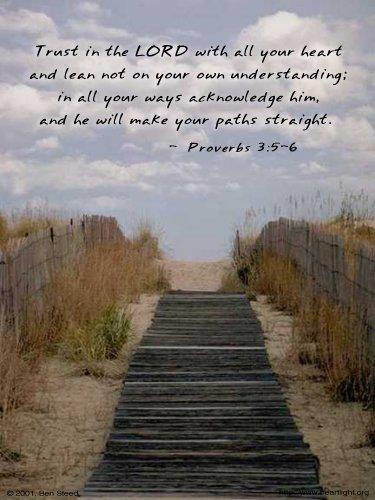
“Behold, I send a messenger before your face, who will prepare your way, the voice of one crying in the wilderness: Prepare the way of the Lord, make his paths straight”   Mark 1:2-3

“Behold”, the voice of one crying out! The word behold itself makes me look, wonder, who is he talking about?  Mark captures this image of John the Baptist proclaiming this message of Jesus to everyone over 2,000 years ago.  This same message is present for all of us today.  It’s such a blessing to hear and share the word with others knowing we are preparing each other for an eternity with him. The kingdom of God is at hand.  Jesus proclaimed the word and performed miracles with everyone providing support to their faith.  Jesus has performed miracles in my life.  I’m not worthy, but grateful. I pray to for our courageousness to share this good news with others and opening our eyes to witness the daily miracles around us. Helping us all to be prepared for him.

Mark 10:45 says  he came not to be served but to serve, and to give his life as ransom for many. (Thank You God)

To the eyes John wore camel hair and ate locust with honey. This image could possibly scare someone or start a new fad diet these days.  Either way, John’s faith and message of Jesus would change your life. “Behold!”At a time when some people were waiting for Jesus to come, John shared and prepared others for Jesus. John baptizes many telling those baptized, Jesus will baptize you  by the Holy Spirit.  Jesus wants us to repent for our sins asking for forgiveness. We need to build our relationship with him by faith and obey his word. (making our paths straight) In what ways are we preparing others for a relationship with God?

Galatians 2:20 I have been crucified with Christ. It is no longer I who live, but Christ who lives in me.

Jesus has prepared our way and provided us with a way to live our lives. I recently heard, “We have been changed, and being changed“(Sanctified – Sanctification).  It’s an on-going process.

Jesus said, “Follow me, and I will make you fishers of men”. And immediately they left their nets and followed him(17-18). When we immediately do this we see the miracles he performs. When we do things at our time often our path goes off track and we need some spurring from God or fellow believers to get us back on.  I’m grateful for the spurring I receive from all of you.

The Righteous Shall Live by Faith

Paul reminds me in Romans 1:17 God is revealed from faith for faith. Having faith he has prepared a path just for you.  We strive to have our path that is righteous by faith. Apart from faith, we have no hope in life.  Thank you God for preparing our path to you.  What path are you on?


The Price of Sin and the Value of Grace.

January 28, 2016

Link to today’s reading: Genesis 29; Matthew 28; Esther 5; Acts 28

It is very hard for me to grasp the price of sin. Romans 6:23 reminds us, the wages of sin is death. I take this on face value that there are serious consequences for sinning. In a very basic way, sin can be anything that puts my interest before God’s. How often do I do that?  Can I even count that high?

Not keeping God’s Commandments and breaking the law might mean losing the opportunity for sharing eternal life with God. If it is sin that separates me from God, then it is no wonder I cannot expect to dwell with God forever based upon my efforts alone.

Despite my depravity, God made a provision for my salvation, not only from death but from a misdirected life. In His abundant mercy and amazing grace, He died for me, bridging the void created by sin. He paid the price so that I wouldn’t have to, freeing me from the consequence of my sin and restoring me to the intended fellowship with God. The price of my sin alone was so high in fact that the only way to pay it was for God himself to suffer and die on the cross. Only then could I be redeemed.

Yesterday’s reading made it clear how agonizing the death of Jesus was. He suffered to pay for my sins. Perhaps His greatest agony was that moment before he died when God’s spirit pulled away, leaving Jesus to suffer as a man. A man that had been perfectly united to God throughout his life on earth. My God, my God, why have you forsaken me?

Today’s reading speaks of Jesus’s resurrection. This was the defining moment of Christianity. The proof and proclamation of the power of Jesus and the reconciliation of God to all humanity. By accepting Jesus, we can live in the knowledge that our slate is marked clean. We have nothing to prove to God if we accept by faith, that all was proven for us. This is the easy part (Jesus did the hard part). If we can get to this point, then we are called to put our faith into action. It is in humility and gratitude, that we seek the life that God has called us to, through the disciplines of prayer, study, service, continual repentance, and sacrifice. To glorify God in all things.  On the surface this may seem hard, and yet, in the sincere pursuit of God, we learn more and more about God’s character and will. About God’s love.  Then through the power of God’s Holy Spirit, it is possible to be transformed as we begin to conform our lives to God’s will. The way we were meant to be in the beginning.

For me, transformation began in the willingness (and then desire) to seek God above all else. This was the only way I was able to get past the confusion and self deceit in my life. Trust me, there was a lot of both. Unfortunately it took over fifty years to find the faith to do so. A faith I prayed to receive. Then I did.

“Father I pray that those who do not know you would not have to wait as long as me. That your Holy Spirit and your Word, would peirce the hearts of unsaved souls across the world, in our neighborhoods and within our families, bringing forth the abundance of the knowledge of your truth. Amen!”

Ultimately in our faith we are called to “good works,” for “faith without works is dead.” We are to be known by our fruit, which cannot ignore our response to the Great Commission; the command of the resurrected Jesus’s to his Disciples:

“Therefore go and make disciples of all nations, baptizing them in the name of the Father and of the Son and of the Holy Spirit, and teaching them to obey everything I have commanded you…..” (Matthew 28: 19-20)

I’m not really sure why it took so long for me. Probably a combination of my stubbornness, arrogance and utter confusion. I didn’t really understand who God was, or how big He was. Nor did I really understand who I was — so broken and lost. In my arrogance I was deceived, not truly understanding what was at stake or how wonderfully different life in a relationship with God could be. I didn’t understand how low the value of the things that God wanted me to turn over to Him were, especially when compared to the value of what God offered me — a new life of abundant blessing in grace and sufficiency.

The easier thing for me was talking to God, asking for help, clarity and strength. Always asking God to do more made me realize I always needed God’s help. Eventually I found the strength (in God) to pursue God with more intention. Then a crazy thing happened, I began to experience the power of God’s love, and this eventually became the best thing in my life. As I began to change on the inside, I hungered more and more for God’s presence, and to know His will for my life.

I am a fatally superficial person.  Thankfully, the death and resurrection of Jesus turned my life inside out. What’s your next move?

God’s Plan, God’s Glory

Christian cross with bright sun and clouds background

Family: Genesis 28; Matthew 27. Secret: Esther 4; Acts 27.

When I read today’s passages, I quickly realized my post was going to cover the crucifixion and burial of Jesus captured in Matthew 27. Mike Baker’s sermon at Eastview this past Sunday covered John’s account of this story.  As a result, I start with a great sense of inadequacy.  Nevertheless, the greatness of God’s plan is on my heart as I meditate on today’s passages.

Romans 11:36 says, “For everything comes from God alone. Everything lives by his power, and everything is for his glory”.

The central theme of God’s plan for mankind is salvation through the death, burial and resurrection of Jesus Christ.  Yesterday, we read about Jesus’ time in the Garden of Gethsemane.  As he is praying before his arrest, he cries out to the father.  Admitting the weakness of his flesh, he asks God if there is another way to accomplish his will.  Nevertheless, he closes his prayer in submission, “My Father, if this cannot pass unless I drink it, your will be done.”

Every detail of Jesus’ betrayal, crucifixion and burial in Chapter 27 are part of God’s plan. Throughout his conviction and crucifixion, Jesus endures challenges to defend himself and/or to save himself by the chief priests, the elders, the crowd, and even one of the other men on a cross.  Yet he does not give in.  Knowing, “…everything comes from God alone. Everything lives by his power, and everything is for his glory”. Jesus was committed to being part of God’s plan, for God’s Glory.

In John 10:17, Jesus says, “I lay down My life that I may take it again. No one takes it from Me, but I lay it down of Myself.”

Think about your own circumstances today. Knowing God will accomplish his purpose with or without you, are you choosing to submit to his power? Are you living for his glory?

Before and After

Today’s reading link: Genesis 27; Matthew 26; Esther 3; Acts 26

One of our readers (Jane Harris who happens to be my loving mom) rightfully commented on Growing Leaders that Paul was the “before and after”. Thanks mom for your engagement on Bible Journal, we appreciate you!!!

In Acts 26 Paul describes his before and after. Paul’s before included imprisoning Christ followers as well as voting to put them to death. He punished them, tried to get them to curse (blaspheme) Jesus, was full of rage, and forced them to flee to foreign cities. In 1 Timothy 1:15 Paul even refers to himself as the chief or foremost sinner. These attributes come to mind in describing Paul’s prior life: full of anger, hatred, rage, abusive, murderous thoughts, and pride. Then he met Jesus, literally – he met him, and chose to trust and follow him with all his heart, and everything changed. The before attributes transformed into a beautiful after: fully recognizable “fruit of the Spirit”.

“But the fruit of the Spirit is love, joy, peace, patience, kindness, goodness, faithfulness, gentleness, self-control; against such things there is no law.” – Galatians 5:22-23

There’s another before example in today’s reading in Matthew 26. Jesus’ disciples hung out with him, listened to his teaching, witnessed his miracles, and even declared that he was the Son of God. They were scared when Jesus was arrested, and instead of staying beside their teacher and proving their love, they left him. Peter (the same guy whose faith enabled him to walk on water) denies Jesus verbally, three times.

This behavior is evidence of a before situation; lives not yet filled with the Holy Spirit, and very similar to my life for many years. I had attended church as a kid, heard the teachings of Jesus, professed to follow him, professed verbally that he was the Son of God, and had been voluntarily baptized. The problem was that when it came down to it, I basically either ignored Jesus or left him out of fear, and denied him far more than three times (not verbally, but with my heart and life choices). I was dead in my sin, but God is rich in mercy…

“And you were dead in the trespasses and sins in which you once walked, following the course of this world, following the prince of the power of the air, the spirit that is now at work in the sons of disobedience— among whom we all once lived in the passions of our flesh, carrying out the desires of the body and the mind, and were by nature children of wrath, like the rest of mankind. But God, being rich in mercy, because of the great love with which he loved us, even when we were dead in our trespasses, made us alive together with Christ—by grace you have been saved” – Ephesians 2:1-5

One key difference between my before and after is my relationship with God. I had always had some belief that there was a God, but I couldn’t say I loved God or Jesus because we didn’t have a relationship. Can we love someone we don’t know? I don’t think so. The more I get to know God through a real relationship (for example: prayer, studying scripture, writing these journal entries) the more I realize how deeply he loves all of us, and I grow in my love for Him.

Considering these before and after situations, the word “unlikely” keeps coming to mind. God, through his love, mercy, and grace makes the seemingly impossible possible. It seemed unlikely that Saul (Paul) would become a Christ follower, but God had a different plan. It seemed unlikely the disciples would turn back to Jesus, but they did.

If you knew me in high school or college it would have seemed unlikely that I would get married and be a faithful husband, but I did get married and have remained faithful to the most amazing woman I have ever met. Thank you God. It seemed unlikely that I’d join a small group, fall in love with God’s word, or share my faith publicly on the internet, but I did. I say these things not to convince anyone that I’m a good person; I am a sinner and actually have wondered if I might be in competition with Paul for “chief sinner”. The thing is that I now see my sin as sin, and the more I realize how big and wrong sin is, the greater I see the magnitude of what Jesus did on the cross so that I can be forgiven.

This is my before and after. What’s yours?

Isaac Relocates

A dog showing patience with a treat on nose.

Family: Genesis 26; Matthew 25. Secret: Esther 2; Acts 25.

I am humbled today by the patience and steadfastness of Isaac. This starts in the beginning of Genesis 26 when there was a famine in the land. As he is deciding where to go, presumably so that he can take care of his family, God has an interesting message for him. In effect, he says, “hey, don’t go to Egypt. Instead, stick around here and hang out in this land. If you stay, I will be with you and bless you. In fact, remember the promise that I gave your father, Abraham? I told him that he would be the father of nations. If you hang out with me here, you will be the one that helps me establish my promise to him.” Wow! That is a pretty serious honor. Isaac does, what any of us would do with such huge prospects ahead of us. He settles in the land God suggested, Gerar.

According to the scripture, God made Isaac very wealthy, very quickly. Yet, that same year, king Abimelech demands that he leave the valley. Now, I don’t know about you, but if I had just become rich I would be doing everything in my power to hold on to what is mine. Moreover, I would be even more pugnacious because God himself promised me. Isaac, on the other hand, doesn’t seem to mind. Without delay, he packs up and moves on, displaying incredible patience.

Perhaps Isaac is bolstered his patience with the prospect of using his father’s old wells? Surely he considered these to be part of God’s plan.  I certainly would have. Unfortunately, he would quickly discover that the old wells were no longer useful. They would need to be re-dug because the Philistines had spitefully filled them in. To his credit, he was not deterred by the extra work and effort. Not only would he rebuild the wells, he would show honor and gratitude for them, reestablishing the name of each, in homage of his father’s legacy.

Isaac endured trouble steadfastly. Every time he rebuilt a well, finding water, the neighboring people would come over and quarrel with him, claiming it for their own.   What did he do? Nothing. He moved on and did it again. This perplexes me greatly. Everything in me wants Isaac to fight for what is his.   Not only did Abraham establish these wells, God promised to provide for and prosper him. I want him to fight! Instead, Isaac moves forward, steadfastly, knowing that God will provide.  It pays off. He finally digs a well and there are no quarrels. How does he respond?   Not with a single thought or inkling that he had finally received his due, as I may have. Rightfully, Isaac responds with full thanks and gratitude to God. It was pure worship.

As I read through this story of Isaac, God reminds me that His promises are good, trustworthy and guaranteed. Unfortunately, God’s good promises can become feelings of entitlement and presumption. When they do, be reminded that the object of our affection has shifted to ourselves. Isaac never considered his own gain as a victory. Instead, all glory, honor and praise were for the Giver.


Be Not Deceived

Today’s reading: Genesis 25; Matthew 24; Esther 1; Acts 24

January 24th, 2016

Be Not Deceived

In Matthew 24 Jesus speaks of the end times. Upon this His disciples asked Him for help:

Tell us, when shall these things be? and what shall be the sign of thy coming, and of the end of the world? And Jesus answered and said unto them, Take heed that no man deceive you. – Matthew 24:3b-4

I’m not sure how the disciples felt but I know I had the thought “that wasn’t really an answer” the first few times I read this account. But my spirit told me I should know better then to think that. To be sure, upon reflection, was it not the best answer? Could Jesus have been saying, let this be your sign, that as the end times come deception will run rampant? Not only giving an answer but also giving a command that can save us. Be not deceived.

Deception is indeed all around us. May we not be deceived. May we be accurate in our interpretation of God’s word and not led astray from the way.

This know also, that in the last days perilous times shall come. For men shall be lovers of their own selves, covetous, boasters, proud, blasphemers, disobedient to parents, unthankful, unholy, Without natural affection, trucebreakers, false accusers, incontinent, fierce, despisers of those that are good, Traitors, heady, highminded, lovers of pleasures more than lovers of God; Having a form of godliness, but denying the power thereof: from such turn away. For of this sort are they which creep into houses, and lead captive silly women laden with sins, led away with divers lusts, Ever learning, and never able to come to the knowledge of the truth. – 2 Timothy 3:1–7

May we believe the Word as truth and may our minds be renewed through the real power of Jesus Christ. May we cling to the Word and be not deceived.

For this cause also thank we God without ceasing, because, when ye received the word of God which ye heard of us, ye received it not as the word of men, but as it is in truth, the word of God, which effectually worketh also in you that believe. – 1 Thessalonians 2:13

God would You put up an hedge around us that our paths be lit always in the power of truth? God would You give us understanding so that we may keep Your law with all our hearts? Would You turn our hearts toward Your statutes and not toward selfish gain? Would you turn our eyes away from worthless things and preserve our life according to Your word? God we need You. Keep us LORD, would You please? I ask this in Jesus Name. God, thank You. You are good!  Amen.