Freely Taken

Whoa, whoa, whoa?! Who do you think you are? Do you really think that you deserve this? Do you really think that the Lord is so impressed with your righteousness that he is blessing you with all of these things? No! No! No! says Moses. You’ve got it all wrong. You are not here because of the great things you have done, but because of the more horrible things that those other people did. Ouch!
These seem like harsh words from Moses. But, clearly, they are not. He explains by describing, in detail, how they have assaulted the glory of the Lord. Remember the golden calf you made? He asks. Wait, how about when you spied out the land of Kadesh? Remember, you said it was “flowing with milk and honey?” (Numbers 13:27). But, when the Lord asked you to go in and take it, you refused. You became afraid and did not trust in the Lord. Have you forgotten these things? Do you still think you deserve this?
The answer is no, the Israelites did not deserve to enter the promised land. That right was purchased for them. Moses has to remind them. He explains to them “you would do well to know what I did on your behalf. The sacrifices I made and my humble pleadings to God that he would not look at you with anger, but with love. This is why you are here. You have not gotten what you deserve. Instead, you have gotten a wonderful gift.” (Deuteronomy 9:18, my paraphrase)
We too live in the land of milk and honey. It is far too easy to believe that we deserve it all. Our freedom, our cars, our jobs, our houses, our family, our breakfast, lunch, and dinner. To top it off, we enjoy a gift called salvation. It’s free for the taking. Or is it?  Just like the Israelites, our freedom was purchased. This time, the ultimate price was paid with the life and blood of Jesus Christ.    So no, this gift is not free for the taking.  It requires something of us.  It starts with gratitude and ends in worship.

In Awe

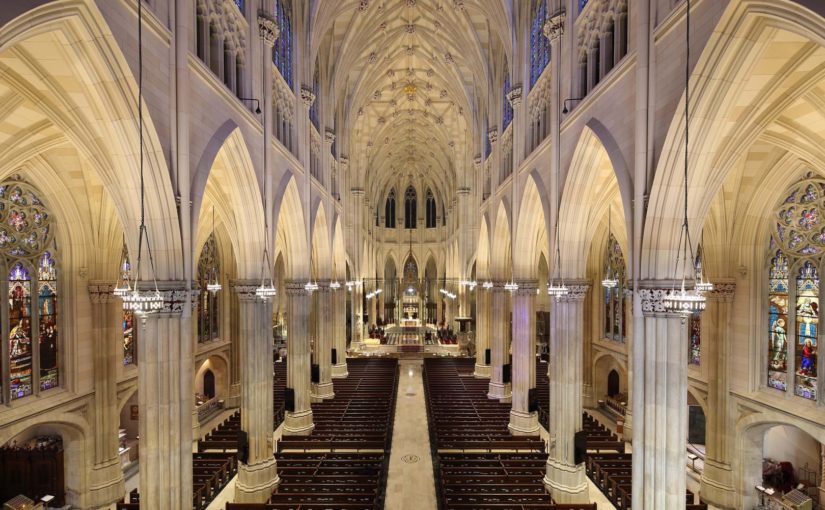
Last week, while visiting New York City, I walked through St Patricks Cathedral.  It is everything you expect.  The building is massively overwhelming and overwhelmingly intricate.  The cathedral’s cruciform shape has an altar prominently positioned in the nave and raised in the direction of heaven.  The altar is enshrined in gold and surrounded by angels.  Throughout the building, you’ll see the saints hosting various shrines, imagery, and relics of heavenly trophies.  It’s amazing.  Awesome, even.  All of it.
I stood at the entrance gazing down the long hall, wondering how many people think about Jesus.  More importantly, how many people considered the sacrifice he made?  How many people came and found God?  That is the risk, of course, that we may go and find awe but miss what really matters.  The hope and solace of Jesus Christ.  This is what Moses is warning us against today.  He knows that we are likely to take these most beautiful things like gold and saints and fantastic architecture and turn them into something they are not.  Beware, he says, “that you may be drawn to them and serve them” (Deut 4:19).  Do you see it?  We are likely to bow down and serve the created thing over the creator.  it’s easier.  It’s tangible.  It feels real.  But, the created things have no power.
Dig a little deeper and review the mission statement of the St. Patricks Cathedral.  There, it says that these things – this cathedral – are brought to us for one purpose.  That it may “call us to respond to our shared humanity – one in the image and likeness of God, saved by his Son, Jesus Christ, in the family of the Church”.

Faith, Or Something Else?

Matthew 15:21-28

We call God many things like provider, teacher, healer, savior, and father.  The list is long, please add some that matter to you.  Now, consider how each of these things manifests in your life.  For example.  I see Jesus as my teacher.  I know that to be true because he has taught me.  It’s evident in his words, his people, and in my heart.  I have evidence.  What if, God stopped teaching me?  How would I respond?  Honestly?  I don’t know.  But, I do know how I would like to respond.  We see it in the Canaanite woman from today’s reading.
“Hey Jesus,” she shouts.  “I need your help.  My daughter is in trouble.”
Silence.  Jesus does not even bother himself with her.
As Jesus bickers with the disciples, the woman came before him again.  This time, she was kneeling.
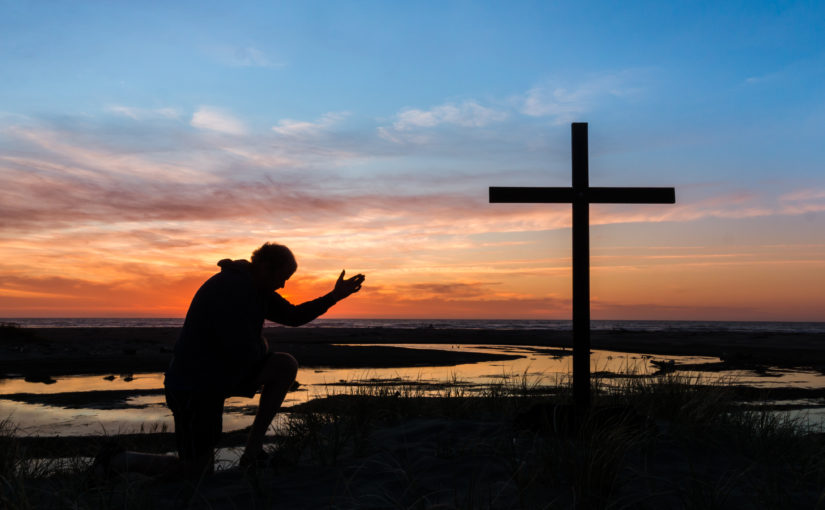
At first glance, we may consider her kneeling to be begging.  That would be a mistake.  Jesus would have quickly called her out on that, saying something like “woman, get up!”  Instead, Jesus exclaims the greatness of her faith.  She captures Jesus’ attention, not through the quality of her begging but the depth of her belief in who Jesus is.  In this context, her kneeling is an act of worship.  She falls to her knees because of who she knows Jesus, rather than what he can do for her.  She knew, in the very depth of her heart, that Jesus could not walk away from her daughter.  It’s not in his nature. That’s faith.
Just like the Canaanite woman, God will never stop teaching me as long as I am searching.  Nor will he stop providing, healing saving, or loving.  He cannot.  It’s who he is.  It sounds like it’s time to start worshipping and stop begging.

Just As You Are Doing

1 Thessalonians 4

I tend to read scripture with a critical voice.  The Bible is written for instruction and correction, I think.  When I heed these words, I become closer to Christ, righteous, and worthy – right?  Sort of.  This is not entirely true.  Once in a while, it is worth reflecting on what is going right.  In fact, if you are a Christ-follower, you are honoring God.

Paul subtly reminds us of this today in 1 Thessalonians 4:1.  He says that the words that we have taken and brought into our lives have shaped the things that we do – the way we walk.  These things, he adds, are honoring to God.  As I sit and reflect on that, my body takes on a new posture.  It mimics a man of pride and joy.  I feel worthy.  Maybe you feel that too?

I know that these strange and great feelings are not a result of my great works.  No, they are the result of His great work.  Specifically, his work on the cross rids me of sin.  His work in the grave allows my old self to pass away.  Yes, and His work in ascension brings me new life.  Life that can never be taken away.  These are the words worth remembering.  These are the things that we should “keep doing.”

Called

Philippians 1

Few things stir my heart more than the concept of calling. Why? Well…if I am honest, the answer is self-incriminating. When I think of a calling, I consider what my life is about. What is the significance of my time here on earth and what is my contribution to the world? Now, these are not bad questions to answer, but we need to be careful with the answer. Here’s why.  I see two options. One is to answer them according to the American dream, the second is according to the faith I have professed in Jesus Christ.

When I answer my calling with respect to the American Dream, I begin to think about all sorts of possibilities. I think of people like Henry Ford and John D. Rockefeller.   They are stand-outs among the fabricators and heroes of the American Dream. Their motto; anything is possible and everything is probable. Heck, I could even be President! It just requires persistence and hard work. Our dreams are within reach. So, how do I define my calling as an American? Unfortunately, much of my life has been marked by the shallow and self-serving answer of “success.”

The narrative changes, however, when we choose to follow Jesus. In Philippians 1:27, Paul reminds us to “let our lives be worthy of the Gospel of Christ.” In this simple statement, Paul clarifies that Jesus’ calling is not my own. Instead, Paul exhorts me to live the life to which God is calling me to.  Paul is talking about the life that God created us for.  What is the difference between these two lives? A handful of verses bring me clarity.

[Serve] the Lord with all humility and with tears (Acts 20:19 ESV)

 Do nothing from selfish ambition or conceit but in humility count others more significant than yourselves (Philippians 2:3 ESV)

Put on then, as God’s chosen ones, holy and beloved, compassionate hearts, kindness, humility, meekness, and patience, bearing with one another (Colossians 3:12-13 ESV)

have unity of mind, sympathy, brotherly love, a tender heart, and a humble mind (1 Peter 3:8 ESV)

Clothe yourselves, all of you, with humility toward one another (1 Peter 5:5 ESV)

As I read through these verses, there is one word that appears and repeats in my head, tying them all together. It is the thing missing from my narrative. It is replaced with turmoil in our daily lives, as we chase the American dream. It is why Jesus died for us. It has eternal significance and, it will ensure our joy-filled life. What is it?  What does Jesus call us to? LOVE.

The Stewardship of God’s Grace

There are many things we are called to be good stewards of.  Time and money are the obvious ones.  Maybe you think about health or, gifts and talents. Good stewards of any of these are easily spotted.  You might even be able to identify what makes them a good steward. Today, in Ephesians 3, Paul suggests grace as an additional item to steward.

Each of the items I mentioned has significant value.  To maintain it, they require care. Vigilance even.  This is particularly true for grace.  Why?  Because we will always choose strength over grace.  To harsh?  Consider Peter.  He was sure that his strength of faith was enough to keep him clean.  He believed that right up until he heard the rooster crow (Mark 14:72).  Suddenly, he understood his greater need for grace.

There is a significant contrast between Peter and Paul.  First, Paul had a keen awareness of his weakness.  He testifies, “I have discovered this principle of life—that when I want to do what is right, I inevitably do what is wrong. I love God’s law with all my heart.  But there is another power within me that is at war with my mind. This power makes me a slave to the sin that is still within me (Romans 7:21-23).  This confession allows Paul to understand that there is no way out of sin.  Instead, he must have a way through it.  So do we.

Grace offers us a way through it.  It comes, fully and freely, upon our remembrance of Jesus Christ and his sacrifice.  Paul says it well in Romans 8:11, “If the Spirit of him who raised Jesus from the dead dwells in you, he who raised Christ Jesus from the dead will also give life to your mortal bodies through his Spirit who dwells in you.”

Our Hope Is Real

Psalm 31

In this Psalm, we hear David remembering  God’s grace and generosity.  He’s been through some pretty tough circumstances and withstood some really bad choices.  In his reflection, David generates hope for the future.  Not because of a promise that was made – although it was – but because of God’s action.  God has proven himself over and over again.  Even though David was undeserving. 

David’s reflection of God’s greatness also gives him hope for tomorrow.  This hope is so real, and he is so connected to its source that his deepest desire is that everyone should experience it.  You see this clearly in verse 23.  David is passing along the blessing to us with instruction.  He has fully become the hope that’s been given.

These words are the promise of God.  It is our faithfulness that enables God to make them a reality

 Love God, all you saints;
God takes care of all who stay close to him,
But he pays back in full
those arrogant enough to go it alone.
Be brave. Be strong. Don’t give up.
Expect God to get here soon. Psalms 31:23-24 (MSG)

Afraid of Being Fearless

Isaiah 54

Jennifer and I were once asked to talk about being fearless.   Her comment was something along the lines of “they should pick someone else to ask.”  I think that rings true for most of us.  We don’t feel fearless.  In fact, as soon as you bring it up, all I can think about is the things that I am afraid of!  On closer reflection, however, it is not true.

Let’s start with geography.  Living in America is pretty safe.  I am not afraid of invasion or enemy attack.  But, does that make me fearless?

What about money?  The median worldwide income is around $2,900 per year.  The median wage in America is about $34,000.  If you live with me in BloNo, it’s higher than that.  I am not afraid that I won’t be able to buy food or gas tomorrow.  But, does that make me fearless?

How about knowledge?  Our educational system and availability of resources provide more educational opportunities than ever before.  I’ve been to college and have a post-graduate degree.  I am not afraid of being uneducated.  But, does that make me fearless?

Did you know that the freedoms and privileges I’ve just described are the fulfillment of prophecy?  Isaiah 54 talks specifically about God’s provisions of peace, riches, and knowledge for his servants. We are living proof of his promise!  But, guess what?  That does not make us fearless.    Fearless comes only when we embrace the promise and the privilege.  What does that look like?   It looks like “living life with a single passion: to joyfully display his supreme excellence in all the spheres of life. The wasted life is the life without this passion. God calls us to pray and think and dream and plan and work not to be made much of, but to make much of him in every part of our lives.” John Piper – Don’t Waste Your LIfe

The Highway to Holiness

Isaiah 35

And a highway will be there and it shall be called the way of holiness (Isaiah 35:8)

I am captured by verse 8 from today’s reading.  I suppose it is because it brings out the complex meanings of the simple word ‘way.’  Eugene Peterson explains it this way, “way: a simple noun designating a road that leads to a destination but then opening up as a metaphor that ramifies into many and various “ways” – not only the way we go, as in the route we take but the way we go on the way whether by foot or bike or automobile.  The way we talk, the way we use our influence, the way we treat another, the way we raise our children, the way we read, the way we worship, the way we vote, the way we garden, the way we ski, the way we feel, the way we eat…And on and on, endlessly, the various and accumulated “ways and means” that characterize our way of life.”

Wow.  Can I sum that up?  Our path in life is determined by two things.  First, the road we follow, and second the method or style in which we follow it.  While I often think about the road that I am on, I rarely think about how I follow it.  Both are worth our consideration.

Think first about the road you want to follow.  What’s at the end of it?  The pearly gates?  Successful children?  $1,000,000?  We pursue all manner of goals, some worthy and some not so much.  Yes, pick the right goal, but be careful.  This life is lived every day, not just on the last day.  What you do in between matters.

So, how do you want to follow the road?  Grumpy?  Enthusiastic?  Singing and dancing?  When I picture myself on the road to heaven, I see myself skipping and jumping like a little kid.  He’s enjoying the walk, with a smile on his face.  I see laughter and singing and sunshine.   I see holiness.   If I know where I am headed, why should it be any different?

Eugene H. Peterson. The Jesus Way.  Wm. B. Eerdmans Publishing Co. 2007

Confused

Today’s Reading: Acts 19

One of the enemy’s best weapons is confusion.  When we are confused, we are unable to see things clearly.  It disrupts our decision-making process, often resulting in choices that are irrational and inconsistent with our core beliefs.  Many times, confusion is produced by the people around us.  We are continuously barraged with differing world views and alternative belief systems.  Want proof?  Take a closer look at today’s reading.  Did you notice in verse 29, “the whole city was in confusion?”

To understand the city’s confusion, we need to look back to verse 23.  Up until that point, Paul was actively spreading the word of God.  Acts 19:20 says that the Lord’s message Paul presented was “spread widely and had a powerful effect.”  Clearly, lives were being changed.  Not everyone, however, was happy about this.  In fact, a man named Demetrius was suddenly worried about the impact that these new beliefs would have on his business.  To combat this, he developed a strategy.  He knew, that it would be easy.  All he had to do was confuse people.

Demetrius starts with the economic conversation, encouraging them to consider the consequences of slowing sales.  It was enough to spark some fear, but not enough to start a rebellion.  To intensify their reaction, he adds confusion by suggesting that the magnificent goddess, Artemis will be robbed of her “great prestige.”  This was all it took.  The people were sufficiently overwhelmed by these significant changes.  The fear it stimulated caused their anger to boil (v18).  It wasn’t long before full on rebellion occurred and “everything was in confusion” (v32).

The sad reality is that we are subject to the same confusion.  J.I. Packer elaborates on this.  He says, “we are so consumed with great thoughts of man that we only have room for small thoughts of God.  Second, we are confused by modern skepticism.”  Is it any wonder that it’s one of Satan’s preferred weapons?  Thankfully, the Spirit who lives in us, is greater than the spirit who lives in this world (1 John 4:4).  When we arm ourselves with His truth, we win.  I have found a very practical way to avoid confusion.  It comes from remembering who God is and who I am.  The following affirmations, despite their simplicity, are powerful statements that bring clarity, hope, courage and refreshment.

I believe that God is who he says he is

I believe that God can do what God says he can do

I believe that I am who God says I am

I believe that I can do what God says I can do

God’s Word is alive and active in me

I believe God