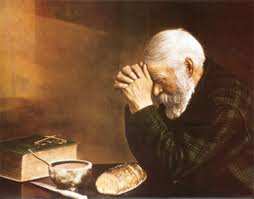
Delivered

John 19

Our introduction to today’s reading:  “Jesus is delivered to be crucified”.  Pilate had a decision to make.  In reviewing the charges against Jesus, Pilate states: “Take him yourselves and crucify him, for I find no guilt in him.”  How conflicted he must have been?  He finds no guilt in him but he feels the pressure of the crowd.  The crowd clearly wants and believes he should be crucified.  When I last wrote on this verse, I used the terminology “crowdsourcing”.   While not a perfect definition for this situation, it relays the message that the crowd came together and decided Jesus’ fate.  Pilate kept trying to get Jesus to open up, to talk to him, to say something he could use to free Jesus, but all that he said was “You would have no authority over me at all unless it had been given you from above. Therefore he who delivered me over to you has the greater sin.”   Not much to go on to free this man people believe is disobeying the law.   Pilate tried a few times but without success and finally gave us, releasing him to the crowd.

What if the story had been different?  What if Jesus had confided in Pilate?  What if they had a conversation and came to a conclusion on what to do next? What if Pilate let Jesus go?  It is hard to contemplate because we know the rest of the story.   Jesus is then given over the crowd, already wearing a purple robe, a crown of thorns and multiple wounds from being flogged.  The events of this day are traumatic.  We continue reading about Jesus bearing his own cross on the way to the Place of the Skull.  We read about the Crucifixion along with two others.  This chapter is not written from Jesus’ perspective, but from Pilates and others.  The next turn of events: 19 Pilate also wrote an inscription and put it on the cross. It read, “Jesus of Nazareth, the King of the Jews.”  He goes against the crowd with what he believes and still showing he does not feel Jesus was guilty.

The story continues as we know it today with the dividing of his garments and casting lots for his tunic.  The scene presents vivid images of the drama as it unfolds with a large crowd, watching Jesus die on the cross.  The Death of Jesus as it is written:

28 After this, Jesus, knowing that all was now finished, said (to fulfill the Scripture), “I thirst.” 29 A jar full of sour wine stood there, so they put a sponge full of the sour wine on a hyssop branch and held it to his mouth. 30 When Jesus had received the sour wine, he said, “It is finished,” and he bowed his head and gave up his spirit.

His side is then pierced and he is buried. Before we continue to the next chapter and read about his resurrection, let us ponder again what would have happened if Pilate had released Jesus?  At this time of Thanksgiving, let us give thanks that Jesus died on the cross for us!

~Carol Barham

What Will You See?

Today’s Reading: John 9

He probably blamed himself.  Can you picture him?  The blind beggar, sitting, all alone.  Cold, hungry, and lonely.  He could hear people talking as they passed by.  They questioned what was wrong.  They mocked him.  They made up stories. Every conversation reminded him that he was useless.  Every remark reinforced his belief that he was bad.  For a while, the blind man fought it.  He wondered what he could have possibly done wrong.  Why, did he deserve this?  

In the moments that others engaged him in conversation, the answer was always the same.  “you must have done something” they would say.  “Think hard.  You dont remember doing anything sinful?”  As the blind man searched his heart, he would cry out, “no, nothing.”  “Well,” they retorted, “if not you, then it must have been your father.  Clearly, you are paying for someone’s sin.”

Most of the time, he was just alone.  Alone with his thoughts and heavy heart.  His hope for a normal life, productive and useful, was gone.  He would never be like everyone else.  Over time, he decided, they are right.  I’ll just accept what I have.  “There is no sense in trying harder, no benefit to leaning in.”  

I wonder if that is real for all of us.  The blind man had an ailment that kept him from experiencing a full and meaningful life.  It was something that he could not overcome.  Nobody else could help him either.   Like the blind beggar, we are unable to view the thoughts and actions that shape our lives objectively.  When we look closely, we will develop reasons why it just wont work for us.  Ironically, those reasons, become exactly what keeps us from moving forward.  They are the things that keep us from becoming who God created us to be.

Just like the blind man, we cannot find comfort or assistance from other people. We definitely cannot find it inside of ourselves.  We need someone to believe in us.  Actually, we need something more than belief.  We need someone that knows us, intimately, just like Jesus knew the blind man.  Jesus stopped and provided exactly what was needed.

I wonder, if the blind man knew what sight would bring him.  Maybe he thought about new and amazing opportunities, or maybe that it would open the door to love and companionship.  It could be that comfort and ease of life were enough for him.  Whatever it was, I wonder if he was surprised at what he got.  He didn’t get any of those.  Instead, he got Jesus, telling him to be a witness.  To tell the world of his experience.  It didn’t make sense.  Of course he would tell the world.  In fact, he wanted to shout it from the mountaintops. He would make sure that everyone knew it was Jesus Christ that healed him.  He is why he sees.

What the blind beggar didn’t know and didn’t think about was that this is who he was created to be.  Full of passion, full of love, hope and joy.  These were the fruits that had been hidden away for so long.  This is what Jesus unlocked in his life.  For the first time, he could see.

What do you want to see?  What will you use your sight for?  

Bad Investments

Luke 21

When I read Luke 21, I get a little scared.  It starts with the destruction of the Temple.  Jesus is telling us that God’s very house will be destroyed.  When it does, we will be tempted to follow others that are not God.   We could easily be led astray.   There will also be wars, natural disasters and persecution.  Jesus makes it personal.  He tells us that we, as believers, will be beaten and tried with some being put to death.  This action is not caused by strangers or even the government. It is our own parents, brothers, relatives and friends.   Entire cities will be destroyed and overtaken.

The events found in this chapter are truly horrifying, with one exception.  Did you notice the first paragraph about the widow?  How did it land here?   It is out-of-place, isn’t it?  I thought so, until I got a closer look.  Read it again and note that the widow kept nothing back for herself.  She gave everything she had, because that is not where she found value.  Consider it this way.  She invested everything she had.  Why?  Was she foolish?  No.  She gave everything because she did not hold value in herself, her own comfort, or her own well-being.  Instead, she invested everything she had for the Kingdom.  She only though of others’ comfort and well-being.  She invested it so that God’s kingdom could be full.

It is worth considering our investments vs the widows.  I realize now that my fear when reading chapter 21 is a result of the investments I am making.  You see, if I am investing in my business or my possessions or even my family, Jesus is quick to show me that my investment will not pay off.  This is what gives me anxiety.  Thankfully, I have an opportunity to make it right.  Today, I choose to invest in God’s kingdom.  I can do it with my pennies and dollars as well as my talents and abilities. Will you?

Man, Prophet, or God?

Luke 9

How did God make the stars? Were they thrown in the air like pixie dust settling into random patterns, or were they placed, one by one with care and intention?  I can spend hours in the fascination of the stars and our universe, becoming quickly overwhelmed with their mysteries and possibilities.  God has not revealed to me how, or why, he created the universe, I just know he did.  In fact, we all know.  We to experience it every time we look into the sky.  I find myself saying “Wow, you are awesome God!”

I don’t question that God created the universe.  Maybe because the evidence is all around me.  Sure, there are people that contrive alternate explanations, but I believe He did it.  I have no doubt.  In order to believe that, I have to consider his capabilities.  I come to greater understanding that he is far bigger than me. I see that his capacity for both creativity and activity are infinite. Why then, do I question that he was able to feed 5,000 people with four loves and two fishes?  Why do I attempt to rationalize and water down the story into some rational explanation? Seriously, there is no rational explanation for the universe so why do I attempt to create them around the works of Jesus?

Asking those questions is scary.  Actually, the answer is the scary part because it reveals what I believe about Jesus.  You see, if Jesus was a prophet, or merely wise human, feeding the 5,000 is impossible and I need to rationalize the story.  If, however, Jesus is God, the creator of the universe, the answer is quite different. Feeding the 5,000 is easy when you know how to make a sun and stars and moons.

Who do you believe Jesus to be?

The End

Mark 13

Do not be anxious.  That’s what the apostle Paul wrote in Philippians 4:6.  I have to remind myself of that because it’s exactly what happens to me when I read Mark 13.  Maybe you become anxious too?  Here’s how it goes.  We begin to analyze and worry, trying to discern if we are in the end times. As we consider current events and the natural disasters happening everywhere, the conclusion has to be yes, we are living in the end times.  Given that answer, our creative energy is poured into possibilities and theories that tie everything together.  In some odd way, it helps make sense of the world.  Other people support the idea too.  In fact, they will encourage us and ask for more which causes us to go digging into the prophetic scripture so that we can justify our conclusions.

What is my conclusion?  Yes, we are in the end times.  I do not know if we are closer to the beginning or closer to the end, but I’d have to be crazy not to see evil rising up all around me. And, yes, it makes me anxious.  Truth is, this anxiety is very revealing.  It paints a pretty good picture of what is really in my heart.  You see, this anxiety is produced when I consider that the life that I know, with its familiarity and relative comfort, is going to be disrupted.  If that is true, then clearly, I am not looking forward to a life with God.  If that is true, Jesus warns, there is no possible way you will make it through the tribulation.

How then, are we going to make it through?  How are we going to survive additional trials that are headed our way? Its easy when we reflect on the central focus of all these stories.  They are not about God’s condemnation.  They are about his love and faithfulness. If we are to be reminded of this, we must do as Colossians 3:2 suggests and “set our mind on things above, not on earthly things.”  When we do that, all the events, all the possible horrors and evils fade away, forever lost in the hope created by the pure, precious love of Jesus Christ.

Immediate Decisons and Accurate Choices

Mark 1

Think about some big choices you have made in your life.  Maybe it was a new or a house, or a career change.  Getting married and starting a family rank right up there too. None of those are spontaneous choices.  Now, consider the process you used to evaluate the choices.  You probably weighed the benefits and potential consequences.  You may have also studied time and economic commitments.  Along the way, it is likely that you weighed alternative choices.  Everyone would agree that a decision process that includes all of those steps is wise, right? With that truth, we have something to consider about the disciples choices to follow Jesus today in Mark 1.  Check out verses 18 and 20.  It says that when Jesus asked them to follow, they immediately did.  Did they make hasty choices?

There are two factors we must consider when answering that question.  First, is the logical decision framework we just looked at accurate and second, do we have the whole story?  For the first part, I am going to simply answer yes, that is a logical framework for effective decision-making.  Sure, there could be additions to it and probably a few constraints added in, but in summary, it works.  So, the logical conclusion is that the disciples made hasty decisions, right?  Not so fast.  Since we know their life stories, we can safely and accurately say that they made wise choices.  So, how did they do it?  In fact, I want to know how we can make such accurate decisions immediately.

To determine how James and Matthew made their decision, we have to look into their history.  Unfortunately, we don’t get a very much information about them so, we are going to have to make a few assumptions.  The first takes a cue from Mark 1:2-3.  Mark is quoting a prophecy from the book of Isaiah.  It predicts the coming of a man that will prepare the way for Jesus.  This was John the Baptist.  John the Baptist, in turn, predicts the coming of Jesus.  It is fair to assume that the disciples were listening to and hearing these messages. So, the two contributing factors to their immediate decisions were listening to God and keeping watch for the Christ. Therefore,  we really want to make accurate decisions, we too will listen and keep watch.

The second consideration of the disciple’s immediate choice to study is what the disciples continuously thought about.  As faithful Jews, they were steeped in scripture.  This knowledge of God’s word allowed them to weigh the truth of what they were hearing and evaluate the promises being made.

To close, let’s look again at this immediate decision.  Clearly, it was not hasty, nor was it exactly immediate.  You see, their decision to follow Jesus was made long before they met him face to face.  It came from setting their mind on him, keeping watch and knowing that they would act when it was time.  Their immediate decision, therefore was really a conditioned response to the Truth that they had hidden in their heart.  At the moment of invitation, no thought or consideration was necessary.  The preparations had already been made.

To be like the disciples, we can follow their pattern.  Accurate and effective choices are made by knowing God (plasm 119:11), setting our minds on him (Colossians 3:1-4) and be ready to respond (1 Thessalonians 5:1-2).

Colossians 3:1-4 (ESV) If then you have been raised with Christ, seek the things that are above, where Christ is, seated at the right hand of God. 2 Set your minds on things that are above, not on things that are on earth. 3 For you have died, and your life is hidden with Christ in God. 4 When Christ who is your life appears, then you also will appear with him in glory.

Philippians 4:8-9 (ESV) Finally, brothers, whatever is true, whatever is honorable, whatever is just, whatever is pure, whatever is lovely, whatever is commendable, if there is any excellence, if there is anything worthy of praise, think about these things. 9

Deuteronomy 12:28 (ESV) Be careful to obey all these words that I command you, that it may go well with you and with your children after you forever, when you do what is good and right in the sight of the Lord your God.

Greatly Distressed

Matthew 17

A couple of weeks ago, I began asking people if it were a full moon outside.  It was my sarcastic way of downplaying the distress in my life.  To be distressed, according to google, is to experience anxiety, sorrow or pain.  But, distress is more than that.  In fact, Marriam-Webster (by the way in our world that is all things Google, we lose some richness from our lives – use other sources for information occasionally) adds that distress is a state of danger or desperate need.  Distress, in my life, shows up when the things that I put my hope in, the things that I trust my future with, don’t perform the way that I expect them to.  The disciples experienced this too.

As they were gathering in Galilee, Jesus said to them, “The Son of Man is about to be delivered into the hands of men, and they will kill him, and he will be raised on the third day.” And they were greatly distressed. Matthew 17:22-23

Do you see it?  At this point, the disciples had given up their entire lives for Jesus.  Their careers, family life, money, everything.  The only comfort and security they know is Jesus.  What does he do?  He tells them that he is going away.  Worse than that, he is going to die.    They knew that they found the very best thing to live for and now it is going away.  It could never be replaced.  No relationship, no job, no wealth could give them hope.  The result?  Distress – agony, anguish, tribulation, excruciation, torment and torture.

As I consider the disciples’ lost hope, I see that distress reveals much about our own lives.  Chiefly, distress in our lives exposes the object of our affection. Some of us, put our hope in people, maybe a spouse.  Many choose the organization that we work for.   When these let us down, or they change course, our future looks different than what we originally chose.  We find distress.  Do not, for a second, think that distress is a bad thing.  I think Jesus allowed, even wanted his disciples to experience it.  Why?  Because it caused them to reevaluate.  It caused them to clarify why they were following him and was it worth continuing.

History shows that the disciples continued to choose Jesus, despite their distress and the uncertainty of his future.  In him, they found life, abundantly.  That abundant life continued even after his death.  Today, we get that same benefit.  In fact, he promises that he will be with us “even to the end of the age” (Matt 28:20).  Because of that eternal promise, we never have to experience distress.   When we do, our hope is in the wrong place.


Despair or Hope?

Matthew 5

Hope, peace, and joy.  That is what I hear in today’s reading of Matthew 5.  No, it is not packaged the way I expect it to be.  Nor is it presented in a way that is particularly pleasant.  Think about it for a minute.  Jesus begins the chapter talking about the poor, the mourning and the meek.  These are the people, he says, that are worthy of God’s kingdom.  As I read through the list, I am not sure where I belong.  In fact, as I consider the list more closely, I am sure that I don’t belong.  Continuing to read, I wonder, am I a peacemaker?  Merciful?  Maybe I am pure in heart?  No, not really, I conclude.  Sure, they show up on some level, but none to which I fully identify.  Now, it really gets tricky.  The balance of Matthew 5 consists of Jesus pushing deep into morality.  He skillfully exposes that which I would rather keep hidden.

Am I salt and light?  Uh, well, I don’t know.  Does my righteousness exceed that of the scribes and the Pharisees (v20)?  Well….  Am I angry with my brother?  Do I call him a fool?  Has my right eye looked at something it shouldn’t and enjoyed it?  Have I taken an oath or ever wanted revenge?

Jesus knows the answer to each of these questions for all of us.  It is as true today as it was when he gave the sermon on the mount.  Thankfully, Jesus’ goal was not to spin me into despair and depression.  Nor was his goal condemnation.  No, Jesus carefully crafts the sermon on the mount to be sure that we find peace, hope, love and joy.  Thankfully, these results do not come from our perfection, our hours and hours of service to the kingdom, or our generous financial gifts.   No, none of these things will make our heart pure.  Only one thing will.  The perfect offering of Jesus Christ.  Hebrews 10:10 assures us, “we have been sanctified through the offering of the body of Jesus Christ once for all.”  2 Corinthians 5:21 explains this perfect sacrifice nicely.  It says, “for our sake he made him to be sin who knew no sin, so that in him we might become the righteousness of God.”  This, and only this, is the way to hope, peace, love and joy.


Look Closer

Luke 15:11-32

How many times have you read the story of the prodigal son?  My guess is that it’s a lot.  In fact, this BibleJournal blog has 10 articles about it.  Obviously, it is a valuable story.  Even so, I have to admit that I was a little bummed when I was assigned this scripture again.  I mean, hasn’t it all been said?  Yes, yes, I know what you are thinking, and I am thinking it too.  I need to check my pride at the door and take a closer examination of my life.  In so many ways, I am a prodigal son.  Today, however, I want to look at the story differently.  Let’s focus on the father.  We are, after all, trying to focus the character of God.  This familiar story reveals much about His character.  Here are four character traits of God that I see in it.

He gives us freedom  As did the father and prodigal son, we begin life in a relationship with God.   As time passes, however, we may refuse the relationship.  When we do, God does not seek to control us.  Instead, he allows us to pack up our gifts and talents and use them however we want.  It’s up to us.

He longs for us We don’t get details from this parable, but it’s there.  Consider for a moment how the father felt as his son was leaving, or maybe a year later.  He missed him.  The Bible has several stories about how God misses us when we choose something other than him.  In the parable of the lost sheep, for example, the shepherd leaves 99 sheep to search out the one missing (Matthew 18:12-14).  Or, the parable of the lost coin in Luke 15:8-10.  Isaiah 30:18 says it directly,  Yet the LORD longs to be gracious to you; therefore he will rise up to show you compassion. (NIV)

He Forgives. While my view of forgiveness often gets distorted.  God’s is always the same.  Whatever our crime, whatever our transgression, God removes it.  As far as the East is from the West (Psalm 103:12).

He establishes his kingdom within us. The father, in the story reminds the second son that “you are always with me and everything that is mine, is yours.”  God doesn’t hold anything back to those that love him.  He gives us his kingdom, literally.   We are reminded of this in the book of Acts.  As the disciples share the love of God, they “were filled with joy and with the Holy Spirit” (Acts 13:52).  Galatians 5:22-24 expounds on this.  His kingdom in us looks like love, joy, peace, patience, kindness, gentleness and self-control.

We can discern God’s character by the actions of the father in this parable..  If I were to sum it up, I would use one word; love. What better scripture to encapsulate it than 1 Corinthians 13:4-8?

Love is patient and kind; love does not envy or boast; it is not arrogant or rude. It does not insist on its own way; it is not irritable or resentful; it does not rejoice at wrongdoing, but rejoices with the truth. Love bears all things, believes all things, hopes all things, endures all things.  Love never ends. 1 Corinthians 13:4-8 (ESV)

Watch out!

James 1:1-12

I can hear the voices in my head that say “don’t pray for wisdom.”  They come from everyone, including friends, peers, mentors, and yes, even pastors.  Often, the phrase is followed with a nervous chuckle, or a sideways glance so that the listener gets the real message.  What is the real message?  Today, in James 1, we get an opportunity to look a little closer.  Specifically, verse 5 says, “If any of you lacks wisdom let him ask God who give generously to all without reproach, and it will be given him.”

When I pull verse 5 out of James 1:2-12 and read it alone, I gain confidence.  Wisdom is at my fingertips.  All I have to do is ask.  Why wouldn’t I want to be wise?  I can’t lose.  To do so, however, is like removing Christ’s ugly death from the gospel.  It doesn’t work.  Instead, we need to consider the whole message.  Read now, verse 2 and 3.  They say, “Consider it all joy my brothers when you meet trials of various kinds, for you know that the testing of your faith produces steadfastness.”  It is this verse that triggers the warnings from others.  They know where wisdom comes from.  James gets it right.  It comes from “the testing of your faith.”  This, then, is the beginning of wisdom.

What does testing of our faith look like?  I don’t know the design, only God knows that, but I do know the outcome.  Think of it like an automobile test.  Engineers deliberately crash a car to show its weak points.  Not only are they trying to make the car stronger, but also a safer environment for the driver.  I think faith testing looks similar.  When God reveals our weakness, he retools us and equips us so that we can be “perfect and complete, lacking in nothing” (v4).

When I think of faith testing in that way, I become a little braver, but I still have a hang-up.  I fear that God will apply wisdom to areas that I don’t want him to.  It likely comes from areas of my life that I am neglecting or maybe in disobedience.  When it comes to asking God for wisdom, I experience guilt or even shame because of my faulty life.  The fear these feelings produce will inevitably keep me from praying for wisdom.  Once again, we need to look closely at the scriptures for truth.  Reading verse 5, I quickly see that God gives generously.  It’s not until I look more closely that I see also that he gives “without reproach.”  Do you know what that means?  It means that God gives it without disapproval or disappointment.  Wow, really?!  Really.  God gives wisdom generously with his full approval granting us success and good fortune.

I am thankful for James 1 and the truth provided about wisdom.  I am also devastated.  He reveals my complete lack of understanding.  I see more clearly, today, that it is not wisdom that I lack.  It is faith.