The Consequences of Unbelief

Amos 1-3, Matt 13

I’m fascinated at the text in Matt 13.  Jesus returned to his hometown.  The place where he grew up.  The villagers knew him well.  They knew his ordinary parents, and his unremarkable home.  They knew his brothers and sisters and witnessed all their awkward teenage years.  “Nothing special here,” they thought.

Just like us, their future expectations were shaped by their experience.  In this case, the people remember Jesus as the smelly teenager, with the high-pitched voice, tripping over his own feet.  Those memories have shaped their expectations of Jesus, but not in a good way.   They have no positive expectation of Jesus and that neuters his influence.  “And so he did only a few miracles there because of their unbelief.” Matthew 13:58

Perhaps we are also  stuck because of unbelief.  Upon seeing that, I am instantly reminded of the man in Mark 9.  His son is possessed, and he approaches Jesus for help.  “Help, if you can.” He suggests. “What do you mean, ‘If I can’?” Jesus asked. “Anything is possible if a person believes.”  The father instantly cried out, “I do believe, but help me overcome my unbelief!” Mark 9:23-24 (NLT)

That is worth repeating.  “Anything is possible if a person believes.” (Mark 9:23)

Problems and Solutions

Joel, Matthew 10

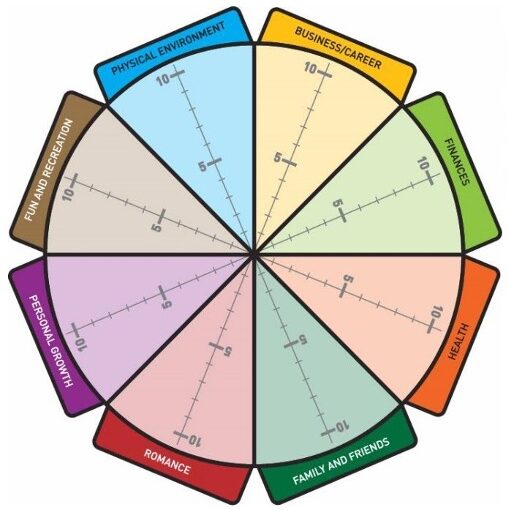
There is an exercise that shows up often in self-help books.  It asks you to rate yourself in seven categories

  • Health
  • Spiritual
  • Financial/Money
  • Career/Job
  • Physical
  • Relationships
  • Fun/Recreation

Go ahead.  On a scale of 1 to 10, rate yourself in each category.

Now, consider this.  How does your ranking reflect your relationship with Jesus?  Matthew 10:32 says that when we acknowledge Him, He will acknowledge us to the Father.  But, Jesus warns, if you do not acknowledge me, I will not acknowledge you.

A more effective approach to this exercise incorporates Jesus.

Using the same scale of 1 to 10, how well do you acknowledge him with:

  • Your health
  • Your spiritually
  • Your Money
  • Your career/Job
  • Your physical self
  • Your relationships
  • Your fun and recreation

If your responses correlate, as mine do, the solution is obvious.

Entertainment Is Overrated

2 Kings 2-3, Psalm 48, Matthew 4

I really enjoy podcasts.  Huberman Lab, Morgan Housel and Seth Godin are a few of my favorites.  They are great for a long walk in the morning with my young dog, Louise.  I’ll eagerly pop in my ear-pods, ready to be entertained, enlightened, and encouraged.  I do this most days.

Guess what?

Instead of peaceful I am stressed

Instead of motivated I am discouraged

Instead of encouraged, I am disappointed.

What gives?  These guys are experts, right?  If I can think like them, work like them, exercise the right way, eat well, sleep appropriately and get the right amount of vitamin D, my life will go well.  Nope.  Truth is, I can’t do more and maybe I can do what I do better, but sometimes I just need to be.

This week I’ve done it different.   Rather than listen to voices through earphones, I talked to God.  I was mesmerized by the fog and entertaned by the singing birds.  I felt the cool breeze on my face and the summer dew on my feet.  I watched ducklings following their mama and geese protecting their young from this unexpected predator named Louise.  I enjoyed my reflection in the calm pond and marveled at the extraordinary honking of bullfrogs.  Peace.

Psalm 48:9-10 revealed the Truth for me.  Peace comes not from who I can be, or who I want to be.  Peace comes from Who God is.  Who He was and who He always will be.  That, my friends, never fails.

O God, we meditate on your unfailing love

as we worship in your Temple.

As your name deserves, O God,

you will be praised to the ends of the earth.

Your strong right hand is filled with victory.

Safety, Danger, and Ridiculousness

1 Kings 17-18, Psalm 119, Jude

I am a Christian.  Maybe you too have said that before.  It is a statement of belief.  In general, it means that you believe in Jesus.  Maybe you would add the Trinity or the Bible to the list of things that a Christian believes.  What about baptism, or tithing, or attending Church?   Many people would call themselves Christians but not engage in those things.  So, some Christians differentiate.

Instead of simply “Christian,” many choose the more descriptive label of “Christ-follower.”  Christ-follower turns belief into action.  Christ-followers use Jesus’ instruction to order their lives, thoughts and activities.  I’ve used this term to describe myself too.  There is however, one term that I have not used; slave.

Jude begins his chapter with it.  He says, “I am Jude, a slave of Jesus Christ.”  It’s a powerful word.  A term that carries a heavy burden.  Slaves have no rights.  Slaves have no personal identity.  Slaves are fully surrendered.

Being Christian brings us safety.  Christ-followers is dangerous but becoming a slave, now that’s ridiculous.  Just like Jesus.

You Complete Me

Ecclesiastes 7-9, Psalm 46, 2 Timothy 3

Ive listened to many sermons about 2 timothy 3:16.  The focus is on Scripture.  “All scripture is breathed out by God and profitable for teaching, for reproof, for correction, and for training in righteousness.”  That verse rightfully sets up God’s word as a special gift to us.  But it’s, verse 17 that gives us the reason.

What is the benefit of having God’s ordained and infallible word at our fingertips?  In a word; complete.  2 Timothy 3:17 says that the word is breathed out so that we can be “complete.”  What does that mean, exactly?  Let’s first consider the Greek translation.  In his book, Shaped by the Word, M. Robert Mulloholand Jr. describes it this way.

The Greek word is a beautiful one it is the word artios, meaning that which is perfectly suited to its nature. If you when to a fruit bowl and found what you considered to be a perfect apple, you would call it artios.  It would be everything an apple ought to be.  it would possess the essence of “appleness.”  

 “Everything that an apple ought to be.”  You know what that is, right?  When you choose that apple, it has just the right color.  When you hold it, it has a certain firmness, such that you can almost taste it before you bite it.  When you do bite it, there is a crispiness to it and it’s juice pours from the corner of your mouth.  It’s perfect and complete, living out its life exactly the way that it was created to do.

That is our calling in 2 Timothy.  To allow God’s word into our heart so that we can be formed, fitted and equipped to do exactly what God created us to do.

Fools, Folly and Failures

Proverbs 26-28, 1 Thesalonians 3

It’s about an hour until showtime.  The show is the Presidential debate.  Both candidates would be wise to listen to Proverbs 26:4.

Answer not a fool according to his folly, lest you be like him yourself.

How did they do?  Were they in control?  Did they let their emotions take over?  That, according to Proverbs is the mark of a fool.  Maybe they did better.  Verse 5 gives us a picture of what a proper response looks like.

Answer a fool according to his folly, lest he be wise in his own eyes.

 Do you know who did this well?  Ted Lasso.  Maybe you remember.  In season 1, he was called out by the famous reporter, Trent Crimm.  Trent attempted to goad him with talk of his inexperience, and inability to lead.  He cited, factually, the losing record.  Lasso knew he was right.

Most of us would respond to such an attack foolishly, allowing anger and emotion to take over.  Not Lasso.  He responds humbly.  He acknowledges his lack of experience and highlights the real goal. “I’m going to do the best job I can, helping these young fellas be the best versions of themselves on and off the field,” he says.  Lasso’s wise response defuses the situation, replacing Crimm’s criticism with curiosity.

When I Look At Your Heavens

Proverbs 11-13, Psalms 8, Romans 13

My calendar is packed.  It has to be.  There are problems to solve, deadlines to meet and profits to make.  I analyze spreadsheets, time-tables, work orders, and service lists, followed by invoices, purchase orders, receivables and balance sheets.  Then, I see the need for more sales, so I consider our database touches, marketing campaigns, call schedules and missed opportunities.

“That’s life,” I think.  It has been that way forever and it will always be.  “Suck it up.  Here, have a drink.  Relax”. But God says otherwise.

In an instant, God gives me perspective.  The sun shining through the trees, the sunset over the water, the stars in the sky, and the heat of the sun.  When i focus on it, I am gripped with wonder.

How does a sequoia grow so tall, or the mountains so massive?  Who set the moon, added the stars and brings the rain?  “When I look at your heavens, the work of your fingers, the moon and the stars, which you have set in place,” says the Psalmist (Psalms 8:3).

I know who.

The Psalmist declares him. “When I look at your heavens, the work of your fingers, the moon and the stars, which you have set in place,” he says (Psalms 8:3).

It is our Lord.  Our God!

With that remembrance, with that celebration of his majesty, I find my rightful place in this world.  My heart is full and the world is right.  Our Lord, our God makes it so.

The Stumbling Stone

1 Kings 4, Proverbs 1-2, Psalm 43, Romans 9

“I need a win.”

How many times have I said that?  I’ve prayed for it.  “Just give me a win, Lord.”  Many times.  What does it mean?  It means that I am trying hard, working diligently, yet I am failing.  Things are blocking my way.  When I need a win, my conversations are colored with complaint.  I think only of all the bad things going on in my life and it comes out through my mouth.  Others can also see it in my body.  “You look tired,” they say.

“God, give me a win,” I pray.

The prayer is answered quickly.  “I am your win.”  But, I instantly reject it.  That is too corny for me.  Too cliché.  “That’s too easy,” I quip.  I want a real win.  A victory that is recognizable, one that others will see too.

Gathering myself, I attempt to respond more thoughtfully.  “Thanks for the reassurance God, but Ive got this.  I will try harder.  I’ll be smarter.  I’ll work longer.  I will be more organized, and more caring.  I’ll set bigger goals and keep them in front of me all the time.  I will win.  Then, you can be proud.  Then, I will be worthy.”

Thats when God confronts me with Scripture.  His word says that I, like the Israelites, have stumbled over the stumbling stone.   Romans 9 says it like this, “they did not pursue it by faith, but as if it were based on works.  They have stumbled over the stumbling stone.” (Romans 9:32).

What does it look like to pursue it by faith?  Faith remembers that today, I am winning because he comes here, for me.  He does not see a liar, a cheat, or a failure.  He sees his son, great and glorious.  He ses the purity of my heart, not because I am good, but because Jesus has made me good.  I am covered in his blood, the one and only true sacrifice.  All of my failure is taken away.  Now, I am here with God, separated from my sin.  I have already won.

Doubt and Fear

2 Samuel 21-23, Psalm 18, Romans 3

I read recently that doubt and fear are Satan’s best tools.  If he can get you to doubt God’s goodness, God’s power, and God’s protection, he wins.  Once doubt is in place, fear takes over.  It’s a big victory.

Once our soul is given over to doubt and fear, life is perilous and hope is thin. Without God’s power, we have no refuge, no rock, no fortress and no shield.  Without God’s goodness, we cannot be drawn from the many waters, or rescued from our strong enemy.

Do you want to know where fear and doubt show up for me?  David, in the face of danger,  is able to claim righteousness (v20).  “According to the cleanliness of my hands,” he says, “God rewarded me. For, I have kept the ways of the Lord.”

But, what about me?  I haven’t done a very good job keeping the ways of the Lord.  I can’t claim righteousness like David did, nor am I one of God’s chosen like David was.  How will I ever survive?  Doubt and fear prevail.  Satan is winning.

It only feels like Satan is winning.  He is easily overpowered by the Truth.  You see, its not the cleanliness of my hands that God measures nor is it my ability to keep the ways of the Lord.  There is only one way to gain and maintain God’s goodness, power and protection; Jesus Christ.  By proclaiming Him, we are made right with God.  That means we are made righteous (Romans 3:22).  What’s more, that promise is not reserved for “God’s chosen people.”  Because of Christ, we are all chosen.

Once freed from the lies of the evil one, there is only one response.  David got it right in Psalm 18, as he exclaimed

The Lord lives, and blessed be my rock, and exalted be the God of my salvation!

Uncovered and Redeemed

2 Sam 11-12, 1 Chr 20, Ps 51 & 32, Acts 27

In April 2010, an oil platform called the BP Deepwater Horizon spilled an estimated 4 million gallons of oil into the Gulf of Mexico.  According to Time.com,

U.S. District Judge Carl Barbier said BP was mostly to blame for the 2010 Gulf of Mexico disaster, which killed 11 people and spewed oil into the water for 87 days. Barbier attributed 67% of the fault to BP, 30% to Transocean, which owned the Deepwater Horizon drilling rig, and 3% to Halliburton, the cement contractor.

 But, instead of fully acknowledging their role, BP deflected blame, pointed fingers and downplayed the severity of the incident.  In the end, the company agreed to pay $7.8 million to settle the claims against them.  The settlement was made without BP admitting to any wrongdoing.

BP, of course, is not the only company to settle claims without admitting fault.  It happens all the time.  Enormous amounts of money are offered up to make the problem go away.  On some level, it works.

King David found himself in a bad spot.  It was discovered that he had an affair with Bathsheba and that he attempted to cover it up by killing her husband, Uriah.  Now, David had gotten on with his life.  With Uriah dead, he married Bathsheba and she had a baby.  But the Lord was ‘displeased’ (2 Samuel 11:26).  Consequently, the Lord took the life of the child.  But that’s not all.  God also promised to punish him by ‘raising up evil from his own house and giving his wives to his neighbor (2 Samuel 12:10-11).  Clearly, God was angry and justice had to prevail.

If you were David, what would you do?

“I’m sorry. I’m sorry! I’m so, so sorry,” I would exclaim, my voice trembling. “I’ll do anything. Anything! Here, take this money.”

“I’ll give it to the church. I swear, I’ll help the homeless. I’ll give it to the poor. Just please, believe me.”

“God, you have to see—you’re going to be so happy with all the good I am about to do!”

“Surely we can make some kind of deal.”

What this confession misses, David gets right.  His first response when confronted was  confession. “I have sinned against the Lord,” he says.  In Psalm 51, David takes his confession deeper.  He pours his heart out to the Lord privately.  But this also happens publicly.  David made no attempt to cover up anything that he did.

Did you notice what is conspicuously missing from David’s confession?  Money.  In fact, he outright rejects the temptation to present money as reparation to God.  He says, “For you will not delight in sacrifice, or I would give it; you will not be pleased with a burnt offering.  The sacrifices of God are a broken spirit; a broken and contrite heart, O God, you will not despise” (Psalms 51:16-17).

Because of David’s confession and repentance, God is able to continue his aszzwork through him, starting with the blessing of another child, Solomon.  The sins and mistakes of the past have not been erased or eliminated as if they never happened.  They still exist and are well documented.  But, now, through David’s faithfulness, and God’s loving mercy, they are redeemed.