The Stumbling Stone

1 Kings 4, Proverbs 1-2, Psalm 43, Romans 9

“I need a win.”

How many times have I said that?  I’ve prayed for it.  “Just give me a win, Lord.”  Many times.  What does it mean?  It means that I am trying hard, working diligently, yet I am failing.  Things are blocking my way.  When I need a win, my conversations are colored with complaint.  I think only of all the bad things going on in my life and it comes out through my mouth.  Others can also see it in my body.  “You look tired,” they say.

“God, give me a win,” I pray.

The prayer is answered quickly.  “I am your win.”  But, I instantly reject it.  That is too corny for me.  Too cliché.  “That’s too easy,” I quip.  I want a real win.  A victory that is recognizable, one that others will see too.

Gathering myself, I attempt to respond more thoughtfully.  “Thanks for the reassurance God, but Ive got this.  I will try harder.  I’ll be smarter.  I’ll work longer.  I will be more organized, and more caring.  I’ll set bigger goals and keep them in front of me all the time.  I will win.  Then, you can be proud.  Then, I will be worthy.”

Thats when God confronts me with Scripture.  His word says that I, like the Israelites, have stumbled over the stumbling stone.   Romans 9 says it like this, “they did not pursue it by faith, but as if it were based on works.  They have stumbled over the stumbling stone.” (Romans 9:32).

What does it look like to pursue it by faith?  Faith remembers that today, I am winning because he comes here, for me.  He does not see a liar, a cheat, or a failure.  He sees his son, great and glorious.  He ses the purity of my heart, not because I am good, but because Jesus has made me good.  I am covered in his blood, the one and only true sacrifice.  All of my failure is taken away.  Now, I am here with God, separated from my sin.  I have already won.

Doubt and Fear

2 Samuel 21-23, Psalm 18, Romans 3

I read recently that doubt and fear are Satan’s best tools.  If he can get you to doubt God’s goodness, God’s power, and God’s protection, he wins.  Once doubt is in place, fear takes over.  It’s a big victory.

Once our soul is given over to doubt and fear, life is perilous and hope is thin. Without God’s power, we have no refuge, no rock, no fortress and no shield.  Without God’s goodness, we cannot be drawn from the many waters, or rescued from our strong enemy.

Do you want to know where fear and doubt show up for me?  David, in the face of danger,  is able to claim righteousness (v20).  “According to the cleanliness of my hands,” he says, “God rewarded me. For, I have kept the ways of the Lord.”

But, what about me?  I haven’t done a very good job keeping the ways of the Lord.  I can’t claim righteousness like David did, nor am I one of God’s chosen like David was.  How will I ever survive?  Doubt and fear prevail.  Satan is winning.

It only feels like Satan is winning.  He is easily overpowered by the Truth.  You see, its not the cleanliness of my hands that God measures nor is it my ability to keep the ways of the Lord.  There is only one way to gain and maintain God’s goodness, power and protection; Jesus Christ.  By proclaiming Him, we are made right with God.  That means we are made righteous (Romans 3:22).  What’s more, that promise is not reserved for “God’s chosen people.”  Because of Christ, we are all chosen.

Once freed from the lies of the evil one, there is only one response.  David got it right in Psalm 18, as he exclaimed

The Lord lives, and blessed be my rock, and exalted be the God of my salvation!

Uncovered and Redeemed

2 Sam 11-12, 1 Chr 20, Ps 51 & 32, Acts 27

In April 2010, an oil platform called the BP Deepwater Horizon spilled an estimated 4 million gallons of oil into the Gulf of Mexico.  According to Time.com,

U.S. District Judge Carl Barbier said BP was mostly to blame for the 2010 Gulf of Mexico disaster, which killed 11 people and spewed oil into the water for 87 days. Barbier attributed 67% of the fault to BP, 30% to Transocean, which owned the Deepwater Horizon drilling rig, and 3% to Halliburton, the cement contractor.

 But, instead of fully acknowledging their role, BP deflected blame, pointed fingers and downplayed the severity of the incident.  In the end, the company agreed to pay $7.8 million to settle the claims against them.  The settlement was made without BP admitting to any wrongdoing.

BP, of course, is not the only company to settle claims without admitting fault.  It happens all the time.  Enormous amounts of money are offered up to make the problem go away.  On some level, it works.

King David found himself in a bad spot.  It was discovered that he had an affair with Bathsheba and that he attempted to cover it up by killing her husband, Uriah.  Now, David had gotten on with his life.  With Uriah dead, he married Bathsheba and she had a baby.  But the Lord was ‘displeased’ (2 Samuel 11:26).  Consequently, the Lord took the life of the child.  But that’s not all.  God also promised to punish him by ‘raising up evil from his own house and giving his wives to his neighbor (2 Samuel 12:10-11).  Clearly, God was angry and justice had to prevail.

If you were David, what would you do?

“I’m sorry. I’m sorry! I’m so, so sorry,” I would exclaim, my voice trembling. “I’ll do anything. Anything! Here, take this money.”

“I’ll give it to the church. I swear, I’ll help the homeless. I’ll give it to the poor. Just please, believe me.”

“God, you have to see—you’re going to be so happy with all the good I am about to do!”

“Surely we can make some kind of deal.”

What this confession misses, David gets right.  His first response when confronted was  confession. “I have sinned against the Lord,” he says.  In Psalm 51, David takes his confession deeper.  He pours his heart out to the Lord privately.  But this also happens publicly.  David made no attempt to cover up anything that he did.

Did you notice what is conspicuously missing from David’s confession?  Money.  In fact, he outright rejects the temptation to present money as reparation to God.  He says, “For you will not delight in sacrifice, or I would give it; you will not be pleased with a burnt offering.  The sacrifices of God are a broken spirit; a broken and contrite heart, O God, you will not despise” (Psalms 51:16-17).

Because of David’s confession and repentance, God is able to continue his aszzwork through him, starting with the blessing of another child, Solomon.  The sins and mistakes of the past have not been erased or eliminated as if they never happened.  They still exist and are well documented.  But, now, through David’s faithfulness, and God’s loving mercy, they are redeemed.

What’s Next?

2 Sam 1-2, 1 Chr 11, Ps 96 & 106, Acts 21

America is the land of opportunity.  Anything is possible here.  You have the freedom to choose who to be and how to do it.  And, we have all chosen.  Some of us choose success, while others will choose family and children.  Still others will commit to community service, political power, or maybe leisure and pleasure.  What have you chosen?

Its easy to look back upon our lives and evaluate choices that we have made.  From some, we brim with pride while others bring deep regret.  Looking backward is easy.  Looking forward requires a bit more courage.  But, we all have to ask “what’s next?”  What will mark the next 10, 20 or 30 years of your life?  Will you choose exploits in the land of opportunity, or something else?   Before you choose, consider Paul’s response in s in Acts 20.  He says:

But my life is worth nothing to me unless I use it for finishing the work assigned me by the Lord Jesus—the work of telling others the Good News about the wonderful grace of God. Acts 20:24 (NLT)

Looking For Answers

1 Samuel 17, 1 Chronicles 2, Acts 12

Being alone with my thoughts is dangerous.  Dangerous, because I am focused on who I am.  While I like who I am, when I am alone, I focus on my shortcomings.  I find myself comparing who I am to who I want to be.  Often, I will compare who I am with who others expect me to be.  Facts are, I fall way short of who I want to be and even shorter of who others expect me to be.  This is why being alone with my thoughts is often destructive.  In the end, alone sends my heart and mind into chaos, replacing my confidence with anxiety and gripped with fear.

Fear and anxiety send me looking for answers.  How do I eliminate it?  My heart longs to be restored.  My quest for restoration leads me to podcasts, books, and videos, attempting to gain understanding from others’ experiences.  Their success, I think, can be my success.  Content creators promise it too.  If I follow these “10 Simple Steps,” for example, I too can convert “fear into fuel.”  This works.  For a minute.  That’s when the excitement and the newness wear off.  I find myself disappointed and distressed, just as I was before.  Alone again, with my thoughts.

In Acts 17, Paul presents the truth differently.  He teaches me not to be alone with my thoughts, but to be together.  Being together with my thoughts, counter-balance’s the world’s wisdom with Truth.  Instead of focusing on who I am, Paul reminds me of who I am created to be.  These are God’s promises.  When I am alone, I forget them.  If, however, I invite God to join me, he is quick to remind me.  First, he says that he will never forsake me.  Then, he tells me about the full life he has ready for me.  Finally, he freely fills me with love, joy, peace, patience, kindness, goodness, gentleness, and self-control.  These are the building blocks for confidence, blessing, and courage.  As I move through together time, I quickly find that not only is this who God created me to be, it is who I AM.

Acts 17:26-28 (NLT) From one man he created all the nations throughout the whole earth. He decided beforehand when they should rise and fall, and he determined their boundaries. His purpose was for the nations to seek after God and perhaps feel their way toward him and find him—though he is not far from any one of us.  For in him we live and move and exist. As some of your own poets have said, ‘We are his offspring.

Gold Stars

1 Samuel 6-8, Acts 7

I can still hear the grey-haired lady in the front of the room shrill, “who remembers the memory verse?  I have something special for you.”  This always struck fear into my heart.  She would go around the room having each child recite the memory verse individually.  I never knew it.  But that didn’t get me out of it.  The teacher would help me along, sounding out the first couple of letters prompting me to say the word.

“Th..  Th….  Th….” She would repeat.

Oh “the,” I would say.

“Good Job, BJ.”   “L…. L… Lo…” was next.

“L..Lord,” I replied sheepishly.

“Yes!” she exclaimed.  “The Lord, what….?”

“Is?”

“Good.  The Lord is…. what?” she prompted.

“G…good?”

“Here is your sticker, BJ” she rewarded.

My gut wrenches as I recall it.  It happened every Sunday.  Pure torture.  I couldn’t figure out why I had to know this stuff anyway.  Everyone knows that “the Lord is good” (Psalm 100:5).

If it wasn’t the verses, it was all the people.  I never did understand who came first.  All those Old Testament guys were a blur.  Relief always came when we got to the New Testament because “Jesus” was the answer to every question.  Why do we have to know all this stuff anyway?

I would bet that Stephen was a committed Sunday School student.  He spent the time and energy required to develop a full understanding of the Bible.  He knew the characters by name.  He knew what they did and he knew when they did it.  More importantly, he was able to understand God’s work through each person.  This all happens in Acts 7.  Stephen was arrested and put on trial.  Do you know what he did?  He didn’t preach a sermon or tell an elaborate tale. He did not make threats, or accuse others.  He didn’t even defend himself.  Stephen did one simple thing that he had been preparing his whole life for.  He told God’s story.  In telling God’s story, he illustrated his provision, his deliverance, his salvation, and his love.   I think Stephen deserves a sticker.

God’s story is worth knowing.  Its even worth memorizing.

The Holy Spirit

Judges 17-18, Psalm 21, Acts 1

In Acts 1, the disciples are hanging around Jerusalem after Jesus’ death. While they wait, Jesus comes to them.  He talks with them about the kingdom of God. Talking to the one who died on the cross, brought them hope.  Hope that their dreams of a new life had not ended. In fact, their life with Jesus was very much alive. The disciples could feel the new world order upon them. This was the time that they had waited for. Jesus would now rule the world! Israel will finally be restored and all of God’s promises would now be fulfilled. The Bible explains these promises with words like freedom, liberty, fearlessness and peace, along with promises about healing our physical ailments and living prosperous lives. This was it. Israel will again be on top, the leader of all nations. Let’s go! But, Jesus wasn’t ready. He was holding them back. When they ask when it will happen, he responds, “You don’t get to know the time. Timing is the Father’s business” (Acts 1:7, Message). For now, he continues, “you will receive the Holy Spirit. It is the Holy Spirit that will enable you to be my witnesses.”

In that moment, upon hearing Jesus’ answer, do you think the disciples were disappointed? Seriously, the victory party they were anticipating seemingly vanished into thin air. No doubt, they did not fully understand. Yet, they remained silent. Consider that their silence is an indication of their acceptance and submission. They trust Jesus with whatever is coming. Or, perhaps their hope is kindled in Jesus’ promise of the Holy Spirit. With his presence, Jesus explains, the disciples will receive power. In Greek, it is called “dynamis.” If you hear our modern words “dynamite” and “dynamic” in there, you are getting the idea. The Holy Spirit brings power that is explosive. His power provides “energy, ability, efficacy, and meaning.” With the Holy Spirit, Jesus explains, the name of Jesus will be extended “to the end of the earth” (Acts 1:8).

I readily admit that this scripture reveals my ignorance of the Holy Spirit. To be sure, this American Christian often misuses and misinterprets the work of the Holy Spirit in my life, selfishly claiming His good work for myself.  Similar to the disciples, I want to use this power to reign over all.  If I cannot reign over all, I’ll settle for health and good fortune.  You see, when the Holy Spirit indwells us with the power of God, we can easily use His gifts to get ahead in this world.  According to John Maxwell, this is a defensive posture resulting from focusing on my short life and not on servicing all of God’s creation, extending His rule for eternity.

Contrast that with true Holy Spirit indwelling. Jesus releases the Holy Spirit to us so that we can share God’s love and meaning with the world. Aligning with Him means that I will use my gifts in concert with His vision, not mine. This is what the disciples were able to grasp. They quickly dropped their own pursuits and limited vision in favor of His. As we move through the book of Acts over the next several days, we get to watch the Holy Spirit work through the lives of Jesus’ disciples. The Spirit gives power is both dynamic and explosive in the lives of everyone that the disciples meet. It is the beginning of Jesus’ great vision to take God’s message of love and hope to the ends of the earth.  Today, we continue to carry out this vision.  How are we doing with it?

In his book Forgotten God, Francis Chan offers several great questions that help us evaluate our relationship with the Holy Spirit. Take some time to consider them.

  • Can you say with confidence—from the depth of your being—that you know God and are known by Him?
  • Do I want to lead, or do I want to be led by the Spirit?
  • How would you be missed if you left this place? What would change? Basically, what difference does your presence here make? Or, as my youth pastor once asked me, what would your church (and the worldwide church) look like if everyone was as committed as you are? If everyone gave and served and prayed exactly like you, would the church be healthy and empowered? Or would it be weak and listless?

Exactly What To Say

Judges 4-6, Luke 21

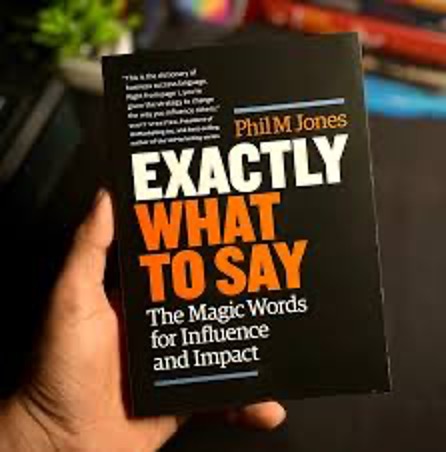
To be a successful salesperson, you have to master four things.  The fist is how to generate leads.  Then, you have to follow-up with those leads.  Your follow up allows you to negotiate, which is the third role of a salesperson.  The fourth one might be the most important.  It’s script and role play.  That’s right, knowing exactly what to say and how to say it matters. If you don’t believe me, check out this book by Phil M Jones.  His entire goal is to script salespeople so that that can sell more.  He even titles it “Exactly What To Say.”  It works.  Practicing scripts is a proven way to increase your sales results.

Now, I am perplexed.  All of my training says to prepare, but in Luke 21, Jesus is tells us not to prepare.  He says, “Settle it therefore in your minds not to meditate beforehand how to answer.” Luke 21:14 (ESV).  My initial reaction to that advice is incredulous.  How could it possibly be better to be unprepared?

I don’t get to ruminate on that for long.  In verse 15, Jesus provides some additional explanation.   Rather than your great script, he says “I will give you a mouth and wisdom, which none of your adversaries will be able to withstand or contradict.”  That’s interesting.  Why would I want to be unmeditated and unrehearsed?

It establishes my trust in him

It creates my dependence upon him

It promotes a response from my  Spirit filled heart

It gives the Holy Spirit the opportunity to show his power

It ensures that He gets all the glory

Hope, Purpose and Opportunity

Joshua 1-4, Psalm 143, Luke 14

Rahab, lived in Jericho.  The news reports were filled with stories of the Israelites conquests. They even explained a wild tale of the Jordan sea parting and the people walking across on dry land. Then, there were reports of the Israelites destroying people. Not just regular people, they were defeating giants.  They were “as mighty as oaks and as tall as cedars!” according to Amos. How could it be?  The Israelites were puny!  The city Sihon had recently been sacked and the latest reports indicated that Og was utterly destroyed. How was it possible? “God is on their side,” was the only possible explanation. With Og gone, Jericho was the next likely target. Every resident feared the inevitable.

Rahab confirmed the danger as she answered the door to three strangers.  She knew instantly that trouble was imminent. The men standing outside were not locals, they were Israelite and they were coming for Jericho. She was trapped. As a prostitute, Rahab was despised and scorned. Nobody would save her.  Not even God would help her. He was on their side, not hers.

When the men asked for safe harbor, she contemplated the great risk in protecting them. Treason is punishable by death. Even so, she knew that Jericho was doomed. The Israelites will quickly and easily devastate the city. Nothing can stop them. God is on their side. Rahab was quick to spot the difference.

What is your story of God?  If you feel beaten down, there is good news.  Notice how she turned it around.  Through the Israelites, she sees that those with God do not live in fear and oppression, but have purposeful lives filled with opportunities. She confesses to the men, “the Lord your God is the supreme God of the heavens above and the earth below. “ (Joshua 2:11). It’s that simple.

What happened to Rahab? Was her life changed? Was God on her side? Matthew 1:5 tells us that she gave birth to a boy named Boaz. Boaz son fathered Obed, who fathered Jesse, who sired King David. David, of course, is the predecessor to the King of King’s, Jesus.  Obviously, God honored Rahab’s confession.  He changed her from a slave of the world, facing certain death, and replaced oppression with life. Not just any life, but life worthy of a King’s lineage. Royalty. God was on her side!

There is no other force, no other power, no other name that can compare with the power of God.  Is God on your side?

Substitution

Deuteronomy 12-26, Luke 11

Ronald Reagan started eating Jelly Belly jelly beans as part of his effort to quit smoking. Before becoming President of the United States, Reagan had been a smoker but decided to quit the habit. He found that having something to occupy his mouth could help curb his craving for cigarettes. It wasn’t long before eating jelly beans became a well-known aspect of Reagan’s public persona; he was often seen with a jar of them nearby during his presidency.

Its worth paying attention to what Reagan did.  He knew that choosing to quit smoking wasn’t enough.  By adding a new behavior, he didn’t just remove the old, bad habit, he created a new one.  This new one became part of him.  He was identified by it.

Yes, this is an over-simplification of Jesus in our lives, but the principle holds true.    As Luke 11:15 explains, we can try to clean up our lives all we want but until we invite Jesus in, the change is temporary.  Then, it gets worse.  Only Jesus provides real transformation that changes our behaviors and our identities (John 13:35).