Unconditional Forgiveness


Today’s Reading:  John 8: 1-20 

Since the beginning of the year, I have become more intentional about my prayers and my request to God and his direction in my life. One action that I have been doing is asking God to show me direction and allow me to work in His favor daily and for Him to direct me to where he wants me to be: spiritually, physically, mentally, and emotionally.

A couple weeks ago an acquaintance of mine asked me about my faith journey and what I was doing differently these last couple weeks. I told him that I became more intentional and shared some of my experiences that I have encountered in the last year that has made me who I am today. I also recounted some of the past experiences from over the last several years in which the person who I am today is completely different from the person who I was 10 years ago. I am a person who is more into others and listens more to God‘s will in my life.

Several days later, the same associate came and told me that they were trying to be better and live a more intentional life as well. But they confessed that they had slipped away from their promise and felt remorse and regret. Upon hearing this I gave them encouragement and told them that God is working in them, because they have the acknowledgment of the transgressions and have remorse. This is the beginning of growing. This is the beginning of learning how God forgives us in our transgressions. This is the beginning of a new being.

Many times we feel that when we start something new and we regress we have failed. But that is a trick that the enemy has been reiterating to us for our entire life. The actuality is when we start to acknowledge our failures and start to press toward the better of ourselves we are growing from ignorance and doubt into peace of knowing. This peace does not come easily and freely, there will be some aches and pains.

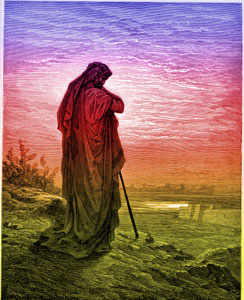
In today’s reading we see how Jesus gives unconditional forgiveness in the midst of the actual act of sin. We see how his gentleness and compassion overrules all the other frustrations and anxieties that we have in the midst of our sin. How many of our accusers ( our own hidden feelings and items of our past) are standing on the edge right now pointing fingers and accusing us of the things that we know we have done? How many times can we try to run away from our sins but we are still caught in those sins? In the midst of our most sinister sins God and Jesus gives undying unconditional love and forgiveness. This forgiveness is for all.  This forgiveness is available to each of us. 

Be Blessed


God’s Words Of Life

Today’s Reading John 6:1-24

It is a great pleasure and honor to start this new year again with the Biblejournal. Being part of this community has truly been a blessing to my family, my friends, and myself. It is an honor that I take deeply and with a lot of humility.

As we start this new year we are focusing on God’s Word of Life. Today’s reading comes from John 6:1-24. In this passage we see two miracles of Christ: The blessing of the 5000 and Jesus walking on water.

Throughout the past several years, this chapter has come up in many of our discussions here in the Biblejournal. As I read and prepared for this blog writing I noticed a highlighted portion of this chapter which gave me pause.

The particular section is within the first several verses of the chapter. I have to be honest, I sometimes glance over the first sections of literature and try to get into the true meat of the subject. But when I allow the Spirit to slow me down and direct me, I am able to find little gems of knowledge. In the first verse of the chapter we have the setting of the two miracles that Jesus performs.

First,  the timing of these miracles is during Passover which is the Jewish New Year. Next, this is the second Passover of Jesus’ ministry. He has been healing and spreading the gospel for over a year and people are aware of his power.These gems are great, but one that has my undivided attention is John 6:3.

 Jesus went up on the mountain, and there he sat down with his disciples.

In this sentence, God gives us direction on what is important in the new year… sit and be with him in a secluded spot. This is the essence of Quiet time. How often do we just sit with Jesus on a daily, weekly, monthly, or yearly basis? I can attest that my quiet time has been lacking for the last several months. I have been in prayer and devotion, but my intentional quiet time has not been what Jesus is wanting. What is you quiet time like? How can we go forward this year and become more intentional in our quiet time? How can we start: 1 min, 5 min, 10 min? No matter where we start He is waiting and wants to enjoy anytime with Him. Have a blessed week.


He will prevail


Today’s Reading : Revelation 13 and 14

We have made it to another Christmas season. Contrary to popular common belief, Christmas season starts on December 25th by the liturgical calendar. The season that precedes Christmas is the Advent season. We still have a couple of weeks, 12 days, of the festive Christmas season. We have been waiting and anticipating the birth of Christ, now we can celebrate His being with us. Let us not start to slow down the merriment and joy that He has given us.

From Christ’s initial coming down as a child on that first Christmas day, he lived with us and showed us how to live with him. With his sacrifice, he gave us the Holy Spirit, and with that the promise of a new life, and a new destination after we depart this one. This time of Christmas sometimes can be a joyous one, but it also can bring up sadness for others for the loss of loved ones. But we have the hope that we will be with Him after this life is over. He shows us that in all things He will prevail and nothing can over take him.

In today’s reading we are giving a glimpse of the apocalypse. The apocalypse comes from Greek, the original language of the Book of Revelation. It means “uncover, disclose, reveal.” In late 14th century Church Latin, it became “revelation.” In Middle English, its general sense was “insight” or “vision.” 

As I read and meditated over these passages, I had an initial sense of sadness and foreboding. These texts reveal a spiritual battle that has taken place or will take place sometime in the course of time. Please review Chapter 13. As I read through this passage I had images of “the Lord of the Rings” and the final epic battle. This is not an easy read, but it is an essential read. Once the stage has been set and the characters have been established, we will see how the story plays out.

If I only stopped at one portion of this text, then I would be completely dismayed and questioning everything. Everything that I have prayed about and had faith in would be shaken. But in the midst of this epic setup, God shows us that He will prevail.

Revelation 14:2-3; 6-7

And I heard a voice from heaven like the roar of many waters and like the sound of loud thunder. The voice I heard was like the sound of harpists playing on their harps,  and they were singing a new song before the throne and before the four living creatures and before the elders. 

Then I saw another angel flying directly overhead, with an eternal gospel to proclaim to those who dwell on earth, to every nation and tribe and language and people. And he said with a loud voice, “Fear God and give him glory, because the hour of his judgment has come, and worship him who made heaven and earth, the sea and the springs of water.”

When all of the things that have been done, God will show up and truly show his awesome power. He will herald a proclamation that will culminate all of our joy and prayers. Just like the time on earth before Christ entered in the human form, there was darkness and desolation and despair. But Christ came to give light that will not be taken from us. This same light will be with us even through this catastrophe because he prevails.

Let us not forget that just because the day of Christmas has come and gone, Christ is still with us and the celebration of his joy is forever.

He came so that we can overcome

Today’s Reading: 1 Peter 2-3
It amazes me how fast this Advent season has moved so quickly. These last couple of weeks have been on autopilot and I have been swept along with it. We are preparing for the last days of school and prepping for recitals. The house is a buzz with the excitement of the season. As I sit and ponder, I am over joyed with the reason for this excitement and delight: Jesus has overcome all of our fears and he has come to be with us.
In first letter from Peter,  Peter writes to give encouragement to the early Christians from his relationship with Christ before and after the resurrection. Peter tells how Christ has performed miracles and acts that allowed him to overcome all the obstacles that he had face and these are translatable to us in the challenges we have faced, can face, and will face in the future. This is a letter of overcoming the obstacles that challenge us on a daily basis. These challenges can be internal or external. These challenges can be at home or outside.
The best news is that in this season of Advent we are reminded of the time before Christ came and before the Spirit was available to us all, the time for hope and wonder and anticipation of renewal and life. We are reminded that before there was only darkness and now we have the light that has overcome the darkness.
Peter tells us in these chapters:
1 Peter 2: 15 - 17; 19;21;23

 For this is the will of God, that by doing good you should put to silence the ignorance of foolish people. 16 Live as people who are free, not using your freedom as a cover-up for evil, but living as servants[d] of God. 17 Honor everyone. Love the brotherhood. Fear God. Honor the emperor.

 For this is a gracious thing, when, mindful of God, one endures sorrows while suffering unjustly

 For to this you have been called, because Christ also suffered for you, leaving you an example, so that you might follow in his steps. 

When he was reviled, he did not revile in return; when he suffered, he did not threaten, but continued entrusting himself to him who judges justly. 


1 Peter 3: 8-9; 14 - 17 

Finally, all of you, have unity of mind, sympathy, brotherly love, a tender heart, and a humble mind. Do not repay evil for evil or reviling for reviling, but on the contrary, bless, for to this you were called, that you may obtain a blessing.

 But even if you should suffer for righteousness' sake, you will be blessed. Have no fear of them, nor be troubled, 15 but in your hearts honor Christ the Lord as holy, always being prepared to make a defense to anyone who asks you for a reason for the hope that is in you; yet do it with gentleness and respect, 16 having a good conscience, so that, when you are slandered, those who revile your good behavior in Christ may be put to shame. 17 For it is better to suffer for doing good, if that should be God's will, than for doing evil.
As we continue in this season of Advent, we have to take courage that even though we are excited as believers for this season,  this is a time that many obstacles will try to derail us and take out attention away from Christ. Let us be aware of this and allow the Spirit to reassure us of the fact that we have already overcome. Be blessed.

Fatherly Advice

Today’s Reading II Timothy Chapters 1 & 2

Throughout our lives, hopefully we have had the opportunity to interact with our parents. These relationships with our parents can vary from each individual and sometimes differ in our own families.  This past weekend, many families were able to gather and celebrate with each other.  This season of holidays can sometimes be fun and merry, but it can also be difficult and painful.  Sometimes our past and current relationships with our parents can be joyful and beneficial, but sometimes they can have sorrow and pain associated with them.

Currently the relationships that I have with my mother and father are good.  Over the years we have had our differences, but we are at a place where we can each respect each other and our differences.  I know that I might be in the minority of where I have a meaningful and understanding relationship with both of my parents, but I have had to work diligently for years to cultivate these bonds with my mom and my dad. For the last several years I have intentionally worked on these relationships by increasing my communication with them on a more regular basis. I also have an understanding between them that we are all adults and we can be beneficial to each other and not have any negative feelings towards each other for any infraction on anything.

As a child I understood that my parents had the best interest in mind, but my young mind would not be able to comprehend this at that time. As a father I am seeing the same predicament play out with my children as well. Sometimes the children cannot fully understand the choices and decisions that we have to make as adults for their best interest. But as they grow and as I have grown I have seen the emotional toll that it takes older adults to make these hard decisions and that’s part of being a parent.

All these years of listening and being mentored by my father I have had some amazing words of wisdom and fatherly advice. Here are a couple that I can remember :

  • Don’t take any wooden nickels
  • Everything in the mind doesn’t have to come out the mouth
  • This ol’ world is a mean ol world, Cheer a man up in his sorrow, you might be down tomorrow.
  • You know where you came from, but you don’t know where you are going
  • Not every day can be sunny, prepare for a rainy day and keep your umbrella handy.
  • Everyone has the potential to be a thorn, but not everyone can show their inner flower.

We have been given a glimpse of some of these words of wisdom and Fatherly Advice from Paul to Timothy in this book. As we continue to review Paul’s letters and dive deeper into his message to the nine different churches and to his closest friends and associates we come to the letters that he wrote to Timothy. These letters to Timothy are some of the most personal letters that he has written in our Bible to this point. These are personal messages from a father to a son, that we have a glimpse into their relationship. At this point in their lives Paul is a prisoner under house arrest in Rome and Timothy is the principle leader for the church of Ephesus. To see the full extent of their relationship we have to go back to their beginning.

Their Journey started in Acts chapter 16 where Paul meets Timothy in Lystra and Iconium.

Acts 16: 1- 5 : Paul[a] came also to Derbe and to Lystra. A disciple was there, named Timothy, the son of a Jewish woman who was a believer, but his father was a Greek. 2 He was well spoken of by the brothers[b] at Lystra and Iconium. 3 Paul wanted Timothy to accompany him, and he took him and circumcised him because of the Jews who were in those places, for they all knew that his father was a Greek. 4 As they went on their way through the cities, they delivered to them for observance the decisions that had been reached by the apostles and elders who were in Jerusalem. 5 So the churches were strengthened in the faith, and they increased in numbers daily.

At this point Paul takes Timothy as a disciple and a son. From biblical references it is assumed that Timothy is about 16. When Paul is writing the this letter to Timothy it is assumed that is about 14 years after their journey began,  so Timothy would be approximately 30 to 40 years old.To see the full picture of the letter you have to understand the relationship between Paul and Timothy. 

Paul has been a mentor and a father figure to Timothy for more than half his life. When we were introduced to Timothy, his father was not mentioned.  The other part of their relationship is that we have to assume that they are communicating to each other on a regular basis. We are only giving a glimpse of some of the communications. They could have thousands of letters written back-and-forth between each other during these times. We have been gifted with a couple of letters between the two. 

In these two letters we can see that Timothy is like us: we are adults but we still need help and assistance from our mentors and our elders. Timothy is one of the leaders or the main leader of one of the largest churches in Asia and needs help. Sometimes we need help. Sometimes we need to know how to ask for help. Sometimes we need to know how to use the help. Sometimes we need to just listen. There are several places in these two chapters that Paul is giving Timothy some sound advice.

II Timothy: 

1: 2-6;9

2 To Timothy, my beloved child:

Grace, mercy, and peace from God the Father and Christ Jesus our Lord.

3 I thank God whom I serve, as did my ancestors, with a clear conscience, as I remember you constantly in my prayers night and day. 4 As I remember your tears, I long to see you, that I may be filled with joy. 5 I am reminded of your sincere faith, a faith that dwelt first in your grandmother Lois and your mother Eunice and now, I am sure, dwells in you as well. 6 For this reason I remind you to fan into flame the gift of God, which is in you through the laying on of my hands, 7 for God gave us a spirit not of fear but of power and love and self-control…..who saved us and called us to[a] a holy calling, not because of our works but because of his own purpose and grace, which he gave us in Christ Jesus before the ages began,

II Timothy 2: 4-7

No soldier gets entangled in civilian pursuits, since his aim is to please the one who enlisted him. 5 An athlete is not crowned unless he competes according to the rules. 6 It is the hard-working farmer who ought to have the first share of the crops. 7 Think over what I say, for the Lord will give you understanding in everything.

16-17

 But avoid irreverent babble, for it will lead people into more and more ungodliness, 17 and their talk will spread like gangrene.

20-21

Now in a great house there are not only vessels of gold and silver but also of wood and clay, some for honorable use, some for dishonorable. 21 Therefore, if anyone cleanses himself from what is dishonorable,[d] he will be a vessel for honorable use, set apart as holy, useful to the master of the house, ready for every good work.

22-25

So flee youthful passions and pursue righteousness, faith, love, and peace, along with those who call on the Lord from a pure heart. 23 Have nothing to do with foolish, ignorant controversies; you know that they breed quarrels. 24 And the Lord's servant[e] must not be quarrelsome but kind to everyone, able to teach, patiently enduring evil, 25 correcting his opponents with gentleness.


Each on of these pieces that Paul is guiding Timothy with is still valid today in our society.  These are nuggets that Paul is giving his son in how to work with the people in the church and for the body of Christ.  

As we review these points, let us ask ourselves how we are engaging with each other on a spiritual level. One exercise that we could do is write a letter to our father or mother or a mentor.  

What will we say to them? What words of advice would we tell them how we are using their advice? What will we write to a son or a daughter or someone that we mentor to give them advice about what’s going on? How is God using us in our relationships to be encouraging? 

Have a blessed week.

Clarity and Gentleness


Today’s Reading Galatians 6 and Ephesians 1

In this week’s blog we have the closing of one book, Galatians, and the beginning of the next book, Ephesians. In both of these books Paul is addressing the churches which he has established in both of these territories. The churches in Galatia actually are not in just one city but in a territory which is located in a large landmass. The book of Ephesians is a city which is a major trading center in the time of Paul and the apostles.

One of the main themes that transcends both of these books is the clarity of each of the churches’ mission. Paul, as in the previous books, is giving advice and guidance to the churches that have been established in the early days of Christianity. In these early days of Christianity there are many individuals who are trying to re-established the central theme of Christianity and to make it more like the past Jewish faith. But Paul is clarifying that the foundation of the Jewish faith that was established with circumcision is not required to worship Christ. The only circumcision is that of the heart:  removing your previous self from the new creation that Christ has given to us freely without hesitation or pain.

In this passage in Galatians, there is such compassion and grace that Paul gives us as a standard for our daily life. It is correcting each other with gentleness. 

Galatians 6:1-3 

Brothers, if anyone is caught in any transgression, you who are spiritual should restore him in a spirit of gentleness. Keep watch on yourself, lest you too be tempted.  Bear one another’s burdens, and so fulfill the law of Christ.  For if anyone thinks he is something, when he is nothing, he deceives himself.

As I have stated previously in many of my blogs, God uses my daily life to highlight his word that he’s given to me. This passage that we read today, helped me to exhibit the gentleness and correction of my children. From my childhood, I remember my parents and mentors giving me advice and direction many times with gentleness and compassion when it was not warranted. These examples I have been able to reflect in my own parenting.

Just the other evening, I was able to channel the Spirit of God to use my gentleness and help my son correct some of his assignments. First I asked to say a prayer so that we could have gentleness between the two of us. The next thing was reviewing and making a plan that the two of us could follow and be able to achieve our goals. 

Sometimes it’s hard to work with gentleness, especially when you have previously worked with them. But God chooses to work with us with gentleness every time we make a mistake. Because he is a good father, he uses gentleness with us in our corrections. No matter how many times we make mistakes God uses his gentleness to correct us. I am so fortunate that God has used his gentleness with me throughout my life. I pray that the Spirit of God will continue to be with me as I help others, because I would want the same amount of gentleness given to me as I am being corrected.

As we grow and mature, I’ll pray that God gives us the ability to see clearly and give gentleness as we correct and guide each other.

Be Blessed

Barriers to Worship

Today’s Reading: I Corinthians 11

From the beginnings of religion and the church, there have been barriers to our worship.  This is not a happenstance, but a deliberate intention and assault on us from the enemy.  When we read in the beginning of the Bible, the foundation of Eden and the Jewish faith and tradition established through Moses, the foundation of worship has been shaken continuously.  When we have come together to uplift God, the enemy is constantly there to minimize the full effect of the worship.  The reason that the enemy cannot tolerate the worship is because it gives us strength to fight him.  Worship creates the relationship between us and God.  This relationship then allows God to work in us and helps us turn away from our human nature.  This allows the Spirit to overcome the flesh which is our human nature.   

Human nature is the fundamental pieces of our being that we have that drive us as biological beings: food, procreation, security, play,and social status.  The drive for these fundamentals can be beneficial or detrimental depending on the individuals. The drive for competition can be beneficial when we are trying to engage ourselves to be better and strive for excellence, but it can also be detrimental when we hurt others in the process.  Human nature can be divisive.  It will begin to create differences in the same group.  It tries to make one better than the other. It will create rifts in families and communities.  This is another weapon that the enemy uses.  It will take the good things of God and try to create confusion between each other.  When we start to find differences instead of focusing on the similarities, we are not able to worship together.  This is what Paul is speaking about in this chapter of Corinthians. 

I Corinthians 11: 8-12 (The Message) 

This is basically the origin of these customs we have of women wearing head coverings in worship, while men take their hats off. By these symbolic acts, men and women, who far too often butt heads with each other, submit their “heads” to the Head: God.

10-12 Don’t, by the way, read too much into the differences here between men and women. Neither man nor woman can go it alone or claim priority. Man was created first, as a beautiful shining reflection of God—that is true. But the head on a woman’s body clearly outshines in beauty the head of her “head,” her husband. The first woman came from man, true—but ever since then, every man comes from a woman! And since virtually everything comes from God anyway, let’s quit going through these “who’s first” routines.

Throughout my life and studies, I believed this passage in Corinthians was a passage only showing us about Christ and the church as their example of the unity of marriage. I had always seen this chapter as a way of showing the relationship between a husband and a wife. As I have meditated on this chapter, the Spirit has revealed a new paradigm shift.  In Corinth, there was different practices between the Greeks and the Jews. In Greek culture, the women would not cover their heads in worship. In Jewish culture, the mandate from the old law was that women had to cover their heads.  This is not a passage to show authority over one or another. But this is a passage to show how our human nature tries to divide us from worshiping one together.  

There was division in the new church and foundation in Corinth, specifically on the clothing and covering the worshipers.  The people were not really focused on the MAIN THING: Worshiping God.  They were distracted from the purpose of the church and more on what each other was wearing.  Does this sound familiar?   They were allowing their human nature to outshine their worship.  This is a major perspective shift for me because now I see this chapter in a different light.  I hope that this challenge allows you to see this passage in a different light as well. This is not a declaration on submission to each other in marriage, but this is an observation in which we can worship God in spite of our differences in cultures, and song, and praise. This is what Paul is trying to convey is that we can worship without the restraints that each other puts on the other.

I Corinthians 11: 20-22

20-22 And then I find that you bring your divisions to worship—you come together, and instead of eating the Lord’s Supper, you bring in a lot of food from the outside and make pigs of yourselves. Some are left out, and go home hungry. Others have to be carried out, too drunk to walk. I can’t believe it! Don’t you have your own homes to eat and drink in? Why would you stoop to desecrating God’s church? Why would you actually shame God’s poor? I never would have believed you would stoop to this. And I’m not going to stand by and say nothing.

The paradigm shift continues as how do we worship with the Lord supper. As a young boy, I always thought that the Lord supper was really short and questioned where the remainder of the food? This is the mindset of kids, when you say “Supper” you’re thinking of a big supper per se Thanksgiving dinner. But the Lord’s supper is to remember the union that we have formed in Christ after the meal of the Passover.  The use of the word “Supper” is actually more in accordance with Merriam-Webster’s definition:  Supper is used especially when the meal is an informal one eaten at home, while dinner tends to be the term chosen when the meal is more formal. In some dialects and especially in British English, supper can also refer to a light meal or snack that is eaten late in the evening.  The Lord’s Supper is taking the meal to the next level. When we partake in the Lord’s Supper we are participating in an act of worship.  

We have already been fed our main meal, but Jesus is the fulfillment of our needs. This is to be done to remember his sacrifice. Paul writes in this section that the Corinthians where have lavish parties for the Lord supper. They were forgetting the essence of the Eucharist meal.  The instant that they were not acknowledging the full scale of the sacrifice,  they were committing the death of Christ again with the same brutality of the death of Christ over and over. This makes us take a moment to see how we worship. Are we continuing to give God the glory for the sacrifice?  Or are we continuing to kill Jesus again on the cross? Is this for his resurrection? Or is this for our gain? 

What are our barriers to worship?  I have battled for my worship over the last several years.  I continue to press forward in my worship through song, dance, meditation, blogging, and reading.  I still get bombarded by the enemy, but my praise and worship continues.  God will give me some resolve each day. How are you doing in your worship? What barriers are being placed in your life that are trying to prevent your worship?  God knows all these things, but you have to ask him to help you push through these barriers.  


Be Blessed

Together as one in faith

Today’s Reading: Romans Chapter 3 and 4
Over the past several years and being a part of this Bible journal club I have been fortunate to be able to read and dive into the Bible several times over. During these years, God continues to bring back a theme which he wants me to explore more. A couple weeks ago, the chapters in Acts that I blogged were about inclusion and coming together. This week God continues to bring this theme back to me: Every one is seen the same in God’s eyes and he is smiling.
A couple days ago,  I had a great conversation with one of my dear friends. We were talking about our relationship with God and our spiritual journeys. Both of us are at different points in our journey. We have grown together;  we have change together; and we continue to encourage each other daily.  We acknowledged how amazing it is the more that we grow our relationships with God the more that he will reveal to us. Here is the example we had: picture a room filed with jewels and riches all around you, but there is a fog covering the room. But the only way to reveal these items would be to have a better relationship with the owner of the room who can reveal the location. The more that you interact with the owner, the more you will find these treasures that are right in front of you.
Each of us have a relationship with God. It can be a good relationship. It can be a bad relationship. It can be a relationship of trust and dependability. It can be a relationship of disdain, hurt, and of pain. Each of us have a relationship that is personal that only God and you know about. I have friends who have great relationships with God. I have friends who have a thirst for God but have been jaded by current different situations. I have friends who have a relationship with God  by believing he doesn’t exist. But each of us has a relationship with God. In this section of Romans, Paul addresses the relationship that we have with God being Jew or non-Jew.
Romans 3: 29-30 (MSG) 
29-30 And where does that leave our proud Jewish claim of having a corner on God? Also canceled. God is the God of outsider non-Jews as well as insider Jews. How could it be otherwise since there is only one God? God sets right all who welcome his action and enter into it, both those who follow our religious system and those who have never heard of our religion.
In these chapters Paul is speaking to the Romans. He is writing to the Romans while he is in Corinth. In this letter to the Romans, Paul is showing the Jewish people how God has worked in the Jewish people and how at the same time the Jewish people have failed God. Paul also writes about how the love of God cannot be contained to one person or a people. Paul states in chapter 3, that everybody has sinned and fallen short of the mark that God has for us. The Jewish people believe that because they were chosen, they were outside of the sin factor. This division and confusion of who was right and wrong echoes in today’s society. In the end everybody needs love. Everybody needs to be embraced. Everybody has fallen short of the glory of God and God is ready to give that to us again.
Romans 4: 19-25

19-25 Abraham didn’t focus on his own impotence and say, “It’s hopeless. This hundred-year-old body could never father a child.” Nor did he survey Sarah’s decades of infertility and give up. He didn’t tiptoe around God’s promise asking cautiously skeptical questions. He plunged into the promise and came up strong, ready for God, sure that God would make good on what he had said. That’s why it is said, “Abraham was declared fit before God by trusting God to set him right.” But it’s not just Abraham; it’s also us! The same thing gets said about us when we embrace and believe the One who brought Jesus to life when the conditions were equally hopeless. The sacrificed Jesus made us fit for God, set us right with God.
In chapter 4, Paul makes a great distinction and clarification. Paul takes his argument to the beginning of the Jewish faith: Abraham. Paul goes back to before Abraham was called to be the Father of the nations. Paul goes back to when Abraham was a man who was after God‘s heart. Paul brings this concept to the front of the faith question. Abraham is not only a father of the race, but also a father of the faith.  Through Abraham the entire world was given the ability to connect with God, through Jesus.  He shows that God loves all individuals before the circumcision. God loves all individuals before the sacrifices. God loves the heart of each individual by their faith.  It is through the act and trust of faith that God is able to do amazing works in us. When we start to depend on God for direction and for strength it is amazing how nothing is impossible for us to accomplish. When we are trying to work through our flesh we will stumble and fall. But we will walk into faith as Abraham did we begin to do things that others have not been able to do before.
In these two chapters, we see the beginning with the foundation of what Paul is showing us how we should live.   Many times we are trying to find the differences between us to justify the right and wrong of our lives in our situations. But in the end, we are all the same, we are all here by faith in God. And if we continue to acknowledge God and walk in his faith will be able to surpass and accomplish more than we have a good in our only flesh. May God continue to allow you to walk more and his faith. May God continue to lift you to new heights.
Be Blessed

No condemnation

Today’s Reading: Acts 15 and 16
Over the last couple years, Jillian and I have made time for our kids on Friday nights with a movie night. One of the most recent movie nights we chose the movie “The bridge to Terabithia“. I had seen this movie several years ago and we’ve read the book as well. But when you’re seeing it with your children again, you see it with different eyes. The book and the movie tells a story about a friendship and relationship between a new girl, Leslie, at school and an outcast boy, Jesse. Throughout the course of the story, they become really good friends. At one point in the story the young girl asked to go to church with a family of her new friend.
Leslie’s experience from the church experience was jubilant and excited she was so excited about hearing the gospel of Jesus. But in the same moment the Jesse’s sister tells Leslie that if she didn’t believe a certain way that she would be “Damned to Hell“. But the Leslie how couldn’t believe a loving God be could be so condemning. !!!Warning spoiler alert!!!!!As the story progress. The girl has an accidental death not long after her visit to church. And the boy is heartbroken and questions will she go to heaven or hell since she didn’t have a relationship with Jesus.
This revelation was a hard revelation to see with the kids in this movie. The kids asked how did the child die? They asked what was going to happen to her? And I had to reassure them that she was going to be OK. They have a solid foundation in Christ and we have had several times that someone in our lives have died and transitioned to the eternal life.
This week’s reading in Acts 15 and 16 highlights some very critical perspectives that we have in the church. This interaction in the first chapter brings Paul and Peter together.
Acts15:1-2;7-11

But some men came down from Judea and were teaching the brothers, “Unless you are circumcised according to the custom of Moses, you cannot be saved.” And after Paul and Barnabas had no small dissension and debate with them, Paul and Barnabas and some of the others were appointed to go up to Jerusalem to the apostles and the elders about this question.
And after there had been much debate, Peter stood up and said to them, “Brothers, you know that in the early days God made a choice among you, that by my mouth the Gentiles should hear the word of the gospel and believe. And God, who knows the heart, bore witness to them, by giving them the Holy Spirit just as he did to us, and he made no distinction between us and them, having cleansed their hearts by faith. 10 Now, therefore, why are you putting God to the test by placing a yoke on the neck of the disciples that neither our fathers nor we have been able to bear? 11 But we believe that we will be saved through the grace of the Lord Jesus, just as they will.”
This interaction shows how some mentalities or perspectives are about condemnation or about punishment. But both of them Peter and Paul wants to show the compassion of Christ not condemnation of the spirit. In this particular situation we are shown compassion and love of Christ that we should share the gospel with everybody no matter what. There are no stipulations that we need to enforce in order to share the gospel of Christ. We don’t have to go to the old ways of connecting with God. We have a new mediator through Christ to intercede for us on our behalf. We don’t have to fear anymore about condemnation because when we accept Christ at any point in our journey on this earth: birth, life or death; Jesus will accept us without any stipulations. He loves us unconditionally.
In the second story we are also shown how Christ interceding for us does not promote condemnation. Christ longs for compassion a relationship with us.
Acts 16: 25-30

About midnight Paul and Silas were praying and singing hymns to God, and the prisoners were listening to them, 26 and suddenly there was a great earthquake, so that the foundations of the prison were shaken. And immediately all the doors were opened, and everyone's bonds were unfastened. 27 When the jailer woke and saw that the prison doors were open, he drew his sword and was about to kill himself, supposing that the prisoners had escaped. 28 But Paul cried with a loud voice, “Do not harm yourself, for we are all here.” 29 And the jailer[e] called for lights and rushed in, and trembling with fear he fell down before Paul and Silas. 30 Then he brought them out and said, “Sirs, what must I do to be saved?”

In the second chapter we are presented with Lydia and the officer in the jail. Christ could have allowed Paul to escape with the guard killing himself. But Christ gave compassion to Paul and to the officer. By showing his compassion he actually saved the all the prisoners and the guard and the guard’s family. In the compassion of Christ we see how the relationships are built and how they can grow. But when we focus on the condemnation of people this stops our relationships, that stops progression, that stops love.
In the these scenarios we are not to see how condemnation will bring Christ to us, but we are shown the compassion of Christ in some of the most tense intense times in the new church. We have this same spirit that Paul and Peter had during this first church. The Holy Spirit that allows us to be compassionate to one another over rules any of the potential condemnation of our past. No matter where we are in our life we can always come back to Christ. He is such a Benevolent father that he continuously wipes away all of our sins and all of our hurts, and all of our pains, and wants to give us love and compassion. If he can do this and we are in him we have to work diligently to give more compassion than condemnation.
Be blessed

The Mandate To Serve

Today’s Reading : John Chapter 21

Throughout the gospels, John is the only gospel in our canon that is a eyewitness account of the life of Jesus Christ. The other gospels are inspiration of the Holy Spirit through the apostles. But John’s gospel is a first hand account about living and interacting with Jesus. Throughout the entire book John, John affirms the deity that Christ is and shows it throughout the entire book.  This last chapter is different from the other Gospels by the last scene of the book.  This chapter does not show Christ giving a proclamation to a large group. This last chapter does not show Christ ascending into heaven as his last act. This last chapter shows the compassion of Christ, the love of Christ, and the individual relationship with Christ.
In the beginning of this chapter Jesus redirect us from returning to our past lives.   In this chapter we see how after the resurrection and our relationship with Christ, we are tempted to re-create our past lives after we know him. In the beginning verses we see that Peter and the disciples go back to fishing as he had before Christ called him to be a disciple. Christ calls us not to go back to our old ways but to translate and transform our old skills into a better life into something to serve him better.
Jesus then proceed to prepare a breakfast on the beach. In 2003, I had a retreat in the Dominican Republic, where the priest gave us this passage to reflect on. The next morning at 5 o’clock in the morning, we actually met on the beach and had breakfast on the beach. It was one of the most serene and tranquil times in my life. I remember the stillness of it and the excitement of the day to come. Jesus sets up his breakfast for the disciples as a re-connection with them resurrection.
In the final passages of this chapter Jesus is talking with Peter in several different instances the last conversation that he has with Peter in this chapter is concerning Peter’s service to Christ. At the same time that Jesus and Peter are talking John is following. Peter asked Jesus “why is he following us”? Sometimes we can get distracted from being with Jesus with others around. Jesus is telling us to just focus on him and not to focus on others. Sometimes he will use us to help others on their journey, but if we are focusing on them, we will not continue our journey.
Some of the most intriguing parts of this chapter is the reconnecting and reaffirming Peter’s mission. In the earlier chapters, Peter was a faithful follower, but he had several times of betrayal and he was atoning for his transgressions. For quite some time, I would read this passage and only hear the same command: Feed my sheep.
But each time Jesus ask Peter if he loves him, he has a different response. Feed my lambs; Tend my sheep; Feed my sheep. Each of these is a different mission and a different service to perform. Feed my lambs: give the nourishment to the new comers of the faith. Treat them with compassion and love. These are the ones that need guidance to know and understand the Love of Christ. Tend my sheep: guide the followers that have been in the midst of the new covenant and help them grow and thrive into the followers that will bring others to Christ. Feed my sheep: Don’t neglect the followers that are mature and aged in the faith. Continue to give them nourishment and guidance so that they will be examples for the others.
I think that these words are essential to each of us today. I have fallen short many times in my journey and I take comfort that Christ is here for us to look to for guidance. This passage shows that no matter where we are in our journey, He has someone to help us. Take comfort in the preparation of others being ready to help you in any part of your journey. Also allow your light shine in all of your situations because you might the the guide that Christ has placed in their life.
Be blessed