The Small Things

Today’s Reading : John 6

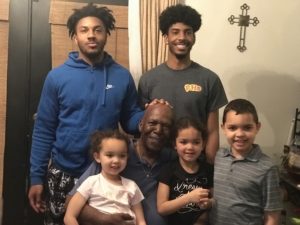
This past weekend we celebrated the life of my uncle. He was my father‘s oldest brother. My relationship with my Uncle Charles really developed when I went to college. He and my Aunt Jackie lived literally down the street from my undergraduate college. There were many days and nights and weekends that I would be at their house. He was the one who showed me how to work on cars and how to grow into a young man. He was very influential in helping me become the man that I am today. He passed away on last Wednesday morning. We spoke together three days before his departure to Heaven. Our conversation was about five minutes in total. We spoke about his current prognosis of his terminal diagnosis. And the last thing we say to each other was “I love you”.
It’s the small things in life that we cherish that means so much in our lives. The conversation that we had, the final conversation that we had together was a brief moment in the day. It meant a lot for me to have this conversation especially when I found out he had passed away only days after this conversation. I just found out that this conversation also meant a lot to him because on his burial day, my aunt told me that he informed her he spoke to me. This verified for me that the true essence I was unaware of those small moments in our life, day, and conversation meant a lot to him as well.
Some of the “small moments” that I cherish in my life are when I’m leaving the house and I forget to say goodbye to one of my children. The child will come running to me “don’t leave daddy” and they come give me a hug and a kiss. That hug and kiss means the world to me every time. But it might even be more to my child.
In John chapter 6, John delivers some amazing things that may seem small but have major impacts in our lives. In this particular chapter we are presented with the miracle of the 5000 being fed, the miracle of Christ in the water with the disciples, and the realization of bread of life.
John introduces and closes the chapter with the bread of life. When we were introduced about the bread it is a side note and a point of contention John 6:5-8

5-6 When Jesus looked out and saw that a large crowd had arrived, he said to Philip, “Where can we buy bread to feed these people?” He said this to stretch Philip’s faith. He already knew what he was going to do.

Philip answered, “Two hundred silver pieces wouldn’t be enough to buy bread for each person to get a piece.”

8-9 One of the disciples—it was Andrew, brother to Simon Peter—said, “There’s a little boy here who has five barley loaves and two fish. But that’s a drop in the bucket for a crowd like this.”

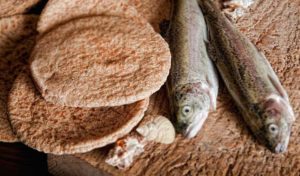
The bread that Christ blesses for the 5000 is received from child from his lunch. Five loaves of bread and two fish.
We often prepare our children’s lunches and you asked them “ what do you want for lunch “? This task may seem like a small task but it’s a huge part of the children’s day. When we prepare their lunch they are anticipating something amazing later in their day. This can break or make the entire day. So Jesus uses this opportunity from the lunch of a child to create an amazing miracle. But Christ also set up his next revelation.
In the end of the chapter Christ reminds the individuals that are listening about the bread that he gave them the day before. But he also reminds the crowd about the manna from heaven that Moses gave the ancestors. He says that the bread that they get from Moses and the bread they receive from Christ the day before we’re not enough to fill them but only for a moment in time. But the living bread that he has come to give is the bread of the life: the living spirit, God the Spirit. Jesus is speaking of the spirit of renewal that he brings to the world. That his presence is the awakening of their nutrition of spiritual awakening with the Holy Spirit. With his life he brings new life to each individual.
We can sometimes miss the small things in life. We can sometimes gloss over those small items that are essential for us. I’m reminded of the Lord’s prayer “Give us this day our daily bread”. In the time of Christ the actual literal bread was hard to find for individuals. The figurative brand of the spirit was also in limited supply. We today sometimes take granted our physical bread and our spiritual bread. But let’s not lose sight of this beautiful morsel of nourishment. Let us not forget daily to be thankful for our physical needs that God had provided and also our spiritual needs that God provides.
From the beginning examples that both parties receive great joy and meaningful from the small interactions. God also receives great satisfaction when we are given our physical bread and our spiritual bread and we acknowledge that he has given it to us.
Have a blessed week

Thinking outside the box… Living intentional

Today’s Reading: Luke 16 

Last week, the kids started school again. It is always a pleasure to see them go to the next level and the next grade. So currently we have a fifth grader, a second grader, and a first grader.

Each year, each teacher will send a note welcoming and introducing themselves to each of the students. This year my youngest is starting first grade and she received a letter from her teacher. This was one of the first times she could read the letter by herself. As we were reading the letter she needed some help with some of the words and was able to sound out the others by herself. At the end of the letter the teacher states that the student will be a first grade reader, writer, scientist, mathematician. For the first three words she needed some help. But I was the last and most complex word she was able to see it without any hesitation and complete competency and fluency: Mathematician. This made me smile because some of the hardest words are complex and difficult to pronounce or say, but with support and confidence and they are able to shine in shock us.

In Luke chapter 16, we have two major scenarios in which each individual after being presented with dire consequences of their actions they try to think outside of the box and become more intentional about their life.

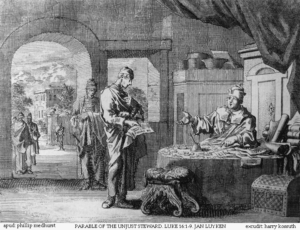
In the beginning there’s a manager who is not honest with his masters work. This manager has worked with the master for quite some time. The master knows the heart of this manager and he calls him to terms or his life is in jeopardy. This manager then becomes very intentional and thinks outside the box to fulfill his masters duties. In doing so the manager is able to correct his actions and set up his master for success. Jesus doesn’t want us to be dishonest as this manager, but wants us to see his example and be diligent and intentional about our own life in reference to what God has given us. The manager had to think outside the box because his life was in jeopardy. How many times do we have to be pushed to the edge to become intentional at our lives?

The second scenario is that of the Rich man and Lazarus. The rich man having all of the good things in life and Lazarus being poor and unable to care for himself. This parable is not a judgment on rich and poor, but the intentionally of each persons life. When the rich man is in Hades he starts to try to think outside the box to get his eternal life back on track. While he’s in Hades he tries to do several things he tries to get Lazarus to come and cool his thirst. The next thing The rich man does is try to get Lazarus to help his siblings to not make the same mistakes. So in these two scenarios the Richmond still thinks about himself and his brothers, but he’s thinking outside the box he’s thinking outside of his normal.

It is interesting in these two scenarios that the individuals knew what to do from the beginning. But they made a choice not to do the good or proper thing. Not to do these correct things or live intentionally for others. And because of those choices that they made they find themselves 1.) in fear of their earthly life; 2.) fear of their eternal life. How many times are we presented with opportunities to help or assist others? How many times are we scared or frightened because of the choices that we’ve made that have impacted us? How many times do we need to hear that our blood pressure is high before we make a change to our health? How many times do we need to be brink of diabetes before we are willing to change? How many times do we have to be presented with the loss of our family or friends before we make a change? This is the time that we need to become more intentional about our decisions and about our lives.

At the end of the chapter, one last statement from Christ about the state of affairs about intentionally. If we do not listen to the prophets and Moses, “ The Law”, how would we listen to a person who was raised from the dead? Are we hearing what Christ is telling us?

Growing up

Today’s Reading : Luke Chapter 4 
It is amazing and a blessing for me to reach adulthood. When I look back over my time as a child, teenager, and young adult, there were many times that God blessed me to escape the potential pitfalls and detours. One of the benefits of being an adult and a parent is that you have the ability to have retrospective and prospective views. It seems that on a daily basis, I am constantly guiding my children in a better path than they are taking. “I would not advise eating that berry”, “Try riding you bike on the side walk and not in the middle of Main Street”, “ If you hold your sister’s arm like that it might come out of place”. These are the things that I can see would be beneficial for them and not require a hospital visit.
When we read Luke Chapter 4, we are getting a brief glimpse of Jesus growing. Luke 4: 1-2

And Jesus, full of the Holy Spirit, returned from the Jordan and was led by the Spirit in the wilderness for forty days, being tempted by the devil. And he ate nothing during those days. And when they were ended, he was hungry. 

In the beginning of the chapter we are given powerful information in two verses. In these verses we see a transformation. Jesus has just been baptized by John the Baptist. This was the fulfillment of two prophecies: John has completed his mission of preparing the way for Christ, and this was the beginning of the transformation of Jesus before his ministry. As was the custom of Christ, he starts his ministry by taking time with God. He is growing into His work. But he is not alone, he is full of the Holy Spirit( God the Spirit).
The time that he is in the wilderness is forty days. God the Son is filled with God the Spirit being mentored with God the Father. The trinity is in unison during this growing period. This time could be equated with the forty years that Moses was being prepared and groomed in the wilderness before he was made the savior of the Israelites. Each day that Christ was growing in his ministry he was filled with a year’s worth of information and insight. He is growing exponentially. How much would we be able to grow if we concentrated all of our being to God the Father and filled with God the Spirit?
Throughout those entire journey, Christ has been repeatedly accosted by the enemy. These forty days, he has been in communion with the triune God but this did not stop the assault of the enemy. At the conclusion or the commencement of the journey Christ is barraged with the heaviest weapons that the enemy has to offer. He is questioned is authority, his place in the world, and also has the scriptures used against him. But his journey has prepared him for this test. Many times when we have completed a wilderness experience, we feel tired and ready for a rest and refreshment, but we have to slow God to reveal the respite. He will open up the door for us to find growth and peace in his will.
As we continued grow spiritually and physically, we have to understand that we will have wilderness experiences, but the only way that we will be successful is to carry God the Spirit in us by God the Son’s blood to continue in communion with God the Father. Grow strong.
Be blessed


Living in the Margins

Today’s Reading Mark 7
Mark’s gospel is the first gospel that was written in the canon of the Bible. The remaining gospels are synoptic gospels which followed after Mark. The manner in which Mark originally wrote the gospel was from the perspective of the resurrection and retracing the steps of Christ throughout his life. Mark was a contemporary of the apostles Peter and Paul. Mark actually relates to us the life of Jesus from the crucifixion backwards through the miracles. Mark is telling us and showing us how Christ was human and divine throughout his life.
One of the main ways that Mark relays Christ’s divinity and humanity is by taking us inside the margins of Christ life. In Mark Chapter 7, we begin with a discussion between the Pharisees and Christ. In this particular scene, we are see the difference between the traditions and the heart. The Pharisees are caught up on the traditions of everything down to the cleansing of the hands before meals. Christ rebukes them and reveals to them that it is not the traditions and rituals that make us pure or defiled, but it is the heart that can corrupt the person. Christ took the disciples to the margins to reveal the truth about the heart verse the ritual. It’s not the grand things that we do, but the items on the margins of our life that defines us.
Throughout Mark, we see a couple of items were Jesus pulls individuals to everybody the side and gives them small tidbits and nuggets of inspiration and perform miracles. This can be an example for us where we can be with people and interact with our people but at the same time take time out on the margins of our life to do you have a little extra.
The next story, Christ has been with the multitude of the Jewish people. He then is approached by a woman who is on the complete fringes of society and the Jewish people. Many of the multitude “know” of Jesus and his power, but this woman believes and recognizes the full divinity held by Christ. He blesses her in the Margin of the crowd and she is overwhelmed with the miracles.
In the final portion of the chapter, Christ is presented with an man who is deaf and mute. Christ examines him in the presence of the crowd, but then takes him in private and blessed him in the Margins of the crowd. Christ then instructed the man to remain quite about the miracle. But he cannot contain his joy for being freed of his shackles.
In the chapters before and after this chapter Christ interacts with the people and loves the people, but he also takes time in the margins to connect with God to perform miracles to do amazing things in the presence of just a few.
Where in our lives are we being called to work in the margins? During the pandemic and during this current post pandemic era, are we still not addressing the margins of our life? Are we still staying with the crowds and not getting that renewal and refreshment from the margins? What are we not receiving while we are inside of the crowds and we need to be in the margins.
Be blessed.

By what Authority?

Today’s Reading : Matthew 21
Why do we have do this? Where are we going? You are not the boss of me? Who put you in charge? For what purpose are we doing this project? Who do they think they are? If I was in charge things would be better. These are a few of the comments that we make or we hear on a daily basis.  We hear these at home, or at the office, or with friends. We are always trying to figure out who has the authority and in what respect are they utilizing their authority in a proper way.
In Matthew chapter 21, we are diving deeper behind the scenes of what is actually happening. This is the time of Passover. Jesus is setting up the new covenant with the disciples. He is fulfilling the scriptures on many levels. We are opening the chapter with one of the most triumphant scenes in Christian history. This is when Christ is coming into Jerusalem at the beginning of Passover before his crucifixion.
Matthew shows a snippet of that procession of the Hosanna processional during  Palm Sunday. But Mathew also dives deeper into several images of authority throughout this chapter. I believe that Matthew is showing us the different aspects of Christ authority in all realms of our life.
The first is authority over the Scriptures. We see how Christ shows his authority of the donkey and the Colts being picked up. When the people ask what authority do you take these animals he says “the Lord needs them”.
Matthew shows us Jesus authority over nature when he approaches the fig tree. All creation was made by God through Christ and the Holy Spirit. All nature falls before and gives praises to Jesus and God in all forms. When Jesus approaches this fig tree and the mere presence of his being does not produce any fruit or any praise worthy of Christ, Jesus condemns the tree. It is an act of authority over nature. With the word that he speaks the tree literally withers from a majestic big tree into a sapling and dies. Jesus demonstrates his authority over nature by his words.
And the next piece of authority Jesus shows is his authority over worship. During this time of Passover which only happens once a year this is a very special and very holy event. The act of preparing for the Passover is one that is dictated in the laws of Moses.  There cannot be any corners cut. Everything has to be exact. But the people have become complacent in their worship and they are not devoting their complete love and devotion to God. They are purchasing the things that are supposed to be procured or harvested by themselves. They have become complacent in their worship of God. They are purchasing the things that they did not take time to give into worship God in the temple. Jesus is showing his authority by cleaning the temple from the complacency. We have to acknowledge this at us that we need to clean out our complacency and I worship and give Jesus and God therefore worship.
In these examples of authority we have to recognize the authority Christ has in our lives.  I asked that we acknowledge respect him from what the prophets have told us. We have to see that all nature will shows who has the authority over all.   From every ounce of worship that we give to him we must remember not to become complacent because he has the full authority over us.  He has all the authority and the glory and the power.
Be Blessed

Dig Deeper


Today’s Reading: Matthew Chapter 5

As I continue in Biblejournal club, I have continue to grow in my understanding of each blog and each biblical passage. As we enter this new section of the year with the New Testament, I can see each portion in a different perspective. For the majority of my life I have seen the books of the New Testament as the journey of Jesus and the apostles. It tells the different perspectives of Jesus and the many journeys of Paul and his letters to the churches.
As I read through Matthew, my perception has changed and evolve into one that really looks at the author and their experience and their testimony of Jesus and how it relates to me and others today. Each of the writers of the gospel have been appointed by the Holy Spirit to relay the gospel to us, but each had their own backgrounds and those influenced the manner in which they conveyed their experience. Matthew was originally a tax collector. We know that this is a profession that is still not highly adored. The reason is because they have been taught how to look for the most obscure information and gain the most wealth from it. He knew how to dig deep. Matthew in his writing digs deep into some of these experiences of Jesus.
In chapter 5, we are at the sermon in the mount. The beatitudes are given to us here. But in The Message version these become so much clearer and more profound. Jesus is telling us to look deeper at the law and find the true underlying meaning. We sometimes get the crust of the issue, but not the core.
Matthew 5: 3- 10

 “You’re blessed when you’re at the end of your rope. With less of you there is more of God and his rule.

“You’re blessed when you feel you’ve lost what is most dear to you. Only then can you be embraced by the One most dear to you.

“You’re blessed when you’re content with just who you are—no more, no less. That’s the moment you find yourselves proud owners of everything that can’t be bought.

“You’re blessed when you’ve worked up a good appetite for God. He’s food and drink in the best meal you’ll ever eat.

“You’re blessed when you care. At the moment of being ‘care-full,’ you find yourselves cared for.

“You’re blessed when you get your inside world—your mind and heart—put right. Then you can see God in the outside world.

“You’re blessed when you can show people how to cooperate instead of compete or fight. That’s when you discover who you really are, and your place in God’s family.

10 “You’re blessed when your commitment to God provokes persecution. The persecution drives you even deeper into God’s kingdom.

Salt and light – Allow our life with God to be the seasonings to the others. We should be able to bring the essence of God through our walk.  We should enhance the love and life of others if we are part of God.
Murder – Not only killing the physical person, but stop killing the essence of the person. Don’t degrade your neighbor or kill their spirit.
Adultery and Divorce – these are not just the act, but the moral complexity that are attached. Jesus is telling us not to get raped up with the legal ramifications but look at the moral implications. He is telling us to see the heart more so than the body. The spirit and the soul more than the act.
Empty promises – When we interact with each other, do not put on a facade. Let your words be true and not contrite with useless hopes and religious platitudes. Be real with others and not fake.
Love your enemies – Do good to those that would bro you harm or have done you harm. Loving your enemies doesn’t mean to put yourself in harms way, but it means to not allow hatred and despair make you do things that you wouldn’t want to do. Loving your enemies allows you to control your emotions and actions in the midst of adversity and strife.
In the midst of our daily lives, we have to look at the deeper meaning of the journey.  When we experience joy and happiness, we must look deeper to give the same joy and happiness to others even.  They might be experiencing something traumatic in their lives.  If we are going through some difficult times, we may have to dig deeper to see how is this glorifying God in the midst of our trials.  Sometimes God uses us to be reflections of his amazing grace and love in our most tremulous times.  God is in control, we will show his glory.
Be Blessed.

The Lord is Righteous

Psalms 129

“Greatly[a] have they afflicted me from my youth”—
    let Israel now say—
“Greatly have they afflicted me from my youth,
    yet they have not prevailed against me.
The plowers plowed upon my back;
    they made long their furrows.”
The Lord is righteous;
    he has cut the cords of the wicked.
May all who hate Zion
    be put to shame and turned backward!
Let them be like the grass on the housetops,
    which withers before it grows up,
with which the reaper does not fill his hand
    nor the binder of sheaves his arms,
nor do those who pass by say,
    “The blessing of the Lord be upon you!
    We bless you in the name of the Lord!”

This is one of many songs that is in the Septuagint. This psalm was originally song while making one of the three mandatory annual pilgrimages which is written about in Deuteronomy Chapter 16: The Passover, the Feast of Weeks, and the Feast of Booths. Each of these pilgrimages were to call the people of God back to their main place of worship. This was a way of returning and remembering the goodness and providence of God. The Septuagint consists of the psalms 119-133.

In our western practice of Christianity, these have been used in daily prayers, particularly in the monastic and vesper practices. These prayers are still practiced today in many monasteries and convents. They are part of the three, seven, or nine daily prayers. In these prayers it is similarly the original Hebrew prayers, it is remembering a time in which we were oppressed as a religion and now we have the freedom under God to worship.

In childhood and throughout our lives we all have been the victim of bullies and verbal abuse. Sometimes it is passive, but others times it is overt and harsh. This teasing or demeaning behaviors can have some harsh and irrevocable effects on the individual. We are currently transitioning into a more open and accepting world, but bullying and teasing are still current. We as adults have to listen and console our children and others who are subjected to this unjust behavior. We have to encourage our sons and young men to be sensitive to others needs and be affectionate to others without any stigmas or questions of their masculinity. We need to enrich our daughters in the ways of engineering and backcountry knowledge and help them to become reliable in all situations without a question of their femininity. This psalm reaches out to us to remember our youth and allows us to be emboldened to not have the same ignorance of our past to dictate that of our children. This psalm teaches us to not forget the past but to remember and then move forward.

The main portion of this psalm is hidden in the middle: THE LORD IS RIGHTEOUS. No matter what has afflicted us in the past or what we think should be of the ones that afflicted us, God is righteous and his grace will be given to us all the time. No matter what has been done to us or held from us, we cannot allow this to shape who we are in God’s eyes. He alone is righteous and give this to us. Let us remember the times of our youth: the good, bad, and the ugly. These times make us who we are because God used his righteous to keep us righteous for His sake.

Power in brevity

John 11:35 

Jesus wept. 

This is the shortest verse in the bible.  It has some of the most powerful imagery and connotation that can be given in the Bible.  This is one of the most excruciating moments in Jesus life.  It is summed up in two words.

I have in the past miscounted the simple terms and phrases, but as I reflect on these items I have found they are the most profound.  I have also miscounted the sequences of name and events of their importance.  This is something that we have been conditioned in our society to do.  We have associated brevity as something simple and non-complex.  We have associated the last as the least of the group.

But Christ has changed the system completely.  In the simplest items he has given us the most complex entity  :  Blood :: Salvation. He has also changed the way we see order.  The Spirit of God is not the least of the persons of God, but the unifying presence of the Father and the Son.  The Spirit also unifies time: The Spirit was there in the beginning; in the creation of man; in the conception of Christ; in the resurrection of Christ; in the conversion of Paul; and in us today.

Psalms 117 

Praise the Lord, all nations!
    Extol him, all peoples!
For great is his steadfast love toward us,
    and the faithfulness of the Lord endures forever.
Praise the Lord!  

This psalm is the shortest chapter in the Bible. It also is the exact middle chapter of the Bible.   It is so powerful in many ways.  Let us not discount this chapter due to its brevity, but let us mediate on this to see how powerful and amazing God will use this chapter in us.

Let this be our anthem for the week; the summer; and the remainder of the year.

Be Blessed

The Shema

Ten things that I have taken for granted is the past:
  • Kissing my kids and wife daily and telling them I love them
  • Talking with my parents and mentors often
  • Taking a shower (hot or warm water that is easily accessible)
  • Having the ability to do laundry whenever I need
  • Being able to walk and move without hesitation
  • Having a job and the ability to get there without any problems
  • Being able to go to the restroom without assistance
  • Being able to sit with my children and just be in their presence
  • Being able to breathe
  • The Lord’s Prayer
By no means is this a complete list, I would not be able to contain the items in finite pages.
Every day we are given blessings that we are not aware or don’t acknowledge. Over the last several years, I have been more aware of my blessings that God has instilled upon my family, my friends, and myself. Sometimes, I take for granted the waking up in my bed or being able to walk from my bed to the restroom or to the kitchen without assistance. Currently, the patients that I serve want to do these activities, but are physically incapable of performing these tasks. When we become more aware and attentive to our surroundings and our privileges, then we are more appreciative of the small things that causes us to be where we are and where we have come from. I have found the more that I am reminded of God’s glory in my everyday life, the more I can give Him more praise and give it unconditionally.
Psalms 105 is a reminder of the hidden blessings that we can take for granted. This psalm is an echo and reminder of the Shema: Deuteronomy 6. The author of this psalm is reminding Israel of the complete promise and fulfillment of the Promise that God gave Abraham. He would give the people of Israel a land that was full of blessings and all they had to do was to enter and remember God’s provisions.
When I first encountered this psalm, I had the feeling of deja vu. As we have prayed through and reflected in the Psalms we are reminded of the promise and liberation and joy of the God. This particularly echos the Shema because in Deuteronomy 6:6-12 it is a statute that we must remember and not take for granted our current situation.
Deuteronomy 6:6-12

Write these commandments that I’ve given you today on your hearts. Get them inside of you and then get them inside your children. Talk about them wherever you are, sitting at home or walking in the street; talk about them from the time you get up in the morning to when you fall into bed at night. Tie them on your hands and foreheads as a reminder; inscribe them on the doorposts of your homes and on your city gates.

10-12 When God, your God, ushers you into the land he promised through your ancestors Abraham, Isaac, and Jacob to give you, you’re going to walk into large, bustling cities you didn’t build, well-furnished houses you didn’t buy, come upon wells you didn’t dig, vineyards and olive orchards you didn’t plant. When you take it all in and settle down, pleased and content, make sure you don’t forget how you got there—God brought you out of slavery in Egypt.

Each of our current situations, God is in the midst and providing all our needs. Our current situation could be better and it could be worst. We must allow ourselves to see what God is doing and remember what he has brought us through. We must also remember when we are in the wilderness at different times in our lives, God will fulfill his promises if we allow Him to show us in his time.
The main sustenance of Psalms 105 is summed up in the last part of the verse : When you take it it all in and settle down, pleased and content, make sure you don’t forget how you got there.
Be Blessed

The Roaring Sea

Psalm 93 (The Message)

1-2 God is King, robed and ruling,
God is robed and surging with strength.

    And yes, the world is firm, immovable,
    Your throne ever firm—you’re Eternal!

3-4 Sea storms are up, God,
Sea storms wild and roaring,
Sea storms with thunderous breakers.

    Stronger than wild sea storms,
    Mightier than sea-storm breakers,
    Mighty God rules from High Heaven.

What you say goes—it always has.
“Beauty” and “Holy” mark your palace rule,
God, to the very end of time.

Since the beginning of time the seas have always intrigue us. The immense size and depth of the waters continue to perplex us even today. There are many areas and places in the oceans and seas that still have not been discovered. Approximately five percent of the total oceans have been explored. The same can be stated about the many seas that we have on earth. The seas and the oceans have one particular predictability: they can have calm or storms at a moment’s notice and these two (peace and chaos) can happen simultaneously on the same body of water at two different locations.

There are several seas that are referenced in the Bible. Two particular seas are the Red Sea and the Sea of Galilee. These bodies of water are places of many miracles. For the Red Sea one of the first major miracles was performed by Moses delivering the Israelites from Egypt. On the sea of Galilee there was several miracles that shown by Christ. On the Sea of Galilee, Jesus shows himself to the disciples in the night and Peter understands Christ power as he walks on water. The other miracle is when the disciples are in dismay and angst during the tempest and storm. During the storm Christ is slumbering and has to be woken by the disciples. When he awakens, he silenced the storm with a whisper and a flick of the hand. These are some of the ways God shows us magnificent power over the most complex part of nature. He shows us that He is all powerful and able to control the things where we still do not understand but only 5% of the waters.

This particular psalm is meaningful to me this past week, this past month, and this past year. The Lord reigns over everything and can be heard, even over the roaring and raging seas. The seas of life are raging everywhere. Sometimes we can not hear the love and peace that God has for us because we are listening to the sea and not His voice. In the midst of the roar, we have to remember that Jesus was able to rest in the storm because he knew whom he belonged and who has the power over all things. This coming week, I will rest in Him who has the voice that pierces over the roar of the sea. He who can give me utter peace in the storm. How will you react to the roaring seas this week?

Be blessed