My Weakness

The Bible Journal team has been discussing and praying over what our approach to this site will be in 2017. Spending time thinking about this brings several realities to the forefront of my mind:

  1. Authoring blog posts is hard. Publishing every week is really hard.
  2. Writing with the intent to glorify the one who created the heavens and the earth comes with great joy and great responsibility.
  3. Without a strong commitment to this project, there is no way I would do this.
  4. I’m not a naturally gifted writer. For me personally, each week I struggle immensely with what to write.
  5. Authoring for Bible Journal has been my single most impactful spiritual habit of 2016, perhaps lifetime.

When writing these journals each week I come to a place where I feel extremely weak and helpless and pray these words, sometimes aloud, “I have nothing to say; I have nothing. Please help me God.” It is almost as though I am in a dark place, and sometimes fear and panic start to set in, but when I am at my very lowest and acknowledge my weakness and God’s tender mercy, that’s when I feel His strength. It has happened with each post, and I can only say this is a miracle.

But he said to me, “My grace is sufficient for you, for my power is made perfect in weakness.” Therefore I will boast all the more gladly of my weaknesses, so that the power of Christ may rest upon me.

This is teaching me to humbly turn toward Christ, where his power is made perfect in weakness. That verse so aptly fits because at the end of our own strength which is lacking, that’s where Christ wants us. Our strengths can often keep us from being in God’s will because we think we can do it all on our own. The faster we acknowledge him as the source or our strength, the faster we will align with his will and be able to glorify him, and that is a beautiful thing.

Dear readers, would you consider praying over writing for Bible Journal on a regular basis next year (or sooner as a guest author)? Do you think you’re weak? Good, you’re already on your way. Look around you, think about all of the stories in your life right now that can be used to glorify God. Observing these stories takes practice, but it also brings us closer to our maker and closer to our purpose for being on this earth, which is to glorify Him so that others may know his son Jesus Christ and be saved.

And finally, if you happen to have a birthday today then I double-dog dare you to consider this commitment to journaling… nudge nudge… (happy birthday to my sister Katie!).

2 Samuel 19; 2 Corinthians 12; Ezekiel 26; Psalm 74

Your Eulogy

Angel on top of gravestone in the Greenwood Cemetery in Brooklyn - Black & White

2 Samuel 18; 2 Corinthians 11; Ezekiel 25; Psalm 73

I was recently asked to write my eulogy. No, nothing is wrong. Writing your own eulogy is an exercise that prompts focus. It allows us to envision our lives complete and accomplished, thereby giving us the ability prioritize today. Have you ever thought about your own? What would it say? What will you be remembered for?

As I think about it, I am tempted to write about all of my accomplishments. Maybe I want everyone to think of the beautiful homes that I built, my beautiful wife or the amazing kids that I raised. Today, as I listen to Paul boasting of his accomplishment’s, I am reconsidering. According to 2 Corinthians 11:22-28, Paul’s eulogy would include

  • He was a Hebrew
  • He was an Israelite
  • He is the offspring of Abraham
  • He was a hardworking servant of Christ
  • For Christ, he endured prison with countless beatings, often near death
  • He was whipped, stoned and beaten with rods
  • He lived in danger of being robbed, everywhere he went
  • He was often hungry, cold and endured sleepless nights without protection

I don’t know about you but reading that list does not fill me with warm fuzzies. Even so, it’s exactly the list that Paul is most proud of. Why? They were the periods of his greatest weakness. What Paul had figured out is that when he was at his weakest, he was at his best because he was fully reliant on Christ.   Ironically, we are taught to avoid our weaknesses.  Instead of weaknesses we are taught to find our strengths.  Once we do, we are told to exploit them. Paul warns us against such philosophies in verse 3.  He says, “I fear that somehow your pure and undivided devotion to Christ will be corrupted, just as Eve was deceived by the cunning ways of the serpent.” (NLT).   He continues to explain that our adoption of such success strategies are really our acceptance of “different gospels.” In other words, they literally steer us away from the King and Christ, Jesus.  Paul continues to explain that our adoption of these teachings will affect our eternity.  Hear his words in verse 15. “It is no surprise if his servants, also, disguise themselves as servants of righteousness. Their end will correspond to their deeds.”

If you die today, what will your eulogy say?  God willing, we all have many years ahead of us.  Remember, you get to choose, today and every day, whether it will be an account of your worldly accomplishments or your ridiculous love and dangerous witness.

A Nation’s Leader

Psalm 72 is a beautiful prayer for a nation. It’s focus is primarily on its leader. In its recipe for a prosperous nation we find a leader who knows the truth from lies and acts in truth and righteousness, a leader who brings up other strong leaders, a system that brings peace to the people and a people who fear the LORD. On the other hand, we see in scripture how a nation and people who turn from God are handed over to confusion, not being able to discern the truth from lies, they pursue emptiness and the nation declines.

  • Romans 1:18-32 – Turning away from God, being handed over
  • Isaiah 1:21-31 – Outcomes: systematic ruin of economy and justice
  • Isaiah 3:2-6 – Outcomes: weak leaders
  • 2 Timothy 3:1-7 – Outcomes: false believers
  • 2 Timothy 4:3-4 – Outcomes: false religion
  • Deuteronomy 28 – Compare and contrast

May we be the salt of the earth and preserve the old ways.

Today’s reading: 2 Samuel 17; 2 Corinthians 10; Ezekiel 24; Psalm 72

The Cheerful Giver

Today’s Readings2 Samuel 16; 2 Corinthians 9; Ezekiel 23; Psalms 70–71

The point is this: whoever sows sparingly will also reap sparingly, and whoever sows bountifully will also reap bountifully.  2 Cor. 9:6

Great point, so why is it so hard some days to remember this point written by Paul? Why do I hesitate when it comes to my time, finances, love, listening, or wisdom? I want to piggy back of the authentic heartfelt words from Jillian yesterday called By His Poverty.  This too is something that challenges me and my family. My best answer is to look to His word. God’s word continues with:

Each one must give as he has decided in his heart, not reluctantly or under compulsion, for God loves a cheerful giver. And God is able to make all grace abound to you, so that having all sufficiency in all things at all times, you my abound in every good work.

When my heart is truly committed that is when the cheerful giver emerges in my words, actions, and time.  I would say much of my past life and still selfish current moments can leave me thinking that I can’t commit fully to something.  My only answer is lack of faith, full of fear, and believing I won’t have enough left for myself.  The truth is, God will provide all we need at all times. Amen. This faith and confidence changes your outlook of life. When I have this mindset my heart has decided to trust with all I have in God.  I pray you walk into this day, week, and life with a heart focused on cheerful giving.

For myself there are many factors that can help me make excuses as to why I’m not a cheerful giver at all times.  But I know these are excuses and that the Lord knows us, and he knows our hearts. Psalm 139:1 So, no matter your story beginnings, obstacles, hope, and future God is with you, he goes before you, and will provide anything that we need according to His will!  The part where I have struggled is when I’m doing things for My will. I can often struggle with the idea of Needs vs. Wants and whether they are His or Mine.

One gives freely, yet grows all the richer; another withholds what he should give, and only suffers want. Proverbs 11:24

Having a strong faith of God’s plan for my life needs to include my finances, time, words, wisdom, and actions.  As I write this you should be encouraged to know  the opportunities you will have today to give cheerfully whether that be financially or a listening ear or just love on someone.  In any scenario God will know your heart.  That the giving concept not only looks at our financial giving but our time.  In the time we give to people we give love, we listen, we can give empathy, we can encourage.

Dear Lord,  Continue to build a faith in us that portrays our faith completely in you.  That in our sharing we do it with a love that exemplifies Jesus.Teach me that all we have to offer all day long is done for others because that is what you ask us. Help us not grow weary in doing good.

And let us not grow weary of doing good, for in due season we will reap, if we do not give up.  Galatians 6:9

generosity-2


By His Poverty


Today’s Readings: 2 Samuel 15, 2 Corinthians 8, Ezekiel 22, Psalm 67

This is the first time I’m really diving into 2 Corinthians…in my lifetime. I know, I probably lost half our readers there, but I’m a firm believer in transparency! I’m finding that I’m just really convicted by the messages for us there. I don’t have lots of great Bible history or insight for you today. Instead I just want to share some of my own faith story. In second Corinthians, Paul speaks of giving generously. This is an area that I have struggled in the past. Putting my whole faith and trust in the Lord to provide for us was just really scary. I’ve always struggled with the fact that despite having really successful careers, my husband and I don’t have a fancy house or really nice cars. What we do have is a lot of medical debt for our five year old and some student loans on two doctoral degrees that could pretty much build a castle!

I’ve listened to lots of sermons on cheerful giving and putting your trust in God when it comes to finances. I always felt so moved by those sermons, but that old sense of doubt would come creeping in and I’d be back to placing my trust in the dollar bill and not my Heavenly Father. This summer, our family was humbled to our knees when our son became so ill that required weeks of hospitalization. This community, our Bible Journal community showed our family what Paul meant by generosity. I was taken to my knees again this week when I read these words,

“For you know that grace of our Lord Jesus Christ, that though he was rich, yet for your sake he became poor, so that you by his poverty might become rich.” (2 Corinthians 8:9)

This week, my husband and I were given an opportunity to give. An opportunity to give to another family experiencing deep pain and grief. For the first time I felt the absolute freedom and grace in giving. True giving, not substantial giving, but giving of what we have to bring others closer to God. We don’t have much, but there was so much freedom and reward in sharing it. I felt like I could truly connect with Paul’s teaching,

“So now finish doing it as well, so that your readiness in desiring it may be matched by your completing it out of what you have. For if the readiness is there, it is acceptable according to what a person has, not according to what he does not have.” (2 Corinthians 8:11)

Do you see? We don’t have to wait to become wealthy to be givers. Instead, we only have to become ready. We only have to experience the deep love of Jesus through generosity one time to become ready to share it. When I think back over the last few months of our life, the moments I remember are the times when people came to the hospital to be with us even though it wasn’t easy. I remember the days I wasn’t sure how we would pay for daycare for our daughters, only to be blessed hours later with all the childcare we needed. I remember fear and sadness giving way to comfort and peace in Jesus and the plan he has for our family. Now we get to share that peace with other families. We get to share that living sacrifice with others because it was so generously given to us. I pray for all of us that we give according to what we have rather than what we don’t have. I pray for each of you that have given so generously. Thank you for shining Christ’s light in our life.  We and our children know the love of Jesus because of you.

Happiness Isn’t Everything

Many thanks to my friend Erin Straza who was so gracious to agree to write for Bible Journal this week. Her encouragement as a friend and a fellow artist has been a blessing to me over the last year. She is an insightful and heartfelt writer. I am looking forward to her new book about comfort detox that releases in February.

I first met Erin when she was the staff writer for Spread Truth Ministries (spreadtruth.com). This team is best known for their amazing condensation of the bible to a brilliant, compelling, five minute animation which is inspiring millions across the world in thirteen languages and soon to be twenty two!

Now Erin’s fine work:

God’s Comfort Distribution Strategy

If our country had a national emotion, it would certainly be happiness. The pursuit of it is written into our founding documents. It’s become the highest aim of our lives and even our in-the-moment choices. Although being happy isn’t wrong, it isn’t the only emotion we will experience in this life. When other feelings show up and crowd happiness out, it’s easy to feel like a failure.

Something I appreciate about the Bible is that the authors are real people who experience real feelings—and not just the socially acceptable ones. Even Paul—who seems to be a persistent, get-it-done, no excuses sort of guy—admits to a whole host of emotions.

Today’s reading includes a portion of Paul’s second letter to the believers in Corinth, in which Paul admits to the entire church that he had been depressed (v. 6) because their “bodies had no rest, but we were afflicted at every turn—fighting without and fear within” (v. 5). We’ve all had seasons when nothing seems to be going well and it robs us of rest physically, emotionally, and spiritually. Although we don’t know the extent of Paul’s despondency, whether it was short-lived discouragement or debilitating depression, he willingly confesses his struggle, his pain, his weakness.That’s a brave soul, indeed.

Admitting these needs is necessary, however, if we are to receive the comfort of God. He is our Comforter, our solace for every trouble. We know this—in theory. But in practice? Well . . . we all could use a bit more practice!

Practicing the practice of finding our comfort in God takes a concerted effort. We’ve been conditioned by our culture—and ultimately, our sin nature—to grasp for comfort everywhere else but God. Our efforts fall short because God made us for Himself, as Pascal has said. To this end, I see two principles in 2 Corinthians 7 that help us practice finding our comfort in God.

No Hiding: Learn to Receive. When I’m downcast, reaching out to others for help takes all the courage I can muster. I need courage to be real like Paul was—upfront, no mask, no hiding. But mainly I need courage to be tended to in my moment of need. Inviting others to draw near and be close when I am at my lowest is a place of great vulnerability. The people I invite into this tender realm must be trusted allies who speak full truth in full love. Coming to others with my full self requires that I allow others to come to me with their full selves too. This is the mark of Christian community, where everyone is “walking in the light;” it’s essential if we are to enjoy true “fellowship within one another” (1 John 1:7, ESV). Learning to receive help and comfort from others is foundational to a healthy fellowship—and a healthy person.

No Hoarding: Learn to Give. In this world of trouble, it’s tempting to back away from people like Paul who confidently announce their needs. But a healthy fellowship cannot have members who only know how to receive help and comfort—they must also know how to give it away. Sometimes I withdraw from others because I don’t want to invest the energy required to be a comfort. Sometimes the magnitude of a need just plain scares me. But as a recipient of God’s mercy, I am now commissioned as a steward; hoarding the comfort I’ve been given is not becoming of God’s redeemed. Paul explains how comfort is meant to be the gift that keeps on giving:

“But God, who comforts the downcast, comforted us by the coming of Titus, and not only by his coming but also by the comfort with which he was comforted by you.” (2 Corinthians 7: 6–7)

Paul received comfort from Titus, who got it from the Corinthian believers. Ultimately, the comfort came from God who, it seems, “comforts the downcast” through His people. We are truly His comfort agents, commissioned to give away all that God has given us, wherever we find a need. Comfort is never meant for a single, onetime use. It grows in power when we pass it on.

In sum, all comfort comes from God, as He is “the God of all comfort (2 Cor. 1:3). But God often uses flesh-and-bone people to deliver it. Comfort abounds when we readily admit our own needs and readily tend to the needy. In this life, happiness may come and go with our circumstances, but God has a comfort that prevails when His people refuse to hide and learn to give.

Today’s reading link:  2 Samuel 14; 2 Corinthians 7; Ezekiel 21; Psalm 68

Erin Straza is a freelance writer, editor, and marketing communications consultant. Her first book, Comfort Detox: Finding Freedom from Habits That Bind You, releases February 2017 from InterVarsity Press. Learn more at erinstraza.com.


Encouraging Words

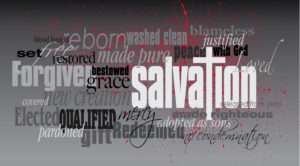
Graphic typographic illustration of the Christian concept of salvation. Art composed of mixed typefaces of associated words and concepts.

Today’s Reading:  2 Samuel 13; 2 Corinthians 6; Ezekiel 20; Psalms 66–67

Do you sometimes have days when you just need an encouraging word? We had one of those days this week.  In order to get my kids to school, then make it to the office in time for an 8am meeting, we needed to leave our house as close to 7:15am as possible.  This past Wednesday morning, my fourth grader couldn’t find one of her shoes.  At 7:18 she stood in the mud room with one shoe in hand and gave me a very helpless look.  We were already late.  I simply told her to wear another pair, then headed to the car.  This was NOT the answer she wanted to hear.  After a few minutes, she finally came out to the car with a different pair of shoes in hand.  She was discouraged and I was frustrated.

A pretty minor issue, but that was NOT the way we wanted to start our day. We needed some encouraging words.  I reminded my kids that this was the day that the Lord made.  Because his mercies are new every morning, we get the opportunity to start new every single day.  Unfortunately, we don’t often make good choices on our own.  We need God’s guidance and support.  We definitely needed it to change the course of our day on Wednesday.

Our assigned scripture reading for today started with the dark and discouraging story of Amnon and Tamar in 2 Samuel 13 – a man raping his brother’s sister, then being murdered by his brother for what he deemed to be an unforgiveable act. In 2 Corinthians 6:4-5, Paul’s account of what he endured throughout his mission to share the Gospel of Jesus Christ sounds awful – afflictions, hardships, calamities, beatings, imprisonments, riots, labors, sleepless nights and hunger. Then, for thirty-two verses, the prophet Ezekiel gives a depressing account of the Israelites’ consistent rebellion against God.  The next seventeen verses of Ezekiel 6, verses 33-49, are prophesy about restoration, but not necessarily the kind of restoration the Israelites were expecting.  God’s plan for restoration included judgment and wrath.

“As I live, declares the Lord God, surely with a mighty hand and an outstretched arm and with wrath poured out I will be king over you. I will bring you out from the peoples and gather you out of the countries where you are scattered, with a mighty hand and an outstretched arm, and with wrath poured out. And I will bring you into the wilderness of the peoples, and there I will enter into judgment with you face to face. As I entered into judgment with your fathers in the wilderness of the land of Egypt, so I will enter into judgment with you, declares the Lord God (Ezekiel 20:33-26).

After reading today’s scripture in 2 Samuel, 2 Corinthians and Ezekiel 20, I needed encouragement. I found it in Psalms 66-67, our fourth passage for today. But truly God has listened; he has attended to the voice of my prayer. Blessed be God, because he has not rejected my prayer or removed his steadfast love from me (Psalm 6:19-20).

God answered our prayer for a new start on Wednesday. Annika had a good day at school and I had a good, productive day at the office.  Thank you God.

I (still) Do

Today is a special day in the Harris family as we are celebrating our 16th wedding anniversary!

Back in the 1900s, I typically only prayed last minute or for shallow stuff that would benefit only me. For the airplane in turbulence to not crash, for a passing grade on a test that I didn’t study for, for money, to win at sports (or to not come in last), etc.

However, there was one prayer that I feel that over time was more spiritual than the rest. I prayed for a wife; that God would send her to me and that I would know that she was the right one. Even though my spiritual life was weak in those days, there were times that I actually got on my knees and prayed. Sometimes it was out of feeling lost with the thought that another person would fill the void. Sometimes it was loneliness or with a broken heart after a breakup. Deep down though even with a lacking relationship with my creator, I truly believed he was listening to me, and he would answer this prayer. And did he ever.

If you know Amy at all, you know she is fun, super cute, beautiful, energetic, a good listener, and a thoughtful, sweet, kind friend. These attributes are what drew me to her and reasons why I vowed to spend the rest of my life with her, to have and to hold, forsaking all others… until death. Wedding vows seem to be the only common place where people say “until death”, so this should remind us how significant the commitment should be. The thing about vows (solemn promises or guarantees) is that they are only as good as what backs them up. A vow made today could easily be broken tomorrow, so how do we address this? We’re humans and unfortunately destined to fail on our own. We can all cite various marriage statistics and share stories about sad endings to marriages, but today I want to share some of the ways that our vows have remained intact and some reasons why there is joy in our marriage.

      1. 916ceremonyThe vow. We made promises that we both intended to keep. We had careful

        consideration and discussed marriage well before getting engaged. I knew Amy’s stance long before we were married; cheat and it is over. We don’t wonder what we’ll do if this doesn’t work out, we focus our commitment in doing what it takes to ensure that it does work out.
      2. Continuously recall why you chose the person in the first place. I love to make Amy laugh and sometimes I forget how powerful it is to make her laugh, it is like all the cares in the world melt away. I love to travel with her, I love dates with her, I love to pause and look into her lovely green eyes. This doesn’t all just happen; neither of us are close to perfect, so we need a lot of intentional practice. I believe many people grow apart because they forget this crucial aspect. It breaks my heart to hear a husband or wife refer to their partner negatively. YOU CHOSE the person, figure it out. Get help. Ask a friend. Pray fervently. You dated the person before you were married. Why did you stop dating? Excuses aren’t accepted; it is your life, your marriage that you chose. Have a dinner date at home when the kids go to bed (and don’t let the inmates run the prison, you are the parent, you control their bedtime). Have a one hour date on the porch, it is free. We’ve found that intentionally and frequently seeking distraction-free time together helps us communicate and refocus on each other.
      3. Putting Christ at the center of the marriage. This is where imperfection meets its match. Meaning, the more we recognize that we’re not perfect and that a perfect, loving God has given us so much grace, the more we realize how important it is to give grace to each other. I’m not the best listener, but Amy gives me grace. I think she does things too fast and she thinks I do things too slow, but we give each other grace. In Christ, our priorities are realigned from “me, myself, and I, then others get the leftovers” to “Jesus, others, myself”. As we grow spiritually, the more visibly we become the “new creation” that 2 Corinthians 5:17 refers to: “Therefore, if anyone is in Christ, he is a new creation. The old has passed away; behold, the new has come.”
      4. Treating the marriage as an entity or an investment. Is it healthy? Does it need exercise? Is it being built up? Does it need input from others? Do the core principles need to be shared so that other marriages can be strengthened, and perhaps ours strengthened as well? Are books to help my career more important than books that strengthen my marriage and spiritual life?

2 Samuel 12; 2 Corinthians 5; Ezekiel 19; Psalms 64–65

Father God, thank you for the gift of marriage. Today I ask a special blessing on not only our marriage but all marriages. For the readers of this blog. For those who are hurting, lost, or lonely and feel there is no way out. Would you supernaturally pour out your love and show them your way? Would you speak to us and reveal your will? That we may point others to you as the source of all goodness, and to your son Jesus as our redeemer and king. Amen.

Jars of Clay


Young plant - "Ficus" in a broken flower pot
Today’s Reading: 2 Samuel 11; 2 Corinthians 4; Ezekiel 18; Psalms 62–63

I was recently asked about what I do to stay motivated. I offered the stock answers, explaining how I spend time every morning studying and praying. I exercise and eat right (sometimes). I read a lot and am careful of how much sleep I get. Sounds like a 10-step plan, doesn’t it. In fact, you could get similar advice from any self-help book ever written. Don’t get me wrong, there is some truth in those answers. The problem with them is that they don’t get to the Truth.

The Truth is that no matter how much you exercise, eat right or study and pray, you are going to have hard days. Maybe not only days, but weeks, months and years! Our lives are, in fact, fragile. In every moment, we are vulnerable physically and mentally to the forces of nature, illness, economics, character assassination, and defamation. The Apostle Paul calls us “jars of clay.” It is a fitting metaphor. You see, anything made of clay is rigid and strong enough to contain precious things. Even so, it is brittle and fragile. It reminds me of our clay flower pots.  When that clay pot makes sharp contact with the corner of your table or the wind blows it over onto your concrete patio, watch out! We encounter these same dangers in our everyday lives. So, if we are so fragile, how is it that we are to live fearlessly?   How will we stay motivated to press on?

The answer those questions lie in your “big why.” I learned about this from the founder of Keller Williams Realty, Gary Keller. He writes, “The Big Why is about having a purpose, a mission, or a need, that in turn gives you focus. High achievers always have a Big Why powering their actions.” This statement is spot on. In fact, we can look throughout history and see where many people put their very lives on the line to achieve their singular purpose. To illustrate this further, I could cite men like Abraham Lincoln and Martin Luther King. No person stands out to me more than the Apostle Paul. He endured one painful day after another. Amazingly, Paul didn’t just endure the suffering of his life he thrived in it. So, how did Paul stay motivated? Simple, he had a really big why.

as God’s grace reaches more and more people, there will be great thanksgiving, and God will receive more and more glory. (2 Corinthians 4:15, NLT)

That’s it! Paul was so enamored with God that he became laser focused on Him. His sole purpose, his Big Why, in this life was to “reach more and more people so that there would be great thanksgiving and God would receive more and more glory.” Wow! I am immediately and deeply humbled by the purity and righteousness of Paul’s motives. Truly, I want to be “sold out” like that. I want to be fully aware that the dangers to my “earthen vessel” are nothing. As Paul says, “our present troubles are small and will not last very long.” (2 Corinthians 4:17, NLT) That mindset is only possible when we “fix our gaze on things that cannot be seen.” (2 Corinthians 4:18, NLT). When we do, God will remove the cares of our temporary, earthly minds and bodies, replacing them with His “surpassing power,” (2 Corinthians 4:7, ESV) which becomes our motivation. What is your Big Why?

Works Cited:
Keller, Gary; Jenks, Dave; Jay Papasan; Gary Keller; Dave Jenks; Jay Papasan (2004-03-11). The Millionaire Real Estate Agent (Kindle Location 1163). McGraw-Hill. Kindle Edition.

Discerning People

There is so much in the Bible instructing us not to judge others and at the same time there is much in the Bible instructing us on how to judge others righteously, even warning us that we need to be able to look to the fruit to understand who a person is. How could this be? We know the Bible does not contradict itself. I have come to believe that one of the worst attacks on the truth is the weakening of the language. For example, my understanding is that our word ‘judge’ is translated from 20 different original words. Imagine all the instructive contextual meaning that was lost in this mashup. It is then up to us to investigate the difference between attempting to judge the heart and motive of another and discriminating between the truth and a lie, or put another way, between life giving righteousness and sin that leads to death.

Today’s reading: 2 Samuel 10; 2 Corinthians 3; Ezekiel 17; Psalms 60–61

After this the king of the Ammonites died, and Hanun his son reigned in his place. And David said, “I will deal loyally with Hanun the son of Nahash, as his father dealt loyally with me.” So David sent by his servants to console him concerning his father. And David’s servants came into the land of the Ammonites. But the princes of the Ammonites said to Hanun their lord, “Do you think, because David has sent comforters to you, that he is honoring your father? Has not David sent his servants to you to search the city and to spy it out and to overthrow it?” So Hanun took David’s servants and shaved off half the beard of each and cut off their garments in the middle, at their hips, and sent them away. 2 Samuel 10:1-4

It is sad to read the rest of the account and how this terrible misjudgment lead to war. Here are a couple lessons I think we can learn from this reading:

  1. Be careful who you lend your ear to, from whom you take your advice. Instead of a righteous judgement in truth: perhaps considering the question, “is it a good thing that David sent comforters?”, the suspicious questions Hanun received from his advisors were aimed directly at David’s motives. And they missed by a mile.
  2. Do not judge motives. Jesus tells us in the Sermon on the Mount, “Judge not, that ye be not judged.” (Matthew 7:1) But again what is the difference in judging and discerning? The Bible warns us again and again that judging others come with heavy and dire consequences as does not discriminating. God please help us get this right.

If you are looking for answers to understanding the difference between sinful and righteous judgment, I recently listened to a sermon called Stop Criticizing that I would recommend. It was part of a series called Mishandled: Setting the Record Straight on Frequently Abused Bible Verses. It is on judging and worked from Jesus’s teaching on human relations from His Sermon on the Mount, while also taking a comprehensive look at the Scripture as it relates to this subject.