Power

Today’s Reading:  2 Samuel 13

Remember last Sunday when I wrote about Jephthah?  I couldn’t figure out why I didn’t remember him or his story even though his name shows up in the Hebrews 11 “Hall of Faith”.  Eventually I concluded it was because his story about sacrificing his daughter was so awful.  My assigned scripture for this week is different in that Amnon does not show up in Hebrews 11 and, I totally remember him and his story.  But it has a very similar feel in that this story is completely awful.

Amnon was the oldest son of King David and his third wife, Ahinoam.  He was the heir apparent to the throne of Israel.  2 Samuel 13 tells us Amon fell in love with Tamar, Absalom’s beautiful sister.  He became obsessed with her to the point of making himself ill.  STOP HERE.  We are only two verses into the chapter, but I want to draw your attention to two important points –

  • Absalom’s father was King David.  While he and Tamar had a different mother than Amnon, they had the same Father.  So Tamar, the beautiful woman Amnon was obsessed with, was also his half-sister.
  • 2 Samuel 13:1 says Amnon was in love with Tamar, but he was actually in lust (not love) with her.  If he were in love, he would have put her interests ahead of his own.

Amnon and his advisor Jonadab came up with a plan for Amnon to get closer to Tamar.  Amnon pretended to be sick.  When King David came to check in on him, Amnon asked for Tamar to fix him something to eat.  This was not unusual, as it was customary for a female family members to be called upon to prepare and serve meals to male family members.  King David summoned Tamar to make some bread and serve it to Amnon, who was in bed.  But…when Tamar brought the bread to Amnon, he talked her into feeding him.  After Tamar was in close proximity, he tried to get her to have sex with him.  When she refused, Amnon took her by force and raped her.

All of the sudden, Amnon’s “love” for Tamar turned into an intense hate. Both Absalom and King David learned of Amnon’s horrible deed.  The Bible says King David was furious, but it doesn’t speak about Absalom’s emotion other than to say that Absalom never spoke another word to Amnon.   STOP HERE.  I want to draw your attention to two more important points –


  • The Bible doesn’t speak of Absalom’s reaction to the situation because he was plotting how to use it to his advantage.
  • The Bible says King David was angry, but notice he doesn’t punish Amnon.
After two years, Absalom invited King David and his sons to join him at Baal Hazor for a party.  King David didn’t go, but sent his sons including Amnon.  Long story short, Absalom got Amnon drunk at the party, then ordered his men to kill him.  The rest of King David’s sons returned home and Absalom fled to Geshur for three years.


Now that I’ve recapped this awful story, let’s stop again.  What does God want us to learn from it?  I’ve been soaking on a few different things this week, but as I’m sitting down to write this morning, the message God has laid on my heart to share with you is abundantly clear –

Power, and the pursuit of power, often drives people to actions (or inaction) that were previously uncommon of their character. They often disregard their moral compass, what is right, or what is in the best interest of others. Their actions demonstrate complete self-promotion.

We see glimpses of this behavior in the lives of Amnon and Absalom, but it is even more clear (and more sickening) in the life of King David. The Bible tells us David was a man after God’s own heart. He was Israel’s greatest king. By this point in his life, however, David was wrapped up in his own power. His focus had shifted from leading his armies in battle to preparing for who was going to succeed him on the throne. Amnon was first in line and David didn’t want to do anything that would mess up the plan. David was no longer concerned about doing what was right, only what served his own purposes.

From a godly leader who poured out his heart in Psalm after Psalm, we would never have expected such behavior. Power propelled David to disregard what was in the best interest of others, and the people closest to him were hurt in the process. Amnon was dead, Absalom was on a path to destruction, and Tamar’s life was forever ruined. While David may not have been able to prevent the detestable act in the first place, he definitely had the power to make it right after the fact. Instead, he chose to do nothing.

Does this behavior sound familiar? Have you experienced it in the lives of people close to you? Have you been hurt in the process? Are you in a position of power or pursuing power? Could you be blind to the hurt you are causing for those close to you? I urge you to draw near to God and submit to his ways. His plans are sovereign. All power truly belongs to him.

Abigail


Today’s reading is from 1 Samuel 25.

If someone was describing you to someone else what words would they use? I hope that most of the descriptors would be positive but there is alway the risk that there would be some negative comments too. In this chapter of 1 Samuel we hear some good descriptions of Nabal and Abigail.  We get to know their character quickly in just a few words.

1 Samuel 25:3 This man’s name was Nabal, and his wife,  Abigail, was a sensible and beautiful woman. But Nabal, a descendant of Caleb, was mean and dishonest in all this dealings. 

We do not know the details of Nabal and Abigails relationship but we do know that he was very wealthy and was called a fool. Whether their marriage was one of choice or politics we do not know but we can surmise that they were probably not cuddling by the fire at night whispering sweet nothings into each others ears. Abigail probably learned very early on how to deal with him in order to keep the peace. For this, her servants trusted her.

In this Chapter David is traveling and he comes upon Nabal, his men, and his sheep. In an effort to provide for his own men he requests provisions from Nabal after reminding him how he protected his sheep and all his men in the past. Instead of acknowledging Davids kindness, Nabal “hurls insults at him” and refuses to give him anything. This sends David into full testosterone mode and he starts strapping on swords to destroy Nabal and all his men. Thankfully, before a full attack takes place, one of Nabal’s servants goes to Abigail for help. She springs into action and takes provision to David on the trail and falls at his feet in order to protect her household and her husband. She is loyal in spite of her husbands poor behavior. She doesn’t make excuses for him, but she takes responsibility and asks that David not take vengeance on her household. She even acknowledges the Lord and his plans for David.  She uses this to convince him not to proceed with fighting. She has brought peace and wisdom to the table and David accepts it. No one else was offering this. He is thankful that she talked him off the ledge and he blesses her for it.  Without her intervention, David would have brutally attacked Nabal and had needless blood shed on his hands.  She was courageous and bold in her decision to step in the gap. Once she returns home she wisely chooses to allow her husband to sober up before filling him in on the details of the previous day. Upon learning all that had happened God struck Nabal with a stroke like illness and he died 10 days later.

And David and Abigail got married and lived happily ever after….

Nabal was mean and dishonest in all his dealings which lead to stress and untimely death. Abigail was sensible and peacemaking and God took care of her.

If someone was describing you to someone else what words would they use?

Galatians 5:22-23 But the fruit of the Spirit is love, joy, peace, forbearance, kindness, goodness, faithfulness, gentleness and self-control. Against such things there is no law.

Shelly


Saul

Today we get a chance to read and reflect on the life of Saul. I must admit it was a little difficult when thinking back to all the recent people of faith we have been sharing. Another side of me found it hard because of what you will realize about Saul when you read today’s readings of 1Samuel 18-19.

A few nights ago I was up in the middle of the night thinking of the life of Saul in these two chapters, it was marked by disobedience. When you look back at 1 Samuel 15 the Lord was not happy with Saul and how Saul had turned away from the Lord and didn’t follow any instructions from the Lord. He didn’t obey.

1 Samuel 15:22-23 says

“Has the Lord as great delight in burnt offerings and sacrifices,
as in obeying the voice of the Lord?
Behold, to obey is better than sacrifice, Saul’s
and to listen than the fat of rams.
23 For rebellion is as the sin of divination,
and presumption is as iniquity and idolatry.
Because you have rejected the word of the Lord,
he has also rejected you from being king.”

Once Saul made the decisions to not obey the Lord. Evil entered Saul’s body. 1 Samuel 18:10. Then enters fear, jealousy, and selfish desires to have David killed. Saul tries this numerous times but without success. My wish was that we would read further and see how this disobedience changed, but we don’t. Saul continues to live his life this way eventually losing everything and even taking his own life. 1 Samuel 31

There are many things we want to do, places to go-lives to change. But I realize that the first action God wants from us is to obey. God has given us His Living Word so we know exactly what He desires from us. As I looked in the back of my bible for the word obey, obedient, obeyed, obeying there are 116 (if I counted correctly) verses on obeying the Lord or His word. I encourage you to look at this in the back of your bible now. Here is one of my favorite verses.

He replied, “Blessed rather are those who hear the word of God and obey it.” — Luke 11:28

I just want to obey. I need prayer for this daily. We see the results of what happens when we don’t. When we allow ourselves to make the decisions. We stumble and fear, jealousy, or selfishness enters. When we obey, we will receive His blessings. When we obey, others we are blessed. When we obey the Lord, we will never be disappointed.

What’s your go-to verse on obedience? Do you have one?  Look back and find one that speaks to you today.

Dear Heavenly Father,
Just like I ask my own children daily to obey me, please help me to obey you. Our temporal world speaks lies that we can do it ourselves and that our way is right, but we see and know that the only way is through you. God, we ask for a mind, heart, and body that says yes to all the things you ask and desire through your Living Word.
Amen

Jonathan : Speak it. Believe it. Achieve it.

Today’s Reading : I Samuel Chapters 14 &20

Jonathan was the son of the first king of Israel, Saul, and the best friend and brother-in-law to David, the second and most known king of Israel.  Jonathan is a unique individual in that he defined the roles of his life through the Spirit of God and not through the prescribed doctrine of the culture. During his lifetime, Jonathan followed Jewish law, which held family bonds and relationships higher than any other bond found in the community.  He was both a devout son and friend, but through his actions he exhibited a connection more through spirit than blood.    I think that his life could be summed up into three phrases: Speak it. Believe it. Achieve it.

Jonathan was a great soldier and warrior, but he also had an amazing relationship with God.  He was able to discern and consult with God in some of the most profound adventures and journeys in his life.

Speak it. Believe it. Achieve it.

I Samuel 14:6-15

Jonathan said to the young man who carried his armor, “Come, let us go over to the garrison of these uncircumcised. It may be that the Lord will work for us, for nothing can hinder the Lord from saving by many or by few.” And his armor-bearer said to him, “Do all that is in your heart. Do as you wish.[b] Behold, I am with you heart and soul.” Then Jonathan said, “Behold, we will cross over to the men, and we will show ourselves to them.If they say to us, ‘Wait until we come to you,’ then we will stand still in our place, and we will not go up to them. 10 But if they say, ‘Come up to us,’ then we will go up, for the Lord has given them into our hand. And this shall be the sign to us.” 11 So both of them showed themselves to the garrison of the Philistines. And the Philistines said, “Look, Hebrews are coming out of the holes where they have hidden themselves.” 12 And the men of the garrison hailed Jonathan and his armor-bearer and said, “Come up to us, and we will show you a thing.” And Jonathan said to his armor-bearer, “Come up after me, for the Lord has given them into the hand of Israel.” 13 Then Jonathan climbed up on his hands and feet, and his armor-bearer after him. And they fell before Jonathan, and his armor-bearer killed them after him. 14 And that first strike, which Jonathan and his armor-bearer made, killed about twenty men within as it were half a furrow’s length in an acre[c] of land. 15 And there was a panic in the camp, in the field, and among all the people. The garrison and even the raiders trembled, the earth quaked, and it became a very great panic.[d]

This is a great example of Jonathan’s mindset and spirit.  Jonathan has a plan and then he SPEAKS the words of how to proceed.  He gives two possible scenarios of how the conversation with the enemy might and states if the responds is “Come up to us” the Lord is with us and the Lord has given the enemy into the hands of Jonathan. Unlike his father, Jonathan gave God a way to show his ultimate authority and power.  There could have been many other possibilities that this interaction could have taken, but he had the foresight to provide a way that only God would know the outcomes.   Sometimes in our lives, how much better would the outcomes be if we presented two sides of the scenario and allowed God to work in the midst with the answer we seek.

Speak it. Believe it. Achieve it.

I Samuel 20: 3-11; 35-42

 But David vowed again, saying, “Your father knows well that I have found favor in your eyes, and he thinks, ‘Do not let Jonathan know this, lest he be grieved.’ But truly, as the Lord lives and as your soul lives, there is but a step between me and death.” Then Jonathan said to David, “Whatever you say, I will do for you.” David said to Jonathan, “Behold, tomorrow is the new moon, and I should not fail to sit at table with the king. But let me go, that I may hide myself in the field till the third day at evening. If your father misses me at all, then say, ‘David earnestly asked leave of me to run to Bethlehem his city, for there is a yearly sacrifice there for all the clan.’ If he says, ‘Good!’ it will be well with your servant, but if he is angry, then know that harm is determined by him. Therefore deal kindly with your servant, for you have brought your servant into a covenant of the Lord with you. But if there is guilt in me, kill me yourself, for why should you bring me to your father?” And Jonathan said, “Far be it from you! If I knew that it was determined by my father that harm should come to you, would I not tell you?” 10 Then David said to Jonathan, “Who will tell me if your father answers you roughly?” 11 And Jonathan said to David, “Come, let us go out into the field.” So they both went out into the field.

 In the morning Jonathan went out into the field to the appointment with David, and with him a little boy. 36 And he said to his boy, “Run and find the arrows that I shoot.” As the boy ran, he shot an arrow beyond him. 37 And when the boy came to the place of the arrow that Jonathan had shot, Jonathan called after the boy and said, “Is not the arrow beyond you?”38 And Jonathan called after the boy, “Hurry! Be quick! Do not stay!” So Jonathan’s boy gathered up the arrows and came to his master. 39 But the boy knew nothing. Only Jonathan and David knew the matter. 40 And Jonathan gave his weapons to his boy and said to him, “Go and carry them to the city.” 41 And as soon as the boy had gone, David rose from beside the stone heap[f] and fell on his face to the ground and bowed three times. And they kissed one another and wept with one another, David weeping the most. 42 Then Jonathan said to David, “Go in peace, because we have sworn both of us in the name of the Lord, saying, ‘The Lord shall be between me and you, and between my offspring and your offspring, forever.’” And he rose and departed, and Jonathan went into the city.[g]

Again, Jonathan and David are speaking with the intentional purpose that the Lord is with the two of them. They don’t make large and arrogant claims, but humbly speak about the circumstance.  They speak with confidence and are in agreement with each other. They are not fighting and upset with each other, they are at peace with each other over some very powerful and hard matters: the possibility of the King trying to kill David, Jonathan’s best friend and the son-in-law of Saul.

Some of the attributes that we can gain from Jonathan are:

Speak it.

  • When we are presented with major or minor life choices we have a chance to give God the opportunity to confirm his purpose in our lives. We have to speak boldly and intentional about the direction God has in our lives.

Believe it.

  • When we make a proclamation, we have to have faith that is will be completed. We cannot allow doubt to sway our thoughts.  There will be times when we are waiting on the answer, doubt or uncertainty will creep in, but we must remember the promise that God continually give us and has made.  He will give you the desires of your heart if you believe.

Achieve it.

  • Once you have made the proclamation and keep the faith, you will see the fullness of God manifested. He is awesome and amazing and through Jesus and the Holy Spirit, God will show his love to those who speak it, believe it, and they will achieve it.

Samuel


Be careful what you ask for.  Sometimes God will give it to you even if He knows He has better plans for you!!

This is exactly what we see happen to the Israelites in our reading for today,  1 Samuel 8.  

Samuel was raised in the house of God, where he grew in stature and in favor with both God and man ( 1 Samuel 2:26).  As a young man, the Lord spoke to Him and through Him.  Samuel served the Lord as a prophet, priest, judge and leader of Israel, yet somehow his own children rejected God.  

When Samuel grew old, he appointed his wayward sons as the next leaders of Israel (1 Samuel 8:1).  The people knew that the two sons were not walking with the Lord and they were understandably upset.  The people did not look to God and ask what is best, instead they looked all around and decided they wanted what every other nation had…a king.

So all the elders of Israel gathered together and came to Samuel at Ramah.  They said to him,

“You are old, and your sons do not follow your ways;  now appoint a king to lead us, such as all the other nations have.      1 Samuel 8:4 &5

Israel, the nation chosen by God to be set apart, to be His nation, to follow His commands, wanted a king.

The people went to Samuel and pleaded with him. 

“But when they said, ‘Give us a king to lead us,’ this displeased Samuel; so he prayed to the Lord.”  1 Samuel 8:6

Samuel went to god with the issue.  The people of Israel did not look to God, but instead to one another.  Then they refused to listen to the counsel of Samuel.  They wanted what they wanted and they wanted it now. God gave them a warning through Samuel that their desires were not His.  Samuel warned them of all the consequences that would happen with a king in place. 

“But the people refused to listen to Samuel.  “No!” they said.  “We want a king over us.  Then we will be like all the other nations…”        1 Samuel 8:19&20  

God wasn’t pleased with this request because demanding a king meant the nation was rejecting God as their leader.  But guess what God tells Samuel to do?  He says to go ahead and anoint Saul as Israel’s first king.

Many of us consult God about important decisions in our lives, but how many of us are ready to accept His counsel and abide by it?  Especially when His counsel appears to go against our own desires?  Samuel was a great man of prayer and consulted God in all situations.  The Lord answered, “listen to them and give them a king.” (1Samuel 8:22)  The people knew this of Samuel and respected him for it.  The Israelites even asked him to pray for them in 1 Samuel 12:19.  

Like the nation of Israel, we sometimes think we know what is best and what would work best for us.  Israel saw the other nations being led by a king and they thought that a king might make their lives easier and solve their problems.  Samuel goes into great detail telling them what would happen if they appointed a king, but they did not hear him.  They stood their ground and asked for a king anyway.  

Is there anything you are asking God for that you think would make your life better?  Has God ever answered that prayer and given you exactly what you asked for?  Only to later realize that maybe your idea was not the best idea?

We look at other people’s jobs, houses, social media posts, talents, marriages, clothing, accomplishments, children, bank accounts, and even other people’s prayer life and think, “I want what they have!”

We think that someone else is doing it better and if we did it that way our life would also be better.  

When all the while, what we really need is more of Jesus.  Our biggest need is a deep, soul-level relationship with God.  Where we seek Him, know Him, trust Him, savor Him, walk in His ways, and serve in His name.  

We need to stop looking to what others have and instead look up to Jesus just as Samuel shows us in the book of 1 Samuel.

Eli

Today’s reading is about Eli (1 Samuel 2:12-4).

Coming back to the books of Samuel, it was difficult for me to remember much of Eli’s tale beforehand. He himself acts as sort of a footnote in the origin story of the wise prophet Samson, last in the line of Judges who ruled over Israel in their more tribal days, high priest and target of Samuel’s servitude. This line of judicial rulers reflected as a darker period in Israel’s history, where their reflection of God’s will towards His people and the strength of leadership were at historical lows.

At a glance, Eli’s work as spiritual leader is just as one would expect the high priest to be. He is a reverent family man who performs his duties well and fathers a new generation to engage in spiritual leadership for Israel. His main downfall though, and the driving force of this passage, is his handling of his “wicked sons”. His sons, priests and direct servants of God in their own rights, steal undue portions from offerings from the Israelites before offering them up to God, threaten and bully the Israelites into compliance, and sleeping with the women serving at the tents of worship. Not great examples for God’s people. When hearing about this himself, Eli confronts them and asks them to stop, but pursuing the issue no further after trying once.

This passage contains valuable insights into the love displayed by the Lord’s gentle rebuking of our wrongdoings. Ultimately though, as someone young enough to not have children of my own, yet old enough to realize how wise my own father(earthly and heavenly) was and how difficult we could make it for him to properly discipline us, I realize I lack expertise and knowledge in this form discipline. Yet this passage offered valuable insight into where and how I equate my relationship with God to the world around me.

When Eli’s sons Phineas and Hophni carry off the Ark of the Covenant into battle, the very presence of the Ark incites the Israelites’ joy and the Philistines’ fear. However, God had considered the men wicked and it was His will that they would be put to death for their wickedness. Eli (before his untimely death, at least) and the other Israelites likewise mourn the loss of the Ark after battle, claiming the Lord has left them, when He’d told them it was their own wicked ways that would cause disdain for Eli and his lineage. Throughout this passage, the notion becomes more and more plausible that the Israelites have more respect and concern for the Ark itself than the God who it should have reminded them of. With no regard to their own relationship with the Lord, these people celebrated the presence of the Lord’s symbol and mourned the loss of it, not concerned with what the Lord Himself had said.

In this train of thought, I have found much self-reflection. How easy is it for me to put what reminds me of the Lord in front of the Lord? Out of reverence and tradition it can be easy to store our Bible neatly on the shelf when not in use, when it should be close by instead, turning to Him and His word whenever a moment of weakness strikes. How easy it can be to get caught up in a beautiful song, or a touching story, or someone’s testimony, rather than consider the Lord it glorifies. I’m not saying it’s wrong to enjoy these things; celebrating and glorifying the Lord in the way you can best is good. But it can be easy to forget that beyond and above the rituals, symbols, and feel-good moments, the God we worship holds a very personal relationship with each of us. There is nothing we can or should put above the Lord; even good things that point to God can become idols if we forget Who they symbolize. As Eli and all the Israelites fixated on the symbolism of the Ark instead of God, it is possible for us to fixate on our religion instead of our relationship. God wants you to know Him for who He is – as He knows and loves you for who you are – not the temporary things we use to represent an Eternal Lord. I pray that God alone can reside in your heart today, that you could think along with me about why and for whom your thoughts and actions are for.

Hannah

Today’s reading is 1 Samuel 1:1-2:21 with a focus on Hannah and what we can learn from her.

Hannah was the wife of Elkanah. Hannah could not have children, and this deeply saddened her. However, in her distress, she prayed for God to give her a son and vowed to give him to the Lord (1 Samuel 1:10-11). The Lord answered her prayer by giving her Samuel who she presented back to Lord, leaving him in the temple to learn under Israel’s ruler and priest Eli. Later, God also gave her three more sons and two daughters. Even though Samuel was not in the bloodline of Eli, he became Eli’s unlikely successor and leader of Israel because Eli’s sons were “worthless men” (1 Samuel 2:12). She gave her problems and pain to God, and He did even more than she could ask or imagine.

The first part of 1 Samuel makes it very clear that Hannah was a sad woman for years because of her inability to have a child. This brought the question to my mind…is it a sin to be distressed or sad because of something you want but are not receiving? I believe that initially it is not a sin to be sad or distressed because of something you want because the Bible is clear that Jesus was without sin and yet in Luke 22:43-45, Jesus, knowing of the pain he would suffer on the cross, was in “agony.” In fact, He was so distressed that he perspired drops of blood as he asked God to “remove this cup” from him in Luke 22:42. God gave us the ability to feel sadness so I don’t think it in and of itself is a sin. The question is…where do your thoughts go from there, and to whom do you go? What do you do when you feel sadness or stress or anxious? Maybe God allows us to feel sadness at times so we go to Him.

Jesus went to His Heavenly Father in prayer, and “prayed more earnestly” (Luke 22:44). At the same time, He also said, “not my will, but yours, be done (Luke 22:42).” Hannah, not having yet the example we now have from Jesus, did the same…she went to the Lord in prayer.

“She was deeply distressed and prayed to the Lord and wept bitterly.” 1 Samuel 1:10

She tells Eli….

“I have been pouring out my soul before the Lord.” 1 Samuel 1:15

It is then that Eli tells her the Lord will grant her a child.

Although it says Hannah had “great anxiety and vexation” in 1 Samuel 1:16, I think we gain more insight in how she may have prayed that prayer asking for a child when we see how she prayed another prayer in 1 Samuel 2:1-10 where she gave great praise and adoration to God. It is clear that she knows there is no one like Him. He is in control, and He is the one who she worships. Christian musical artist Toby Mac recently posted on his Facebook account, “Worry is worshipping the problem.” That is powerful. It is clear that Hannah still worshipped God and knew He was in control during her sadness. Feeling sad and having anxiety in and of themselves must not be sins since Jesus had these feelings, but worrying that consumes you constantly and thus worshipping those problems, and not going to God, is. Ask yourself, as I am definitely asking myself today, am I worshipping my problem in my worrying? Or, am I giving my problems to Him, worshipping Him in adoration of His greatness and sovereignity, like Hannah did in 1 Samuel 2:1-10?

We must also ask ourselves, is what I want for His glory or mine? Also, am I willing to give that blessing to Him when I receive it? And, do I FULLY believe that he can and will answer this prayer? Finally, can I find peace in whatever His will is and trust His will is what is truly best? I could do multiple other journal entries to each one of these questions, but I’ll sum it up briefly. I believe God answers Hannah’s prayer because as we can see through her prayer in 1 Samuel 2:1-1-, she knew she served a mighty God, full of wisdom, who could do anything.  And despite her sadness, she says she will give her son that God gives her back to God for His glory in 1 Samuel 1:11! Can you imagine wanting something that bad for that long and then just giving it right back to God when you receive it? Then, she follows through. And God blessed her and Samuel for that by making Samuel an unlikely leader of Israel and by giving her five more children.

Let us follow the example Hannah set here and the words of Paul…

“Rejoice in the Lord always; again I will say, rejoice. Let your reasonableness be known to everyone. The Lord is at hand; do not be anxious about anything, but in everything by prayer and supplication with thanksgiving let your requests be made known to God. And the peace of God, which surpasses all understanding, will guard your hearts and your minds in Christ Jesus.”

Philippians 4:4-

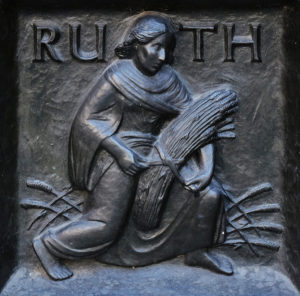
Ruth

Today’s reading:  Ruth 1-4

If someone asked you to describe your mother-in-law or daughter-in-law, what would you say? I feel like in our society today it is very rare you will hear raving reviews on either one. Most people I know talk about their mother-in-law as overbearing, criticizes everything they do, meddles in their marriage and how they raise their kids. It’s so sad to me that others don’t have great and special relationships with their in-laws. Fortunately, I can say I had one of the best. She was kind, patient, full of love, selfless, humble, God-centered, faithful, and unwavering. Unfortunately for me, God took her 2 years ago to spend eternity with Him. People couldn’t help but be drawn to her because of her character and how she loved others. She always put God first, was a faithful servant, and stood fast to His promises.

Our story today is about a daughter-in-law, Ruth, and her mother-in-law, Naomi. It’s a story about faithfulness, grace, and redemption. Naomi and her husband along with their two sons had moved to Moab from Bethlehem during a famine. Her husband dies while there and the sons marry Moabite women, Orpah and Ruth. After 10 years, both sons die so the three women start to head back to the land of Judah as they have heard the Lord has provided food to the nation. Now in these times, widows typically become poverty stricken. Just like my mother-in-law, Naomi had a selfless attitude. She recognized they most likely would be living a poverty style life and told both girls to go back to their homeland where the Lord can show favor on them and grant them another husband. They both resisted at first, but then Orpah went back. Ruth, however, would not leave Naomi. Ruth was not part of God’s chosen people but she had a great example in Naomi. She was drawn to Naomi and her God. Ruth followed Naomi’s selfless attitude as she could have gone back to her homeland to find another husband for herself and had a family. Instead, she stayed and remained faithful to her mother-in-law showing the love and kindness that had been shown to her.

Ruth finds a field to glean in order to provide for her and Naomi. Though Ruth may not have recognized God’s hand through this journey, He was there every moment. The field she ended up in “happened” to belong to Boaz, who “happened” to be a close relative (the only way to redeem the widow in those times). This was God’s hand at work; He is faithful. How many times has God been at work in our lives that we don’t even notice? God is always directing our lives for his purpose, we just may not see it or understand it at the time.

In the end, Ruth listens to Naomi’s instructions because she trusts her, which results in her marrying Boaz. Like Ruth, we all have someone in our life who is looking out for our best interest, whether it is a relative or a close friend. Treasure that person and lean into their love and faithfulness to you. God blessed Ruth because of her faithfulness. Her and Boaz had a son, Obed, and she becomes the great-grandmother of King David and a direct ancestor of Jesus! How awesome is that? Just think about the possibilities of who you were created to be, you just have to be willing to listen and be faithful to Him!

Danell

Samson: strong AND weak

Judges 13-16

“Then the Philistines seized Samson and gouged out his eyes; and they brought him down to Gaza and bound him with bronze chains, and he was a grinder in the prison.” Judges 16:21

The Bible has a lot to say about Samson. Four whole chapters are devoted to a character study of this strong man. Everyone tends to remember what the Bible says about Samson’s strength, but the biblical record tells us a lot more about this leader of ancient Israel.

The story of Samson is a study in contrasts – Tremendous feats of physical strength vs. spiritual shortcomings.

Samson lived in Israel during the period of the Judges. In fact, Samson was the last judge of Israel before Samuel. Soon after Samson’s death, Saul was anointed by Samuel as the first king of Israel. The period of the judges was certainly not a time of spiritual growth in Israel’s history. The people of Israel had gone downhill since the days of Moses and Joshua. Disobedience to the Word of the Lord was the reason for this downhill spiral. A “do your own thing” attitude characterized the age of the judges. Judges 17:6 and 21:25 state that “everyone did that which was right in his own eyes.” God permitted the enemies of Israel to come in and oppress and defeat His people because of their sin.

Periodically during these dark days the people of Israel cried out to the Lord for help. God then graciously raised up a judge to deliver them. But soon after they were delivered, they turned their backs on the Lord again and plunged into renewed idolatry and immorality. Against such a background Samson came on the scene – during a time of Philistine oppression. Right from the start Samson had everything going for him.

In chapter 13 we learn that Samson came from a solid home. He had godly parents who believed and worshiped the Lord. Furthermore, Samson was designated by God to be a deliverer of Israel from the hands of the Philistines (13:5). Victory was guaranteed. What more could one ask for? And then, of course, there were Samson’s physical attributes. Not only did God bless him with great physical strength but it seems that God gave him good looks as well. (An ugly Samson just could not have had the “success” that Samson had with the Philistine women!) On top of all this, we read further that God blessed young Samson and the Spirit of the Lord was at work in his life (13:24-25). To sum it up, Samson had everything going for him and apparently unlimited potential for success.

Instead of delivering Israel from the Philistines, Samson had delivered himself to the enemy. Who would have believed that this could ever happen to Samson–the teenager who had everything going for him? What went wrong, anyway?It doesn’t take much insight to discover the key to Samson’s downfall. It is found over and over again in chapters 14-16. Samson had no self control. He could not govern his passions. He was weak-willed and self-willed. What he wanted, he wanted now. “Not Thy will but mine be done” was Samson’s standard operating procedure. Look, for example, at Samson’s uncontrolled selfish passion in chapter 14:1-4. He saw a beautiful pagan Philistine woman and wanted her. His selfish response to the godly counsel of his parents was, “Get her for me, for she looks good to me.” Decisions made only on the basis of looks and pleasure are usually a sign of little self-control.

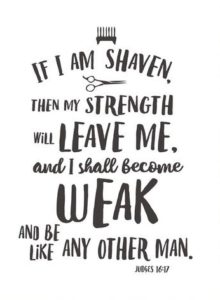
Look also at Samson’s weakness with Delilah in chapter 16. Because of his selfish “love” for this ungodly woman, Samson not only gave her the secret of his strength but he sold her his soul as well–“he told her all that was in his heart” (16:17). The almost unbelievable magnitude of Samson’s weakness is seen only when it is realized that he had three clear warnings of what was coming (16:8-14). How blind could Samson be–especially when Delilah had told him openly why she wanted to know his secret. “Please tell me where your great strength is and how you may be bound to afflict you(16:6).

How important it is for a growing Christian not to fall in love with an unbeliever. Love can be so blind at times that you do things you never dreamed possible–against all logic and common sense. What a mess you can get yourself into if you fall in love with a “Delilah”. No wonder God’s Word says that marriage between believers and unbelievers is wrong. (See 2 Corinthians 6:14.) Step by step Samson let his lack of self-control take over. He had taken the Nazarite vow as a youth, but one by one he was breaking the rules because of his undisciplined and selfish life. Samson ended up breaking every one of the rules because of his uncontrolled selfish desires.

We too may have a lot of God-given potential, but we may also lose all of it due to having no self control. Like Samson, we may come from a solid Christian background where we have been taught the precepts and principles of the Word of God. But like Samson, we may turn our backs on the clear teaching of God’s Word because we want to do our own thing and go our own way. Like Samson, we may have it all together in the physical area–good looks, talent, etc. But like Samson, we may take our God-given looks and talents and use them to indulge in selfish pleasure and passion.

Even our spiritual gifts can be misused and abused because of selfish interests and ambitions. Without self-control, a growing Christian with great potential strength will be as weak as Samson. In spite of Samson’s lack of self-control, God was still working with him and through him (see 14:4, 19; 15:14). And Hebrews 11:32 assures us that Samson had faith. All of this should be an encouragement to us who are constantly being tempted to do our own selfish thing.

God can still accomplish His purposes through us, but how much greater to yield to His control and realize our full potential.

Words Matter

Today’s Reading:  Judges 11-12

Today as we study Judges 11-12, we are focused on the Life of Jephthah.  I know I’ve read this story before, but only because I read the whole Bible in 2016.  When I read it again this week, I didn’t remember it.  Perhaps because I’m still not sure how to pronounce Jephthah’s name.  But more likely because it is an awful story.

According to Judges 11, Jephthah was the son of Gilead, a great warrior, and a prostitute.  Jephthah’s half-brothers ran him off to keep him from getting any of his father’s inheritance.  When the Ammonites were attacked the nation of Israel, they went to find Jephthah and recruited him to lead their army.  We know from Jephthah’s response, he was faithful to God.

“If I come with you and if the Lord gives me victory over the Ammonites, will you really make me ruler overall the people” (Judges 11:9)?

Long story short, Jephthah became commander of the Israelite army and led them into battle with the Ammonites.  His faith, however, didn’t keep him from making a rash, foolish promise to God.

“If you give me victory over the Ammonites, I will give to the Lord the first thing coming out of my house to greet me when I return in triumph.  I will sacrifice it as a burnt offering (Judges 11:30-31).

When Jephthah returned from the battle, his daughter was the first person out to meet him to celebrate the victory.  Verse 39 then tells us that Jephthah kept his vow.  Ugh.  Didn’t I say this story was awful?  Is it true?  Could Jephthah really have offered his daughter as a burnt offering to God?  Was that what God really expected?  To be honest, I’m not sure.  After reading a few arguments why Jephthah’s follow through may have been literal and others why it likely was not, I settled on this – for our purposes today, I’m not sure it really matters.  What I know for sure is God’s word is true, and God keeps his promises, without exception.  In the same way, God expects us to be truthful, and God expects us to keep our word, without exception.

Whether or not Jephthah’s vow was literal or not, we know that keeping his word came with a hefty price (Judges 11:34-35 gives evidence of his heartache).  We also know that God honored his faithfulness, as Hebrews 11:32 identifies Jephthah’s faith story along with those of Gideon, Barak, Samson, David, Samuel and all the prophets.

My challenge for us today is to think about the words we use, they matter.  Not keeping our word and/or telling half-truths are just different forms of lying.  All are displeasing to God and come with pretty serious consequences.

“But I tell you that everyone will have to give account on the Day of Judgment for every empty word they have spoken. For by your words you will be acquitted, and by your words you will be condemned (Matthew 12:36-37).

But the cowardly, the unbelieving, the vile, the murderers, the sexually immoral, those who practice magic arts, the idolaters and all liars—they will be consigned to the fiery lake of burning sulfur. This is the second death” (Revelation 21:8).