Jesus’s Ministry

Jesus’s life between age twelve and age thirty is a bit of a mystery. Nothing was recorded and it leaves me wondering, what was he like as a young man? He was fully God, yet fully man… sin free but still had the full range of human emotions. I remember back to specific points in my life in this span of time and I wonder – did he ever have the same experiences I did? Did his parents continue to worry about him? Did he surprise them again and again, like he did when they found him in the temple? Did he get scraped knees and what about math? Did math come easy to him? Did he have a good friend group that he confided in? Did he tell his parents about the future? It’s pretty amazing that Jesus walked this same earth and lived and breathed just like us.

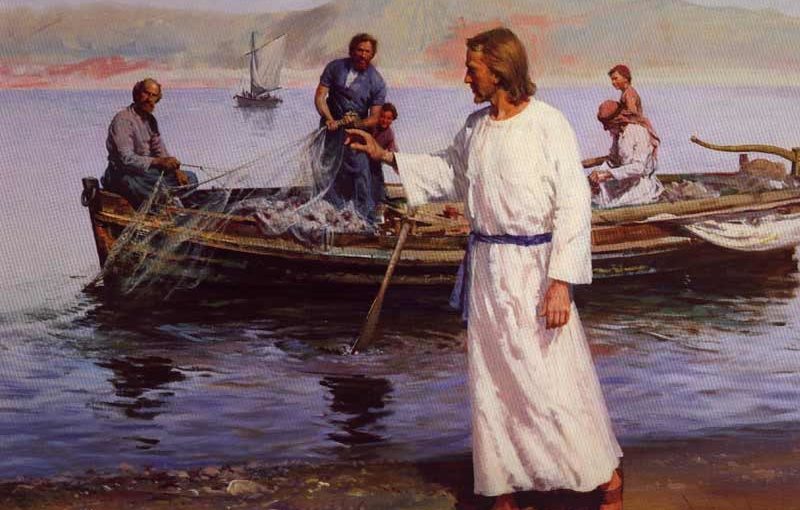
As we open up to Mark 1, Jesus is 30 years old and this chapter is full of Jesus’s ministry kicking off. His cousin, John the Baptist, has been preaching repentance and baptism to the Jews and prepping the people for Jesus to come. Jesus is baptized and tempted in the wilderness by Satan. Jesus then calls his first disciples, Simon, Andrew, James and John. They were fisherman by trade, and Jesus instructs them to follow him and become fishers of men, and they immediately obey. I wonder what they thought they’d be doing?!

During this first period of time in Jesus’s ministry, he is teaching and instructing his disciples, performing miracles of healing and driving out evil spirits. He also takes time to step away from the crowds and pray.

One thing that is evident in this chapter is that God had the details planned out. He used John to prepare the people for Jesus the Messiah to come. He prepared the fisherman to become disciples. Jesus waited for the right time to announce “the time has come, the kingdom of God is near, repent and believe the Good News”! John the Baptist and the disciples believed this to be their calling and went forward in faith. Without knowing how Jesus’s ministry would unfold, or how their lives would be impacted, they believed and acted. God had a plan for their lives and used each of them to accomplish his will.

In my early twenties, I worked in Chicago as a project manager. My boss was an executive of a large corporation, with a lot of influence and a lot of responsibilities. it was evident (in no time) that he was a Christ follower and his most important work was to be the hands and feet of Jesus. It wasn’t the Bible on his desk that gave it away – it was how he cared for each person he interacted with, from the doorman to his own boss. He would ask about their family and how he could pray for them. He had real conversations about real stuff, not just pleasantries. He didn’t worry about oversharing or overstepping his boundaries with religion in the workplace – ‘God would take care of that’. Our offices were separated by a thin wall, and for three years I was able to witness his “work”. I learned so much from observation alone – not to mention all the ways he directly mentored and encouraged me. I could fill a book with the scriptures and wisdom he shared – one thing that reminds me of our passage today is a belief he has:

My desk is my alter, my work is an extension of his ministry.   

He believed this and he lived it. He saw his position as one given to him so he could have more opportunities to talk to people about Christ. To help people. To share with people. Yes, he had important business to do, but he had even more important kingdom work to focus on. He reminds me of the fisherman turned disciples… yes, they knew how to fish – but Jesus was teaching them how to REALLY FISH!

I love how God positions each of us to be a part of his kingdom. From John the Baptist, to the disciples, to you and me. It’s pretty humbling that each of us are not just called, but also equipped, to be an extension of his ministry.


 

In My Father’s House

As a kid I worked hard to avoid going to church. Hiding under the bed, faking an illness, often hoping my parents would forget it was Sunday (which they never did).

It wasn’t that I didn’t like being there, it was more about wanting to do something else like sleeping or playing outside.

The childlike pattern went on for way too long, but in January 2005 everything changed. There was a church just down the street that Amy and I had heard was pretty good and a little voice inside me said, “if not now, when?” So we went and never looked back.

At Eastview Christian Church, we found authentic teaching and worship changing our hearts like never before as we came to a deeper understanding of the cost of sin and the value of grace.

From the first time we went, we didn’t miss a Sunday (apart from being out of town) all the way until May 2018 when we packed up and moved out of the country. This “not missing” had nothing to do with checking a box, no bonus points with God, nor from anyone. We longed to go. We loved to go.

Last week I took the opportunity to travel back to the USA. First stop, Normal Illinois and then directly to Eastview for their night of worship on Good Friday, then back again on Easter Sunday.

There were many joyful reunions; big extended warm hugs with tears of joy and lots of smiles. Most important, once again I felt at home, in my Father’s house. Heaven will have similar feelings and realizations. Truth, peace, joy, praise, love, and awestruck wonder as the name of Jesus Christ is proclaimed as King of Kings.

Please take the time to read Luke 2. It is rich with content. The birth of Jesus, angels speaking, prophecy fulfillment, insights into Jesus as a young boy and much more!

Luke 2:41-51 provides an account of Jesus at age 12 going missing then being found by his parents in the temple.

And he said to them, “Why were you looking for me? Did you not know that I must be in my Father’s house?” (Luke 2:49)

Jesus had an earthly mother and father, but he also knew of his Father in Heaven and he also considered the temple “his father’s house”. Physically I do not believe there is anything super spiritual the structure of our churches; what is important is what happens inside and the life change as the people live out what was taught.

There’s a song that we joyfully sing from our couch as we watch eastview.church online and have sung many times there in person. It is a song about our identity, not what the world tells us but who God says we are.

It acknowledges our Father’s house as a place for us.

Who the Son sets free
Oh is free indeed
I’m a child of God
Yes I am
In my Father’s house
There’s a place for me
I’m a child of God
Yes I am (Who You Say I Am – Hillsong Worship)

Here’s a link to the full song on YouTube: Who You Say I Am. Powerful lyrics and all powerful object of worship. Praise God.

Good News

Today’s reading:  Luke 1

Today we launch into a six-week study of the life of Jesus Christ as recorded in the first four books of the New Testament – Matthew, Mark, Luke and John.  These four books are referred to as The Gospels, or good news.  What is the good news?  From my perspective, it can be summed up in one short verse.

For God so loved the world that he gave his one and only Son, that whoever believes in him shall not perish but have eternal life (John 3:16).

As we study over the next six weeks, how can we continually keep this truth on our hearts and in our minds?  Will our study be more meaningful if, with each passage, we take time to remember every single one of them is intended to point us to Jesus Christ our Savior?  Let’s try it.

Our text for today is Luke 1 – the birth of John the Baptist foretold, the birth of Jesus foretold, Mary visiting Elizabeth, the birth of John the Baptist and Zechariah’s prophecy.  These stories are familiar to many of us.  Rather than focus on the storyline, I’d like to begin our study in Luke 1 by focusing on verses 1-4.  What these verses tell us about the author and his commitment to sharing the good news of Jesus Christ is significant.

Many have undertaken to draw up an account of the things that have been fulfilled among us, just as they were handed down to us by those who from the first were eyewitnesses and servants of the word.  With this in mind, since I myself have carefully investigated everything from the beginning, I too decided to write an orderly account for you, most excellent Theophilus, so that you may know the certainty of the things you have been taught (Luke 1:1-4).

A few interesting facts I learned this week that emphasize Jesus Christ is good news wrapped in a person:

  • Luke is the only one of the gospels that was written by a gentile (Matthew, Mark and John were all Jews). Why is this significant?  The saving grace of Jesus Christ is available to anyone who puts their faith in him.  Knowing part of the Bible, the inspired word of God, was written by an author outside of the Jewish community helps gentiles (or non-jews like most of us) see themselves as part of the good news story.
  • Luke was not one of Jesus’s apostles.  He did not personally walk with Jesus during his earthly ministry.  According to verse 2, he interviewed many eyewitnesses and completely investigated everything.  The evidence he found to support Jesus as the long-awaited Messiah must have been overwhelming.  He couldn’t keep it to himself, but had to share the good news.
  • Luke was a physician.  He captured more detail than the other gospels, as the book of Luke is the most complete record of Jesus birth and childhood.  Rather than just focusing on the storyline, Luke emphasized Jesus’ tenderness, care and kindness toward people throughout his writing.  A Savior who humbled himself and became a servant to all is a leader I want to follow.  That is good news.
  • Luke addressed this letter to Theophilus (verse 4), or “Lover of God”.  While many interpreters consider this to be a specific person, it could also have generically meant any Christfollower.  According to verse 2, Luke’s objective was not to provide Theophilus with an historical justification of the Christian faith (did it happen), but to encourage faith by connecting the dots on what happened and what the good news really meant.

The good news of Jesus Christ impacted the life of Luke so significantly he was compelled to pass it on by writing this letter.  As we study together over the next six weeks, I dare you to ask God to speak to you through his word.  God used Luke to write part of the New Testament.  Who knows what he has in store for you.

Isaiah 55

Today’s reading is from Isaiah 55

Easter is still on my mind. I remember watching the Passion of The Christ when it came out at the movie theaters in 2004. I was so emotional as I watched, instead of read, all that Jesus endured to get to the cross. So overwhelming. Reading the words on the page I can easily skim over the flogging and the beating, but to watch it acted out in real time is another experience entirely. Half the time I had to look away. It was too much. I wanted to yell at it to stop and then get up and leave. But knowing that it was “My Jesus” made me not able to get up and walk out. This is the Jesus I said yes to many years ago but I had never put a visual connection to His sacrifice until that movie. I couldn’t walk away from that moment and forget about it because it wasn’t just a movie for me. It is the core of my belief about God and Jesus and His plan for this world. I wasn’t a spectator to some fairy tale but rather watching the very thing that I believe and center my life upon.

I am amazed when I think about Isaiah prophesying about this moment before it even happened.  He spoke of the Messiah being beaten and sacrificed, but also the hope and the beautiful plan for our forgiveness through Christ. A plan that was so beyond what we would expect. In Isaiah 55 he starts out by saying that this message is for EVERYONE! It is for those who are thirsty yet have no money to buy anything and it is for those who have plenty but aren’t satisfied. He urges them to seek the Lord while there is still time and to listen. Isaiah 55:3 says, “Come to me with your ears wide open. Listen, for the life of your soul is at stake”. He was preparing the way for the Messiah, but why would God save the world and our souls this way? Surely there was a better option that didn’t require so much pain.

Isaiah 55:8-9 “My thoughts are completely different from yours,” says the Lord. “And my ways are far beyond anything you could imagine. For just as the heavens are higher than the earth, so are my ways higher than your ways and my thoughts higher than your thoughts.”

Who am I to question the divine plan of the almighty? Instead I will humbly accept the sacrifice that I do not deserve.  The ultimate sacrifice paid on my behalf. I am humbled and thankful and overwhelmed.

Shelly


Suffering Servant

Today’s Reading: Isaiah 53

Isaiah 53:1 Who has believed our message and to whom has the arm of the Lord been revealed?

In the last few weeks in our home, we have had many conversations about Easter and its meaning. It took a little while to get past the newness of peeps and candy filled eggs with our boys, but eventually we landed on the story of Jesus. Simultaneously, our small group has gone through a six-week study called The Easter Experience by City on a Hill productions. This has led us up to celebrating Easter this past weekend.  In the midst of all of these conversations and scripture reading around Easter it has allowed us more time to reflect around what Jesus physically went through in addition to His willingness to die upon that old rugged cross.
In our group we have read various scriptures leading up to this event and asked each other, ” Who would you most identify with at this moment?” One of the two thieves, Peter, Judas, Mary, one of the guards or on-lookers? We  had the opportunity to watch some difficult video that visually shows his pain and suffering. As we landed on Isaiah 53 its amazing to see how over 700 years earlier Isaiah was prophesizing this day to come.  It’s fitting that Isaiah means “God is salvation” in Hebrew.

Another interesting fact that I learned this week while learning more about Isaiah 53  is how the total chapters in Isaiah is equal to the old testament and the new testament. (66) our Sovereign Lord always shows his authority in so many ways.

Now Isaiah 53 has so many truths we can take away.  I would encourage you to read slowly Isaiah 53:1-12.  If we had only had Isaiah 53 we would understand the birth, life, death, and resurrection of our Lord. We have fallen short, and like sheep needing a shepherd,  there is only one person who can save us,  Jesus.  The suffering that Jesus went though He did not deserve.  All of it. Its unimaginable that the sins He died for on the cross include my sins today.  And even though Jesus didn’t deserve any of it, He took them all.

Mark 10:45 For even the Son of Man did not come to be served, but to serve, and to give his life as a ransom for many.”

Surely he took up our pain and bore our suffering, yet we considered him punished by God, stricken by him, and afflicted. 5 But he was pierced for our transgressions, he was crushed for our iniquities; the punishment that brought us peace was on him, and by his wounds we are healed.6 We all, like sheep, have gone astray, each of us has turned to our own way; and the Lord has laid on him the iniquity of us all.

It’s hard to even imagine, I take it for granite daily.  No,  there’s nothing I can do to pay Him back.  I simply give thanks, pray to be obedient, lovingly trust Him with all aspects of my life to the best of my human possibility.  We deserved the death, but Jesus took it for all of us.  We thank you, praise you, and love you.

 We are therefore Christ’s ambassadors, as though God were making his appeal through us. We implore you on Christ’s behalf: Be reconciled to God. 21 God made him who had no sin to be sin[b] for us, so that in him we might become the righteousness of God. 2 Corinthians 5:20-21.

From Suffering Servant to Glorious King.

Two elements of a suffering Servant


Todays Reading : Isaiah 52

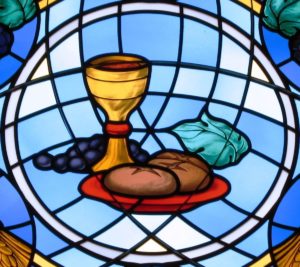
The two elements that I think about during Easter are the bread and wine.  Two items that were the reminder of the Passover feast have become the representation of Christ’s new covenant with us.  But the choices of these elements werevery intentional and purposeful.  Christ chose these to give us a true representation of the sacrifice and process that would be necessary for our salvation.

During the traditional Paschal Feast, a lamb has to be sacrificed and the blood placed on the doorpost of the family to show that there had been proper sacrifice to atone for the sins of the family.  The process of sacrificing a lamb begins with the lamb being brought into the house of the family.  The lamb is brought into the house four days before the sacrifice. This originally was to emphasize the meaning of the sacrifice to the Egyptians, but then it became a symbol of the closeness that you had to be to the sacrifice.  The lamb had an intimate bond with the family and you knew the cost of the life given for you.  The lamb was taken care of and not harmed before the sacrifice.  Jesus was familiar with this custom as he was practicing his faith; but, he is revealing a new type of intimacy and price for sacrifice.

The elements that he intentionally uses are common among the people and they also have strong meanings.  Bread has been for several centuries the sign of health and food. Many times the people were so hungry that they only had a small piece of bread to eat and sometimes it was not available daily.   But Jesus had a different view of bread.  The seed of the wheat, first, has to be buried before it sprouts new life. Then once the wheat has grown, it has to be harvested and threshed.  The outer coating of the seed has to be broken to allow the inside of the seed to be use for nourishment.  Next the seed has to be crushed and grounded into a powder or flour.  Next the flour has to be worked until it is suitable for the loaf.  The process that transforms the seed into the bread, completely changes the form and the nature of the wheat.

The next element that he uses for the new covenant is the wine. Wine has for ages been the vehicle for celebrations, healing and ceremonies.  From ancient times to the modern times, wine was used to purify water in order to make it potable.  But the process of making wine is a very intricate process.  The vinedresser finds the correct fruit and then properly harvests the grapes.  Then the grapes are placed in a wine vat and pressed with extreme hard labor that crushes the skin and the essence of the grape.  The result is pulp and juice.  Then the juice and the pulp are stored for a time until the correct amount of fermentation has occurred and then the wine is ready to consume.

With the understanding of these elements it is easy to understand the verse of today: Isaiah 52:13-15

Behold, my servant shall act wisely;[b]
he shall be high and lifted up,
and shall be exalted.
14 As many were astonished at you—
his appearance was so marred, beyond human semblance,
and his form beyond that of the children of mankind—
15 so shall he sprinkle[c]many nations.
Kings shall shut their mouths because of him,
for that which has not been told them they see,
and that which they have not heard they understand.

Jesus was preparing us in the last supper for the transformation that was about to take place.  He was showing us that these were the true representation of His body and what was going to happen to it.  The process of his sacrifice was going to be unlike that of the traditional Paschal Lamb, he would have to endure a process that would change the physical, emotional and spiritual forms to produce something that was more power. He would not be recognized after the process.  “As many were astonished at you— his appearance was so marred, beyond human semblance,and his form beyond that of the children of mankind.”  This was the preparation to the eternal.  This is one reason that the women who came to see him after the resurrection didn’t recognize him, because they saw the marred and crushed body of the Messiah before he was transformed.   I am thankful for the sacrifice and the transformation of the body for my salvation.

Father,

Thank you for the awesome sacrifice and humility you endured to save us.  Thank you for the redemption and the elements to remind us of the love, power and glory you have.  Thank you for the remembrance of your victory over death and sin.  Amen.


Plugged In


A common occurrence in our house is phones dying.  We have charging cords everywhere, in the kitchen, bedrooms, living room and even the car!  Sadly, the older the phones get, the quicker they lose their power and die.  We all know when we get the first warning at 20%, that we need to find a charger as soon as possible.

Where do you find your power?  Your strength to make it through another day?  It seems like it would be an easy fix to just plug in to a power source when we feel drained and overwhelmed and then be all set to go again.  There are many “power sources” that we try to use to fill us back up when we are drained.  We may try working out, taking a nap, reading, chatting with a friend at a coffee shop, going for a walk, having a glass of wine, or enjoying time with friends.  All of these are fine things and can help to revive us for a while.  But they are all temporal fillings.  They will not sustain us over the long haul or bring us consistent peace.

Tomorrow is the greatest celebration of the year!  A day to focus, remember and worship our Lord, Jesus Christ who Rose from the dead for You and for Me!  The power of His resurrection is the power that we have to tap into daily/hourly to keep going in this life.

Today our reading is Isaiah 40.  The Israelites had experienced the power of God.  They were delivered from slavery.  God gave them a cloud to follow by day and a fire by night.  They experienced food (manna) falling from the sky every morning.  And, they had their enemies delivered right into their hands.  

Even after experiencing all this power from God, the Israelites moved away from their source of power.  Praying became less of a daily habit.  Keeping the 10 commandments became optional.  Parents stopped talking about God with their children.  Judges became unjust.  And as a nation, their faith slowly fell away.  They separated themselves further and further from their Creator, and because of this they became exhausted.

Do you relate to this?  Has praying become a ritual that happens only before meals or only at Church?  When was the last time you sat down to read the Bible for an extended period of time?  Do you talk to your children about faith and what it looks like in your personal life?  Have you become exhausted like the Israelites and let your faith take a back seat or fall to the side? There are many times I fail at these things.

The truth is, we were made to be in deep connection with God (our power source).  We are called to pray without ceasing.

Rejoice always, pray without ceasing, give thanks in all circumstances;  for this is the will of God in Christ Jesus for you.                                                                               1 Thessalonians 5:17 & 18

If we have fallen away from our power source, that is when we find our batteries dying and life becomes exhausting.

But, thank You Jesus for your power!  Your power on the cross.  You died that we may have life, and have it abundantly.  The moment we turn to you, pray to You, read Your Word, and tell others about You, we will find our energy return.  

Have you not known?  Have you not heard?  The Lord is the everlasting God, the Creator of the ends of the earth.  He will not grow tired or weary, and his understanding no one can fathom.  He gives strength to the weary, and increases the power of the weak.  Even youths grow tired and weary, and young men stumble and fall;  but those who hope in the Lord will renew their strength.  The will soar on wings like eagles;  they will run and not grow weary, they will walk and not be faint.

Isaiah 40:28-31

He Is Risen!  Plug into the one and only TRUE power Source, Jesus Christ our Risen Lord!

Repaired & Restored

Today’s reading is Job 42.

There’s a centuries-old long-standing tradition in Japan called “Kintsukuroi”, or “golden repair”, that pertains to broken pottery. When a cup, bowl, vase, or other piece of pottery breaks into pieces, a craftsman will repair it by mending those pieces back together with a lacquer filled with golden powder. This results in a piece of pottery similar to the original, but covered in beautiful streaks of gold. This is done not only for practical repairs, but to highlight how something broken can retain its worth and usefulness, even taking on new beauty as its past flaws and damage are appreciated in a new light, and ultimately being more lovely than before.

Throughout the chapter of Job, we’ve seen one of God’s most faithful servants enduring overwhelming hardship and sorrow, fighting with anger at God and questioning his motives. We see his friends attempting to get Job to confess to whatever sins he committed to displease God and cast this fate upon himself. But after listening patiently for the Lord and learning to accept His will no matter what, Job finally realizes his need for repentance in this passage. He comes to God, admitting: “I know that you can do all things; no plan of yours can be thwarted”. Even after all the suffering he has endured, Job admits first and foremost that God is all-powerful and just, no matter what happens to him. And when he finally repents in this way, the Lord restores his lost fortunes to nearly double what he had lost.

Losing sight of God’s control tends to bring about a lot of questions. It’s easy to question how sovereign the Lord is or how good His plan is whenever difficulties present themselves: “Why would God let this happen to me?” “Is God punishing me for something I did?” “How am I responsible for this?” Even Job, about whom the Lord himself says “there is no one on earth like him; he is blameless and upright, a man who fears God and shuns evil,” had to endure great suffering at Satan’s hands. And even then, after facing similar questions yet ultimately holding fast to his faith, Job knows and proclaims that the Lord alone knows what is right.

When difficult times overtake our lives, it’s easy to feel attacked or abandoned by God. People often pray for complete avoidance of all trials and perfect, blameless lives, then feel let down when they experience harsh realities instead. But unfortunately, we live in a world enraptured by sin, where bad things happen to both bad and good people alike. We can think of ourselves as righteous believers whom God is punishing and become angry or confused with Him, but the truth is all of us live in a fallen world where all people must deal with the consequences of humanity’s sinful nature. Let’s face it, we’ll never know for sure why He allows these bad things to happen: some things are just too infinite and complex for us to comprehend.

But as Romans 8:28 tells us, “We know that in all things God works for the good of those who love him, who have been called according to his purpose.” We can rest assured that no matter what comes our way, God is working in our favor always. We know God uses our worst hardships and trials every day to create beautiful moments pointing towards His love and redemption. We become broken, imperfect, destroyed by sin, left tainted and worthless; mere pieces of God’s image of us. But in our struggles, when we proclaim that God is in control and He is righteous and just, He will take care of us and help us heal. Only in Him can our broken pieces, shattered and left imperfect by a sinful world, be mended into a beautiful reminder of how God will always make us whole. Job goes from a lowly sinner, ravaged by death and fire and illness, into a blessed and wealthy upright family leader. But his restoration to former wealth and beyond is not the focus; God could have rewarded Job with no earthly gifts and the ultimate reward of eternity with Him would be the same. And when we too surrender all control to God in our times of questioning and anger and sin, he repairs us and makes us whole, gifting us eternity by His side. We go from shattered remnants to beautiful vessels, yearning to be filled with the Holy Spirit. So when trouble comes your way, big or small, remember that God has a perfect plan that He is putting into action right now, where he will carry your through your toughest times and make you whole again in Him.

– Ross B.

Eternal Perspective

Today’s reading is Job 38.

Yesterday, we read Job 1-2, so we know Job was a man who had it all so to speak…personal wealth/possessions, family, and health. Then, it was all taken from him. Like mine, your Bible may have headings for the chapters of the book of Job that follow. Just a quick skim of these can show you the many emotions and feelings of Job through troubling times which are likely some of the same we have during trials.

In March of 2018, Coach Tony Bennett and his Virginia Cavaliers basketball team became the first #1 seed to ever lose to a #16 seed in the NCAA Men’s Basketball Tournament. Some would be right in saying this disgrace is not worse than divorce, poor health, or financial troubles, but no doubt this disgrace was bad and in the public spotlight. It seemed like every year it would come up that a #1 had never lost to a #16 with many experts saying it would never happen. Not only did Virginia lose, they lost badly. While Coach Bennett’s teams had done well in recent years, many had already questioned him and his coaching strategy which is different than the norm in college basketball with hard-nosed defense and a slow style of play that many call boring to watch. Many also questioned his coaching style which showed little fire and emotion on the outside in that game, as it does in every game. What would critics say now, and how would Coach Bennett react to the loss? Well, not only did he give credit to the other team for their play in his interview outside of the locker room immediately following the game, but he admitted they simply “got their butts whooped.” Then, he followed up by saying, “I’m trying to tell the guys in there..this is life. It can’t define you. Enjoy the good times and you gotta be able to take the bad times.”

Although he didn’t state it on the outside to the public, I would imagine Tony Bennett had his Job-like moments privately to himself, if not verbally to family or those closest to him. He likely wondered what God’s plan was in all of this and why God let it happen to Him, a faithful Christ follower who likely also plays by the rules when many coaches in college basketball don’t. He may have even wondered if his critics of his slow down coaching strategy and calm demeanor were right. Could he really get the job done? If Tony Bennett thought these things, we do not know what the Holy Spirit may have said to him. However, we do in fact, know what God said to Job here in Job 38. God reminded Job that he in fact was sovereign and in charge. In Job 38:4-6 He states, “Where were you when I laid the foundation of the earth? Tell me, if you have understanding. Who determined its measurements-surely you know! Or who stretched the line upon it?” God continues to speak to Job with this message and in Job 38:12 says, “Have you commanded the morning since your days began, and caused the dawn to know its place?” If we read on to Job 42, Job ultimately confesses and repents, and God rewards Job for that confession and repentance by giving him twice as much as before (Job 42:10-12).

Ultimately, Job did not think that God knew the physical and emotional pain and public disgrace he was going through. Thankfully, we know that now through Jesus, God experienced every type of pain we have. Knowing of His upcoming scourging and crucifixion, He experienced emotional stress so great that when He prayed in the Garden of Gethsemane He sweated drops of blood (Luke 22:44). He experienced relational distress and abandonment of those He thought were friends when one of His 12 closest friends, Judas, betrayed Him leading to His death (Luke 22:48), not to mention another one of his 12 closest friends Peter denying He knew Him not once but 3 times (Luke 22:54-62). He even had family relational turmoil and abandonment with His brothers telling Him to leave and not believing Him (John 7:3-5). He experienced public disgrace and embarrassment when the soldiers mocked Him (Luke 22:63-65), and the crowds yelled “Crucify Him! Crucify Him!” requesting the release of a murderer in Barabbas instead of Him (Luke 23:18-21). Wait…even Jesus experienced the unfairness of bad things happening to good people and good things happening to bad people!? And of course, He experienced the physical pain of the scourging (John 19:1) and then being nailed to the cross (John 19:18). How blessed are we that during trouble times we can have peace knowing that we can talk to and pray to God who felt what we are feeling?

Just a year later here in 2019, after being down in the first round to a #16 seed again by 14, Coach Tony Bennet’s team won the national championship! Coach Bennett said he played the song Hills and Valleys by Tauren Wells for his team before the game. He said, “It just means that you’re never alone in the hills or in the valleys. And we faced those from last year to this year. But the credit goes to those young men, and I can’t wait to celebrate with my wife and my kids and my parents. And I do want thank my Lord and Savior.” He also said, “I think there was a bigger plan going on here. I wasn’t needed but I was used in it, and I hope that it’s message for some people that there can be hope and joy in resiliency and I’m thankful for what happened.” I’m sure he wasn’t thankful last year after the loss, but now the bigger picture and plan can be seen.

When we take an eternal perspective on the hills and in the valleys, it changes everything. As we reflect on Maundy Thursday today, Good Friday tomorrow, and Easter Sunday, let us not forget that our story is part of God’s story. He took the absolute worst event in the history of mankind, the only truly innocent person to ever walk the earth being tortured and killed, and turned it into the greatest event in the history of the mankind…brining us together into oneness with Him through the forgiveness of sins which gives us eternal life.

Coach Tony Bennett quoted to his team last year after their terrible loss Psalm 30:5 which says, “Weeping may tarry for the night, but joy comes with the morning.” Joy truly does come with His resurrection on Easter morning. It not only means that we can face whatever trials this life brings, but most importantly, it means He conquered death, and now so can we.

https://www.youtube.com/watch?v=8iDuZv_5MQk

Love/Hate


Job chapters 1&2

I think I have a love/hate relationship with the book of Job. I find things in this book that disturb me, that I find beautiful, that I fear, and some things that I don’t understand. So let’s read through and I’ll point out along the way some of these “loves” and “hates”.

Chapter 1 Vs 5- “love” As a dad Job was concerned that his children may have offended God and would get up early to make a sacrifice on their behalf to God. Also it mentions that, “This was Job’s regular practice”.  Am I characterized by a regular practice of praying for my kid’s hearts to be Gods?

Vs 6- “hate” Satan presented himself before the Lord. I don’t like the idea of this because I don’t understand it. (I thought that God couldn’t be in the presence of evil because of His holiness.)  “love” I know that Satan is accountable to God and that Satan can only do what God allows him to do. God is in control.

Vs 8- “hate” The Lord asked Satan if he had noticed Job. This entire mess was God’s idea not Satan’s? God is in control.

Vs 9- “love” Even Satan recognizes God’s love and protection for us. God is in control.

Vs 12- “hate” I dislike that Satan is allowed to work in a person’s life to this degree, but I “love” how it is clear in this conversation Who is setting the ground rules for the test. God tells Satan not to mess with Job physically. God is in control.

Vs 21- “love” After losing everything and everyone in his family besides his wife, Job fell to the ground and praised the name of the Lord. Would I respond to these circumstances in this way?

Chapter 2 Vs 3- “hate” Again Satan comes to the Lord and the Lord asks if Satan has noticed Job. “love” God’s thoughts on Job after Satan has taken horrendous pot shots at Job. “Job is the finest man in all the earth, he has maintained his integrity even though you urged me to harm him without cause.” I “love” that God defends Job to Satan, pointing out that Satan is not as powerful as he wishes he was. God is in control.

Vs 6- “hate” God allows Satan to take Job’s health, but I “love” that again God sets the parameters for this and only allows Satan to mess with his health. Satan is forced to spare Jobs life. God is in control.

Vs 9- “hate” I hate for Job’s wife that she is recorded in the Bible advising her husband to curse God and die. (I have to share the note in my Bible for this verse as I have wondered why Job’s wife was spared when the rest of his family was not. It says, “ It is possible that her very presence caused Job more suffering through her chiding and sorrow over all they had lost.”)

Vs 10- I “love” Job’s response to his wife. “Should we accept only good things from the hand of God and never anything bad? Do I have this much integrity?

Vs 11- “love” When Job’s friends heard about what had happened to him they went together to him to comfort and console him. Do I make myself available to comfort and console friends who need it?

Vs 13- “love” Job’s friends sat on the ground with him for seven days and seven nights. No one said a word to him for they saw that his suffering was too great for words. This verse is beautiful. The note in my Bible explains that according to Jewish tradition, people who come to comfort someone in mourning should not speak until the mourner speaks. Am I willing to consider that people might be better helped and loved by my presence, than my attempt at insightful words?

After reading through these chapters again today, there are still things I do not understand. This is a good thing. If I understood God fully, He would not be who He says He is. My human limitations cannot comprehend all of God. Praise Him that He is above all gods, mighty, holy, ultimate truth, creator, faithful, deliverer, just, our keeper, our offering, sovereign Lord, our help and our strength. God is in control of all!  This I LOVE more than I have words to express.