Eternal Perspective

Today’s reading is Job 38.

Yesterday, we read Job 1-2, so we know Job was a man who had it all so to speak…personal wealth/possessions, family, and health. Then, it was all taken from him. Like mine, your Bible may have headings for the chapters of the book of Job that follow. Just a quick skim of these can show you the many emotions and feelings of Job through troubling times which are likely some of the same we have during trials.

In March of 2018, Coach Tony Bennett and his Virginia Cavaliers basketball team became the first #1 seed to ever lose to a #16 seed in the NCAA Men’s Basketball Tournament. Some would be right in saying this disgrace is not worse than divorce, poor health, or financial troubles, but no doubt this disgrace was bad and in the public spotlight. It seemed like every year it would come up that a #1 had never lost to a #16 with many experts saying it would never happen. Not only did Virginia lose, they lost badly. While Coach Bennett’s teams had done well in recent years, many had already questioned him and his coaching strategy which is different than the norm in college basketball with hard-nosed defense and a slow style of play that many call boring to watch. Many also questioned his coaching style which showed little fire and emotion on the outside in that game, as it does in every game. What would critics say now, and how would Coach Bennett react to the loss? Well, not only did he give credit to the other team for their play in his interview outside of the locker room immediately following the game, but he admitted they simply “got their butts whooped.” Then, he followed up by saying, “I’m trying to tell the guys in there..this is life. It can’t define you. Enjoy the good times and you gotta be able to take the bad times.”

Although he didn’t state it on the outside to the public, I would imagine Tony Bennett had his Job-like moments privately to himself, if not verbally to family or those closest to him. He likely wondered what God’s plan was in all of this and why God let it happen to Him, a faithful Christ follower who likely also plays by the rules when many coaches in college basketball don’t. He may have even wondered if his critics of his slow down coaching strategy and calm demeanor were right. Could he really get the job done? If Tony Bennett thought these things, we do not know what the Holy Spirit may have said to him. However, we do in fact, know what God said to Job here in Job 38. God reminded Job that he in fact was sovereign and in charge. In Job 38:4-6 He states, “Where were you when I laid the foundation of the earth? Tell me, if you have understanding. Who determined its measurements-surely you know! Or who stretched the line upon it?” God continues to speak to Job with this message and in Job 38:12 says, “Have you commanded the morning since your days began, and caused the dawn to know its place?” If we read on to Job 42, Job ultimately confesses and repents, and God rewards Job for that confession and repentance by giving him twice as much as before (Job 42:10-12).

Ultimately, Job did not think that God knew the physical and emotional pain and public disgrace he was going through. Thankfully, we know that now through Jesus, God experienced every type of pain we have. Knowing of His upcoming scourging and crucifixion, He experienced emotional stress so great that when He prayed in the Garden of Gethsemane He sweated drops of blood (Luke 22:44). He experienced relational distress and abandonment of those He thought were friends when one of His 12 closest friends, Judas, betrayed Him leading to His death (Luke 22:48), not to mention another one of his 12 closest friends Peter denying He knew Him not once but 3 times (Luke 22:54-62). He even had family relational turmoil and abandonment with His brothers telling Him to leave and not believing Him (John 7:3-5). He experienced public disgrace and embarrassment when the soldiers mocked Him (Luke 22:63-65), and the crowds yelled “Crucify Him! Crucify Him!” requesting the release of a murderer in Barabbas instead of Him (Luke 23:18-21). Wait…even Jesus experienced the unfairness of bad things happening to good people and good things happening to bad people!? And of course, He experienced the physical pain of the scourging (John 19:1) and then being nailed to the cross (John 19:18). How blessed are we that during trouble times we can have peace knowing that we can talk to and pray to God who felt what we are feeling?

Just a year later here in 2019, after being down in the first round to a #16 seed again by 14, Coach Tony Bennet’s team won the national championship! Coach Bennett said he played the song Hills and Valleys by Tauren Wells for his team before the game. He said, “It just means that you’re never alone in the hills or in the valleys. And we faced those from last year to this year. But the credit goes to those young men, and I can’t wait to celebrate with my wife and my kids and my parents. And I do want thank my Lord and Savior.” He also said, “I think there was a bigger plan going on here. I wasn’t needed but I was used in it, and I hope that it’s message for some people that there can be hope and joy in resiliency and I’m thankful for what happened.” I’m sure he wasn’t thankful last year after the loss, but now the bigger picture and plan can be seen.

When we take an eternal perspective on the hills and in the valleys, it changes everything. As we reflect on Maundy Thursday today, Good Friday tomorrow, and Easter Sunday, let us not forget that our story is part of God’s story. He took the absolute worst event in the history of mankind, the only truly innocent person to ever walk the earth being tortured and killed, and turned it into the greatest event in the history of the mankind…brining us together into oneness with Him through the forgiveness of sins which gives us eternal life.

Coach Tony Bennett quoted to his team last year after their terrible loss Psalm 30:5 which says, “Weeping may tarry for the night, but joy comes with the morning.” Joy truly does come with His resurrection on Easter morning. It not only means that we can face whatever trials this life brings, but most importantly, it means He conquered death, and now so can we.


https://www.youtube.com/watch?v=8iDuZv_5MQk

Love/Hate


Job chapters 1&2

I think I have a love/hate relationship with the book of Job. I find things in this book that disturb me, that I find beautiful, that I fear, and some things that I don’t understand. So let’s read through and I’ll point out along the way some of these “loves” and “hates”.

Chapter 1 Vs 5- “love” As a dad Job was concerned that his children may have offended God and would get up early to make a sacrifice on their behalf to God. Also it mentions that, “This was Job’s regular practice”.  Am I characterized by a regular practice of praying for my kid’s hearts to be Gods?

Vs 6- “hate” Satan presented himself before the Lord. I don’t like the idea of this because I don’t understand it. (I thought that God couldn’t be in the presence of evil because of His holiness.)  “love” I know that Satan is accountable to God and that Satan can only do what God allows him to do. God is in control.

Vs 8- “hate” The Lord asked Satan if he had noticed Job. This entire mess was God’s idea not Satan’s? God is in control.

Vs 9- “love” Even Satan recognizes God’s love and protection for us. God is in control.

Vs 12- “hate” I dislike that Satan is allowed to work in a person’s life to this degree, but I “love” how it is clear in this conversation Who is setting the ground rules for the test. God tells Satan not to mess with Job physically. God is in control.

Vs 21- “love” After losing everything and everyone in his family besides his wife, Job fell to the ground and praised the name of the Lord. Would I respond to these circumstances in this way?

Chapter 2 Vs 3- “hate” Again Satan comes to the Lord and the Lord asks if Satan has noticed Job. “love” God’s thoughts on Job after Satan has taken horrendous pot shots at Job. “Job is the finest man in all the earth, he has maintained his integrity even though you urged me to harm him without cause.” I “love” that God defends Job to Satan, pointing out that Satan is not as powerful as he wishes he was. God is in control.

Vs 6- “hate” God allows Satan to take Job’s health, but I “love” that again God sets the parameters for this and only allows Satan to mess with his health. Satan is forced to spare Jobs life. God is in control.

Vs 9- “hate” I hate for Job’s wife that she is recorded in the Bible advising her husband to curse God and die. (I have to share the note in my Bible for this verse as I have wondered why Job’s wife was spared when the rest of his family was not. It says, “ It is possible that her very presence caused Job more suffering through her chiding and sorrow over all they had lost.”)

Vs 10- I “love” Job’s response to his wife. “Should we accept only good things from the hand of God and never anything bad? Do I have this much integrity?

Vs 11- “love” When Job’s friends heard about what had happened to him they went together to him to comfort and console him. Do I make myself available to comfort and console friends who need it?

Vs 13- “love” Job’s friends sat on the ground with him for seven days and seven nights. No one said a word to him for they saw that his suffering was too great for words. This verse is beautiful. The note in my Bible explains that according to Jewish tradition, people who come to comfort someone in mourning should not speak until the mourner speaks. Am I willing to consider that people might be better helped and loved by my presence, than my attempt at insightful words?

After reading through these chapters again today, there are still things I do not understand. This is a good thing. If I understood God fully, He would not be who He says He is. My human limitations cannot comprehend all of God. Praise Him that He is above all gods, mighty, holy, ultimate truth, creator, faithful, deliverer, just, our keeper, our offering, sovereign Lord, our help and our strength. God is in control of all!  This I LOVE more than I have words to express.

Are you in “hesed” with God?

The terms contract, agreement, treaty and covenant have the same basic legal interpretation. Two or more sides, or parties, have agreed to carry out obligations or responsibilities in exchange for favors from the other party.

We live with these kinds of agreements on a daily basis. When we write a check, use a credit card, take out a loan, or sign a lease, we are engaging in a covenant relationship with the merchant or lender. With our signature on the check, credit card or loan application, we promise to pay for the goods or services in the future. We must be faithful to carry out our regular payments, or the agreement will be terminated by the other party. If either party becomes dissatisfied with the behavior of the other party, the right to end the relationship is exercised.

When I hear the word “covenant,” I am reminded of the marriage vows, most sacred of all covenants in our human world. The man and the woman take vows to love and support each other in the good times as well as the bad and to forsake all others while putting one another first. If one person breaks the covenant, the relationship is tested, or perhaps broken. It is a covenant made and ratified in heaven.

So how often do we hear or think about the word “covenant” when describing our relationship with God? This idea of covenant was important to the formation and continuation of the political, military and economical relationships among many of the ancient kingdoms. Alliances and empires were built largely upon covenants — covenants which were often very fragile.

God chose to pursue his people by the use of this covenant idea. In Malachi 2 we find several references to this idea that God reveals who he is through covenant-making. God’s covenant sets him off from all other gods and tells us that there is none other than him. He is a God who keeps his promises, and his nature promotes obedience in us his people. As we look deeper, we find that the covenant that God offers his people has a quality that is not found in any of the other covenants. God’s covenant includes grace and love and is expressed by the Hebrew word “hesed.”

Hesed can be defined as “passionately loyal, a deep, never-ending love.” Both sides in the covenant “doing hesed” toward each other. Scripture reveals that the ancient Hebrews soon realized that God’s hesed was everlasting. Here was a God who kept on “doing hesed” with them even when they had broken relationship with him.

John Oswalt writes in “Where Are You God?”: “What sort of God is this? Not only is he trustworthy, but persistently trustworthy, not only loving, but insistently loving. It was embarrassing! Had he no pride? Slowly, but surely, these ancient people realized they had not found God, but that he had found them, and his very nature was hesed.”

The God of the ancient covenant is the same God of the Christian faith today. The invitation is the same today as we hear the words paraphrased from scripture, “I will be their God, they will be my people, if they turn their faces toward me and surrender themselves completely.” Our God is a God who is “passionately loyal” to us his people, desperately wanting to “do hesed,” eagerly pursuing us.

Are we consistently in covenant with the God of hesed?

On The Line

What is the most dangerous thing you have ever done?  When I asked myself that question, I had a hard time answering.  Truth is, riding my bike with no hands is probably it.  In modern-day America, we simply don’t face danger.  Occasionally, we may face danger that will put our reputation or popularity on the line, but never our lives.  That reality makes it a little harder for me to appreciate the risk that Queen Esther takes today in Esther 4.  In short, she is informed that the only way to save the Jewish people from certain death was to go and risk her own life before the king.

Not long before this challenge was given her, Esther was the chosen one.  Everything was going right for her.  Her beauty and loyalty earned her high place with the king.  That is until her cousin, Mordecai came to her with this special challenge.  She must go before the king and ask him to save the Jewish people.  This task, she knew, could easily result in death.  This is the part that has me wondering.  What would I really put on the line for God?

The reason we may never know the answer to that question is that we have an amazing ability to dodge the question.  Seriously, when something challenging comes up, we look for simpler ways through it.  Maybe there is an option that will satisfy everyone without going to such an extreme.  If not another solution, we simply avoid the question all together.  Life goes on.  Or does it?

Among the most captivating verses in this passage is verse 14.  Mordecai explained that there is a cost for silence.  In fact, the cost is extremely personal.  He explains that God’s plan to save the Jews will succeed.  He will prevail, with or without her.  Additionally, if she chooses “without her,” she will die anyway.  So will all of her family.  Ouch!

I’ll be honest.   When I compare my commitment and faithfulness to Esther’s, I feel like a wimp.  Like Esther,  I cannot justify my silence when I know God is calling me to more.  Thankfully, unlike queen Esther, our lives are not on the line.  Or, are they?


Revival!

Nehemiah 8 

What an amazing revival! The Jewish people had been living in exile and returned to Jerusalem. They’ve not been following the ways of the Lord, let alone reading the scriptures. Isn’t this a beautiful picture? Ezra, a scribe, reads the scriptures (scrolls) and they are reminded of God’s ways, some maybe even hearing for the first time. Verse 7 tells us that Ezra had assistants or helpers that helped him teach and explain it to the large crowds of people.

I wonder what that looked like. Ezra was standing on the makeshift podium and were his helpers next to him…and after each section they would take turns expounding? Or did Ezra break the people into groups and they would have mini-small group discussions?

We know this is a revival because the people actively responded and turned their hearts toward the Lord. “And all the people answered Amen, Amen, and lifted up their hands” (verse 6), what a sight! They recognized how far they have fallen away from God and are weeping with remorse and sorrow for their sin.

What a picture of God’s grace… instead of them wallowing in their self destructive sin, God uses Ezra and calls them out of it. Go, be merry, celebrate your heart change, help others. Keep reading, keep celebrating! Nehemiah had just rebuilt the wall around Jerusalem, the people were reading the Word – what a time to celebrate! God doesn’t want us to be stuck in a pit of shame, self loathing, and guilt. He wants us to learn and use the joy of Him as our strength to move forward.

The very next morning they assembled again… and again, and again. Implementing and taking action on the things they heard and learned. They even began celebrating the Feast of Booths again – a practice that had been ignored for years and years – since the time of Joshua. They read and studied for hours, 8 consecutive days with joyful hearts – what a kickstart to renewing their spirits!

Don’t we need a revival like this?  What would a revival look like:

            • In our world?
            • In the United States?
            • In our community?
            • In our schools?
            • In our church?
            • In our family?
            • In our own heart?

Will you join me in praying for a revival? In Psalm 51, after David falls into sin, he repents and asks the Lord to create in him a clean heart and renew a steadfast spirit in him. Whether you’re a new Christian, or have been following Jesus for quite some time, I’m guessing you have seasons that need renewing and reviving, I know I do! I’m going to pray for a desire to study God’s Word like Ezra’s group did…and for people to help me understand where I’m lacking. God is ready to revive our hearts and celebrate with us!

I love the fourth verse of this old hymn from William Mackay:

Revive Us Again

1 We praise thee, O God, for the Son of thy love,
For Jesus who died and is now gone above.

2 We praise thee, O God, for thy Spirit of light,
Who has shown us our Savior and scattered our night. [Refrain]

3 All glory and praise to the Lamb that was slain,
Who has borne all our sins and has cleansed ev’ry stain. [Refrain]

4 Revive us again – fill each heart with thy love;
May each soul be rekindled with fire from above.

Refrain:
Hallelujah, thine the glory!
Hallelujah, Amen!
Hallelujah, thine the glory!
Revive us again.

Leadership Lessons from Nehemiah

Is there anything weighing on you today? Are there concerns in your heart that perhaps keep you awake in the night? How about problems that you want to keep private, but perhaps if a trustworthy person could see through you and ask confidentially what’s going on, you might just open up?

I’ve got a troubling situation eating at me. It has kept me up at night. The options in dealing with this situation are unpleasant. Relationships are at stake and there are potentially harsh impacts to some people no matter the current apparent solution.

Through much practice and learning from many mistakes in the past, I’m in a better habit of noticing these situations and quickly giving them over to God. I don’t pray specifically for him to fix it, I pray for him to take this burden from me. To reveal himself for his glory. To guide my heart. To remind me that the problems of this world are not mine to worry about. To forgive me for trying to control a situation on my own and for my worry.

The ensuing peace after this time in prayer is indescribable. We have a king, a father, who loves us, who knows our hearts and wants us to go directly to him with our troubles. He doesn’t want us to try to hide our problems or for us to worry, he wants us to make him lord of all things in our lives. And we can do this because he has proven himself worthy over and over again.

Today’s reading: Nehemiah 2

Nehemiah was a servant to the king. The time period is believed to have been around 444 BC.

In today’s reading, Nehemiah was suffering from deep sadness that he could no longer contain. As the king becomes aware of Nehemiah’s sadness, Nehemiah becomes fearful.

Why fear? Wouldn’t we want someone to know of our sadness and inquire as to what is going on? Well, not exactly in this case. It was against policy to show sadness in the king’s presence, and further as we learn in Esther 4:11, one could be put to death for approaching the king without being summoned.

Like our God and King, the king in Nehemiah 2 could have responded harshly, however he responded with love, grace, and mercy. The king listened and responded and responded favorably to Nehemiah’s requests.

Learning from Nehemiah’s examples:

  1. Nehemiah used his position of power (favor from the king) to serve God rather than himself. What opportunities are before us today where we could choose to serve Jesus rather than ourselves?
  2. While Nehemiah does convey that he was fearful, he also faces the fear with boldness in God’s name. Who and what can we fear when we know that God has it all in his hands? Nothing!
  3. Nehemiah appeared to have been prepared when he was given the opportunity to ask the king for a favor. We must always be prepared in the name of Jesus. “but in your hearts honor Christ the Lord as holy, always being prepared to make a defense to anyone who asks you for a reason for the hope that is in you; yet do it with gentleness and respect,” (1 Peter 3:15)
  4. Nehemiah attributes to God what should be attributed to God. How often do we praise ourselves or fail to acknowledge God when we see victory? “And the king granted me what I asked, for the good hand of my God was upon me.” (Nehemiah 2:8b)
  5. Nehemiah called people to action (again using his power to serve God) and they followed. I believe they followed him because he stayed close to God, he proved himself worthy of being a leader, he was committed to the cause, and he was able to articulate the mission to the people as a matter of logic and heart.
  6. When facing opposition, Nehemiah boldly relied on God’s promises. Again, fearlessness and proving to be a leader worthy of following.

Father God, we seek your wisdom today. Give us the courage and the words to proclaim the truth about who you are and why we serve you. Give us also the wisdom to keep silent when we should just listen instead of talking. Help us to become better leaders and better followers, in your son Jesus’ name and for your glory. Amen.

Encouraging Words

Today’s reading:  Zechariah 8

Do you ever find yourself in need of encouraging words?  Do you always know when you need them?  Yesterday, I had coffee with a leader I’d worked with in the past.  I saw her in the hallway last week and scheduled time to connect just because I hadn’t seen her in a few months.  For about 30 minutes, she caught me up on her kids, her studies, and her job.  It was so good to talk with her.  Shortly after I returned to my office, she sent the following message –

“Thank you for the conversation.  I feel better just talking.  Your spirit is contagious!”

I didn’t realize my friend was in need of such encouragement until after we were together.  These are tough times.  I am convinced that day after day God continues to put me in the path of people who need encouragement.  I am not a prophet or a trained therapist, and I don’t have answers to most people’s problems, but somehow God puts encouraging words for others on my heart.  The result over the past couple of months has been a steady stream of visitors with whom I get to share messages of hope.

Our text for today, Zechariah 8, is about encouraging words.  This chapter was written in about 520 B.C.  God’s people had returned from captivity in Babylon and were supposed to be rebuilding the temple and re-establishing their nation.  Their work, however, had stalled because of the opposition they faced from hostile neighbors and complacency (which Shelly talked about yesterday).  Like the prophet Haggai, God’s prophet Zechariah’s job was to encourage the people to persist.  Zechariah’s approach was to motivate God’s people by giving them a vision of the future when the long-awaited Messiah would come to rescue his people and reign forever.  The messages he shared are still relevant and should be sources of encouragement for us today.  Let’s take a look at a few:

  • God will protect his people from their enemies.

This is what the Lord Almighty says: “I will save my people from the countries of the east and the west.  I will bring them back to live in Jerusalem; they will be my people, and I will be faithful and righteous to them as their God” (Zechariah 8:7-8).

  • God will provide for his people.

For I am planting seeds of peace and prosperity among you.  The grapevines will be heavy with fruit.  The earth will produce its crops, and the sky will release the dew.  Once more I will make the remnant in Judah and Israel the heirs of the blessings (Zechariah 8:12).

  • God keeps his promises.

This is what the Lord Almighty says: “Just as I had determined to bring disaster on you and showed no pity when your ancestors angered me,” says the Lord Almighty, “so now I have determined to do good again to Jerusalem and Judah. Do not be afraid (Zechariah 8:14-15).

God’s promises come with expectations for his people – to tell the truth, exercise justice, and live peacefully.  In reality, if we consistently met these expectations, I expect we would need far less encouragement than we often do.

These are the things you are to do: Speak the truth to each other, and render true and sound judgment in your courts; do not plot evil against each other, and do not love to swear falsely. I hate all this,” declares the Lord (Zechariah 8:16-17).

A Needed Boost

Today’s reading is Haggai 1

Haggai was a prophet that God used to remind the people of their priorities. A long time ago the Babylonians had destroyed the Temple in Jerusalem which was a symbol of his God’s presence.  Then years later King Cyrus said that the Jews could return to Jerusalem to rebuild their temple. They started to rebuild but after awhile they lost their motivation and they stopped. I think over time the people became complacent and forgot their purpose. Instead they focused on building up things for themselves. Haggai received  a message from the Lord to get the people going again and give them a much needed boost.

Haggai 1:3-6 So the Lord sent his message through the prophet Haggai: “Why are you living in luxurious houses while my house lies in ruins? This is what the Lord Almighty says: Consider how things are going for you! You have planted much but harvested little. You have food to eat, but not enough to fill you up. You have wine to drink, but not enough to satisfy your thirst. You have clothing to wear, but not enough to keep you warm. Your wages disappear as though you were putting them in pockets filled with holes! (New Living Translation)

Basically he told them that they had everything they needed but were still unsatisfied. Haggai got the people back to rebuilding the temple – eternal work. Sometimes we need someone in our lives that speaks truth and encourages us like Haggai. Are you living in luxury and working hard to keep it that way instead of building up the kingdom of God? Are you successful but still not satisfied?

Last December I stepped down from teaching in the 2’s and 3’s department at church.  My reasoning was that I had given it a good go for almost 10 years and it was time to move on to something different. The first month after quitting I will admit I enjoyed the freedom of no Sunday commitments, no lesson to prepare, no 2 service Sundays, and I could come and go with barely having to talk to anyone! And then, before I knew it, that became my routine. My intentions were always to find another area to serve, but guess what? I forgot to look for something else and now I’m not serving at all. Looks like I stopped building the temple. I forgot the importance of serving and how God uses that to draw me closer to Him.  The Good news is that we are His temple through Jesus Christ and we can rebuild anytime with a repentant heart. It is a conscious change of priorities. And with obedience to building Gods kingdom and making that a priority, God is with us.

Haggai 2:13 – Then Haggai, the Lord’s messenger, gave the people this message from the Lord: “I am with you, says the Lord!” (New Living Translation)

Romans 9:31  – What can we say about such wonderful things as these? If God is for us, who can ever be against us? (New Living Translation)

Shelly

Ezra 3 – Returning Home

Ezra was a priest, a scribe, and a great leader. His name literally means “help” and this is exactly what Ezra did.  Ezra helped fulfill the promise of the Jewish people returning to Jerusalem. In this short chapter,  Ezra 3 has some powerful insights and reminders that can speak to your heart today.

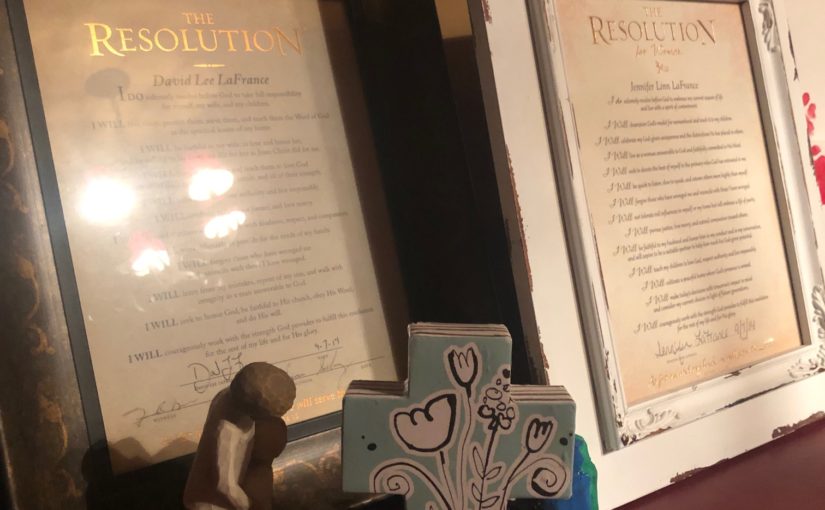
The first insight is noticing one of the most important things the Jews did upon returning to the city.  Their first focus was on creation and use of the alter.  It was the symbol of God’s presence back in Jerusalem .  What does God’s presence look like to you? Is there a presence in your home? For me I think of some of the little things that represent and remind me of our trust in Him.  The verses that hang on our walls, the calendar that shows family pictures with verses written, the kids Sunday school handouts hanging on our fridge, the Resolution certificate framed from our marriage small group study sitting in our dining room.  In a kitchen you can find a mason jar full of prayers and praises from this year.  I also reflect on what do we model when others come stay? What are we modeling when we are alone? Are we intentional in having a place where we can rest in His presence and show our trust in His protection and presence like the Jews did upon returning home?

3 Despite their fear of the peoples around them, they built the altar on its foundation and sacrificed burnt offerings on it to the Lord, both the morning and evening sacrifices.

The second focus was on building of the temple, the people didn’t look ahead at the finished product, or the walls to protect the city, they focused on the foundation.  This could be a sermon on its own but I’ll keep it short.  Our foundation is everything.  It doesn’t matter if you are building  temple, house, or a fort.  The foundation is essential.  It’s Just like in our lives.  Our marriages, decisions about jobs, raising a family, making a decision to move…  really anything we do has to be given to God first. Our foundation has to be in God. If you short change, alter the appropriate materials, or modify the accurate dimensions of a foundation it can lead to disaster.  For some of the Jews, this had already happened to them once.  They didn’t want it to happen again. If our foundation is not strong, and when pain kicks in, hardships, fear, anxiety or lowliness sets in, without a solid foundation you will waiver and eventually fall.  Take time daily to build your foundation! Now, think about how the people reacted once the foundation was done. It says they sang, praised, and gave thanks. For He is good, and His loving kindness endures forever… Ezra 3:11 Take time today to sing, praise, and give thanks! Amen

2 Timothy 2:19 says, 19 Nevertheless, God’s solid foundation stands firm, sealed with this inscription: “The Lord knows those who are his,” and, “Everyone who confesses the name of the Lord must turn away from wickedness.”

Lastly, look at the end of Ezra 3.  At first I was unclear about verses 12-13. The contrast between shouting for joy and weeping? In my study bible it talks about the mix of emotions being felt at that time between the generations.  That some Jews had lived when their first temple was originally built, while others were part of something for the first time.  How many times does the Holy Spirit produce that same emotion in us?  I can be standing in church arms up, praising God singing,  without any care for my pitch.  The next moment, my hands wiping tears from my face convicted once again.  I can often become sobered by my shortcomings, and full of joy, thanksgiving in other moments. In these moments I can see how there are times when it is hard to decipher.  Only God can move us that way.

12 But many of the older priests and Levites and family heads, who had seen the former temple, wept aloud when they saw the foundation of this temple being laid, while many others shouted for joy. 13 No one could distinguish the sound of the shouts of joy from the sound of weeping, because the people made so much noise. And the sound was heard far away.


Where do you turn when your world has been flipped upside down? Maybe it was a marriage, job, your own child, a bad decision? Where do you return? You return home to the Lord.  If you have been lost, or maybe just need to rebuild.  Head into the wonderful arms of our Lord.

Have a blessed Tuesday.

Daniel’s longest night

Daniel Chapter 6

Over the last eight years, Jillian and I have had many long nights with our three children.  There have been nights where the kids have caught a virus or an illness and we are up all night with either child.   These nights have come and go as most parents can attest, but there have been some nights that have truly tested our faith. One particular night is when Oliver was in the hospital when he was six weeks old and had a procedure to secure nutrition.  He had to have a specialized intravenous preparation to give him the essential nutrients for his body to heal.  The procedure that her had to undergo would place an intravenous line directly into his heart and then he would be able to get the medication.  While in the procedure room with him the medical staff informed me that the next hours will be critical because of the risk of his body not maintaining the proper temperature and the risk for infection. After the procedure was completed, we returned to our room.   In the middle of the night we were woken with alarms in the room that he had dropped in temperature.  The drop was so significant the team had to use extraordinary measures to stabilize his body temperature and vital signs.  This was the longest night that I can remember.

In this chapter of Daniel, Daniel is presented with a long night as well.  To the causal onlooker, life and death are weighed in the balance, but for Daniel this was another opportunity to show God’s love and grace. In the previous chapters, God has revealed many times before that the circumstances that we are present with are chances for God to do some amazing work: for both you and the other person.   At this point in the journey Daniel is approximately 80 years old.  He has seen the height of the Jewish authority; been exiled into a new land; made high officer in three different kingdoms; interrupted and conveyed the hardest information to ruthless kings.  Through all of these years and experiences Daniel has seen the glory of God and how these situations worked out for God’s Glory.

Daniel  2: 46

Then King Nebuchadnezzar fell upon his face and paid homage to Daniel, and commanded that an offering and incense be offered up to him. 47 The king answered and said to Daniel, “Truly, your God is God of gods and Lord of kings, and a revealer of mysteries, for you have been able to reveal this mystery.” 


Daniel 3: 28

28 Nebuchadnezzar answered and said, “Blessed be the God of Shadrach, Meshach, and Abednego, who has sent his angel and delivered his servants, who trusted in him, and set aside[f] the king’s command, and yielded up their bodies rather than serve and worship any god except their own God. 29 Therefore I make a decree: Any people, nation, or language that speaks anything against the God of Shadrach, Meshach, and Abednego shall be torn limb from limb, and their houses laid in ruins, for there is no other god who is able to rescue in this way.”


Daniel 4:1-3

King Nebuchadnezzar to all peoples, nations, and languages, that dwell in all the earth: Peace be multiplied to you! It has seemed good to me to show the signs and wonders that the Most High God has done for me.

How great are his signs,
how mighty his wonders!
His kingdom is an everlasting kingdom,
and his dominion endures from generation to generation.

At the beginning of the chapter, Daniel is reappointed to the highest position in the kingdom and is not admired by many except the new king Darius.  Darius makes proclamations about praying to other entities and deities, except for him.  This proclamation backfires on the relationship that Darius has with Daniel and Daniel is sentenced to the lions’ den.  This is a punishment that others have seen as ultimate condemnation for the acts against the king.  But this a final testament of the faith of Daniel, he was blessed by God to survive the punishment.

As we go through our journeys we will face many difficult and dark times.  Some we are able to navigate easily and others may be challenging, but we must always remember that when we have a relationship and have an unwavering faith in God, we will come out in the morning with renewed sense of self and bountiful blessings.