What Cannot be Heard

1 Samuel 5-6, Romans 5, Jeremiah 43 and Psalm 19

I’ve never written a journal entry on a Psalm. Mostly because I think they are pretty deep and the narrative text is far easier for me to connect with. Today, I decided to give myself (and you) a little challenge. I love the message we heard in Romans but I suspect it’s not your first time there. Instead, I decided to really pray on and connect with Psalm 19. As soon as I began reading the words, my mind heard a melody. Does that happen to you? So many church songs we grew up to are revealed to us in print when we study the bible. The author, presumably King David opens with:

“The heavens declare the glory of God, and the sky above proclaims his handiwork.” (Psalm 19:1)

That line is one we’ve heard so often that it’s easy to breeze past it. David is literally saying here that the tangible vision we have of the open sky, the mountains, the seas and all the earth’s creatures is a proclamation of God’s work. The next part is what got my mind working today:

“Day to day pours out speech, and night to night reveals knowledge. There is no speech, nor are there words, whose voice is not heard. Their voice goes out through all the earth, and their words to the end of the world. (Psalm 19:2-3)

I want to stop and just dwell there today. There is so much in Psalm 19 but something in these two verses really resonates with me. In verse 2, the phrase “pour out” literally means to gush or bubble up. This phrase is often used in the Bible to describe springs or fountains of water. David uses the metaphor of an endless fountain or bubbling stream to depict the endlessness of God’s speech in our world. Then, in verse 3 a paradox. He literally says, “There is no speech, nor are there words…” There it is. The very definition of faith. As Christians we must connect with our Heavenly Father and his word without really hearing his words first hand. We must look for the message and with practice, obedience and patience we of course will hear him through the Holy Spirit.

This isn’t a new concept for us to struggle with. Paul writes about it to the Roman’s, even quoting Psalm 19:

“For what can be known about God is plain to them, because God has shown it to them. For his invisible attributes, namely, his eternal power and divine nature, have been clearly perceived, ever since the creation of the world, in the things that have been made. So they are without excuse.” (Romans 1:19-20)

 So we are without excuse. Sometimes I feel a little jealous of those Old Testament guys like Moses that got to actually hear God’s real voice. But as David and later Paul reminds us, the mark of our Father is absolutely everywhere we look. He is present in our lives and he wants connection with us. As the summer draws to a close and we all get into the rhythm of a new school year may we commit to getting into a rhythm with God. No, we cannot hear Him as Moses once did but we’ll be able to feel Him with cooler crisp breezes and see Him with changing leaves. Psalm 19 is inviting us to worship and honor him by attending to the glory of his creation. Listen for his voice in new ways and we will hear His call.

Faith and Righteousness

You, Lord, keep my lamp burning; my God turns my darkness into light. -Psalm 18:28

After wrestling with the idea of righteousness, it turns out it wasn’t exactly what I thought. Mostly I believed righteousness was what God required from us to be worthy of His fellowship and our salvation. But how righteous did we need to be? Holiness was impossible and if the standard was anything less, how would anyone determine where that line was drawn?

I believed we were all called to pursue righteousness, but there was a different kind of righteousness, the one that Jennifer clearly described in yesterday’s Bible Journal. It wasn’t the kind that came from discipline or hard work, though they both offered rewards. It was the kind that came from faith, something that comes easy for a child; from the kind of faith that we discover in moments of helplessness, when we surrender to One far greater. This was the righteousness that came from our belief in the existence of a God who loved us so much he took on flesh and allowed himself to be murdered for our un-righteousness. This was the righteousness that came by the grace.

Today’s reading: 1 Samuel 4; Romans 4; Jeremiah 42; Psalm 18

In today’s text (Romans 4:6-8) Paul talks about grace, quoting scripture: “Abraham believed God and it was credited to him as righteousness” (Genesis 15:6). He also shares David’s proclamation from Psalm 32:1-2 about the blessing from receiving undeserved righteousness. Abraham received this blessing and was credited righteousness by faith, not only Abraham but his descendants, and not only his biological descendants, but his spiritual descendants, for “….He is the father of us all” (Romans 4:16).

I find it fascinating that the message of the gospel, this “new covenant,” was anticipated from the beginning of time. It is mentioned throughout scripture, and offered to all humanity. Jesus’s disciples shared this message of grace and hope to both the Jews and Gentiles of their day, and to us. They offered compelling evidence found in the teachings of the Old Testament and from their personal experience with Jesus and the Holy Spirit. And thier message is still alive today: Jesus lives, God is real and through Jesus, God’s Holy Spirit manifests in millions of lives that are remarkably transformed each day throughout the world.

If an old man with a barren wife, to whom God appears and blesses with children is credited righteousness for his faith, What does that mean for us? A little faith goes a long way with God, faith that He is even willing to provide to us if we ask!

A Perfect Plan

A cross on clouds background, christianity, religious theme

1 Samuel 3; Romans 3; Jeremiah 41; Psalm 17

Today marks the halfway point of the 2016 summer Olympics. Despite the fact that I’m dead tired because I’ve been staying up way too late, I have had so much fun watching the competition.  These athletes are truly amazing.  I watched the US take gold in the women’s gymnastics team competition earlier this week.  As I jumped on ESPN.com to see what the sportscasters had to say the next morning, I saw an article about Gabby Douglas’ hand position during the medal ceremony.  Her patriotism was being questioned because her hands were at her sides, instead of having one hand on her heart like the other gymnasts.  Really?  Can’t we just celebrate the victory?  Nope.  Typical 21st century America – we had to find a way to make the 2012 women’s all-around champion, who tirelessly trained, overcame setbacks, fought her way back on to the 2016 team, then helped 3 first time Olympians win a gold medal, feel like she wasn’t good enough.

Our scripture in the first half of Romans 3 left me with a similar feeling today. Not good enough.  I am a Christ follower.  I pursue righteousness.  But verses 13 and 14 describe my words and actions more often than I want them to.

There is no one righteous, not even one; there is no one who understands; there is no one who seeks God.  All have turned away, they have together become worthless; there is no one who does good, not even one.  Their throats are open graves; their tongues practice deceit. The poison of vipers is on their lips.  Their mouths are full of cursing and bitterness.  Their feet are swift to shed blood; ruin and misery mark their ways, and the way of peace they do not know.  There is no fear of God before their eyes (Romans 3:10-18).

It is true. On my own, I am not capable of living up to God’s standards.  I am not good enough.  But read on, the second half of Romans 3 shows us there is still hope for me and there is hope for you.  Jesus gave his life as a sacrifice for our sins so we could be righteous in God’s eyes. This righteousness is given through faith in Jesus Christ to all who believe (Romans 3:22).  This is great news.

My analytical mind, however, still wrestles with the question why.  Why would God offer sinners salvation through faith alone?  May I share with you a few insights I found incredibly helpful this week as I read through the Life Application Study Bible (Tyndale House Publishers)?

  • Faith eliminates the pride of human effort because faith is not a deed that we do.
  • Faith exalts what God has done, not what we do.
  • Faith admits that we can’t keep the law or measure up to God’s standard, we need help.
  • Faith is based on our relationship with God, not our performance.

God’s plan keeps our focus on him, not on ourselves.  Makes total sense.  The masterful plan of a perfect God.

Nothing can stand in the way of Him

I went to Haiti 3 weeks ago on a mission trip with the senior high ministry at Eastview Christian Church.  We finished building 2 houses for families that were a part of the church funded by Eastview.  One of the most impactful moments during the trip was the house dedication where we had a short service and gave the families the keys to their new home.  During the service there was a Haitian man translating for us. The family who was receiving the house said that in their old house they had holes in the roof and any time it rained they would worry about their children getting sick and being cold through the night.  They were thankful that they didn’t have to worry any more in their new house. That night when we were going back to the house we stayed in, it rained.  We discussed  as a group how incredible it was to give someone safety and warmth and to actually see God in action in Haiti.  Sometimes it takes months or years to see God’s plan unfold, but giving that family in Haiti the gift of a new house was a reminder to me of how powerful God can be, and how nothing can stand in the way of him. Try to remember that today if you feel like God isn’t working in your day to day life, he is always with us.  

1 Samuel 2; Romans 2; Jeremiah 40; Psalms 15–16

The bows of the mighty are broken,

   but the feeble bind on strength.

5 Those who were full have hired themselves out for bread,

   but those who were hungry have ceased to hunger.

The barren has borne seven,

   but she who has many children is forlorn. (1 Samuel 2:4-5)

I find it easiest to live out my life the way God intended on Sundays and after my small group meets on Wednesday nights, but by Friday the messages I’ve learned during the week are already forgotten.  Most people I talk to agree that It’s hard to stay focused on God when there are so many other distractions in the world, we become selfish, easily irritated and portray a hypocritical christian for those who don’t know Christ.  Gandhi (who was not a christian) said, “If all Christians acted like the Christ they follow, everybody would be a christian.” Think today about what might be holding you back from acting like the Jesus you follow. I’m not saying you have to be exactly perfect 100% of the time, but think about times when you could change your mindset, behavior or attitude.  Remember God doesn’t ask for perfection, he just asks that you strive for it, even though he knows you’ll fall short.  

21 you then who teach others, do you not teach yourself? While you preach against stealing, do you steal? 22 You who say that one must not commit adultery, do you commit adultery? You who abhor idols, do you rob temples? 23 You who boast in the law dishonor God by breaking the law. 24 For, as it is written, “The name of God is blasphemed among the Gentiles because of you.” (Romans 2:21-24)

Desert Places

Crack soil on dry season Global warming / cracked dried mud / Dry cracked earth background / The cracked ground Ground in drought Soil texture and dry mud Dry land.

1 Samuel 1; Romans 1; Jeremiah 39; Psalms 13–14

When was the last time you felt like you just couldn’t win?  Did you face reality head on or did you run from it? For me, the answer to that question can often be found in my activity level. If you catch me running, scattered from task to task, without a minute to spare, it’s likely that I am avoiding some reality of my life. A second indicator that exposes my avoidance of reality shows up when I am reading. I love to read. Reading helps me think and process the events of my life. I can do it in almost any environment. That is, unless, I have something weighing heavy on my heart. In these times, I cannot focus on reading. Sure, I might go through the motions, but I cannot hear the words. Nothing gets through. My general reaction is to go, busying myself with things that do not need thought or thinking. This avoidance leads me right back to the first scenario. I am not unique. I am sure that you have a coping mechanism as well. According to today’s reading, Hannah had one too.

Elkanah’s wife, Hannah, did not have any children. As a result, she was given one portion of meat to worship with as a sacrifice to God at the Temple. Elkanah’s second wife Peninnah, however, had two children and, therefore, received three portions with which to worship and sacrifice.   For Hannah, this time of annual worship and sacrifice served as a cruel reminder that God had not given her any children. To make matters worse, Peninnah made fun of her for it, continuously deepening Hannah’s wound. Her reaction, year after year was to cry.  In fact, she would make herself so upset, that she couldn’t even stand to eat.

We all get to choose how we respond to life’s circumstances. Whether your reaction is more like Hannah’s or mine is irrelevant. In the end, they both lead to the same place. Nowhere good. Hannah finally figured this out. Eventually, she looked to God.   As she offered her sacrifice, she looked to the Lord, and through her deep anguish and bitter weeping, she prayed and with all of her heart and laid her cares upon God. Similarly, David’s heavy heart pours out through prayer in Psalm 14. In these moments, Hannah and David both relinquish their futile attempts to change their own reality and instead, depend on God.

Have you ever prayed like that? Seriously, consider for a moment, right now, what it would feel like to spend a few minutes, a few hours, or a whole day, detaching yourself from the activity and crying so that you can give it to God. Why not? Are you afraid of what you might hear? I am here to tell you that the best time to do this is right now, in the midst of the current gridlock in your calendar and in the middle of your deep anguish. If you are praying to the same God that I am, He promises to give us an answer.

My rumination on Hannah and David pouring out their hearts to the Lord has encouraged me to pray similarly. I’m also praying that God urges you to do so as well. As you do, I will be praying for you, as Eli did, “go in peace! May the God of Israel grant the request you have asked of him.”

What’s up with Your Communication?

Looking for some answers on what perfect communication is? God has them. Let’s check them out. God would you help us understand how to communicate the way You intended when You created us?

I am reminded of the power of our words as I read Psalm 12:1-3 this morning. In James 3:5-6 we learn that the tongue is a small thing but how it can change the whole course of our lives. James helps us understand how our tongue can produce great evil (James 3:8-10). But there is more to controlling our tongues than simply not slandering or cursing others.

Jesus tells us we will give account for every idle word we speak (Matthew 12:36–37). He uses term idle to describe useless words. Words are powerful things, but words of these sort seem to be impotent and unprofitable. Indeed our words are powerful, King Solomon reminds us of this also in Proverbs 18:21.

The ability to speak is a gift from God, it makes us distinctly human and some point to Genesis 2:7 when God breathed the breath of life into man that with it came the ability to speak. If this is so, the question becomes how are we stewarding this gift from God? In Ephesians 4:29 we are given clear instruction on the objective of our words. We are told to avoid corrupt communication and that our words are to minister grace unto others.

As we allow the Word to test us and correct us let us consider for a moment on what to put off and what to put on.

Put off corrupt communication. First it says communication not simply talking but listening as well. With that said let us consider most dirty jokes and humor. If heard it will likely contain one of three elements. Two of them are things that humans make private but animals do not; sex and bathroom activities. The third is taking God’s Holy Name in vain. This genre of humor seems to fly in the face of God’s intended purpose for his gift of speech. Are we partaking, viewing, listening, joining in and laughing, exposing, or even sharing this type of ‘humor’? In the past I have found it difficult to avoid. It has seemingly poisoned most TV as heard in the infamous marketing  slogan “sex sells”. In the past, when I have avoided it, it was quite rewarding. Like all things trading in something that is empty and perverted for something that is full of truth fills us up and edifies.

Put on edifying communication. Again begin by considering what we are exposing ourselves to. God willing His Word is the primary stimuli in our lives and the lives of those we shepherd. God please help us. Then consider what we are communicating into this world. Our speech yes but also our non verbal communication; dress, accessories, demeanor, etc. Does it edify and build up? Is it productive and other focused? Is it from God? God willing, He is the primary thing we bring into this world.

God may You guard the gate of our mouths (Psalm 141:3). May You strengthen us with Your Spirit and bring to us the perfect remembrance of all things the LORD Jesus Christ has spoken (John 14:26) that we may edify the world and minister grace to it (Isaiah 55:11). May we love others with the love of Christ. May we walk in the everlasting ways (Psalm 1:1-3). Amen.


Today’s reading: Ruth 3–4; Acts 28; Jeremiah 38; Psalms 11–12

August 10th, 2016

Godly Gleaning

Today’s Readings: Ruth 2; Acts 27; Jeremiah 37; Psalm 10

August 9, 2016 

glean: ɡlēn/ verb extract (information) from various sources.
synonyms: obtain, get, take, draw, derive, extract, cull, garner, gather; More
collect gradually and bit by bit.
historical definition: gather (leftover grain or other produce) after a harvest.

What an amazing story we heard yesterday from Jillian that brought tears to my eyes helping me to take a breath and reflect on our own marriage in the midst of a busy household preparing for the start of school.  I’m reminded to not take things for granted since we don’t know when God will call us home. Prayers for the McGriff’s and family throughout this week as they celebrate Elmer Newton.

The story of Ruth and the introduction of Boaz in today’s reading is a story I never really thought about until this time through. Ruth, through her genuine love stays with her mother-in-law Naomi and returns to the country of Bethlehem right at the beginning of harvest season. What love, honor, and dedication to another person.

Humbly, Ruth realizes she can’t remain idle at home and goes out to the field to glean for her family. (Ruth 2:2) Ruth’s example of diligence, humility, and love is an example for us today.  Diligently she goes off and takes on a job to provide for her family. Even though her previous lifestyle didn’t include gleaning fields she does it because it’s what she has to do.  Today, the desire by some to seek only glamorous high paying positions or that a job will come to them can leave many just waiting and jobless. Here is an example from Ruth that honest work is better than no work when you are trying to help yourself or others taking initiative makes a difference. Diligence promises well and there is nothing wrong with honest employment.

When Ruth goes to the field you hear an amazing work environment.  Imagine when your employer starts the day with, “The Lord be with you!” and you answer with, “The Lord bless you.”  Boaz came out to his field to greet his crew in a loving and praising way grateful for what they are doing. (What a great reminder for myself and others to praise all employees.)  We can bless them, even if for some reason you can’t say it out loud?!  Pray for this courage and follow through with the way you treat people.  This has allowed me to reflect on ways that I interact with those I work with.  Is there opportunity to share this love and blessing from our Lord? (Ruth 2:4) Boaz notices Ruth gleaning and inquires with his foreman. After hearing that she has been there since sun up and worked all day with minimal breaks Boaz takes heart and recognizes her work ethic and love for Naomi. Boaz has the crew watch out for her and remembers the story that has been shared with him about the loss of Ruth’s husband. (Ruth 2:17) How are we looking out for those we work with? Is it a kind word or recognition?  Boaz is sensitive to her needs and shows a genuine care for Ruth.

How often do we go beyond the accepted patterns of providing for those less fortunate? 

It’s amazing some of the stories I’ve heard at registration for school that include a very adverse circumstance.  Where parent, grandparent, or relative is trying to get their child signed up for school. School provides many students an opportunity to be surrounded by love and attention in the midst of many things going on in the current place they are calling home.  Pray for our students, families, and school staffs to get to know these stories and through the all the curriculum, first and always show love:)

Ruth gives Naomi her gleaning and what she had for left overs from earlier that day. Naomi is grateful and blesses Boaz and gives advice to Ruth to stay close with Boaz and his young women. Naomi recognizes in Boaz an honest loving person who is dedicated to the Lord.

“May he be blessed by the Lord, whose kindness has not forsaken the living or the dead!” (Ruth 2:20)

Reflecting on this story is also an example of how God always provides for us. When Ruth goes to glean she ends up in Boaz’s field.  (All part of God’s plan that will continue tomorrow.)

So if you are in Ruth’s shoes where are you gleaning? Are you taking initiative looking out for others? 

If you are in the shoes of Boaz how are you treating others at work? How are you treating those less fortunate at this current moment? 

Dear Lord,

Help us to do what is right similar to the story with Ruth and Boaz today.  Help us to recognize those who need support and reach out to them.  When faced with challenges help us to make the right choice and not just the easy choice.  Thank you for our faith believing you are always directing our lives for your purpose.

Amen


The difficult and the easy

Lynden's Uncle Elmer Newton
Lynden’s Uncle Elmer Newton, doing what he did best…raisin’ up kids.

Today’s Readings: Ruth 1; Acts 26; Jeremiah 36; 45; Psalm 9

Every now and then God reveals himself to us. We have to be present and looking for him. When we are, these moments are enough to sustain us. They can take us out of dark places and into the light.

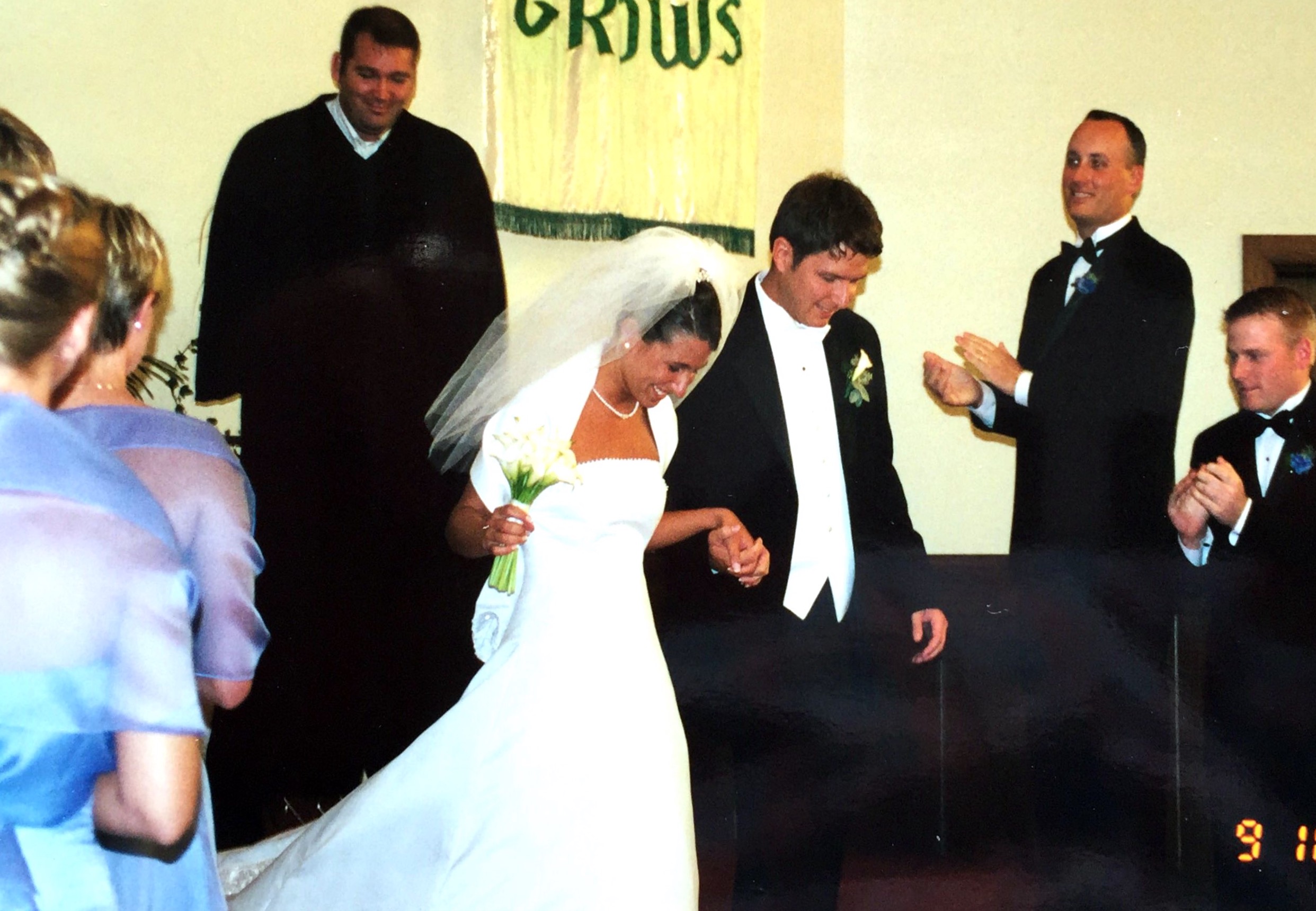
This weekend I took a much needed break to be with a group of women I’ve been close to for years. For the first time in a long time I was able to sleep through the night, eat food while sitting down and have some quiet rest. A few hours after I left home, my husband called to say that his uncle had passed away very suddenly. An accident, and then one short day for all to say goodbye. This man was in so many ways a mentor for my husband. He loved his wife, his children, his grandchildren and even his great grandchildren. He had a hand in raising them all. His flame was blown out in an instant and we are left with such loss and sadness. My mind has gone over and over what it would be like to lose my husband so quickly. To not know when I got in the car and left that morning that I may never get to talk with him again. That I may lose the very essence of who he is to me and our children in the span of one short day.

I hadn’t read my readings for today until this afternoon. Hadn’t done my homework until the last minute. When I opened my Bible to the very first chapter assigned for us today, there they were. At the very end of Ruth chapter 1 were our wedding vows.

“Do not urge me to leave you…for wherever you go, I will go. Wherever you stay, I will stay. Your people shall be my people and your God my God. Where you die, I will die and there I will be buried…” Ruth (1:16-17)

 My breath got caught in my chest when I read these sacred words. When I chose them 8 years ago, it was because I had heard them and just liked them. I found them on the internet. I had never searched for them within the pages of my Bible. Today for the very first time I discovered them in God’s word! I didn’t know that these vows were initially made between a mother and her daughter-in law after the death of her son. The story of Ruth begins with the death of three husbands. It begins with Naomi telling her daughters- in-law that they must leave her and go home as her husbands and sons have died. Instead of abandoning her, Ruth insists upon staying at Naomi’s side. I love this story. It reminds me that as Christian’s we are here to love one another, support one another and hold each other when grief and tragedy strikes. I love that God brought this scripture to us today in our family’s time of darkness. It shows us that he’s here, that he loves us and that our sadness on this earth is only temporary. It shows us that God keeps his promises. Finding these words gave me absolute assurance that His plan is alive and working in our lives.

Although I don’t have much to add about historical context or broader connections today, I wanted to share this encounter I had with God! It’s so exciting in the midst of our sadness and fear. We have a very big week coming up with medical tests for our little boy and my husband flying out to be with his family and say goodbye to a man he dearly loved. I hope you don’t mind if I share our vows here to let him know that God is alive in our marriage. If you are married, I hope you’ll take the time to share your vows with one another this week. We don’t know when our heavenly Father will call us home.

I, Jillian, take you Lynden to be my husband. I will trust you and honor you, I will laugh with you and cry with you, I will love you faithfully. Through the best and the worst, the difficult and the easy. I will always be there whatever may come. As I have given you my hand to hold, so I give you my life to keep. For where you go I will go and where you stay I will stay. Your people shall be my people and your God my God.


Be Still

I was honored to have my talented sister-in-law, Lisa Pruitt offer to write this week’s Journal Post. She loves caving more than anyone I’ve ever met. She is the adored older sister of my wife Heather and the adoring mother to my wonderful nieces, Chloe and Camile. Thank you Lisa!

He says, “Be still, and know that I am God; I will be exalted among the nations, I will be exalted in the earth.” -Psalm 46:10.

Today’s reading: Judges 21; Acts 25; Jeremiah 35; Psalms 7–8

Imagine with me we are in a cave. It is a landscape beneath the landscape. Some enter caves with trepidation and fear. But a cave – to me – is the very essence of God’s work right before our eyes. Caves are a fragile ecosystem, dark, damp, flowing water, the pungent smell of earth. Caves are our final frontier and they contain indescribable beauty.

I am drawn to caves, not because they are dark and scary but because it is a place where I can experience God in a new way. I can be still there in the dark and quiet, my senses are tamped down. When I turn off my headlamp, sight is absent, taste is minimal, I can touch the cool damp rock and smell minerals and soil. I can hear the delicate musical and echoing sounds of water dripping somewhere. It is a perfect environment for meditation, for prayer.

The Celtic Christians appreciated a concept known as “thin places”. A thin place is where the divide between our earthly world and God’s kingdom are narrowed, where we can experience a glimpse of God’s majesty, feel his love in surround sound. Sometimes I experience a cave as a thin place. It is not a place of fear but a place of beauty, a place where I know that God is at work, molding and sculpting hard limestone into natural art. As written by T. Augustus Forbes Leith, “from the star-spangled canopy of heaven to the far bottom of the majestic ocean, created earth is teeming with wondrous beauty”.

I went with a group of people to a cave in Mexico a few years ago. We went in single file, walking and talking quietly in the dark, our voices echoing. We walked about 15 minutes before encountering water. We slowly and gently entered the water and got acclimated to our surroundings and the unfamiliar feeling of swimming and floating in a very dark cavernous space. The water was warm and so clear that it appeared to be only 6 or 7 feet deep but it was actually 60 feet deep. There were extravagant formations everywhere I looked, hanging from the ceiling, along the walls, some emerging from the edges of the clear deep water – as if an artist had placed them there. I felt so peaceful, so blissfully happy, so overwhelmed with all my senses – that I began to weep. I experienced a thin place that day.

When I read the scriptures for today, what I continued to ruminate over was Psalm 8. “Lord, our Lord, how majestic is your name in all the earth!” God has set his glory in the heavens and the earth. When I consider the tangible and visible things that God has created, the work of His fingers, the moon and the stars, the innumerable bugs – so colorful and specialized, high mountains, deep oceans, the rebirth of spring, the delicate soft features of a baby, the miracle of unfolding life, flowers, fungus, and the amazing array of colors our eyes can perceive, I am humbled. Our God is majestic.

Appreciating the beauty of our natural world around me reminds me of the Lord’s majestic name! Anytime I can stop and notice, anytime I can be still and think of God’s love, I am reminded of God’s majesty and I experience a thin place. Sometimes the cave’s environment facilitates my experience of a thin place, sometimes it’s a mountain top, other times it is when I lie in the grass at night and allow the grandeur of the night sky to flow into me.

These profound thin places are not experienced by me every day for they require 1) the right environment, 2) the proper state of observation by me and 3) most importantly – my willingness to be still. What I know is that without Jesus at my side, even at times when these three ingredients converge, they would be meaningless and would not coalesce into a thin place without Jesus, because I would not be worthy of the familiarity of a thin place. I would be there but could not reach out to God, could not feel Him.

The indescribable beauty of all that God has given us on this earth is majestic but it is nothing compared with the gift of Jesus.

One Goal

Compass with needle pointing the word mission. Conceptual illustration part one of a company statement Mission Vision and Value.

Today’s reading:  Judges 20; Acts 24; Jeremiah 34; Psalms 5–6

In Acts 21, Paul was arrested in Jerusalem for preaching about Jesus.  Because a group of men were plotting to kill him on his way to court, Paul was transferred to Caesarea.  Today’s scripture has us in Acts 24, the account of Paul’s trial before governor Felix.

The story begins with Tertullus, the lawyer, acknowledging the period of peace the nation has experienced under Felix’s leadership.  He compliments the governor by directly attributing years of peace to Felix’s programs of reform.  The charges against Paul are recorded in verse 5 – he is accused of being troublemaker who has been stirring up riots all over the world.  Acts 24:9 says, the other Jews joined in the accusation, asserting that these things were true.  Does this sounds like a pile on to you?  A case where one person begins with an accusation, then others (whether they truly have been wronged or not) begin to transform their experiences to fit the argument.  Sounds something like this, “yeah…and I saw him do this…I heard him say that…did you notice that he didn’t say this…and he definitely doesn’t care about that…”.  Situations like this frustrate me to no end.  They almost always make me want to fight the accusations against me, whether they are truly accurate or not.

Notice how Paul responds.  He asserts his innocence, “and they cannot prove to you the charges they are now making against me” (Acts 24:13), but he doesn’t stop there.  He steps out and presses the issue.  In verse 14 he confesses to be a “follower of the Way”.  Then in verse 21 he actually suggests to them a time when he charges may have been valid, “unless it was this one thing I shouted as I stood in their presence: ‘It is concerning the resurrection of the dead that I am on trial before you today’”.  What?  Based on what I know about court proceedings, this certainly isn’t how defendants are counseled to respond.  Shouldn’t Paul just be answering the questions asked, no more, no less?  Anything he says can be used against him.

Felix doesn’t issue a verdict in this case.  Rather, he pends it until Lysias the commander will be present.  Verse 24 tells us that Felix and his wife visited Paul a few days later.  What a perfect opportunity for Paul to discuss with the governor and eventually convince him of his innocence, right?  Nope.  Paul didn’t talk about himself, he talked about righteousness, self-control and the coming judgment.  This is just like Paul.  It was never about him.  His singular focus was on leading others to faith in Jesus Christ.  Every time.

For though I am free from all men, I have made myself a slave to all, so that I may win more. To the Jews I became as a Jew, so that I might win Jews; to those who are under the Law, as under the Law though not being myself under the Law, so that I might win those who are under the Law; to those who are without law, as without law, though not being without the law of God but under the law of Christ, so that I might win those who are without law. To the weak I became weak, that I might win the weak; I have become all things to all men, so that I may by all means save some (1 Corinthians 9:19-22).

What is your one goal?  Are you crafting conversations with others to lead them to Christ or to accomplish some other objective?  Are you willing to sacrifice your selfish desires in order that others may know salvation?

God, we can’t accomplish this on our own.  We need you.  Will you wrap our hearts and minds around one goal – using every opportunity to lead others to you?