Follow Me

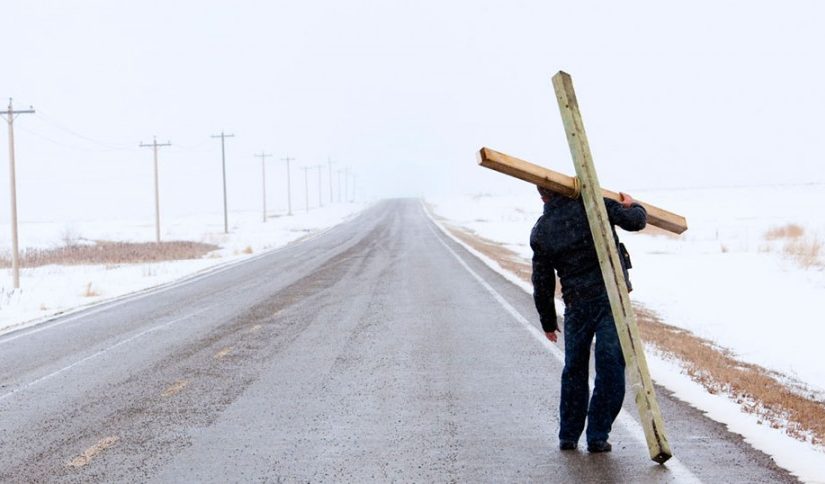
Today’s reading is Luke 9. A few years ago our small group studied a series called Follow by Andy Stanley. He talks about how Jesus said, “Follow Me,” approximately 23 times in the Gospel. A mentor of mine would always say that “repetition is the mother of learning.” So, if Jesus says those words that many times, we should probably take note. Ever since we covered Andy Stanley’s study, it always jumps off the page when I read Jesus say it like He does in Luke 9:23-25 and Luke 9:57-62, and I underline it in my Bible.

I believe many keep their distance from Christianity because they believe it is just a bunch of rules to abide by. We live in a society today that tells everyone to just do whatever they feel like, so if they believe all Christ does is make you follow rules then they will not be drawn to Him.

Jesus does not say to do X, Y, and Z and then you can, “Follow me.” He doesn’t say learn the Scriptures, change these habits, get your life in order, and then, “Follow me.” He just says, “Follow me.” Jesus only wants to see our faith and trust in Him. That is what amazes me so much about the disciples. They just left their lives upon Jesus invitation. Jesus did not pick guys that were scholars and had their lives together. He picked regular people like you and me. Earlier this week in Luke 5:27-28 He asks Matthew who was a tax collector to, “Follow me.” Tax collectors were Jewish outcast because they were Jewish, but collected taxes for the Roman government. Andy says they could only hang out with other tax collectors because even the worst sinners wouldn’t hang out with them. Yet, Jesus still called Matthew to follow Him and then he even hangs out with Matthew and his tax collector buddies after. While the occupations of all 12 disciples are not known, it is believed that most were fishermen or tradesmen of some kind. They were not set apart already because of their occupations or previous works before Jesus asked them to come along for the ride.

You may be thinking to yourself because of my earlier comments that the Bible and Christianity does have “do’s and don’ts” so to speak. Yes, it does because God knows what is best for us, and He knows that often what feels good at the time will eventually cause us pain later at some point. Jesus doesn’t lead with this though because He knows that by following Him our hearts will be changed, and we will stop sinful habits (Luke 12:34).

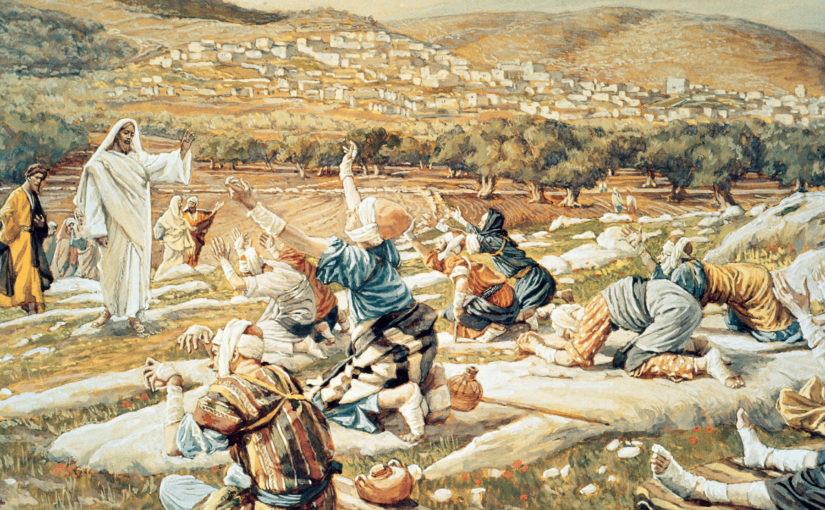
Jesus also knows we are not perfect, and we will still sin and lose faith at times. I know daily God answers prayers that could have altered the course of my entire life if they were not answered. Prayers for safe travels for family, favorable news from an uncertain doctor’s appointment, that a big meeting goes well, and the list goes on. Yet days, hours, or even minutes later I’ve forgotten already, and I’m anxious or nervous about something else! The disciples were no different though, and they even saw Jesus’ direct acts firsthand. Not only did they leave their regular lives to follow Him, but in Luke 9:1-6 He instructs them to leave and take nothing with them as they go to tell others about the Kingdom of God and heal others which they did. Then, in Luke 9:13 right after that, He instructs them to give five thousand people something to eat, and they say they don’t have enough food wondering what they should do. They didn’t even say, “Jesus can you come up with some food like you’ve done before…please perform another miracle.” They just doubted. Yet again, He delivers. Not only does Jesus always satisfy…He even leaves us with leftovers (Luke 9:17).

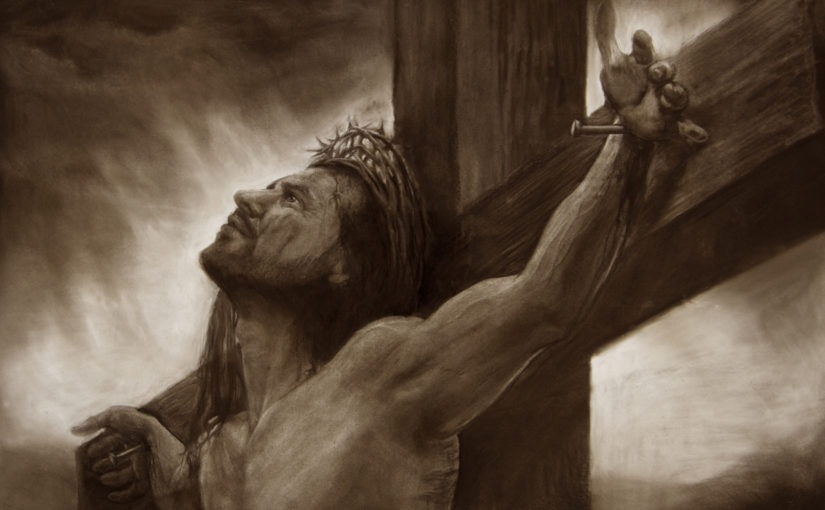
As we go into this week and think about our own lives and hopefully look to share the Gospel with others, let us not just share the love of Jesus with others we think are ready. In Matthew 19:16-22, a rich young man asks what good deed he must do to have eternal life. Most in our society I believe are wondering the same or think if they do more right then wrong they will earn the favor of God. But, Jesus tells the man there is only One who is good. Let’s make sure they know that they must only do one thing to go to Heaven…follow Him. He gave them, and all of us, that open invitation to do so not only with His words, but with his arms wide open on the cross.

 

Abundance

I love the book of Mark.  At just over 11,000 words (overviewbible.com), it is far shorter than the other three gospels.   I’m a reader; I love long novels and rich memoirs.  So to find myself drawn to the shortest gospel surprised me.  I think it is Mark’s simplicity that appeals to me:  it seems like Mark pares down the life of Jesus to the essentials, letting His life and His actions speak for themselves.  Only a few verses into Mark 8, however, I realized that although Mark’s style might be characterized by brevity, Jesus’ actions are marked by overflow and abundance.

Mark 8 includes the story of Jesus feeding a large crowd of people with only seven loaves of bread and a few small fish.  Mark 8:9 tells us that in the crowd “there were about four thousand people.”  It is believed that these four thousand only included the men; women and children were not counted in the total.  In reality, though, four or five times that number could have been in that crowd.  So, with a very small amount of food (Mark 8:6-7) Jesus fed perhaps 15,000 – 20,000 people.

A few chapters earlier, in Mark 6, we learned that Jesus fed even more people –  5,000 – with five loaves of bread and two fish.  Again, the crowd probably numbered over 20,000 people.  And Jesus?  He doesn’t stop there, with simply satisfying their hunger that day.  Instead, after all of the people “ate and were satisfied” (Mark 8:8 and Mark 6:42) He instructed His disciples to gather the leftovers, the broken pieces of bread and fish.  After the 5,000 had been fed, Jesus’s disciples filled twelve baskets with the leftovers!  And after the 4,000 had eaten, the disciples gathered 7 baskets of leftover bread and fish!  Provision, and overflow.  Scarcity, and abundance.

The provision of food for the crowd clearly reminds us to have faith that God will provide for our needs.  The leftover food, though, speaks to the idea of abundance.  Not only will God provide, but He will do so in an abundant way. This thought is echoed in other places in Scripture as well.  In Ephesians 3:19-21, Paul references Jesus’ desire for us to live a full and abundant life in Him.  Paul prays that Jesus’ followers would be “filled with all the fullness of God” (Ephesians 3:19), and writes, “Now to him who is able to do far more abundantly than all that we ask or think, according to the power at work within us, to him be glory in the church and in Christ Jesus throughout all generations, forever and ever.  Amen.”  (Ephesians 3:20-21).  When Jesus fed crowds of people with so little food, and fed them until they were satisfied, He reveals to them, and to us, that He loves to provide for his followers in ways that are more than we could ever imagine.  And in John 10:10, Jesus tells his disciples that He “came that they may have life and have it abundantly”.  The promise of an abundant life for His followers was Christ’s purpose in coming into the world.  My prayer for us today is that we rest in that assurance and embrace the abundant life that Jesus offers.

Take Root

Matthew 13

Matthew 13 contains 7 parables to help explain faith and the Kingdom of Heaven. We will focus on the parable the sower.

Jesus first tells of seeds which fell along the path and were eaten by birds. He clarifies this is those who hear the message, but don’t understand and accept it. He then tells of seeds that fell on rocky soil. He clarifies that here he is describing those that gladly hear the Good News, but lose faith when trouble and persecution come. The Word did not “sink in” so to speak like the seeds did not sink in the soil. He then tells of seeds that fell among the thorn bushes. These seeds grow up, but are choked out by the worries of this life, the love of riches and the world. Finally, Jesus tells of seeds sown in the good soil which sunk in and bore great grain. This is describing those that hear the message, understand it, and bear fruit by living it out in their everyday lives.

A few years ago I told my wife how thankful I was for the blessings we have received, but that I was also fearful for how I would react when we faced what I perceived as some “real” challenges others have faced. We know that challenges will come because James 1:2 says “when” trials come and not “if.” I had attended church my whole life, but how do we make sure our faith is strong and the seeds are planted deep in the good soil? Is going to church regularly enough? Would that prepare us?

In order for the seeds to be buried deep and take root, we must have a strong relationship with Jesus. In fact, Jesus specifically directs us to do so…

“I am the vine, you are the branches. Whoever abides in me and I in him, he it is that bears much fruit, for apart from me you can do nothing.” John 15:5 ESV

How do we foster that relationship with Him? Find a church that focuses on the Bible and sees it as the truth and never changing with time, despite what modern day culture tries to tell us. Next, be in the Word daily (finding a daily devotional helps) to provide a constant and consistent message of instruction and direction. Be in prayer throughout the day to be in communication with God and keep our heart in the right place. Join a Bible study/small group to create a community of believers and friends that can help facilitate and hold us accountable to growing our relationship with Him and our faith. There are many other great spiritual habits and disciplines. These are just a few we focused on.

Since that conversation, we have faced some new challenges we had not before, and I believe we were better prepared to face those. Putting on the armor of God (Ephesians 6:10-18) to create a relationship with Jesus allows us to move forward with confidence each day in knowing we are equipped to face trials and tribulations.

So, how do we now make sure we are not like that seeds that grew up among the thorn bushes and are choked out by the love of riches and the world? There is good news. The answer and steps are the same..let the seeds take root deep in the good soil through putting on the armor of God to create a relationship with Jesus!

What is one thing will you focus on in 2017 to strengthen your relationship with Christ?

Contemplating Life As Worship

If anyone speaks, they should do so as one who speaks the very words of God. If anyone serves, they should do so with the strength God provides, so that in all things God may be praised through Jesus Christ. To him be the glory and the power for ever and ever. Amen. -1 Peter 4:11

The entirety of our lives is made up of what we think, say and do. Our active and passive response to what we are born into, what happens to us, and our surroundings — situations that unfold.

Whether we see it our not, God is the author of life; of our lives. Each breath we breathe is from God. His plan includes us. Part of that plan is our free will, our ability to uniquely decide how we’ll respond to the world as it presents itself, including interaction with each other.

Through studying the Bible and from insights gleaned from friends and sages, I have come to believe I should glorify God in all things, making my life a constant act of worship. But without some understanding of who God is, this is difficult. Even though God’s revelation is available to us all and His law is written on our hearts, it seems impossible to consistently glorify God.

If I was able to subjugate every thought, and every word, and every deed to God’s power; or to fully understand His purposes and His perfect plan for my life, who would I be then? It’s worth thinking about. A life focused on giving glory and power to God in all things — a perfect life, perfect alignment with God’s perfect will.

My hunch is this would be better than any life I could dream up, construct, or will into existence on my own. It’s crazy to think about this perfect life I am unlikely to attain — yet by my faith in Jesus, and through His grace, God considers me worthy of total righteousness, offering me a different kind of life. One in which I am able to receive God’s love as if I were His perfect child.

Jesus’s sacrifice on the cross offers the best example of God’s perfect love. This is the reason I choose to surrender all, bowing down to the maker of heaven and earth.

Thank you God for giving me freedom in the deliverance from my sin, through my submission to you. Thy will, not mine be done, as it is in heaven and on earth. Amen.

1 Chronicles 23; 1 Peter 4; Micah 2; Luke 11

A New Covenant

But God found fault with the people and said: “The days are coming, declares the Lord, when I will make a new covenant with the people of Israel and with the people of Judah. It will not be like the covenant I made with their ancestors when I took them by the hand to lead them out of Egypt, because they did not remain faithful to my covenant, and I turned away from them, declares the Lord. –Hebrews 8:8-9

As I read about this New Covenant I wonder: Why did we need one? How does it work?

God once made a covenant with His chosen people. These were the descendants of Noah, and the children of Abraham. He promised to bless them and save them; and to save the world through them. They, in exchange were bound to his law, essentially the Ten Commandments. Law that focused primarily on loving God and each other, putting God above all while striving for purity and relying on ritual sacrifice to receive God’s atonement for sin.

As I read through the book of Kings and 2Kings, it reinforces the tremendous disappointment God experienced in the almost constant rebellion of his people. Though God appeared at crucial times, rescuing His chosen people, offering many signs and wonders, still they turned away — worshiping other gods, sacrificing their children, and leaning on their own understanding.

The New Covenant came despite God’s disappointment, perhaps even because of it. It came as an expression of His constant love for people. This is not His plan “B” but the final reconciliation, through the death, burial and resurrection of Jesus Christ.

Considering our tendency to rebel, it’s remarkable God extends salvation to us. When we receive God’s grace, in an instant our sins are washed away and we are made righteous by faith! No longer under the power of the law, we are set free in Christ and given freedom to pursue a relationship with the one true God. A holy God who declares our innocence, though we are guilty. A self-sacrificing God, who takes our place on the cross and dies for our sins so we don’t have to.

The New Covenant is based on an act of love that restores the fullness of God’s intended relationship with us — His created beings. Once set free from sin, we are able to pursue holiness in the power of God’s Holy Spirit and a life in the presence of a living God who offers everything we cannot attain on our own. In this way we are blessed with peace, freedom, power and joy in the truth and security of an eternal, dynamic relationship with the very creator of the universe! This is the New Covenant. Thank you God!

Reading: 1 Chronicles 1–2; Hebrews 8; Amos 2; Psalm 145

Demonstrating Faith

“Be the change you want to see in the world!” Gandhi

The first rule of story telling is “show, don’t tell,” and it applies to every aspect of good communication.

“Preach the gospel always, if necessary use words.” St Francis of Assisi might have said this, and certainly others have used this idea to teach us that, our actions speak louder than our words. How we share the “Good News” of our salvation through Jesus may depend on our circumstances, but it is a thing that we should be doing constantly. This is both the by-product of our transformed lives and our obedient response to His teachings. All of this is the blossom of our faith.

“And we also thank God continually because when you received the word of God, which you heard from us, you accepted it not as the word of men, but as it actually is, the word of God, which is at work in you who believe”. -1Thessalonians 2:13

Understanding who we are to God is one of the most private and personal things we can do. But when this occurs, one of the most natural responses is to shout it from the roof tops. This is evangelicalism, and it also happens to line up with the request of Christ in the great commission. In His own words; He said to them, “Go into all the world and preach the gospel to all creation. (Mark 16:15) Not only preach it but….”go and make disciples of all nations, baptizing them in the name of the Father and of the Son and of the Holy Spirit…” (Matthew 28:19).

The problem here is nobody wants to be told what to think or believe. We all have a tendency to want to figure this out for ourselves.  So how do we as Christians proclaim God’s revelation in a way that best glorifies God? The answer is simple, sort of. We must BE the truth. We must think and say and do the very things that Christ encourages us to do. It is then that we become compelling evidence of the wonder and power of God’s spirit living through people who turn to Him. It’s simple really, just follow Christ, the rest is easy.

Give thanks to the Lord, call on his name; make known among the nations what he has done. Sing to him, sing praise to him; tell of all his wonderful acts. Glory in his holy name; let the hearts of those who seek the Lord rejoice. Look to the Lord and his strength; seek his face always. Remember the wonders he has done, his miracles, and the judgments he pronounced, O descendants of Abraham his servant, O sons of Jacob, his chosen ones. -Psalm 105:1-6

1 Kings 19; 1 Thessalonians 2; Daniel 1; Psalm 105

Rooted in His Love

Today’s Readings: 1 Kings 6, Ephesians 3, Ezekiel 36, Psalm 86

Today we find Paul again in Ephesians 3 writing from prison. I did some reading about Paul’s experience and learned that he was under house arrest in Rome while he awaited trial. In the very first verse he describes himself as “a prisoner for Christ.” He goes on to say that he is a prisoner on behalf of the Gentiles. This short phrase is so easy to skip over but I think it is really significant. What does it mean to us to be prisoners for Christ? To me, that means putting Jesus before all other things. That means dying to myself in order to put him first as he put me first on the cross. Paul goes on to explain to the Ephesians that they should not lose heart over his suffering. He says,

“To me, though I am the very least of all the saints, this grace was given, to preach to the Gentiles, the unsearchable riches of Christ, and to bring to light for everyone what is the plan of the mystery hidden for ages in God who created all things.” (Ephesians 3:8-9)

 What would it look like if I committed to bringing light to everyone and shared the plan! Even though he was under arrest, Paul maintained his faith that God was in control of everything. When I think of this in context of my life today, it gives me such comfort to know that God is in control. Then I think about the possibility of sharing that message with others. I know, sometimes we feel hesitant, we don’t know if it’s the right time or place to share the hope and promise of Jesus. Paul shows us through example that we too can gain strength by sharing the message in our times of weakness.

Paul goes on in Chapter 3 to pray for spiritual strength. I love this moment and these words. It reminds me that each of us are named, each of us are absolutely cherished in His heart.

“For this reason I bow my knees before the Father, from whom every family in heaven and on earth is named, that according to the riches of his glory he may grant you to be strengthened with power through his Spirit in your inner being, so that Christ may dwell in your hearts through faith-that you, being rooted and grounded in love, may have strength to comprehend with all the saints what is the breadth and the length and height and depth, and to know the love of Christ….” (Ephesians 3:14-19)

Did you read that? Did you take it in? Rooted and grounded in love! How many times this week can we repeat that sacred text to ourselves in times of worry or anger or fear. We are truly rooted and grounded in God’s love. So rooted that we may have strength to comprehend his love for us. Paul wants us to see that God’s love for us is multidimensional. It isn’t just at church, not just at home in our Bible or our daily devotional. God’s love for us fills all the spaces. Paul calls us as Christians to go to Him. He reminds us that God truly wants to hear from us.

Today’s message is so simple but to me it is so foundational. We can do better than survive each day. We can thrive in the knowledge of his love for us. We are rooted in Him; nothing can separate us from our grounding in Christ Jesus.

God, thank you for your words, help us to find our strength, to comprehend your all-encompassing love for us. Amen!

Having it All

My heart is in anguish within me; the terrors of death have fallen on me. Fear and trembling have beset me; horror has overwhelmed me. I said, “Oh, that I had the wings of a dove! I would fly away and be at rest. I would flee far away and stay in the desert; I would hurry to my place of shelter, far from the tempest and storm. ” -Psalm 55:4-8

Today’s reading: 2 Samuel 6; 1 Corinthians 16; Ezekiel 14; Psalm 55

The Bible always offered me something when I opened it. Sometimes it raised questions and other times it gave answers, but it always brought me closer to God. Problems often came from relying too much on me, and ignoring the tremendous importance of serving God and other people in my life.

For no one is cast off by the Lord forever, though he brings grief he will bring compassion, so great is his unfailing love. For he does not willingly bring affliction or grief to anyone. – Lamentations 3:31-33.

These verses sounded too good to be true. And while I can’t say I completely understood them, they suggested sometimes we bring difficulties upon ourselves, especially when we turn away from God. But through it all, God’s love remains. Sometimes however, we experience separation from our most important relationships. I have often learned the hard way, but eventually came to see that it made more sense to seek God above my own understanding, regardless of the situation. Still, sometimes, I foolishly chose to turn away, often when I needed Him the most.

Of what value were my earthly goals over those of heaven? When I put my faith in my abilities, any victory I might enjoy would be to my glory and not God’s. Not surprisingly, this approach was typically the beginning of a vicious cycle. A cycle triggered by aspirations based on self reliance.

Obsessing over things, having too much urgency and too many variables was never good. These things were usually followed by my increasing loss of perspective. And when that was lost, so was my balance, causing my other responsibilities and relationships to become urgent; creating more problems. As the pressure mounted, a state of fight or flight began to kick-in.

With stress came the hormonal cascade of chemicals designed to save me, and they began to kill me. Cortisol flooded my body and my mind with fear and loathing. The heightened desire to escape in the elation or the comfort of dopamine created other opportunities for bad choices; then more stress. Before I knew it I was trapped in a nuerro-spiritual whirlpool, one that was easy to drown in. I wasn’t designed for this and no matter how hard I tied, or how capable and smart I thought I was, when I took the place of God as the lord of my life, everything got messed up.

The more I learned to rely on God; to take my time patiently waiting on God — the more things fell into place. By trusting God more, I learned to trust others more, and when I worked with teams made up of talented, honest people of high integrity, anything was possible. Ultimately the glory had to be God’s, and in that truth, everything started to work out.

The more I read the Bible the more evident it was that God wanted us to know Him. And in that knowledge, in that relationship, it was possible to discover the life we were made to live. A life of adventure, danger, mystery and truth; of challenges and peace, of sorrows and grace. God offered everyone amazing grace.

If the path we are called to in the Bible is true, and everything I have experienced says it is, then I believe we can have it all. When we ask for the faith to truly know God, then we are able to experience God’s grace. His mercy makes us whole, allowing us to receive the power of His Holy Spirit, and in that relationship we find the strength to surrender our will to His! God’s gift of salvation, in a sense, is really salvation from ourselves. This gift is offered to everyone through the death, burial and resurrection of Jesus Christ who came to our world as God in the flesh, to reconcile sin and offer you and me a righteous relationship with God and each other.

Thank you God that I can know you and that you know me. Amen.

Discerning Faith

Today’s reading: 2 Samuel 1; 1 Corinthians 12; Ezekiel 10; Psalm 49

September 7th, 2016

1st Corinthians Chapter 12 is so rich with practical wisdom for living. Individualism and teamwork. Pride and humility. Comparison, jealousy and envy; beauty, goodness, and joy. It is all there. The one that stands out the most to me is the idea of ownership as it applies to pride and humility. I wrote about this back in April (You are [not] awesome). Instead of considering that again, I would like to draw on yesterday’s post, Examine Thyself, which I believe can help us not only learn from today’s scripture, and any truth, but put the truth to use.

Yesterday we read of the gravity of our call to examine ourselves when we eat and drink the LORD’s Supper (1Corinthians 11:26-29). Consider with me today this thought and if you find it true, let us venture examine our hearts. Here is the thought: knowing the truth and believing the truth are different.

Too often, in my past, I have confused knowing the right answer in truth with having a heart that is right in truth. For example, when posed with the question “should you be prideful or humble?”, most Christians would spring to the right answer understanding the truth is “humility is profitable and pride is not.” However, if the truth is not truly believed is it then impotent? Put another way, How does knowing the right answer differ from living the right answer? If indeed there is a difference, If one were to know the right answer but not live it, what is missing? Could it be a true belief?

If belief is a matter of heart and we know that hearts are not so easily discerned (Jeremiah 17:9) and more that our hearts are deceptive to the point where they can even deceive us (Proverbs 21:2), how then can we discern our heart? How can we examine ourselves?

I was shown an exercise I’ll share it with you here. It is a simple question, that, if seriously considered, may help us discern our faith and test our hearts. It can be adjusted to suit most any situation where discernment of faith in the truth is needed. Here is the question:

What would I be doing right now if ___________?

The blank can equal a prayer answered, worry eradicated, or truth applied. The idea is to imagine a reality where the blank was already filled in, in truth, and measure your actions, choices, demeanor, and/or attitude prior to asking this question against what those things would be like if ______ were so.  

Stick with me here just a bit longer. Let us take in an example. One of the most fundamental in nature and possibly one of the most challenging to follow because it is so unusual to imagine not maintaining your own faculties. Let us attempt to discern our pride, a matter of ownership (1 corinthians 6:19-20). For this, the question then could be: What would I be doing right now if I did not own myself? If you were, say, on loan to yourself from Christ but for a season. Try applying this to a decision you might make in an upcoming meeting or what your first thought might be when you wake up in the morning.

One more example. Let us say there was a leper in a time when being a leper meant they were an outcast to society. In a place where, if for whatever reason they were healed, to rejoin society they would need to follow a protocol to let the proper authorities examine them and give them a clean bill of health that they could then carry back for admittance into the community.  Let us say this leper begged mercy from someone they believed to be able to heal them. The question then becomes: What would the leper be doing right now if they were healed? (Reference: Luke 17:11-19)

This exercise is all to help each of us arrive at the answer to one simple and basic question that at the same time is most critical to everything we think, say and do: do we really believe? (James 1:6-8, Hebrews 3:12) May we examine ourselves and keep our hearts with all diligence (Proverbs 4:23). May we think on our ways and turn our feet to His testimonies (Psalms 119:59).


Extra Credit.

Examine yourself and test your heart with this question in two ways:

  1. construct the question with a supplication you are making to our LORD as if it were already answered.
  2. construct the question with a one of these basic truths you may be taking your heart’s position for granted on; God is perfect and holy, God demands holiness, Hell and Heaven are real, on our own we are hell-bound sinners incapable of holiness incapable of earning a right relationship with God, Jesus bought us and paid our way into Heaven and that right relationship with God, there is nothing we can do to repay Him, even our best performances are but filthy rags to Him, our greatest privilege is to serve Him.

Faithfulness

Your love, Lord, reaches to the heavens, your faithfulness to the skies. Your righteousness is like the highest mountains, your justice like the great deep. You, Lord, preserve both people and animals. How priceless is your unfailing love, O God! People take refuge in the shadow of your wings. -Psalm 36: 5-7

God’s love was hard to miss and yet sometimes people missed it or turned away — sometimes I did too. But why? I knew God was sovereign and would do as He pleased, but did he use affliction and sin to draw us closer? That was sure how it had worked for me, but still I wondered, did He ever cause it? Perhaps affliction and sin were not only the natural consequences of turning away from God, but also the way God drew close to us. This was starting to make sense.

The History of the Jewish nation and the story of David both offer examples of God’s love and power. They are examples of how people respond to God and how God responds to people. These stories are historical treasures and lessons in both faithfulness and spiritual transformation, lessons that still speak truth and power into the lives of people today!

Israel cried out to God:

Remember, Lord, what has happened to us; look, and see our disgrace. Our inheritance has been turned over to strangers, our homes to foreigners. We have become fatherless, our mothers are widows. We must buy the water we drink; our wood can be had only at a price. Those who pursue us are at our heels; we are weary and find no rest. We submitted to Egypt and Assyria to get enough bread. Our ancestors sinned and are no more, and we bear their punishment. Slaves rule over us, and there is no one to free us from their hands. -Lamentations 5:1-8

Despite being chosen by God to be a holy nation and despite God’s frequent demonstration of his love, Israel turned away from God over and over. Their sin of disobedience resulted in affliction that many times led to repentance and reconciliation. When the Israelites were “on track” with God, His grace came in the blessings of provision and remarkable victories over powerful foes.

The stories of God’s anointing of Saul and Saul’s disobedience, when compared to David and his adulatory and act of murder, are in stark contrast to each other. Despite David’s transgressions, because he never stops trusting and loving God, he has a different outcome than Saul who turns away from God, eventually in arrogance and self righteousness as God’s Holy Spirit retreats along with His blessings. On the other hand, David’s faithfulness leads to his forgiveness by God who “washes him white as snow” and separates him from his sin, “as far as the East is from the West.”

The Lord said to Samuel, “How long will you mourn for Saul, since I have rejected him as king over Israel? Fill your horn with oil and be on your way; I am sending you to Jesse of Bethlehem. I have chosen one of his sons to be king.” -1 Samuel 16:1

In the examples of David and Saul, it sure looks like, if we remain faithful, God remains with us, despite our shortcomings. But our permanent separation from God appeared to be a possible consequence if we turned our backs on God. This was true with Pharaoh, and Saul, and even Israel. God in His sovereignty reserves the right to take back the gift of “free will”, which could allow our hearts to harden. I certainly didn’t want that to happen to me, but what if in my hesitancy it was possible?

Today’s reading: 1 Samuel 20; 1 Corinthians 2; Lamentations 5; Psalm 36

I often wondered how God’s wisdom was revealed? And how could I know God’s spirit? Often this seemed beyond my understanding. And then there were times when I felt God’s presence so powerfully I couldn’t believe I ever favored my prescription for happiness over God’s. But without the stark contrasts in my life, would I have been able to understand my relationship to God? The list of thoughts and words and deeds that I had chosen that “grieved” the Holy Spirit were too long to list, and yet God still poured His Holy Spirit into me when I turned to Him, when I asked. I was so moved by God’s Grace it literally brought me to my knees.

However, as it was written: “What no eye has seen, what no ear has heard, and what no human mind has conceived”—the things God has prepared for those who love him— these are the things God has revealed to us by his Spirit. The Spirit searches all things, even the deep things of God. -1 Corinthians 2:9-10

Somehow I knew, if I sought God’s will above my own, it would be revealed. I would never know the depth of God’s love and wisdom if I continued to pursue my own understanding and worldly wisdom. I knew I had to change. I was changing.

Somehow I learned that life was so much more than being cool and having fun. As cool and fun as that was, it often became the “honey pot” that distracted me from finding real treasure, a treasure more vast and magnificent than any I ever imagined.

This is what I hungered for. This is what I found. Thank you Jesus.