Faith and Decision Making

Are there any big and generally permanent decisions that you made in the past that at the time seemed like a good and sound decision, but now you wonder if it was the right decision? This is not referring to situations that have gone horribly wrong as a result of a string of poor choices. This is about decisions that were made where it was quite clear that the outcome was far beyond your control. Brainstorming on a few of these types of examples:

  1. Attending one university as opposed to another.
  2. The city and state in which you live.
  3. Having a child start kindergarten at the earliest or holding him or her back a year.

We made the decision to have our son Peyton start school at age five instead of waiting another year. From an early age Peyton was curious about the world around him and had an affinity for mathematics. He loved preschool and was always eager to attend. We did not have constant prayer over this decision, nor did we sense divine inspiration. It was a big decision and it seemed like a “no brainer” at the time.

With Peyton now in sixth grade, Amy and I recently reflected back on this decision and recognized some of the impacts such as athletics, social skills, and academic achievement. If we see a negative impact now, should that cause us to doubt our decision? Granted, in some situations it is absolutely appropriate to hold a child back a year while in the middle of grade school. I’m talking about those shreds of doubt, the “what if” situations.

This topic is a wonderful opportunity to rely on our faith. If we lacked faith in an all-knowing, loving God, I truly believe we would be dwelling on this topic day and night, perhaps with regret, worry, and maybe even blame. We might ask, “what if his life is a struggle because he started school too early?” or ” will he be okay with sports, academics, and socially?”

It is in our hands to love our kids and abide in the Holy Spirit’s guidance as we lead our family, but we need not worry because God has it all. God knows the past, present and future. He knows Peyton. He has a plan; may his will be done. This is one of the many benefits of having faith. God didn’t make us to worry, he made us to worship him, to look to him, to honor him, to take refuge in him, to have relationship with him, and for that I am so thankful.

You came near when I called on you;
  you said, ‘Do not fear!’ (Lamentations 3:57)

I sought the Lord, and he answered me
  and delivered me from all my fears. (Psalm 34:4)

Oh, taste and see that the Lord is good!
    Blessed is the man who takes refuge in him! (Psalm 34:8)

1 Samuel 18; Romans 16; Lamentations 3; Psalm 34

What Cannot be Heard

1 Samuel 5-6, Romans 5, Jeremiah 43 and Psalm 19

I’ve never written a journal entry on a Psalm. Mostly because I think they are pretty deep and the narrative text is far easier for me to connect with. Today, I decided to give myself (and you) a little challenge. I love the message we heard in Romans but I suspect it’s not your first time there. Instead, I decided to really pray on and connect with Psalm 19. As soon as I began reading the words, my mind heard a melody. Does that happen to you? So many church songs we grew up to are revealed to us in print when we study the bible. The author, presumably King David opens with:

“The heavens declare the glory of God, and the sky above proclaims his handiwork.” (Psalm 19:1)

That line is one we’ve heard so often that it’s easy to breeze past it. David is literally saying here that the tangible vision we have of the open sky, the mountains, the seas and all the earth’s creatures is a proclamation of God’s work. The next part is what got my mind working today:

“Day to day pours out speech, and night to night reveals knowledge. There is no speech, nor are there words, whose voice is not heard. Their voice goes out through all the earth, and their words to the end of the world. (Psalm 19:2-3)

I want to stop and just dwell there today. There is so much in Psalm 19 but something in these two verses really resonates with me. In verse 2, the phrase “pour out” literally means to gush or bubble up. This phrase is often used in the Bible to describe springs or fountains of water. David uses the metaphor of an endless fountain or bubbling stream to depict the endlessness of God’s speech in our world. Then, in verse 3 a paradox. He literally says, “There is no speech, nor are there words…” There it is. The very definition of faith. As Christians we must connect with our Heavenly Father and his word without really hearing his words first hand. We must look for the message and with practice, obedience and patience we of course will hear him through the Holy Spirit.

This isn’t a new concept for us to struggle with. Paul writes about it to the Roman’s, even quoting Psalm 19:

“For what can be known about God is plain to them, because God has shown it to them. For his invisible attributes, namely, his eternal power and divine nature, have been clearly perceived, ever since the creation of the world, in the things that have been made. So they are without excuse.” (Romans 1:19-20)

 So we are without excuse. Sometimes I feel a little jealous of those Old Testament guys like Moses that got to actually hear God’s real voice. But as David and later Paul reminds us, the mark of our Father is absolutely everywhere we look. He is present in our lives and he wants connection with us. As the summer draws to a close and we all get into the rhythm of a new school year may we commit to getting into a rhythm with God. No, we cannot hear Him as Moses once did but we’ll be able to feel Him with cooler crisp breezes and see Him with changing leaves. Psalm 19 is inviting us to worship and honor him by attending to the glory of his creation. Listen for his voice in new ways and we will hear His call.


Faith and Righteousness

You, Lord, keep my lamp burning; my God turns my darkness into light. -Psalm 18:28

After wrestling with the idea of righteousness, it turns out it wasn’t exactly what I thought. Mostly I believed righteousness was what God required from us to be worthy of His fellowship and our salvation. But how righteous did we need to be? Holiness was impossible and if the standard was anything less, how would anyone determine where that line was drawn?

I believed we were all called to pursue righteousness, but there was a different kind of righteousness, the one that Jennifer clearly described in yesterday’s Bible Journal. It wasn’t the kind that came from discipline or hard work, though they both offered rewards. It was the kind that came from faith, something that comes easy for a child; from the kind of faith that we discover in moments of helplessness, when we surrender to One far greater. This was the righteousness that came from our belief in the existence of a God who loved us so much he took on flesh and allowed himself to be murdered for our un-righteousness. This was the righteousness that came by the grace.

Today’s reading: 1 Samuel 4; Romans 4; Jeremiah 42; Psalm 18

In today’s text (Romans 4:6-8) Paul talks about grace, quoting scripture: “Abraham believed God and it was credited to him as righteousness” (Genesis 15:6). He also shares David’s proclamation from Psalm 32:1-2 about the blessing from receiving undeserved righteousness. Abraham received this blessing and was credited righteousness by faith, not only Abraham but his descendants, and not only his biological descendants, but his spiritual descendants, for “….He is the father of us all” (Romans 4:16).

I find it fascinating that the message of the gospel, this “new covenant,” was anticipated from the beginning of time. It is mentioned throughout scripture, and offered to all humanity. Jesus’s disciples shared this message of grace and hope to both the Jews and Gentiles of their day, and to us. They offered compelling evidence found in the teachings of the Old Testament and from their personal experience with Jesus and the Holy Spirit. And thier message is still alive today: Jesus lives, God is real and through Jesus, God’s Holy Spirit manifests in millions of lives that are remarkably transformed each day throughout the world.

If an old man with a barren wife, to whom God appears and blesses with children is credited righteousness for his faith, What does that mean for us? A little faith goes a long way with God, faith that He is even willing to provide to us if we ask!

Godly Gleaning

Today’s Readings: Ruth 2; Acts 27; Jeremiah 37; Psalm 10

August 9, 2016 

glean: ɡlēn/ verb extract (information) from various sources.
synonyms: obtain, get, take, draw, derive, extract, cull, garner, gather; More
collect gradually and bit by bit.
historical definition: gather (leftover grain or other produce) after a harvest.

What an amazing story we heard yesterday from Jillian that brought tears to my eyes helping me to take a breath and reflect on our own marriage in the midst of a busy household preparing for the start of school.  I’m reminded to not take things for granted since we don’t know when God will call us home. Prayers for the McGriff’s and family throughout this week as they celebrate Elmer Newton.

The story of Ruth and the introduction of Boaz in today’s reading is a story I never really thought about until this time through. Ruth, through her genuine love stays with her mother-in-law Naomi and returns to the country of Bethlehem right at the beginning of harvest season. What love, honor, and dedication to another person.

Humbly, Ruth realizes she can’t remain idle at home and goes out to the field to glean for her family. (Ruth 2:2) Ruth’s example of diligence, humility, and love is an example for us today.  Diligently she goes off and takes on a job to provide for her family. Even though her previous lifestyle didn’t include gleaning fields she does it because it’s what she has to do.  Today, the desire by some to seek only glamorous high paying positions or that a job will come to them can leave many just waiting and jobless. Here is an example from Ruth that honest work is better than no work when you are trying to help yourself or others taking initiative makes a difference. Diligence promises well and there is nothing wrong with honest employment.

When Ruth goes to the field you hear an amazing work environment.  Imagine when your employer starts the day with, “The Lord be with you!” and you answer with, “The Lord bless you.”  Boaz came out to his field to greet his crew in a loving and praising way grateful for what they are doing. (What a great reminder for myself and others to praise all employees.)  We can bless them, even if for some reason you can’t say it out loud?!  Pray for this courage and follow through with the way you treat people.  This has allowed me to reflect on ways that I interact with those I work with.  Is there opportunity to share this love and blessing from our Lord? (Ruth 2:4) Boaz notices Ruth gleaning and inquires with his foreman. After hearing that she has been there since sun up and worked all day with minimal breaks Boaz takes heart and recognizes her work ethic and love for Naomi. Boaz has the crew watch out for her and remembers the story that has been shared with him about the loss of Ruth’s husband. (Ruth 2:17) How are we looking out for those we work with? Is it a kind word or recognition?  Boaz is sensitive to her needs and shows a genuine care for Ruth.

How often do we go beyond the accepted patterns of providing for those less fortunate? 

It’s amazing some of the stories I’ve heard at registration for school that include a very adverse circumstance.  Where parent, grandparent, or relative is trying to get their child signed up for school. School provides many students an opportunity to be surrounded by love and attention in the midst of many things going on in the current place they are calling home.  Pray for our students, families, and school staffs to get to know these stories and through the all the curriculum, first and always show love:)

Ruth gives Naomi her gleaning and what she had for left overs from earlier that day. Naomi is grateful and blesses Boaz and gives advice to Ruth to stay close with Boaz and his young women. Naomi recognizes in Boaz an honest loving person who is dedicated to the Lord.

“May he be blessed by the Lord, whose kindness has not forsaken the living or the dead!” (Ruth 2:20)

Reflecting on this story is also an example of how God always provides for us. When Ruth goes to glean she ends up in Boaz’s field.  (All part of God’s plan that will continue tomorrow.)

So if you are in Ruth’s shoes where are you gleaning? Are you taking initiative looking out for others? 

If you are in the shoes of Boaz how are you treating others at work? How are you treating those less fortunate at this current moment? 

Dear Lord,

Help us to do what is right similar to the story with Ruth and Boaz today.  Help us to recognize those who need support and reach out to them.  When faced with challenges help us to make the right choice and not just the easy choice.  Thank you for our faith believing you are always directing our lives for your purpose.

Amen


Be Still

I was honored to have my talented sister-in-law, Lisa Pruitt offer to write this week’s Journal Post. She loves caving more than anyone I’ve ever met. She is the adored older sister of my wife Heather and the adoring mother to my wonderful nieces, Chloe and Camile. Thank you Lisa!

He says, “Be still, and know that I am God; I will be exalted among the nations, I will be exalted in the earth.” -Psalm 46:10.

Today’s reading: Judges 21; Acts 25; Jeremiah 35; Psalms 7–8

Imagine with me we are in a cave. It is a landscape beneath the landscape. Some enter caves with trepidation and fear. But a cave – to me – is the very essence of God’s work right before our eyes. Caves are a fragile ecosystem, dark, damp, flowing water, the pungent smell of earth. Caves are our final frontier and they contain indescribable beauty.

I am drawn to caves, not because they are dark and scary but because it is a place where I can experience God in a new way. I can be still there in the dark and quiet, my senses are tamped down. When I turn off my headlamp, sight is absent, taste is minimal, I can touch the cool damp rock and smell minerals and soil. I can hear the delicate musical and echoing sounds of water dripping somewhere. It is a perfect environment for meditation, for prayer.

The Celtic Christians appreciated a concept known as “thin places”. A thin place is where the divide between our earthly world and God’s kingdom are narrowed, where we can experience a glimpse of God’s majesty, feel his love in surround sound. Sometimes I experience a cave as a thin place. It is not a place of fear but a place of beauty, a place where I know that God is at work, molding and sculpting hard limestone into natural art. As written by T. Augustus Forbes Leith, “from the star-spangled canopy of heaven to the far bottom of the majestic ocean, created earth is teeming with wondrous beauty”.

I went with a group of people to a cave in Mexico a few years ago. We went in single file, walking and talking quietly in the dark, our voices echoing. We walked about 15 minutes before encountering water. We slowly and gently entered the water and got acclimated to our surroundings and the unfamiliar feeling of swimming and floating in a very dark cavernous space. The water was warm and so clear that it appeared to be only 6 or 7 feet deep but it was actually 60 feet deep. There were extravagant formations everywhere I looked, hanging from the ceiling, along the walls, some emerging from the edges of the clear deep water – as if an artist had placed them there. I felt so peaceful, so blissfully happy, so overwhelmed with all my senses – that I began to weep. I experienced a thin place that day.

When I read the scriptures for today, what I continued to ruminate over was Psalm 8. “Lord, our Lord, how majestic is your name in all the earth!” God has set his glory in the heavens and the earth. When I consider the tangible and visible things that God has created, the work of His fingers, the moon and the stars, the innumerable bugs – so colorful and specialized, high mountains, deep oceans, the rebirth of spring, the delicate soft features of a baby, the miracle of unfolding life, flowers, fungus, and the amazing array of colors our eyes can perceive, I am humbled. Our God is majestic.

Appreciating the beauty of our natural world around me reminds me of the Lord’s majestic name! Anytime I can stop and notice, anytime I can be still and think of God’s love, I am reminded of God’s majesty and I experience a thin place. Sometimes the cave’s environment facilitates my experience of a thin place, sometimes it’s a mountain top, other times it is when I lie in the grass at night and allow the grandeur of the night sky to flow into me.

These profound thin places are not experienced by me every day for they require 1) the right environment, 2) the proper state of observation by me and 3) most importantly – my willingness to be still. What I know is that without Jesus at my side, even at times when these three ingredients converge, they would be meaningless and would not coalesce into a thin place without Jesus, because I would not be worthy of the familiarity of a thin place. I would be there but could not reach out to God, could not feel Him.

The indescribable beauty of all that God has given us on this earth is majestic but it is nothing compared with the gift of Jesus.

Contrast and Choice

Life leads to death, but from death comes life.

Contrast is how we evaluate things. Usually this is on a relative basis. We compare one thing to another and it is easy to tell the difference. If we try to compare too many things we are easily confused. The bigger the contrast between things the easier it is to choose one thing over another — but not always.

Everyday we make choices. By comparison deciding between one thing or another and by contrast we are able to make our clearest choices. Sometimes the contrast between two things is so stark that it seems impossible to miss the importance of the distinction.

Comparison and contrast is usually easier if we consider things in pairs. Sort of like having our eyes examined. Discerning something clearly from a large group can be very difficult, but when we can get two things side by side it is much easier to select our preferences, even between things with subtle variation. By comparison, starker contrast make our choices even more certain, harder to miss.

Having recently been away from home for a couple of weeks, living in a big city for most of that time, I was amazed at the sharp contrast as I drove back to Bloomington from O’Hare Airport. imageWe had been living in a rooftop apartment in Paris, undoubtably one of the most magnificent cities in the world. Still, it was good to be heading home. Past the Chicago Metro fringe, at that perfect time in the early evening when the stark contrast of the green fields under the big blue sky seemed unreal.image

We had been living in grey’s and brown’s of limestone and marble. Now I was bathed in the beams of new light that opened my tired eyes. As we drove southbound Interstate-55, I looked toward the expanse of the heavens, to clouds painted by the fluttering of the wings of angels. Majestic thunderheads building before patterns of scattered cirrus, shaded with the pastels of the setting sun and twilight shadows. I’m not sure I have ever seen more beauty in that prarie I’ve called home for the last twenty one years.    image

In today’s reading, what stood out for me was Sampson’s riddle.“Out of the eater, something to eat; out of the strong, something sweet.” Eating honey from a lion’s rotting carcass certainly represents an extreme contrast. It made me think of how Jesus was born from a rebellious nation, one that rejected God’s prophets and incredible blessings, often turning towards their own understanding. The savior of the world reflected the contrast of God among us, in the midst of people so confused and broken that they rejected and crucified the very source of love and creation. But this didn’t stop Jesus from transforming the lives of believers and He is still doing it today.

The contrast of a changed life is extraordinary. A life filled with love, patience and peace, once filled with strife, anxiety and self seeking is hard to ignore. The contrast of sin and its destructive emptiness when considered against the healing power of God’s grace shows us who we are, with and without God. It shows us who God is. It opens our hearts making us long for perfection.

For me it wasn’t until the latter stages of my life that the light of truth began to shine and despite my imperfection and brokenness it continues to get brighter.

I thank God for His truth everyday. In His grace I am bathed in forgiveness and the power to continue to change. Jesus I praise your holy name. You are the way, the truth and the life.

Judges 14; Acts 18; Jeremiah 27; Mark 13

Jesus Heals!

Today’s Date: Tuesday, July 19, 2016 

I love stories about our Lord’s healing.  It encourages and builds my faith when I need it most. Stories upon stories have been shared and lived out about Jesus healing. How awesome is He! What are the ways in which he has healed you?

Today’s Reading: Judges 2; Acts 6; Jeremiah 15; Mark 1

As we read through Mark you will hear some of these healing stories.  Jesus healed and continues to heal.  Are you in need of some healing?

Last week you heard an amazing story from Jennifer Armstrong and the healing that Jesus provided to her in Great is Thy Faithfulness.  Truly, when it comes down to healing we will need to examine our faithfulness. Let’s look at a few of these amazing stories in Mark 1 and grow together in believing that when our faith is strong our Lord is near and can heal anyone at any moment spiritually, mentally, and physically. (1 Corinthians 1:18, Luke 6:9-10, Mark 10:52, Luke 7:47-50).

Once Jesus heals the man with an Unclean Spirit in Mark 1:24-26 everyone is amazed and realize his authority over all. Jesus then heals Simon’s Mother-In-Law bringing the whole city to allow Jesus to heal many who were sick.

 33 And the whole city was gathered together at the door. 34 And he healed many who were sick with various diseases, and cast out many demons. And he would not permit the demons to speak, because they knew him.

We recognize and receive God’s healing through our faith.  Many times Jesus would heal those who had faith (ex. Mark 5:34, Luke 8:48) and got frustrated when others would want some kind of sign to show he could heal others. (ex. John 4:48, Luke 24:25 ) Keep the faith!

We also get the opportunity to share God’s grace of healing to others through our faith or confidence in God’s Word. This is an active faith not passive faith. We must share our faith with others. This could be through our prayers with others who are in the middle of tribulations. Mark 11:24

Jesus is our healer. His calendar is never too full for any of us.  No situation is too big or small when you ask. His treatment is gentle and results are wonderful. The way a believer receives God’s healing power is through faith. God’s healing power is available to us through the grace of Jesus Christ. We are Living in God’s Grace. Viv Anba Gras Bon Dieu.

So where do you need healing? Is it physically, mentally, or spiritually? It’s hard to do anything when you are in pain. Life is not filled with JOY. What about those you interact with throughout your day? God heals!  He is the great physician and He can heal anyone of any affliction, whether it be physical, mental, emotional, or spiritual. There are going to be times in your life when you’ll need God to heal you or a loved one, so pray to God for the healing that you need.

Dear God,  You are our healer. Let us call on you when we are in need and recognize that you alone are the one who we need to have faith in. Thank you for your love, grace, and healing you have already provided and for being there when we fail to remember. Amen


Listening Pleasure: Kari Jobe ~ Healer


The Holy Spirit

White Holy Dove flying in the sky panoramic view

Joshua 20–21; Acts 1; Jeremiah 10; Matthew 24

In Acts 1, the disciples are hanging around Jerusalem after Jesus’ death. While they wait, Jesus comes to them.  He talks with them about the kingdom of God. Talking to the one who died on the cross, brought them hope.  Hope that their dreams of a new life had not ended. In fact, their life with Jesus was very much alive. The disciples could feel the new world order upon them. This was the time that they had waited for. Jesus would now rule the world! Israel will finally be restored and all of God’s promises would now be fulfilled. The Bible explains these promises with words like freedom, liberty, fearlessness and peace, along with promises about healing our physical ailments and living prosperous lives. This was it. Israel will again be on top, the leader of all nations. Let’s go! But, Jesus wasn’t ready. He was holding them back. When they ask when it will happen, he responds, “You don’t get to know the time. Timing is the Father’s business” (Acts 1:7, Message). For now, he continues, “you will receive the Holy Spirit. It is the Holy Spirit that will enable you to be my witnesses.”

In that moment, upon hearing Jesus’ answer, do you think the disciples were disappointed? Seriously, the victory party they were anticipating seemingly vanished into thin air. No doubt, they did not fully understand. Yet, they remained silent. Consider that their silence is an indication of their acceptance and submission. They trust Jesus with whatever is coming. Or, perhaps their hope is kindled in Jesus’ promise of the Holy Spirit. With his presence, Jesus explains, the disciples will receive power. In Greek, it is called “dynamis.” If you hear our modern words “dynamite” and “dynamic” in there, you are getting the idea. The Holy Spirit brings power that is explosive. His power provides “energy, ability, efficacy, and meaning.” With the Holy Spirit, Jesus explains, the name of Jesus will be extended “to the end of the earth” (Acts 1:8).

I readily admit that this scripture reveals my ignorance of the Holy Spirit. To be sure, this American Christian often misuses and misinterprets the work of the Holy Spirit in my life, selfishly claiming His good work for myself.  Similar to the disciples, I want to use this power to reign over all.  If I cannot reign over all, I’ll settle for health and good fortune.  You see, when the Holy Spirit indwells us with the power of God, we can easily use His gifts to get ahead in this world.  According to John Maxwell, this is a defensive posture resulting from focusing on my short life and not on servicing all of God’s creation, extending His rule for eternity.

Contrast that with true Holy Spirit indwelling. Jesus releases the Holy Spirit to us so that we can share God’s love and meaning with the world. Aligning with Him means that I will use my gifts in concert with His vision, not mine. This is what the disciples were able to grasp. They quickly dropped their own pursuits and limited vision in favor of His. As we move through the book of Acts over the next several days, we get to watch the Holy Spirit work through the lives of Jesus’ disciples. The Spirit gives power is both dynamic and explosive in the lives of everyone that the disciples meet. It is the beginning of Jesus’ great vision to take God’s message of love and hope to the ends of the earth.  Today, we continue to carry out this vision.  How are we doing with it?

In his book Forgotten God, Francis Chan offers several great questions that help us evaluate our relationship with the Holy Spirit. Take some time to consider them.

  • Can you say with confidence—from the depth of your being—that you know God and are known by Him?
  • Do I want to lead, or do I want to be led by the Spirit?
  • How would you be missed if you left this place? What would change? Basically, what difference does your presence here make? Or, as my youth pastor once asked me, what would your church (and the worldwide church) look like if everyone was as committed as you are? If everyone gave and served and prayed exactly like you, would the church be healthy and empowered? Or would it be weak and listless?

Vipers, a Coin and 10 Virgins

Today’s reading: Joshua 18–19; Psalms 149–150; Jeremiah 9; Matthew 23

July 13th, 2016

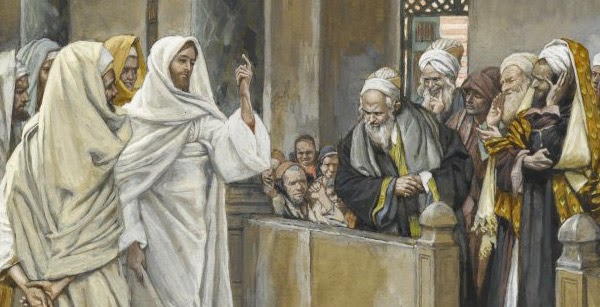
Woe unto you, scribes and Pharisees, hypocrites! for ye are like unto whited sepulchres, which indeed appear beautiful outward, but are within full of dead men’s bones, and of all uncleanness. Even so ye also outwardly appear righteous unto men, but within ye are full of hypocrisy and iniquity. – Matthew 23:27–28

0-FrontJesusPharisees2

In the preceding chapter Jesus had just finished silencing the Sadducees and Pharisees. At this point all Jesus’s opposers realized that challenging Him would mean public identification of their hypocrisy (see extra credit below). In the wake of their silence, Chapter 23 then is a clear warning to all, in their presence, not to follow them to hell (Matthew 23:15). Jesus warns us what to watch out for, how to identify them. Jesus tells us that they are all about profession; religious dress (Matthew 23:5), exalted places (Matthew 23:6), and phony titles (Matthew 23:9), but lacking true saving faith. Jesus then proceeds to indict them with eight specific accounts of their spiritual bankruptcy; the eight woes of the Pharisees.

In Mastering Self; to Lead Self and Others, Chief Hanna, holds that a Christian’s challenge in mastering self is to overcome our inherited corrupt nature expressed through the metaphors of the Pharisee, Philistine, and Pagan. He goes on to define: the Pharisee is preoccupied with pride and pretentious performance: hypocritical religionists with rules, rites, and rituals; Pagans are preoccupied with pleasure and all its passion and preference; Philistines are preoccupied with possessions and pursuits that do not edify. Discrimination, discernment and discretion or put another way; identification, understanding the truth, and freedom to chose life, are offered as the tools we need, and have in Christ, to overcome these destructive tendencies.

God would you help us to identify the deceiver’s lies, know your truth, and chose life? God would you empower us with Your Spirit so that we can live victoriously? We ask this in Jesus Name. Thank you God! You are good! Amen!


Extra Credit:

r6088x2

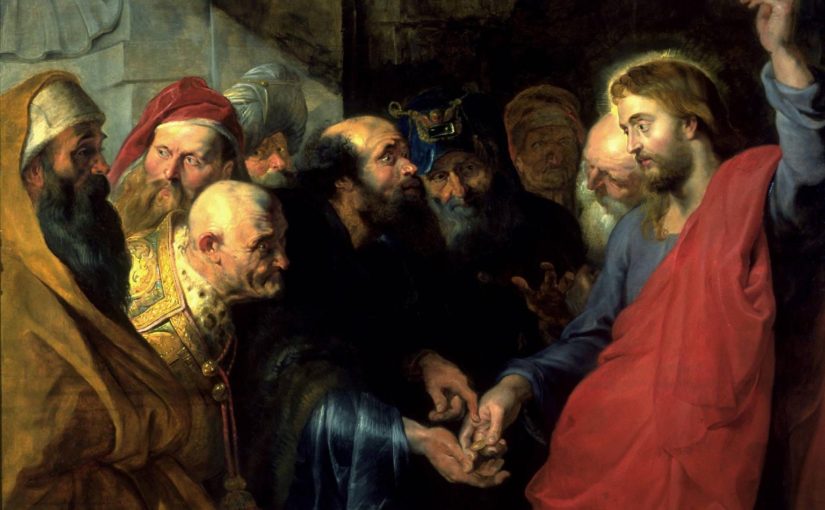
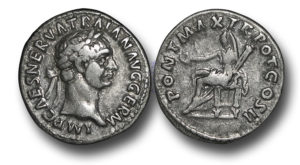
The Coin. In the previous chapter several religious leaders challenged Jesus in the temple. It didn’t go so well for them. In fact, they were completely silenced (Matthew 22:46). Render unto Caesar that which is Caesar’s is possibly the most notable response in these series of challenges. The more we dig into history the more we can understand the implications of this public exchange. Just a few observations here to pique interest. When they tried to trap Him into opposing Caesar publicly, Jesus asks them a two part question about the coin: Whose is this image and superscription? (Matthew 22:20) They answered ‘Caesar’s’, identifying the image’s likeness but only the superscription’s author. They wouldn’t dare repeat the superscription, it was bad enough that they could even produce the coin, let alone that they brought it into the temple, for it read: “TI CAESAR DIVI AUG F AUGUSTUS,” which translates, “Tiberius Caesar, son of the god Augustus, himself now Augustus.” This is the guy the religious leaders were trying to align themselves with to condemn Jesus publicly. On the reverse side was the goddess of peace with the inscription “Pontif Maxim”, which translates to “high priest”; the person who gives access to god. Ironic. In the end the only begotten Son of God, King of kings, and Prince of peace was holding a little graven image with a king claiming to be the son of god and a goddess of peace claiming to be the high priest giving access to god. An entirely false thing in every way but one; it was seemingly a sound representation of the value of the Pharisee’s religious profession. Which brings us to the parable of the 10 Virgins.   

Five-Wise-and-Five-Foolish-Virgins

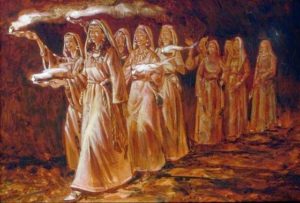
10 Virgins: 5 were wise, 5 were fools. In the upcoming chapter, Matthew 24 we have the story of the 10 Virgins. Given the context of the last two chapters consider how their lamps may represent Christian profession, symbols of their Christian faith. The five fools took their lamps, their Christian symbols but they had no oil. The oil makes the lamp work. It’s what’s on the inside. It’s what makes it all real. Having been surprised by Christ’s coming they scrambled to find oil but could not get any in time and so they were turned away. The virgins with not only lamps (Christian Profession) but with oil on the inside (real saving faith) were welcomed in. The takeaway: your faith better be real, on the inside. Not built to please men (John 12:42, Galatians 1:10). Know you are built to please God (Revelation 4:11) and live according to this truth. 

Interested to know if your faith is real? Read James and work through his book of faith tests. James helped the newly Jewish Christian people test their faith for authenticity. The Jewish people, in my estimation, were quite serious about their relationship with God. Which at the time, having just changed, presented quite the stir in their lives. James walks them through the most important question, “How do you know if you have saving faith in this new covenant?” Here’s a test of saving faith by way of wisdom. Interested to know if you are wise? John MacArthur leads us through James’s test: Earthy and Heavenly Wisdom

Productive Faith

5920447977_f84dff5a33_o_cropped_0Joshua 9; Psalms 140–141; Jeremiah 3; Matthew 17

If only my faith were the size of a mustard seed. Then, I could move mountains. Nothing would be impossible. That is what Jesus tells us today in Matthew 17:20. This is difficult to believe, at best. My struggle with it has me questioning what faith is. Sure, I am familiar with the definition that is provided in Hebrews 11:1. It says that “Faith is the assurance of things hoped for, the conviction of things not seen.” While this is a good definition of faith, it doesn’t help me believe that I can move a mountain. In fact, I can barely move the dining room table!  What gives?

Don’t you think that this is what the disciples were dealing with? They tried and tried to drive the demon from the boy but were unable. Why not? Jesus doesn’t give them a practical answer, he simply says, “Because of your little faith.” (Matthew 17:20). The secret, he tells them, is to “have more faith.” So how is it that we get more faith?

It is helpful to look at a couple of people who have exhibited true faith. One man appears in Matthew 9. Jesus restores his sight after the man confesses his faith. Jesus affirms his faith saying, “According to your faith be it done to you” (Matthew 9:29). Another story involves a woman begging for her daughter’s healing. She worshipped and pleaded with Jesus. Finally, he responds, “O woman, great is your faith! Be it done for you as you desire” (Matthew 15:28). There is also the centurion. He understands authority and ascribes the same to Jesus. Jesus affirms him and says, “I tell you, not even in Israel have I found such faith.” (Luke 1:9). How is it that these people had such faith? What is the difference? The answer is found in the object of focus.

These examples reveal three traits of faith.  First, the blind man confesses his belief, second, the woman worships and third, the centurion acknowledges Jesus’ authority. While these are separate and distinct traits, they have one commonality.   Their focus is on Jesus. According to A.W. Tozer, “faith is occupied with the Object upon which it rests and pays no attention to itself at all.” This is clear in these three examples. When we worship, confess and concede authority to God, we cease to be important. God becomes all. Tozer continues, “Faith is a redirecting of our sight, a getting out of the focus of our own vision and getting God into focus.” The result? The work we are trying to do gets done. Not on our own behalf or for our own satisfaction, but for God’s.

What have you been diligently working on that just isn’t working?  Do you have a persistent flaw that is keeping you from being the person you know God wants you to be?  Tozer says to, “Stop tinkering with your soul and look away to the perfect One.”

All A.W. Tozer quotes are taken from his excellent work The Pursuit of God.  Check out the FREE Kindle version!