Remember

1 Samuel 30-31, 1 Chronicals 10, Acts 20

The Amalekites just raided David’s camp.  All the women and children were taken, and the city burned to the ground.  The men returned to nothing.  All hope was lost.  Every spec of joy had been removed from them.  Forever.  Naturally, the men blamed David, their leader.  If not for him, we would not be here, they said.  If not for him, we would still have our families.  If not for him, our homes would be secure.  “And David was greatly distressed” (1 Samuel 20:6).

What do you do when you are in distress?  Avoid it?  That’s the easiest thing to do.  TV, a good book, and maybe even a glass of bourbon.  None of these help.  Tomorrow, the problems are still there, and the distress returns.  David takes a different path.  The text reads, “David strengthened himself in the Lord his God.”  That sounds good, but what does it really mean to be strengthened by God?

First, we need to be comforted.  Comfort comes with the assurance that everything will be alright.  This assurance starts with our remembering who God is.  Love and grace come to mind.  Remembering who he is allows us also to remember what He has done.  David does this all over the Psalms.  He does it often, and specifically.  The bigger perspective he gains from it brings comfort.

God does not, however, give us comfort for comfort’s sake.   No, God’s comfort opens the door to courage and His courage empowers us to consider the unthinkable.  This was true for David.  With a renewed spirit, David fights for God, again and his victory is assured.  So is yours.


God Leads Us To Mission

1 Samuel 14, Psalm 124, Acts 10

What are you praying for?  Anything?  As you answer that question, remember that we witness Peter praying in Acts 10.  To be fair, the text does not say what he was praying for, just that he was praying.  It does, however, reveal a few elements of how he prayed.  Through this act of obedience, we get a lot of detail about how God works.

Consider first that Peter had a location to pray.  Verse 10 says that he “went up on the housetop.”  Before you get your ladder out to climb onto your roof, think about what is unique about that location.  First, it’s quiet.  The rooftop was secluded so Peter was able to be alone.  In this seclusion, he is less distracted and, therefore, more likely to encounter God.  That is the primary factor of being on the rooftop.

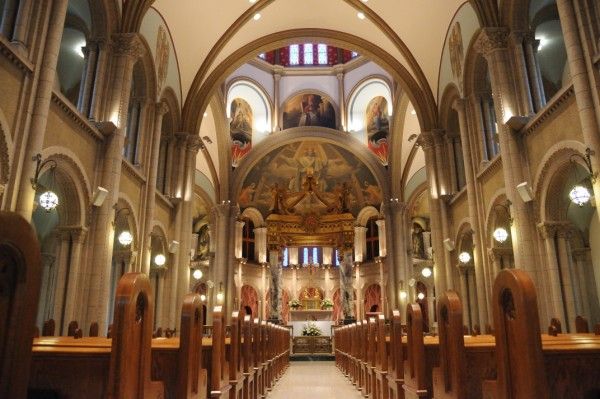
I suppose Peter may have seen another opportunity in being on the rooftop.  Being elevated, he may have felt closer to heaven.  Of course, we know that physical distance is not a thing for God, but it may be for us.  Perhaps Peter could better focus his heart on God because of it.  I’ve found this to be true for myself.  Specifically when sitting in the cathedral at the Chiara center.  While God can be found everywhere, there is something sacred about certain places.  The challenge here is to find our sacred space and use it regularly.

The text also suggests that Peter used this place regularly.  It even cites the time as “the sixth hour.”  Could it be that Peter went to this place at the same time, every day?  It’s probable that he utilized a variety of spiritual locations and very likely that he prayed every day at the same time.

Let’s be clear that God does not mandate where or when we pray.  He does, however, ask us to pray.  Prayer is not just an opportunity to communicate with God, allowing us to seek guidance, express gratitude or voice our needs and wants.  It is also an outlet for God to guide and direct us.  In prayer, he guides and directs us toward fulfilling our mission and purpose in life.  In short, it is transforming.

One commentator says, “As Christians engage in prayer and seek God’s guidance, they believe that he will lead them toward their mission and purpose in life.  This may involve opportunities to serve, share their faith, help others in need, or make a positive impact in their communities and the world at large.  Prayer is seen as a way through which God equips and empowers his followers for their mission, providing them with the spiritual resources, strength, and guidance needed to fulfill their purpose.”

This is abundantly clear to Peter.  As he prayed, his thinking was transformed.  He went from believing that some things – and some people – are unclean to understanding that God makes all things clean.  This was no small thing.  This transformation sparked Peter to take action he would have never considered. Now, the Gospel message will be shared with the Gentiles.

I wonder, where am I holding God back?  How do I need to be transformed?  There is one simple answer to those questions.  Pray as Peter did.

Back To The Grind

Judges 9-11, Psalm 17, Luke 23

Easter is such a great time of year.  The warm sun and the blooms of spring are just the beginning.  These are great reminders of the resurrection that we celebrate.  For a moment, we drink it in, basking in the love of family and the precious blood of a risen savior.  All is well with the world.  And then, It’s Monday.

The problems return, and so do I.  I still have a house to pay for and kids to send to college.   I go to work and find everything just where I left it on Friday.  The toil begins again.  This is not what it’s meant to be.  Jesus opened the door, but we have to walk through it.

If today you find yourself confronted with your old reality, there is work to do.  Start as the Israelites did and “put aside your foreign gods and serve the Lord” (Judges 10:10).   That is where God’s promised life is.  AW Tozer explains it well.  He says that “We are long on talk and short on conduct. We use the language of power, but our deeds are the deeds of weakness.”   That is what Monday does.  It exposes the incongruency of our deeds.

As Monday ends and another Easter is behind me, I ask God if I experienced the life that Jesus suffered for today.  I know the answer, yet my soul is reassured as I turn to Him.  Like the Psalmist says,

As for me, I shall behold your face in righteousness;
when I awake, I shall be satisfied with your likeness.  Psalms 17:15


  1. W. Tozer; Caleb Sinclair. Lessons from Tozer for the Christian (p. 3). Kindle Edition.


All In

Joshua 22-24, Psalm 116, Luke 19

I like the parable of the ten servants (Luke 19:11-27).  At least I like it as long as I am the one that gets the most minas (money).  Do you remember what he did with his?  He doubled them.  As a reward, the governor gave him ten cities.   Not only that, the governor gave him all the money from the lazy guy.  That’s who I am, right?

Truth is, we have to look at this story from the other angle.   The story is not so fun when I become the lazy guy.  He’s ruled by fear and lives in safety.  Of course, that’s not me.  Is it?

To answer that question, let’s first understand that Jesus is not talking about money here.  He is talking about the kingdom of God.  As such, God has invested in us.  In fact, I quickly become overwhelmed when I think of all his benefits to me.  I can start with bountiful earth.  He gave it to us and commanded us to be fruitful and multiply.  He wants us to fill the earth and subdue it, giving us dominion over the fish and birds and every living thing (Genesis 1:28).  How’s that for an investment?  But wait, there’s more.

To cover the crazy mess that humans were making, God went all in on his investment.  He sent his son.  Now, God promises you are guaranteed salvation.  Now, he vows, you can have abundant life.  Now, he asks gently, do you love me?

You don’t want me to respond, do you, God?  I mean, yes, I appreciate all that you’ve done, and I know you to be an angry and vengeful God, so I’ve just been hanging out over here in the corner, trying to mind my own business.  You know, over here where I can’t get into any trouble. I sure don’t want to make you mad.

And just like that, I’ve become the lazy guy.  Choosing to rest on what I have been given for fear that I might say something offensive.  Equally bad, I might do something that doesn’t work.

This isn’t the way God designed it. This is not why he invested in us.  The Psalmist in Psalm 116 gets it right with one single question.  He asks, “What can I offer to the Lord for all he’s done for me?” (v12).  That is a good question for me to answer.  Right now.

The Psalmist responds this way:

I will lift up the cup of salvation

and praise the Lord’s name for saving me.

I will keep my promises to the Lord

in the presence of all his people.

Do Not Enter!

Deuteronomy 32-34, Psalm 13, Luke 13

Deuteronomy 34:1-4 (NLT) Then Moses went up to Mount Nebo from the plains of Moab and climbed Pisgah Peak, which is across from Jericho. And the Lord showed him the whole land, from Gilead as far as Dan;  all the land of Naphtali; the land of Ephraim and Manasseh; all the land of Judah, extending to the Mediterranean Sea;  the Negev; the Jordan Valley with Jericho—the city of palms—as far as Zoar.  Then the Lord said to Moses, “This is the land I promised on oath to Abraham, Isaac, and Jacob when I said, ‘I will give it to your descendants.’ I have now allowed you to see it with your own eyes, but you will not enter the land.”

What kind of cruel trick is this?  For the last 40 years, Moses has led the Israelites faithfully.  He’s endured wars, famine, rebellion, and every kind of struggle.  His calling kept him strong; the promised land.  Get the people there, God told him.  But, this is the end for Moses.  He will not enter.  Instead, he will die.

It makes me mad.  The pain he endured, and the faithfulness he gave, weren’t enough. Instead of a victory lap, God says, stand here next to me and watch.  Let me show you what you are missing out on.  What?!

My thoughts and questions reveal the trouble of my own heart.  Think about it.   If God pulled you aside today and said someone else is about to accomplish everything you dreamed, but sorry, your time has come.  Now, stand here next to me and watch.  How would you feel?

Anger is first for me.  You just experienced that.  Thankfully, it is short-lived.  I push through the anger and ask God to help me see.  He presents me with humility. This comes with the reminder that Moses messed up pretty badly.  So have I.  But God loves anyway.  This love gives way to worship.

Moses had it right.  He knew that the promised land wasn’t the real prize.  God was the prize.  Because of this, Moses saw his death as an opportunity.  It’s no different than Paul.   Remember when Paul said, “to live is Christ, but to die is gain?” (Phil 1:21)  Moses knew this too.  God has finally freed him from all of life’s troubles.  He gets to be with God for all of eternity.

Clearly, I have work to do.  My failure to see God as the prize for Moses tells me that there is something in this life that I have idolized.   There is something in this life that I am making all about me.  This is where Moses got it right.  He looks God straight on and sees everything he ever wanted, so he follows him up the mountain with great anticipation.

Home Alone

Deuteronomy 15-18, Psalm 115, Luke 9

Can you remember the last time you were alone?  No, I am not talking about being by yourself; I am talking about being alone.  Just you and your thoughts.  Unless you are intentional about it, it happens less often than you think.  Not because we don’t have the opportunity but because we extinguish the opportunity.  That means when we find ourselves alone, we do everything possible not to be alone.  Think television, the internet, social media, and maybe even alcohol.  If I am honest, being alone terrifies me.  But Jesus sought it out.

Jesus sought out alone time. A closer look through Luke 9 is surprising to see.  Starting in verse 9, “he slipped quietly away” (NLT).  Verse 18 explains that Jesus left the crowds to pray alone. He even took advantage of being alone while the others were sleeping (V32.) Clearly, Jesus understood the need to recharge.  We all do.  But Jesus wasn’t about “time off.”  He didn’t want to be alone.  He wanted to be alone with God.  And that is even more terrifying than being alone.

As CS Lewis writes in The Lion, in The witch and the Wardrobe, “Is he-quite safe?  I shall feel rather nervous about meeting a lion”…” safe?” said Mr. Beaver … “Who said anything about safe?  ‘Course he isn’t safe.  But he’s good.  He’s the King, I tell you.”

You see, something happens when we are in the presence of the King. Respect and humility are only part of it.  When you get alone with God, he will change you.  Problem is you may not want to change.  Or, maybe God wants to change you a lot, and you’re only willing to change a little.  Perhaps, you are not willing to change at all?  There is a simple solution to all of those.  Don’t get alone with God.

Of course, that is no answer.  To give up Jesus is to give up life.  But, if we are to live fully, we must make time to be with him.  The results will be unmistakable, just like Jesus.  As he prayed, the appearance of his face was transformed, and his clothes became dazzling white (v29).

Go Be Great

Numbers 30-33, Psalm 35, Luke 3

Chad’s post yesterday stirred up my own desire for greatness.  Some days, I want to be like Elon Musk, changing the way the world works.  Or maybe Mark Cuban, one investor at a time.  Often, my desire to change the world is twisted.  I have to be careful.  Do I want to change the world, or do I want the world to be shaped by me?

John the Baptist didn’t see it this way.  He had no interest in power or possessions.  He was consumed only with the love and power of God and from that, he did what came naturally.  He went into all the regions around the Jordan, proclaiming a baptism of repentance for the forgiveness of sins (Luke 3:3).

It is no surprise that John’s passion and fever led others to view him as a leader.  The people wanted more.  But, John was clear.  His mission was not to be the one.  No, his mission was merely to tell as many people as possible that he who is mightier than I is coming (Luke 3:16).  

I have to be careful with my desire for greatness.  I do want to change the world.  But not to look more like me.


What You Focus On Expands

Numbers 15-18, Psalm 113, Colossians 3

It’s been a hard day.  Actually, it’s been a tough week.  Now that I think about it, the last month has been pretty rough.  The longer I sit and think about how tough my life is, the tougher it becomes.  This is nothing new.  You have heard it before.  Earl Nightingale says it this way, “we become what we think about most of the time.”  I also like the way Craig Groeschel puts it.  He says, “your life is moving in the direction of your strongest thoughts.”  Hmmm…. maybe I should take an inventory of my thoughts.

I did it tonight as I sat down for dinner.  I caught myself thinking about my day, reliving conversations and frustrations.  I reminded myself that I didn’t sleep well last night and that tonight was probably going to be tough too.  I am busy, you know.  As my family gathered around the dinner table, concocting a blessing was not in me.

“Mom, will you pray for us?”  Clever, aren’t I?  I can still fulfill the obligation of praying before dinner without actually praying.  At least, I thought so.

As Jennifer began to pray, I found stillness.  Not because I was still but because my mind turned to God.  In an instant, I found an undeserving peace.

I think this is what Paul is talking about in Colossians 3 when he tells us to “set our sights on the realities of heaven.”  This is, he says, where Christ sits.  He is sitting n the place of honor, at God’s right hand.  I think of the throne room.  It feels holy and sanctified.  I feel small.  At the same time, I am whole.

These thoughts are not for God’s benefit; they’re for ours. Think about it.  Where would life take you if you spent more time thinking about the things of heaven, not the things of earth?

Here Be Dragons

Leviticus 26-27, Psalm 112, Hebrews 10

Long, long ago, world maps were incomplete. This was a real problem for people who were traveling long distances. Many were not willing to face the uncertainty. But, a few adventurous souls would throw caution to the wind and set out into the unknown. When they failed to return home, friends and loved ones could only guess their fate, fabricating awful and spurious stories. To warn future travelers of the dangers, they highlighted the unknown territories with dangerous creatures, like dragons. In some ways, this practice still lives within us.

Think of your most significant opportunity. Maybe you have been asked to speak publicly. Perhaps it’s confronting a negative situation at work. Hastily, you say, “yes, I am going to accept that challenge.” As time passes, however, your commitment wanes. You consider all the negative possibilities, and fear shows up. Left unchecked, fear builds to the point of capitulation. We call in sick for the public speaking event and avoid our negative work situation. Both are horrible endings. Why? Because God created us for more. To become who we are created to be, we must live by faith.

The church in Hebrews had a similar problem. They lost their confidence and replaced their hope with fear. The writer of Hebrews is encouraging them to endure. “Just a little longer; trust me, everything will turn out well.” (v23)

Don’t you know that medieval sailors had similar situations? Knowing that a shorter trade route was possible, they set sail. Upon entering the unknown, they experienced storm after storm. Their fear builds until they are faced with a choice.  Continue, or quit.

The truth is that we all have these opportunities. It is our choice whether we advance with faith in God’s promises or retreat. Hebrews 10:33 calls it “shrinking back.”  The result of shrinking back is destruction. That’s the same as death.

Responding through faith, however, we are able to press on. Not just once but every day. With faith, we travel into the unknown with full assurance of what we hope for and the things that we cannot see (Hebrews 11:1).


Let’s Get Going!

Leviticus 15-18, Psalm 31, Hebrews 6

Many people want to become real estate agents.  Maybe you watch Million Dollar Real Estate Agent or House Hunters and get the itch too.  From those shows, lots of people decide to take the next step and get licensed.  But, did you know that lots of people who get a real estate license never sell any real estate?  It’s true.  It’s because getting a license is different than selling real estate.  Let me explain.  The licensing process is a requirement of the state.  The state needs real estate agents to know the laws that govern real estate.  Some of this is practical, like the division of land into sections and acres, and some of it is protectionist, benefiting the consumer.  Training from the state, however, is just the beginning.  To sell real estate, you must go out into the world and help people.  That means you have to come out from behind the computer and share your knowledge.  That’s where the real fun begins.  To be great, you have to learn about the economy, psychology, negotiating, and develop business skills.  It’s a lifelong process.  But some won’t make it.  They don’t want to take the steps to become great and instead stay behind the computer.  Some only last a couple of months. Some will hang on for years.  Eventually, they fade away.  Ironically, this is exactly what Paul is talking about today in Hebrews 6.

As new Christians, we are excited.   Salvation has changed us; we have a new outlook on life.  No longer a slave to our old selves, we get to step out and be whoever we want to be.  Yahoo!  Thank you, Jesus!  But we don’t.  We take our newfound salvation and sit on the couch, watch tv, or read a book.  Paul is urging us to get on with it (v6).  If we don’t, it could turn out badly.  Remember what happened to the real estate agent?

What Paul really wants us to know is that our great life is “out there.”  We need to get out into the world and do things.  “But, but, but I don’t know what to do,” we cower.  But we do.  Armed with faith, we can do any work.  Soaked in God’s love, we can lead and heal people.  Encouraged by God’s promises, we can endure every adversity (1 Thessalonians 1:3).  So, stop being sluggish, lazy, and dull, Paul charges.

Paul has stirred my soul.  I’m ready to “get on with it.”  I want to be Christ’s love in the world. I want others to experience God’s joy through me.  I’m ready to carry my faith to maturity.  This is how we do good things.  This is how we become who God created us to be.