Two Hearts

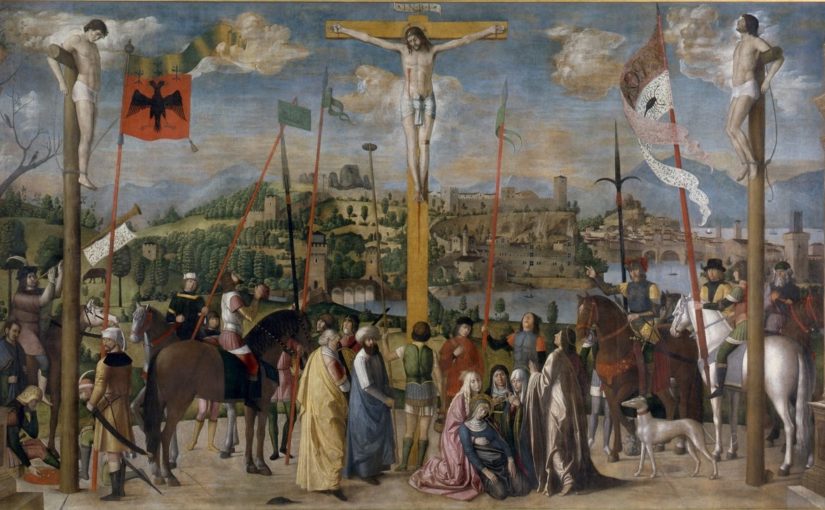
Today we have a front row seat to an unimaginable event. We get a detailed account from Luke, describing a Roman crucifixion. Scavenger creatures are probably approaching and stench is in the air. Death is near.

It is a scene of torture, pain, blood, sweat, and tears, along with eternity-altering dialogue between three people who can barely breathe and are about to die. There was no mercy, no hope, no rescue in a crucifixion; once you’re up there, death is imminent.

With this, we get to be witnesses to what are perhaps the final words of three men. I’d think that when someone knows they are going to die, their words and thoughts become very raw and very real, very quickly. I find it truly fascinating that we have this conversation in writing.

We have Jesus (not guilty) then two men who are guilty.

First, we have words from one of the guilty men:

One of the criminals who were hanged railed at him, saying, “Are you not the Christ? Save yourself and us!” (Luke 23:39)

Adamant, defiant, railing (I interpret “railing” to mean mocking or scoffing, much like the rulers and soldiers were doing). While he didn’t seem to be in denial of the charges at this point, there doesn’t seem to be any repentance from him.

And the other criminal with a different heart:

40 But the other rebuked him, saying, “Do you not fear God, since you are under the same sentence of condemnation? 41 And we indeed justly, for we are receiving the due reward of our deeds; but this man has done nothing wrong.” (Luke 23:40-41)

Even the criminal knew Jesus was innocent, yet sentenced to death. We get a glimpse into the criminal’s heart and mind. He acknowledges Jesus as king.

42 And he said, “Jesus, remember me when you come into your kingdom.” (Luke 23:42)

With that one simple statement of faith and a repentant heart, eternity in Heaven is his. The same goes for all of us, depending on our choice to either rail him or repent and call him who he really is: King and Lord of All.

And he said to him, “Truly, I say to you, today you will be with me in paradise.” (Luke 23:43)

Luke 23 & Psalm 71

Picture: La Crocifissione by Michele Da Verona (c. 1470 – c. 1536)
Cornerstone of Christ

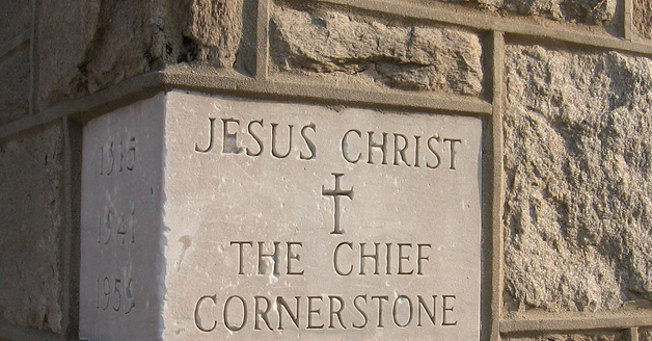
Our Cornerstone

Today’s Reading: Luke 20 Psalm 68

God’s living word is filled with truths of How we should live our lives…, When we should call on Him…, Where you can find hope…, Why a relationship with God is necessary…,and Who we should live for.  The answer to all these questions point directly to Christ Alone and the timing is now and always! So as we reflected on how to live this earthly life,we land on a verse that reminds us of our essential Cornerstone.

Luke 20:17 Jesus looked directly at them and asked, ” Then what is the meaning of that which is written: “The stone the builders rejected has become the cornerstone?”

This verse is a reminder that all our lives are built on this cornerstone? That in our broken lives God is in perfect control. The cornerstone breaks us down to make it not about me or you, but about Him.  This brokenness is necessary to draw us to the realization that we need God. That building our life on the Cornerstone of Christ gives Him full authority.  Do I remember that all the time? This cornerstone mentioned throughout the bible in various places represents our crucial stone, the cornerstone that holds up our whole structure. (Psalm 118:22, Matthew 16:18, Acts 4:11, Eph. 2:19-21) I love this use of cornerstone in these verses.

Here in verse 18 we are reminded that;

Luke 20:18 “Everyone who falls on that stone will be broken to pieces; anyone on whom it falls will be crushed.”

We are all broken. We have been broken to pieces. But God has provided us with this cornerstone that in our broken state we can submit to Him.  When we admit to our brokenness, repent, and give our lives to God, He makes us new.  We make it not about self-centeredness but giving it all to Him. The foundation is already at our feet.  Those who deny this cornerstone and don’t submit to God are described as “crushed”.

Dear Lord,

You are our cornerstone we put all our trust in.  We know we are broken and that in our weakness you are strong.  God we pray that in this earthly world we focus less on us and more on you.  We love you and give praise to you.  The victory is yours. Amen


In Psalm 68:4 David tells us to sing praise in His name, extol Him, rejoice before Him – His name is the Lord! Our Cornerstone!

Cornerstone – Hillsong

Resources:

The Jeremiah Study Bible

Tysdale Study Bible

What Do You Want?

Luke 18Psalm 66

As Jesus approached Jericho, a blind beggar was sitting beside the road. When he heard the noise of a crowd going past, he asked what was happening. They told him that Jesus the Nazarene was going by. So he began shouting, “Jesus, Son of David, have mercy on me!”  “Be quiet!” the people in front yelled at him.  But he only shouted louder, “Son of David, have mercy on me!”  When Jesus heard him, he stopped and ordered that the man be brought to him. As the man came near, Jesus asked him, “What do you want me to do for you?” (Luke 18:35-41)

Did you pay attention to Jesus’ question in this story?.  How would you respond to him?  Think about it.  If you captured Jesus’ attention and, point-blank, he asks you, “what do you want me to do for you?”  How do you respond?  My own answer to that question sends panic through my heart.  Why?  Because, my answer reveals the condition of my heart.

There are a thousand things that I want from him.  I want a new car, a new house and another sale.  I want my company to grow faster and have more influence.  I want him to heal my friend with cancer and to provide more money for the needy.  All of those things are what I want.  Do those Lord.  Should we be surprised that God doesn’t jump in and honor all of my requests?  We shouldn’t.   James 4:3 reminds us that, “You ask and do not receive, because you ask wrongly, to spend it on your passions.”  Yes, that answer stings a bit.  There is, however, a better way.  Consider the response of young King Solomon.

Similar to the blind man, the Lord appeared to Solomon.  He asked him, “What do you want? Ask, and I will give it to you!” (1 Kings 3:5).  Solomon replied, “Give your servant an understanding mind to govern your people, that I may discern between good and evil, for who is able to govern this your great people?”  (1 Kings 3:9).  Solomon’s response pleased the Lord.  So did the blind man’s.  He answered, “Lord, I want to see!” (Luke 18:45).  Jesus immediately responded to this request.  Why?  Because like Solomon, his request required faith in God for the sake of God.

Do you know what you want?  Do you know that the Holy Spirit is here, waiting for you to ask?  What do you want him to do for you?

THIS

Today’s reading is Luke 17 and Psalm 65.

Luke 17 contains messages around temptation to sin, increasing faith, unworthy servants, and the coming of the Kingdom of God, but we will focus our time on the story of Jesus helping 10 lepers from Luke 17:11-19.

In this story, Jesus heals 10 lepers when they yell and ask for help from a distance, but only 1 comes back to thank and praise him. At first read, it’s easy to be judgmental, and think “how could they not come back and say thanks!?” It’s also easy to condemn members of the crowd yelling “Crucify Him!” when he’s on trial with Pilot.  After reflection, I realize when I take Jesus name in vain it’s just the same as someone yelling these words. When I don’t thank Him for answered prayers or completely forget about it a few days later, am I any different than the 9 lepers who didn’t come back to show their gratitude? It’s so easy to quickly forget about the answered prayer for a negative test for cancer, a successful surgery, a new job, retention of your job amidst downsizing, a new home, or a significant other you’ve been asking God for. How quickly do we forget these things!  I’m guilty of forgetting these things within days, hours, and even minutes! What about the answered prayers we don’t even realize occurred? For example, we pray for safety and then get really upset when spill coffee on the way to work and have to go back home in anger to change clothes causing us to be late to our first meeting. We had no idea this situation kept us from getting into a car accident.

Our leadership team, thanks to my brother in Christ Josh Waite’s idea, starts our weekly meetings by “going B.I.G.” That stands for “Begin In Gratitude.” We reflect and tell everyone one thing we are thankful for. When you focus on what you are thankful to God for, the stress and problems are minimalized. I’ve heard it said you can’t feel stress and anxiety at the same time. When we focus on and thank God for what we have and what He’s given us, we don’t get stressed and mad about what we don’t have.

Some might ask how they are supposed to be thankful when they just lost their job or a loved one? Well…it’s hard. But, maybe this will help you find your true calling or give you an opportunity to move closer to, or spend more time with, family. How about giving praise that you had that loved one in your life for the amount of time you did or even at all for that matter? When you praise God when things are good and when they don’t seem to be good, it changes your whole perspective and happiness. You see the world through an entirely different lens. Psalm 65 highlights offering praises as well.

As we go into next week, let’s go “B.I.G!” Let’s remember, thank, and praise Him for the big answered prayers we asked for, for the ones we don’t realize were answered, and for the things we didn’t even request. He gave it all to us. Most importantly, let’s thank him for sending his Son Jesus to take the punishment that should have been ours on the cross. For that, we should always and forever be thankful to Him for the opportunity He gave us to become one with Him and have eternal life! He did for us what we could not do for ourselves.

“Rejoice always, pray without ceasing, give thanks in all circumstances; for this is God’s will for you in Christ Jesus.”  1 Thessalonians 5:16-18

“Thank God for all I missed because it lead me here to This…”

The Pursuit

The pursuit of excellence. The hunt for the prize. The victory of a game. Have you ever been in pursuit of something, knowing you have to work really hard to achieve it? How about training for a marathon, running it and savoring the moment you cross that finish line? Have you ever lost something, spent hours trying to find it (I am thinking of my mother and her constant “pursuit” of finding her glasses 🙂 ), and then you are so pleased when you do, even if it’s just for a moment? How about that one photo from your childhood that you just have to find, digging through bins or an online album? Or have you ever even had that moment where you are trying to remember someone’s name from your past and it comes to you in the middle of the night? All these examples may spark even a little adrenaline rush. We have little things and big things we chase after all the time.

In today’s story, Luke 15, Jesus uses parables to relate to his pursuit of Christians or pursuit of turning sinners into Christians. He first gives us the parable of the lost sheep. He relates to our desire to find something that is lost. Wouldn’t we all go find that one lost sheep even if it meant leaving the rest of the herd behind? And then, rejoice, we find that lost one. Maybe there are some in the world who wouldn’t go after that one lost sheep, but many would chase down that one sheep.  He wants us all celebrating one sheep or one Christian.

Rejoice with me; I have found my lost sheep.’ I tell you that in the same way there will be more rejoicing in heaven over one sinner who repents than over ninety-nine righteous persons who do not need to repent.

The second parable also appeals to many people. The parable of the lost coin. Would we not try to find that lost coin if we lost one and knew it was on the ground, in a corner, if we could just find it.

‘Rejoice with me; I have found my lost coin.’ 10 In the same way, I tell you, there is rejoicing in the presence of the angels of God over one sinner who repents.”

Hunting for little things is sometimes frustrating, but we do it, right? These first two parables are interesting as they relate to “things”.

The third parable tugs at us, particularly those of us who are parents and those of us who may still be very close to our parents. The parable of the lost son. In this story, the son is lost. Lost in the world, off to find his way, do his own thing, throw away his money all to pursue his selfish ways and gain “freedom”. While away, his loyal brother works hard, pleases his father and does what he views is right. When his father celebrates the return of his brother, the eldest is made. He does not think it is fair! He has been the one doing well, fulfilling his father’s wishes, God’s plan for him. But he can’t help himself and is upset. His father calms him but acknowledging his hard work, loyalty and commitment, but also helps us understand the need to celebrate when a lost sole is found.

31 “‘My son,’ the father said, ‘you are always with me, and everything I have is yours. 32 But we had to celebrate and be glad, because this brother of yours was dead and is alive again; he was lost and is found.’”

All three parables help us understand God’s pursuit. His hard work to help sinners become Christians. His hard work to help Christians remain Christians. To help the believers who sin to confess their sins and to continue on his path. His job is so hard some days! And if you don’t think so, pick 10 (or 100 or 1000) people in your head. Think of all God has to do for each one of those individuals. Wow. Yes he chases us down. He is on for the chase, the hunt, the game of pursuit of people.   Thankfully, he does not give up, whether the task is large or small.   He rejoices and celebrates each and every one of us he finds.  He puts his hands in the air and signals VICTORY!

**Special note:  This photo was taken during the Boston Marathon the year after the bombing.  As I wrote this post, I was looking for someone crossing the finish line, and then I remembered this sign of triumph as I saw my kids at the last turn.  The idea of pursuit reminded of the many days of training (pursuing) with my good friend Teresa Herbert.  How pleased we were to finish – yes, hands in the air!  She is running Sunday’s Chicago Marathon, and I know she will have her hands in the air as she crosses the finish line after months of pursuit.  May God watch over her and all the runners.  May God continue to provide opportunities for us to raise our hands in the air as Christians coming together in victory and may we respond to the pursuits he places in our paths.

Additional reading:  Psalm 64

Draw Near

The two chapters of Scripture we’re going over today might not seem like they tie in together at first glance, but as I was reading these two passages, my heart was definitely drawn to a few aspects of each. Both chapters, in my mind, I believe, discuss the character of my God. Let’s start with the beginning of Luke 15, focusing on verses 1-7:

By this time a lot of men and women of doubtful reputation were hanging around Jesus, listening intently. The Pharisees and religion scholars were not pleased, not at all pleased. They growled, “He takes in sinners and eats meals with them, treating them like old friends.” Their grumbling triggered this story.

“Suppose one of you had a hundred sheep and lost one. Wouldn’t you leave the ninety-nine in the wilderness and go after the lost one until you found it? When found, you can be sure you would put it across your shoulders, rejoicing, and when you got home call in your friends and neighbors, saying, ‘Celebrate with me! I’ve found my lost sheep!’ Count on it—there’s more joy in heaven over one sinner’s rescued life than over ninety-nine good people in no need of rescue.

Can we all just pause for a second and recognize how totally grateful we are that our God is a God who “takes in sinners and eats meals with them, treating them like old friends?” My goodness. I can’t help but think that it’s a really good thing that He does, because I don’t know where I would be without that kind of grace in my life. That is the God we worship: a God who will come and be with us. Immanuel. He is not a God who is distant.

Psalm 63 seems to be the perfect place to transition to from this point of total thankfulness for Who our God is. In this Psalm, the author is recounting all the ways that God has been good to him, and I love what he says in verses 5-8, in The Message version:

I eat my fill of prime rib and gravy;
    I smack my lips. It’s time to shout praises!
If I’m sleepless at midnight,
    I spend the hours in grateful reflection.
Because you’ve always stood up for me,
    I’m free to run and play.
I hold on to you for dear life,
    and you hold me steady as a post.

Because we have a God who came to be with us, a God who will eat with sinners, a God who will chase after the one who has run away, and a God who isn’t far from us even when we are imperfect, we can live this same sort of abundant life  we read about in Psalm 62. We are “free to run and play” as we hold on to Jesus for dear life, because we are loved by a God who came. Today, my hope is that you can rest in the fact that God is not far away or even angry with you. Instead, He wants to fellowship with you and draw near to you… in fact, He even promised, “You will seek me and find me when you seek me with all your heart.” (Jeremiah 29:13). And you get to experience that free and full kind of life that Psalm 63 talks about because of Jesus. Today, draw near to God and allow Him to show you the kind of life He has for you to live.

My Refuge

Psalm 62


Vs 1-2 “ I wait quietly before God, for my victory comes from Him. He alone is my rock and my salvation, my fortress where I will never be shaken.” vs 5-8 “Let all that I am wait quietly before God, for my hope is in Him. He alone is my rock and my salvation, my fortress where I will not be shaken. My victory and honor come from God alone. He is my refuge, a rock where no enemy can reach me. O my people, trust in Him at all times. Pour out your heart to Him, for God is our refuge.”  

So much power, truth and beauty in these words. “I wait quietly before God”. How often do I sit quietly and wait before God?  What does that look like? Can you grasp how much self-control it takes to sit quietly and wait before God… without asking for forgiveness, help, or intervention from Him? Shoot, just without talking! How often am I willing to sit quietly and wait? First, waiting takes time. Time that we don’t feel like we have to give. Time, may arguably be our most precious commodity in this country, society, and age. Honestly, “waiting” is probably considered one of the biggest wastes of our time and causes us more frustration than most other things. Second, I have thought for years that waiting for answers to the unknown is one of the hardest things in life. I was reading earlier this week the story of Abraham and Sarah waiting for a child. The commentator wrote, “There probably isn’t anything harder to do than wait.”. Finally someone said it! Waiting is hard. Waiting shows us that we are not in control. A lot of times when we wait, we are powerless to do anything to change the situation or make the process move any faster. Hmmm… I wonder why God asks us to wait before Him?  

When we are willing to use one of our most precious commodities, time, and put our hearts in the proper place of knowing we can’t control our own circumstances we are in the prime place to hear what God wants to tell us. I want to challenge you today to try this. Take 2-5 minutes this morning to sit quietly before God. (If you are anything like me, you will probably have to start over several times as your mind will wander to anything but waiting on God…and you may need to look at a clock. I can easily lie to myself about how long two minutes actually is.) Just try it today to see if it is a valuable practice that needs to be implemented on your calendar on a regular basis.

“ My hope is in Him, He is my rock, my salvation, my fortress and my refuge. Trust in Him at all times and pour out your heart to Him, He is our refuge.” What can I not face with these truths? I need these words in front of me all of the time! It is so easy to get sidetracked with responsibilities, activities, and schedules. A lot of life, because we need to concentrate and think on other things to complete tasks, pulls us away from thinking on these truths. I want to live my days mindful that my hope is in Him. I want to remember to pour out my heart to Him instead of worrying, telling a friend or complaining about my circumstances. I want to trust Him at all times instead of spending hours trying to figure out how to solve a situation. I want to remember His love for me and every person He created as I interact with others. I want to run to Him first when I think I’ve been wronged, scared or misunderstood.  

God the Spirit

Luke 12; Psalms 60

Rauch Elohim, Breath of Life, Spirit of Wisdom, Spirit of Grace, Spirit of Truth, Spirit of Glory, Spirit without Measure, the Holy Spirit, God the Spirit are all manifestations of an infinite and awesome God.

This past year has been an enlightening and transformational year for me as a father, husband, and above all witness for God. I made an intentional commitment to learn more about who I am and how God can use me for His glory. Through this expedition of self-reflection I have read several books on how to realign myself with God and understand His purpose. One particular book that has had an impact on me is Forgotten God by Francis Chan. This book reawakens the mind and allows the reader to recognize the Holy Spirit presence in our lives. It actually changes the way I see the Holy Spirit, not as passive being, but a dynamic and powerful presence of God: God the Spirit. In reading Luke 12, I have a more deep appreciation and awe for the magnitude that God the Spirit works.

Luke 12:8-12

“And I tell you, everyone who acknowledges me before men, the Son of Man also will acknowledge before the angels of God, but the one who denies me before men will be denied before the angels of God. 10 And everyone who speaks a word against the Son of Man will be forgiven, but the one who blasphemes against the Holy Spirit will not be forgiven. 11 And when they bring you before the synagogues and the rulers and the authorities, do not be anxious about how you should defend yourself or what you should say, 12 for the Holy Spirit will teach you in that very hour what you ought to say.”

This chapter has many powerful messages and it is sometimes hard to discern what to focus on (according to the ESV Version): 1.) Jesus Speaks Against Hypocrisy, 2.) Have no Fear, 3.) Acknowledge Christ before Men, 4.) The Parable of the Fool, 5.) Do Not Be Anxious, 6.) You Must Be Ready, 7.) Not Peace, but Division, 8.) Interpreting the Time, and 9.) Settle with You Accuser.

Revisiting and reflecting on this chapter this week I have become aware of an important portion on the Word, which is hidden in verse 10-12. In this small space so much is revealed. Jesus is clarifying how the power is manifested in the Trinity. He states that as a human and advocate for us, that he is somewhat insignificant compared with the Holy Spirit. 10 And everyone who speaks a word against the Son of Man will be forgiven, but the one who blasphemes against the Holy Spirit will not be forgiven. This for me is truly profound. The God in flesh is saying that the most severe sin that would not be forgiven is to speak against and deny the existence of the Essence of God, the Spirit of God.

With this new knowledge, I question myself and ask the question, “Have I blasphemed the Spirit? Have I not acknowledged the power of the essence of God?”

The Spirit of God has many names. The Spirit of God is present in the works of God. The Spirit of God is present in our lives. The first expression of the Spirit is Genesis 1:2: The earth was without form and void, and darkness was over the face of the deep. And the Spirit of God was hovering over the face of the waters. This same Spirit that has been working since before the creation is manifested and working within each of us. When we recognize the presence of the Spirit and the power that He has in us, we are affirming that we are in connection with the Spirit.

My prayer is that as we continue to grow in our journey to know God the Father and God the Son, we be more sensitive to the presence of God the Spirit and allow Him to dynamic in our lives. Be Blessed.


How Should We Pray?

How Should We Pray???

The Lord’s Prayer is a prayer that Jesus taught His disciples to pray. We can find this prayer in Matthew 6:9-13 and here in Luke 11:2-4.

Luke 11:2-4 says, “He said, “This is how you should pray: “Father, hallowed be your name, your kingdom come. Give us each day our daily bread. Forgive us our sins, for we also forgive everyone who sins against us. And lead us not into temptation.” (NIV)

Growing up in a Presbyterian Church, I remember memorizing and reciting this prayer each and every Sunday. It was just something we did. I was always focused on getting the words right, never on what the words meant and why were they written. Why did we say this prayer every Sunday? Did this make God happy just for us to say it by rote?

The Bible teaches that God is more interested in our hearts when we pray than He is in the words that we say. When we pray, we are to pour our hearts out to God, not simply recite memorized words to God.

Philippians 4:6-7 says, “Don’t worry about anything; instead, pray about evverything. Tell God what you need, and thank him for all he has done. If you do this, you will experience God’s peace, which is far more wonderful than the human mind can understand. His peace will guard your hearts and minds as you live in Christ Jesus.” (NLT)

The Lord’s Prayer should be understood as an example, a pattern of how to pray. The disciples were eager to learn HOW to pray. The disciples watched Jesus pray. They were so enamored with how He prayed and was filled with the power of His prayer, that as soon as He was finished praying, they asked him, “Lord, teach us to pray”. There was something about watching Jesus pray that made them want to learn how to pray as Jesus did. The disciples sensed the closeness that Jesus had with God the Father as he prayed. They needed to learn that it is more important that they learn TO PRAY, not necessarily how to pray. Just as the disciples, our greatest need is to learn TO PRAY and TO PRAY all of our days!

The fact that Jesus taught this prayer in Matthew 6:9-13 and then repeated it here in Luke shows how important it is. The fact that He did not repeat it the exact same way as in Matthew shows that it was not to be used as a precise ritual or magic formula for prayer.

“Father” is teaching us whom to address our prayers to – The Father.

“Hallowed be your name” is telling us to worship God and to praise Him for who He is.

“your kingdom come, your will be done on earth as it is in heaven” is a reminder to us that we are to pray for God’s plan in your lives and the world. We are not praying that our own plan will turn out perfect. We are to pray for God’s will to be done, not our own desires.

“give us each day our daily bread” encourages us to ask God for the things we need. Jesus shares with His disciples that they should ask for daily provisions. (Asking God daily reminds us that He wants us to seek Him every day! )

“forgive us our sins as we have also forgive everyone who sins against us” reminds us to confess our sins to God and to turn from them, and also to forgive others as God has forgiven us.

The conclusion of the Lord’s Prayer, “And lead us not into temptation” is a plea for help in achieving victory over sin and a request for protection from the attacks of the devil.

So, again, the Lord’s Prayer is not a prayer we are to memorize and recite back to God. It is only an example of how we should be praying. Should we pray the Lord’s prayer back to God? Yes! If our heart is in it and we truly mean the words we say.

We all have days when we struggle to pray. Sometimes it is hard to have moments to sit and pray. But the good thing is that God listens to our prayers, big or small. He wants us to have conversations with Him. And thankfully when we are struggling with what to say, we have this prayer that Jesus shared to use as a model.

This week, let us commit to prayer. No matter how big or small, let us take time to have those daily conversations with the Lord. Remember, God is far more interested in our communicating with Him and speaking from our hearts than He is in the specific words we use.

Truth and Love

Today’s reading:  Luke 10, Psalm 58

Oxford Dictionaries named “post-truth” the 2016 international word of the year.   Oxford defines it as – relating to or denoting circumstances in which objective facts are less influential in shaping public opinion than appeals to emotion and personal belief.  Thinking over the past 18 months or so, are you surprised that this word is so prominent?   Think about the 2016 Presidential election, the current political climate, fake news, and countless sports figures and movie stars taking the stage in protest.  I could go on and on, but it is exhausting.  Go back and read the definition again.  Did you notice the words “personal belief”?  While our 21st century culture may not have consensus (or really care) about truth, you cannot be a follower of Jesus Christ and buy into this agenda.

Today’s scripture in Luke 10 gives us beautiful illustrations of Jesus commitment to truth and how he demonstrated it through love.  First, he sent out 72 men to prepare several towns for his visit.  According to verse 3, he knew they were going to encounter troubles.  He sent them out with supernatural power to overcome Satan and his evil ways (Luke 10:19), yet he still instructed the men to humbly come in peace and to approach those they encountered with love and gentleness.  “Go your way; behold, I am sending you out as lambs in the midst of wolves. Carry no moneybag, no knapsack, no sandals, and greet no one on the road.  Whatever house you enter first, say Peace be to this house” (Luke 10:3-5). “When you enter a town and are welcomed, eat what is offered to you. Heal the sick who are there and tell them, ‘The kingdom of God has come near to you’ “(Luke 10:8-9).

Even though Jesus sent the men to influence with love first, he also instructed them to demonstrate an unwavering commitment to truth by sternly warning those who rejected it.  But when you enter a town and are not welcomed, go into its streets and say, ‘Even the dust of your town we wipe from our feet as a warning to you. Yet be sure of this: The kingdom of God has come near.’ I tell you, it will be more bearable on that day for Sodom than for that town (Luke 10:10-12).

The parable of the Good Samaritan in Luke 10 also demonstrates truth and love, just in the opposite order. When the expert asked Jesus what he must do to inherit eternal life, Jesus pointed to the truth. He answered, “Love the Lord your God with all your heart and with all your soul and with all your strength and with all your mind; and, Love your neighbor as yourself” (Luke 10:27).  When the expert went on to challenge Jesus on details by asking whom he would consider a neighbor, Jesus responded with the parable of the Good Samaritan.  A parable that demonstrates our responsibility to demonstrate love and compassion to others in need, regardless of their demographics.

In a person, Jesus Christ is truth and love. He doesn’t care about influencing public opinion, rather he cares about people and the life-saving grace God offers to those who put their faith in him.  Jesus Christ is the antithesis of post-truth.  Likewise, anyone who claims to have put their trust in him and is committed to following his ways must submit to his truth and act in love.