
For God’s Glory

Tearing up another crumpled paper ball for the pile

Deuteronomy 21; Psalms 108–109; Isaiah 48; Revelation 18

I sat and sat trying to find the perfect story to explain Isaiah 48. I wanted to tell how we all take Gods promises and use them to glorify ourselves. Like the time that God honored my prayer for more business and I decided the growth was because of my superior product knowledge. I also wanted to tell about how we all have carved idols, we just name them other things. For example, I asked God for a car so that I can get to work more easily and he granted my request. I bought a Cadillac and quickly rose to the top of the parking lot. I am sure thankful for his great provision. Heck, I even tell anyone who asks that it was a gift from God.

If I were to write that story, I would also have to explain that these prayers are just like the Israelites. Isaiah lashes out at them in the very first verse. He illustrates that we are quick to invoke God’s name in all things, but our actions don’t reflect his commands. This is where it gets hard because people don’t want to hear about God’s commands. They only want to know about how loving and merciful he is. Besides, if he didn’t want us to sin, he wouldn’t have given us the desire to do so, right? That conversation would have taken us all the way back to the Garden of Eden. I would have to remind the reader that our bad choices demanded that God establish rules, even rules that are impossible to keep. Our failure to keep them illuminates the Truth. They can show us when we are stealing glory from him. The story would conclude with an explanation of why we are here. It would say God created us for his good pleasure and to give him glory. The answer is easy really. In fact, the answer to all of our problems lies right there. Give him the glory. When we do, he returns peace and righteousness. When we don’t, we get cut off and destroyed. In the end, I wonder why we didn’t pray for his glory and our righteousness in the first place.

If I were to write that story, I would feel really awful for having gotten it wrong all these years. I would wonder if there is still hope for me and if God could still love me. I would shed a river of tears feeling hopeless and guilty. And then I would remember Jesus.

Someday, I will write that story.

Two Diseases

1200px-Biohazard.svgDeuteronomy 13–14; Psalms 99–101; Isaiah 41; Revelation 11

According to John Calvin, “every man labors under two diseases. In prosperity, he exalts himself extravagantly, and shakes off the restraint; of humility and moderation; but, in adversity, he either rages, or lies in a lifeless condition, and scarcely has the smallest  perception of the goodness of God.”[1]  I was thinking about this as I read Psalm 100 today.  Consider how each of these “diseases” cause us to interpret the Scripture differently.

Psalm 100 (ESV) In Prosperity In Adversity
1 Make a joyful noise to the Lord, all the earth! Declare your gratification and happiness for everyone to see. Grumble to all the world, as loud as you can!
2 Serve the Lord with gladness!   Come into his presence with singing! Be happy with what you have done. Sing away, life is good! Do your work, even in agony. Come into God’s presence with despondency
3 Know that the Lord, is God! Know that you have everything under control. Where is God?
It is he who made us, and we are his; We have evolved so wonderfully If he didn’t want us to be this way, he shouldn’t have made us this way!
and the sheep of his pasture We live in the land of plenty.  Go get yours! God doesn’t care!
Enter his gates with thanksgiving and his courts with praise! Look what you have done for yourself. Others should come to you for help! Go to God complaining and blaming him for all your problems.
Give thanks to him; bless his name! You should be thanked for all that you have done! Curse God for all of your troubles!
For the Lord is good; Man, you am good; The Lord is tired of us all!
His steadfast love endures forever for all the days of your life His wrath is upon us.
and his faithfulness to all generations Your kids and your kid’s kids will be set for life! we are on our own.

Father God, help us to see our attitudes as they really are and make us aware of the spiritual diseases in our hearts.  Heal our hearts, Lord, with your Word and your Truth.  Make them new.

[1]
Calvin, John (2011-11-15). Calvin’s Complete Bible Commentaries (With Active Table of Contents in Biblical Order) (Kindle Locations 173172-173175). . Kindle Edition.

Flowing With Milk and Honey

Side view of breakfast set with chocolate walnuts in wooden bowl jam honey in gift jar dry toast bread butter and milk. Everything on craft paper and vintage knife and spoon with patina.

Deuteronomy 6; Psalm 89; Isaiah 34; Revelation 4

If you live in the State of Illinois, you are familiar with its current conditions. Countless families and businesses are leaving the state in search of more favorable conditions. According to a recent editorial in the Chicago Tribune, Illinois’ decline is the result of “a state debt crisis largely driven by unfunded pension obligations, the country’s worst credit rating, weak job growth. Oh yes, and winter.” The same is said of our humble little town Bloomington/Normal. Daily complaints are issued about potholes, the arena and property taxes. All of them have us questioning if it is time to relocate.

As a business owner, this is a question that I wrestle with continuously. It appears that I can be far more successful – assured of success even – if I pack up and move to the sunshine, along with countless others. But, is it true? Are Arizona, Florida or Texas the Promised Land? Are they flowing with milk and honey?  The mere thought of the Promised Land conjures up images of abundance and fertility. Lush landscapes and rich soil that promote health, growth and, yes, even wealth. Are you ready to move yet? Before you answer yes, consider one more thought.

We have been reading from Deuteronomy, watching patiently as the Israelites get ready to walk into the promised land. Before they go, Moses hits them with a whole bunch of rules. Chapter 5 reveals the Ten Commandments and now, in chapter 6, Moses expounds on them emphasizing their importance. Why? The answer is revealed in verse 3.

Hear therefore, O Israel, and be careful to do them, that it may go well with you, and that you may multiply greatly, as the Lord, the God of your fathers, has promised you, in a land flowing with milk and honey (Deuteronomy 6:3 ESV)

As I read it carefully, I see clearly that I have improperly assumed that “it will go well” with the Israelites because they are in the land that flows with milk and honey. How could it not? Verse 3, however, tells us otherwise. Moses is chiding them to listen and listen well, saying, “be careful to obey.” In this sentence, wellness clearly goes with obedience. It is, therefore, our obedience to God that promotes our health, growth, and wealth, not our location. In fact, the location is superfluous to the conversation.

Just like the Israelites, we are called to obedience right where we are. This is true whether we live in the Promised Land, or in the State of Illinois. In both places, God works. When we assume that our growth has come from, or is only possible when living in the Promised Land, we have stolen God’s glory. We honor God with our obedience and it is our obedience that God honors, no matter where we are.

City of Refuge

www-st-takla-org-the-city-of-refuge

Numbers 35; Psalm 79; Isaiah 27; 1 John 5

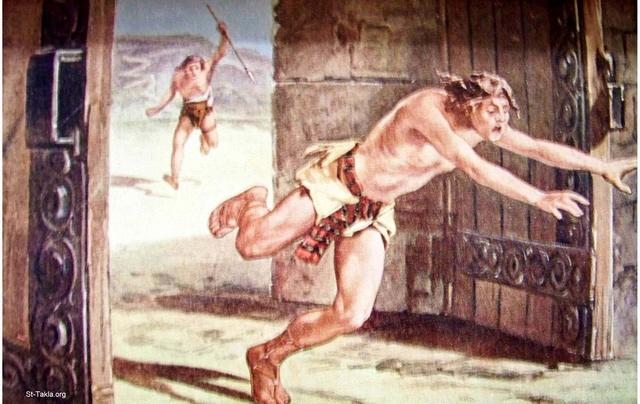
Numbers 35 can be an easy chapter to gloss over. Partly because it seems complicated and partly because it talks about murderers, so clearly it’s not applicable to us. Today, I want to challenge you to take a closer look.  As the chapter starts, Moses is in the process of dividing the Promised Land. As he apportions it to specific tribes, he is also asking them to give some away. It will be given to the Levites, the high priests of Israel. The Levites, then, will dwell in the land. Once they have it, they are instructed to set up six cities of refuge.

Reading closely, we can establish that these six cities will serve specific purposes. First, they will provide a safe place for people who have accidentally killed someone. They will be refuge and protection from the victim’s friends or family members, that may be looking for revenge, an “eye for an eye,” right? This was permissible under Jewish law (Exodus 21:24).

The cities of refuge were also a welcome place for foreigners. Traveling through cities in these times was a dangerous prospect. Consider that the Israelites were required to diligently keep the law in order to remain pure. Since foreigners did not keep the law, they were viewed as unclean, making them unwelcome.  In the city of refuge, however, all were welcome. An added benefit to the sojourner is their interaction with the high priests. These men, being in close proximity to God were able to share God’s hope and love.

These reasons give way to another purpose of the city, which requires closer examination. Redemption. How is it that either a foreigner or a murderer could ever be welcomed into the Jewish community as a useful citizen? For the Jewish people, repayment for the wrong must be made. For any sin, this was accomplished by the sacrifice of animals. Their death and shed blood became the atonement for sins. It makes sense that the cities of refuge were led by the high priests.  The very people charged with making the sacrifices on behalf of everyone. Whoever showed up, whether foreigner or murderer, the high priest was able to provide the sacrifice.   Even so, murderers were not yet free. Not only did they live in fear of retribution, but it is likely that they were perpetually tormented by their misdeed. True freedom was only accomplished through the death of the high priest. Until then, they were only safe in the city of refuge.

As I read through the text, I am horrified at the cost. Why is it necessary for the high priest to die? Remember, the high priest has a special relationship with God. His sins have been atoned for. He is clean in the eyes of God. Through his position, he has been the encourager for the convicted and the unclean. He has spent his entire life interceding for others through prayer and offering living sacrifices for these people. He does so not for his own gain, but so that all people can be counted among God’s chosen ones. He has walked closely with God. Surely, he does not deserve death! Alas, his efforts are not enough. The sacrifices are imperfect. It is his death that marks the end of the era.   Ironically, all punishment and the condemnation die with him, ushering in a new era of life and freedom for the captives.

Does this have you thinking about Jesus and salvation?  Romans 8:18 confirms Jesus as our high priest. “There is no condemnation for those who are in Christ Jesus.” You see, Jesus lived the life of a high priest, only better. How can that be? He was not human, like the Levite priests. He is God. Hebrews 4:15-16 explains that “we do not have a high priest who is unable to sympathize with our weaknesses, but one who in every respect has been tempted as we are, yet without sin. Let us then with confidence draw near to the throne of grace, that we may receive mercy and find grace to help in time of need.” Maybe I don’t identify as a stranger or a murderer.  I do, however, identify as a sinner, falling short of who God created me to be.  We are all called to “draw near” to the city of refuge.  When we do, Jesus our high priest offers up a perfect sacrifice, assuring our freedom. Thank you, Jesus, for making it available to all of us, every day.

Don’t Forget

A string tied around an index finger

Numbers 28; Psalm 72; Isaiah 19–20; 2 Peter 1

Have you ever paid attention to the collection of things in our lives designed to be reminders? As I look around my room, I see all sorts of things. I have a clock that keeps me mindful of what time it is. I have a bulletin board that holds invitations, famous quotations, and certificates, reminding me of good things. I have pictures of my family and friends. They remind me of who they are, how much I love them and really great experiences that we have enjoyed. Unfortunately, these things have failed to become reminders. Instead, I pass by them every day, mesmerized and tranquilized by my busy life. As I flop on the couch at the end of a long day, they cannot compete with my television, as it blurts and blasts [seemingly] innocuous messages.

This random busyness separates us from our hearts causing them to stagnate and lie dormant. This is not at all what God planned for us. Sure, we have faith that we are saved and will live with God eternally, yet we fail to break through and experience him today. Why not? Peter explains that we have failed to grow in our knowledge.  When we do, he says, we will gain self-control, with continuous dedication, resulting in brotherly affection and, finally, above all, love (2 Peter 1:5-7). Did you hear it? Love. It is the thing that we are chasing so endlessly, it is reconnection with our hearts.  Sadly, like the song says, we are Looking For Love in All the Wrong Places. Or, perhaps you are not looking for it at all, being content to live the busy and distracted life I described earlier.

Is there any hope? According to 2 Peter, the answer is yes.  It says, “those who fail to develop, shortsighted or blind.  They forget that they have been cleansed from their old sins” (2 Peter 1:9 NLTse). You see, when we don’t engage God and grow with him, we quickly revert back to our old lives. Wasn’t it these old behaviors that led us to the Cross in the first place? We are, in fact, living our old lives. If you are like me, that is a disappointing and shocking realization. This does not, however, lead me to despair.  Instead, it is a reminder.

Today, I am reminded of my failure to achieve the life he calls me to and also, of his abundant mercy. Thankfully, His mercy is new every morning and will never end (Lamentations 3:22-23). I am reminded that no matter how hard I try, I cannot change myself. Instead, I must put on the clothing of Christ, which is love (Colossians 3:14-17). All of this brings me to one last reminder, that the fullness I seek is made possible by a single, great sacrifice. Today, I am drawn, again, to the cross. This time, I come not so much for what it will do for me, but for what it can do through me.

Display your power, O God

Numbers 25; Psalm 68; Isaiah 15; 1 Peter 3

Yesterday, I had an opportunity to spend some time with Jillian, Lynden and their son, Oliver (aka Ollie). As you know, Jillian is our Monday writer here at BibleJournal. Since our introduction in February, she has impressed us with her faith and zeal for Christ.  The events that have unfolded over the last several days give great evidence for this.

Blessed be the Lord,
who daily bears us up;
God is our salvation.
Selah (Psalms 68:19 ESV)

Late last week Jillian and Lynden’s son, Ollie, began experiencing significant abdominal pain. This pain resulted in being admitted to BroMenn Hospital and shortly thereafter transferred to the Children’s Hospital in Peoria, Illinois. Now, three days later, they wait for options which may include surgery. It takes time to accurately assess lab results. While waiting, we pray for healing and for Ollie’s pain to subside. During our brief visit, I did not experience a family broken down by the burdens of illness. Instead, I found a strong, faithful couple attending to and fighting for their son.

Summon your might, O God. Display your power, O God, as you have in the past (Psalms 68:28 NLTse)

Would you join us today in helping the McGriff’s navigate this trial? First, will you join us in praying for an immediate and full healing of Ollie? We give thanks that he is surrounded by God-gifted doctors and nurses in a world-class facility. Pray with us that He will continue to give them the availability and wisdom required to care for Ollie promptly and appropriately. Also pray that God will cause whatever is hidden within Ollie’s body to be known. Pray for Jillian and Lynden too. That they will be fully filled with His presence and the peace that He promises (Philippians 4:7).

Finally, all of you, have unity of mind, sympathy, brotherly love, a tender heart, and a humble mind. (1 Peter 3:8)

Can we also encourage you to join us in supporting them through practical provisions like food, diapers and money? One of our team members was able to establish a meal train that allows us all to easily assist from any location. Let’s be generous givers to let them focus on spending time together as a family, meeting Ollie’s many needs, and working with the medical staff to ensure the best care and treatment possible. They will have medical bills, childcare costs, fuel/travel expenses, and time away from work.

Please click here to help: McGriff Family Meal Train

Unplanned

RMNP-BearLake-DSC07881

Numbers 21; Psalms 60–61; Isaiah 10:5–34; James 4

This last week, I had the privilege of taking my son to the Rocky Mountains. It was a short trip, justIMG_0037 three days, so I wanted to make the most of it. I had two goals. First, I wanted to spend a lot of time with him, and second, I wanted to spend some time planning for the rest of 2016.  If I am completely honest, one major purpose in spending a lot of time with Freddy is to examine how he is faring. I mean, we only have six, or so, years before he sets off for college! As a good father, I need to evaluate his planning and dreaming skills. Additionally, I want to influence what is in his head.

Among my few to-dos while I am on the road is this entry for BibleJournal.net. While reading James 4, early Monday morning, the Holy Spirit thumped my heart. In part, he reminded me that we are “a mist that appears for a little time and then vanishes.” (James 4:14) I couldn’t shake it. The Spirit instructed me, in that moment, that the reason we came to the Rocky Mountains was not to make great plans for the next several years (James 4:13). No, the purpose became clear as we approached Rocky Mountain National Park. Being absolutely captivated by its beauty, I understood that we were here to enjoy and celebrate breathtaking beauty. And that is exactly what we did. We did not sit piously and passively.  IMG_0022How could we? The majesty of His creation blasted its way deep into our hearts. In reply, we stomped and shouted throughout his handiwork. We left giant footprints as our voices echoed throughout the valley. We sang stupid songs, threw snowballs and filled the air with laughter. We saw our breath in the cold mountain air and hollered over the thunderous roar of waterfalls.  We pondered big questions like “why did God make it all,” and “why did he make it so complex?” We settled on really simple answers like “because He can,” and “so that we will never get bored.”  We stood motionless and silent, marveling at how He did it.  We worshipped!

After a long trip home, I find that I have planned nothing. Ironically, my celebration of His creation, left me with a bigger dream than I could have imagined. I want to enjoy God more.  If the Lord wills me a tomorrow, my prayer is to see his beauty everyday, right here, right now, in the place that I live. Father, show me what to look for and where to look.

I found God this week. He was with us.  He is with us. Will we be with Him?

Obedient To Our Beliefs

Ladder

Numbers 5; Psalm 39; Song of Solomon 3; Hebrews 3

We lead extraordinarily busy lives. Between the pressures and problems of our work lives and the turmoil of training children to have healthy lives, we find ourselves chasing one thing after another, never stopping. If you are like me, there is a still small voice in your heart that is crying out for more. So what do we do? We choose more. We think that working harder, maybe earning that next promotion, will finally silence that nagging voice. We transfer the belief of more to our kids, assuming that my happiness comes from more, theirs does too. We add new activities and focus attempt them more intensely. The result: more pressure, more turmoil and more problems.  Too often these become manifested in depression, substance abuse and a myriad of illnesses. Exactly the opposite of what our heart is crying out for and definitely not the life that God promises us. He is calling us to one simple thing, obedience.

I don’t think of myself as disobedient. Maybe that is why I find myself annoyed when I read Biblical truths about disobedience. In fact, Instead of translating disobedience truthfully, I reinterpret it with positive words like progressive and enlightened.   These twists of truth allow me to avoid guilt while fully embracing, even amplifying my individuality. My prayers are also shaped by this belief. I ask God to help me in the places I am falling short. They sound like, “God give me that promotion,” or, “please help Junior play well today. He deserves to win.” All seems well until God doesn’t perform for us. When we fail to get recognized at work or our kids fall into trouble, we accuse Him of not providing and our restlessness accelerates. James 4:3 confirms this, “you ask and do not receive, because you ask wrongly, to spend it on your passions.” Today, in Hebrews 3, we read a related comment. It says, “Today if you hear his voice, do not harden your hearts.” (Hebrews 3:15).

If we want to have rest as God promises throughout Scripture, we must look toward obedience. This means that I can no longer avoid the hard work of transformation. The first step of obedience is listening.  When I pause and listen for God, I realize that the still small voice in my heart is not asking for more. Instead, recognizing that this is the still small voice of God, I hear Him calling me, calling me to obedience. Waiting in silence, He convicts me that my past re-interpretations are nothing more than a hard heart.   This hardness gives way to misbelief in my individuality and self-importance.  According to the Bible, they are more than misbelief, they are unbelief  (Hebrews 3:19).  My unanswered prayers, therefore, are not the result of God’s punishment or wrath, but my unbelief!  OUCH!

There is hope. When we turn our cry of desperation toward Jesus, stopping to listen, he responds. Thankfully, he does not ask for more than that.  When we do, He assures us of the rest we are looking for. (Matthew 11:28-29)

I found myself captured by the picture I added to this post.  Our stories parallel the boy’s burning of the ladder rungs.  He believes that the fire will keep him alive while we believe that “more” will lead to rest. His comfort is temporary, short-lived even.  What about ours?  Proverbs 14:12 says it clearly.  “There is a way that seems right to a man that leads to death.”  

Thanks to Pawel Kuczynski for creating a fantastic illustration of how our true beliefs shape our actions.


Itching Ears

indian male touching is paining ear, indian man stressed with paining ear

Leviticus 25; Psalm 32; Ecclesiastes 8; 2 Timothy 4

Man holds an unquenchable hunger and thirst for knowledge . Not just knowledge, but wisdom. My own pursuit of these is generally framed around fixing something in my life. The purveyors of answers make promises of living a big life. In fact, it’s not just about living a big life, but doing so while maintaining balance. You actually can have a huge career, the body you deserve and a healthy family. You can have it all. Do you want to hear more?

I listened to a similar pitch just this morning. Apparently, all I have to do is agree to work really, really hard, being 100% sold out and committed to achieving my goal. When I do this and send him $5,000.00, I will be introduced to the simple secret that has eluded me, and apparently millions of others, since the beginning of time. Despite the high cost, it is a compelling message. Not just to me either.  He interviewed a recent graduate of the course. Guess what? The course paid off 10 fold and the man’s marriage was saved from the brink of disaster. All because of these few secrets that have never been revealed. Do you want to know more?

The answer is YES, I WANT TO KNOW! Please, tell me now how I can live this ridiculously awesome life. I am ready!

This is exactly what 2 Timothy 4:3 predicts. The writer knows that my propensity is to seek answers that suit my own desires.  I have “itching ears.” The evidence is overwhelming. I can sit through hours of podcasts and study page after page of business strategy to potentially satisfy my own compulsions. More recently, I have devoured books on psychological theory explaining how the human mind interprets information. It is fascinating. I absorb all of this information to make some sense of my life. Of course, all of these things have failed me. My newly acquired wisdom and knowledge have not silenced the voices of negativity and doubt between my ears.  I remain insecure in my ability and my marriage is less than I think it can be.

Despite my efforts, God has protected me from deception. As I reflect upon my study habits, He reveals that I attempt to learn more about getting rich than being rich. There is a huge difference! The biggest one is surrender. You see, finding something that will tickle my brain is easy. It doesn’t require confronting my weaknesses and it energizes my spirit.  Filling me with possibility. The other way, the Jesus way, is hard. It requires that I give up my own dreams while I embrace my weaknesses.  The Jesus way requires complete transformation of my spirit. To be harsh, it requires death. Ironically, it is in death, that I find life. Jesus tells us right. He says, “The thief comes only to steal and kill and destroy. I came that they may have life and have it abundantly” (John 10:10).  Real Truth.

Forsaken

Young stray dog sleeping on pavement in india

Leviticus 18; Psalm 22; Ecclesiastes 1; 1 Timothy 3

Psalm 22 is known as a prayer of lament.  What does that mean?  Lament, according to dictionary.com is “a formal expression of sorrow, or mourning.”  You hear these clearly in David’s words, right?  At the time he is writing this, his very life is in danger.  His own son has taken over the kingdom and now wants David permanently eliminated.  Knowing this, David cries out in anguish for God to help him, saying “why have you forsaken me?” Yet, God’s help doesn’t show up.  Have you ever had a similar experience?  Maybe your circumstance was not as extreme as David’s, but we all have times that we simply need help.  There are two things about David’s plea that capture me.  First, he is brutally honest and second, even in desperation, he acknowledges that only God can provide what he needs.

To some, David’s honesty might seem disrespectful.  Can we ask God why he has forsaken us?  I actually catch myself thinking that this is a selfish prayer.  Aren’t I suppose to shut up and endure?  Isn’t that what faith is?  Who am I to question God?  Additionally, when I come to him that way, don’t I sound like a selfish and spoiled child?

The answer to those questions come from David in verse 3 as he formally acknowledges God’s position of authority and deity.  He says, you are enthroned as the Holy One, you are the one Israel praises.  Don’t you see David’s true heart here?  Yes, he is crying out to God for relief, and, at the same time his heart is submissive.  How could God accept this as anything but absolute worship?  Furthermore, by acknowledging God and identifying with who He is, David effectively removes any selfish motives from his heart.  Basically saying, since you are who you are, I am willing to endure whatever you have me endure.  Do you hear the echo of Jesus in this?  Remember Jesus in the garden of Gethsemane?  He is under intense stress because of the burden upon him asking God for the same relief.  Luke 22:44 suggests that Jesus’ stress was so great, he was sweating blood!  Despite the agony, Jesus embraces his lot saying, “yet not my will be done, but  yours.”  At that moment, Jesus gave God his greatest possession.  His very life.  Pure Worship.